.jpg)
Visitors of germanexpatinthephilippines/Besucher dieser Webseite.Ich liebe meine Flaggensammlung!

Tuesday, May 26, 2026

Cine Europa returns to Philippines with the ‘best of the best’ European films

Lara Charmaine Lagorra - The Philippine Star
Whether through comedy, tragedy, history or documentary, Cine Europa presents stories of love, loss, identity, resilience and transformation. As the festival continues across the Philippines, it reinforces cinema’s role not only as entertainment but also as a shared space where audiences can encounter lives different from their own.
The Cine Europa returns for its 29th edition, continuing its mission of using cinema as a bridge for cultures, ideas and shared human experiences.
The long-running European film festival once again brings a diverse lineup of films from different European Union Member States to audiences across the Philippines through free screenings nationwide.
This year’s festival will feature 17 full-length feature films and three documentaries, ranging from historical dramas and fiction to adventure and comedy.
“Over the years, this partnership has grown into more than a collaboration,” said Agata Nowicka, deputy head of mission to the Philippines, during the May 14 launch. “It has become a platform of culture, dialogue and storytelling.”
The 2026 lineup presents a wide range of themes exploring identity, memory, history and human connection.
Poland gives us the selection with “Lampo the Travelling Dog,” inspired by a true story of a train-riding dog forming unexpected bonds, alongside “Lost of Balance,” a psychological drama about a young acting student confronting self-doubt and emotional pressure.
Belgium’s “Head or Fails” presents a raw exploration of instability and consequence, following individuals trapped in cycles of risky decisions.
The Czech Republic has the film “The Waves,” which revisits the Prague Spring of 1968, when journalists at Czechoslovak Radio risk their lives to broadcast uncensored information under Soviet occupation. The Slovenian film “Hidden People” explores the unexpected connection between two strangers forced into an unusual situation, while Germany’s “Roter Himmel (Afire)” dives into themes of love, ego and creative struggle.
France’s “Un Ours Dans La Jura” introduces a suspense thriller about a struggling couple whose lives spiral into chaos after discovering a large sum of money following a car accident in the snowy Jura mountains.
“Four Mothers” from Ireland features a humorous yet emotional story about caregiving and family responsibility, while Sweden’s “The Dance Club” follows a group of misfit patients at a psychiatric clinic who form an unlikely alliance through a dance group.
The festival will also present Italy’s “Gloria,” which highlights music and artistic expression in a historical setting, while Austria presents “Sleeping with a Tiger and Peacock,” both examining identity, performance and self-discovery.
Spain’s “Campamento Garra de Oso (Bear Claw Camp)” follows a family adventure film about Maia, an imaginative and spirited girl, and Jan, a fearful city boy, who race to save a summer camp threatened by an eccentric builder.
“How Can I Live Without You” from Hungary is about a young woman named Lili, who discovers her mother’s diary revealing a 1990s summer romance at Lake Balaton that leads to emotional awakening across generations.
“Nasty,” a Romanian documentary, details the life and career of tennis legend Ilie N?stase, while Slovakia’s docu “Andy Warhol: American Dream from Slovakia” explores the artist’s immigrant roots and cultural identity.
Ukraine’s “Simple Soldier” is said to deliver a stark portrayal of an ordinary man navigating the realities of war in eastern Ukraine, reflecting the emotional and psychological toll of conflict.
Other featured films include “Summer is Crazy” from Finland, set in the Finnish archipelago during midsummer, where the Eerola family grapples with disappointments after their fine dining restaurant goes bankrupt.
From Cyprus, the film “Maricel” follows a Filipina domestic worker caring for an elderly couple in a remote mountain village, where what begins as a simple caregiving job gradually unveils questions of personal boundaries within the household.
Also featured is “Sentimental Value,” selected by the European Union Delegation, which tells the story of an aging filmmaker who casts his estranged daughter in his next film in an attempt to reconnect.
When asked by The Philippine STAR during an open forum on why cinema continues to matter in today’s world, particularly in relation to the diverse themes explored in Cine Europa films, Katarzyna Wilkowiecka of Poland said, “It’s sometimes nice to go into the dark room where everybody is sitting, enjoying the big screen with great sound, which is also very important. Even if everything is in front of your eyes, you still use your imagination. And then you go home, you discuss it with friends, with family, or even think about what you’ve seen.”
Ireland’s deputy head of mission, Erica Duffy, also noted that cinema becomes a powerful tool for connection, especially when stories like their film “Four Mothers” reflect universal experiences such as caregiving and family responsibility.
“There are ways that we can connect with one another that me standing giving a speech, or my colleagues discussing what our governments are doing to advance our interests and values, cannot achieve in the same way that storytelling does,” she said.
Germany’s First Secretary, Pia Friedrich, also shared how storytelling strengthens memory.
“You can tell a fact, and you will forget it,” she explained. “But when it is told through a story, it provokes emotion, helps us remember and gets us attached to a topic. This is really how storytelling works, and I truly believe storytelling is everything.”
Slovenia’s Ambassador Smiljana Knez added that audiences engage with films for different reasons — whether to learn about history, discover similarities across cultures or simply enjoy meaningful cinema.
“People may want to learn about history, or feel good, or relate to something they see on screen,” she said, underscoring the varied ways audiences connect with film.
The festival screenings are all free on a first-come, first-served basis. The Manila screenings will be held at Shangri-La Plaza from May 28 to June 3, followed by free public screenings at Rizal Park from June 15 to 20, on specific screening dates, and the lineup of films to be shown each day.
Expanding its reach beyond Metro Manila, the festival will also bring screenings to Tacloban from June 11 to 15 and Cagayan de Oro from June 29 to July 4.
The detailed screening schedules for venues beyond Manila, including the daily film lineup, are still being finalized and will be announced through the festival’s official website in the coming weeks.
MGI All Stars: Meet the 5 queens competing for the Philippines

From left: Fuschia Anne Ravena, Imelda Schweighart, Gazini Ganados, Keylyn Trajano, and Alexia Núñez
Miss Grand International via Facebook, Imelda Schweighart via Instagram
Kristofer Purnell - Philstar.com
May 26, 2026 | 3:02pm
MANILA, Philippines — Preliminary proceedings are underway for the inaugural All Stars edition of Miss Grand International, with participating countries sending multiple names into the mix.
The new competition is open to women and transwomen ages 20 to 40, regardless of marital status, who have competed in or won a previous pageant.
Another key feature of the pageant is that competing countries can send more than one delegate. This year, there are 58 contestants from 38 territories.
China has the most representatives with six, followed by the Dominican Republic with four and host country Thailand with three.
The Philippines is staking a claim with five beauty queens bannered by the Three Stars and a Sun, each bringing major pageant experience and hoping to go far in the competition.
Here is a rundown of the five Filipina queens competing in the first-ever Miss Grand International All Stars.
Fuschia Anne Ravena
The 30-year-old beauty queen was the first delegate announced to represent the Philippines.
Fuschia was crowned Miss International Queen, the biggest beauty pageant for transgender women, in 2022. She was the second Filipina to win the title after Trixie Maristela in 2015.
Organizers hailed Fuschia as a proud trans Filipina and a global advocate for compassion, inclusion and equality.
"A powerful voice for LGBTQ+ rights and gender equality, she is also a successful beauty industry entrepreneur and the owner of a premier aesthetic clinic — redefining beauty through purpose, leadership, and lasting impact," they said.
Alexia Núñez
A couple of days later, Filipino-Brazilian beauty queen and actress Alexia Núñez also threw her name into the ring to compete for the Philippines.
Alexia won Noble Queen of the Universe 2025 last November while representing Brazil, competing against other beauty queens representing Filipino communities.
A wellness and sustainability advocate and creative entrepreneur, the 27-year-old is fluent in five languages and uses her voice to champion peace, dignity and women's empowerment.
Her humanitarian efforts have focused on helping Indigenous women and children through education and livelihood initiatives that honor culture while fostering long-term independence.
In showbiz, Alexia appeared on the television show "Batang Quiapo" and the Netflix film "Kontrabida Academy."
Keylyn Trajano
Earlier this year, another trans queen, Keylyn Pan Guevara Trajano, was confirmed to banner the Philippine flag.
Like Fuschia, the 30-year-old has competed in pageants in Southeast Asia and the Middle East.
She represented Arabia in Universal Woman 2025, placing in the Top 13 alongside the Philippines' Jasmine Omay.
Both queens won two special awards each, with Keylyn taking the Photogenic and Voice Challenge plums.
Outside pageantry, Keylyn is a television host-actress, entrepreneur and marketing and public relations professional who founded several organizations, some of them aligned with her advocacy for inclusion, equality and youth empowerment.
Gazini Ganados
Probably the biggest name among the Philippine representatives and the country's best bet at winning is Filipina-Palestinian beauty queen Gazini Ganados.
Miss Grand International All Stars marks Gazini's pageantry comeback since she was crowned Miss Universe Philippines 2019, the last national titleholder under Binibining Pilipinas before the local franchise moved to a new organizing body as Miss Universe Philippines.
At Miss Universe 2019, won by South Africa's Zozibini Tunzi, Gazini finished in the Top 20 and won the Best National Costume award.
Before that, she competed in Miss World Philippines 2014 as a teenager, making her one of the Philippines' most recognizable beauty queens.
Organizers said the 30-year-old showcased "elegance, resilience, and dedication to representing women with strength and authenticity" during her pageant run.
Since passing on the national title during the pandemic, Gazini has signed with GMA Network's talent arm Sparkle and made a name for herself in showbiz as a model and television personality.
Imelda Schweighart
The fifth and final Filipina competing at Miss Grand International All Stars is Filipino-German beauty queen Imelda Schweighart, a submission that was not without controversy.
Imelda was representing Kalibo, Aklan, in Miss Universe Philippines 2026 until news emerged that a contestant had been removed from the competition.
Photos of Imelda were no longer included in sponsored pictorials. Come coronation night, weeks after Imelda said she was joining Miss Grand International All Stars, Miss Universe Philippines said the 31-year-old had fully left the contest.
Still, Imelda is entering the upcoming competition with immense experience, having competed in Binibining Pilipinas 2013, Miss Earth 2016 and Miss Universe Germany 2023. She resigned her Miss Earth Philippines title after the 2016 international pageant.
Organizers described Imelda as "a legendary multi-hyphenate and a true icon of her generation" who won her first national crown at 15 years old. She is also an actress, singer-songwriter, music producer and entrepreneur.
"Her journey is defined by resilience, individuality, and authenticity," they added. "Known for her unapologetic spirit and editorial edge, Imelda brings a lifetime of stage mastery to the global spotlight — reminding the world that icons aren’t born, they are made."
Arrivals, registration and primary photo shoots will end on May 17 before pre-pageant activities begin, leading up to coronation night on May 30.
Working from home? How to avoid back pains, tech neck

Dolly Dy-Zulueta - Philstar.com
Working longer hours in a makeshift office may lead not only to mental fatigue and burnout but also lower back pain and “tech neck,” also known as chronic pain in the neck.
MANILA, Philippines — One of the work trends that have emerged from the more than two-year pandemic is the work-from-home (WFH) set-up. Some offices have stuck to it even after the pandemic has somehow let up and allowed the economy to move forward.
While working remotely may have become a new source of stress for those who have set up makeshift office spaces in their living area or bedroom, especially for those who lack the proper facilities for it, it still has its advantages. For one, it eliminates the need to travel to and from work, thus saving time otherwise wasted in traffic and budget for gas or bus fare. Then there is the versatility of attending to household chores and mommy or daddy time while at the same time being able to fulfill your corporate duties with proper time management.
But, well, yes, not having the ideal set-up of a real office can take a toll on a WFH employee. Working longer hours in a makeshift office may lead not only to mental fatigue and burnout but also lower back pain and “tech neck,” also known as chronic pain in the neck.
“Poor positioning of work equipment and sitting longer in chairs that were not designed for desk jobs can cause health issues that may get in your day-to-day tasks and affect your productivity, and even make you more prone to injury and fatigue,” said Anne Kathleen Ganal-Antonio, MD, of the Department of Orthopaedics, of Makati Medical Center (MakatiMed).
Even after the pandemic, a lot of people will still be doing business straight from their homes. Fortunately, Dr. Ganal-Antonio shared a few tips on simple adjustments that can help get the work done minus the unnecessary aches and pains:
- Create an ergonomic workspace. There’s no need to buy expensive office furnishings to be comfortable while working from home.
“Just improvise,” advised Dr. Ganal-Antonio. “Make sure your computer screen is in front of you at a comfortable viewing height, not in a place where you have to look down. If you use a laptop, prop it up to eye level on a stack of books or a sturdy box, and invest in an external keyboard and mouse. Your forearms and hands must be level and straight when you use the keyboard, and your arm must be close to the side of your body when using the mouse. The more your arm is stretched to the side, the greater the chance of straining your neck and shoulder.”
As for the way you sit, make sure that your hips and knees are level, or your hips are slightly above your knees, she added. “Avoid slouching or leaning forward. Instead, sit with your upper back straight and your lower back curving to the shape of the chair. Use a pillow to support your lower back. Make sure, too, that your feet touch the floor.”
Dr. Ganal-Antonio also recommends using standing tables or a foot stool. “According to the pioneering study conducted by Swedish spine researcher and orthopedic surgeon Alf Nachemson, when we flex forward, more stress is concentrated at the discs, which are the shock absorbers of the spine. It’s best to be slightly reclined, about 110 degrees. You can use standing tables to lessen the stress. Adding a foot stool to alternately rest each foot can also help.”
- Get up. Sitting is the new smoking, as the saying goes, and studies have linked longer sitting time to higher risk of death, heart disease, cancer, and diabetes. But standing for long periods has also been associated with varicose veins and back pain. “A Cornell University professor of ergonomics suggests following the rule of 20-8-2: Sit for 20 minutes, get up for 8 minutes, and move around for at least 2 minutes,” Dr. Ganal-Antonio shared.
- Use the break to stretch, roll your shoulders, do arm circles, or touch your toes. “You can also give yourself a reason to stand up and move,” the doctor added. “Place the printer or phone in the other side of the room so you have no choice but to get up and walk when you need them.”
- Work out in your workplace. Start and end your workday with simple yet effective exercises that strengthen your core and target the muscles on your back and shoulders, said Dr. Ganal-Antonio. “Begin with 10 squats, 10 tricep dips using a stable chair, and 10 wall push-ups. You can also do jumping jacks, push-ups, and crunches to stimulate circulation.”
Monday, May 25, 2026


Every Man For Himself
May 24, 20263 min read

AND of course: every woman for herself. It’s used for saying that everyone needs to look after themselves and not worry about anyone else. Everyone looks out for his or her best interest. Originally this phrase expressed approval. It appeared in Chaucer’s The Knight’s Tale (“Ech man for him-self, ther is non other”), implying that if one did not look out for oneself no one else would.
It’s always been this way in reality and should be for good reason. “Every man for himself” is an individualistic ideal. It teaches self-reliance, self-sufficiency and independence.
Each individual puts his or her own interests foremost. For example, In this company no one helps anyone—it’s every man for himself . In Chaucer’s day this dictum was stated approvingly, meaning “if you don’t look out for yourself, no one else will,” but today such selfishness is usually censured.
Yes, each person does what is best for himself or herself. Yes, times are getting tougher. I think you, my dear readers, know what I am talking about. No reason to list everything again. Sometimes, there is no team spirit in this office; it’s definitely every man for himself. Neighbors would tell each other: mind your own business. The tone between us humans is becoming more and more harsher.
Some people live alone because friends and families have abandoned them. Important helpline is Psalm 27:10 for them. “When my father and my mother forsake me, then the LORD will take care of me.”
And solitary survivors like Robinson Crusoe, or the hero in the movie Castaway, fascinate. But the loner is someone who purposely holds himself aloof, like the Unabomber, Mathematician Ted Kaczynski. People doggedly moving ever farther away from one another constitute hell in C.S. Lewis’ book, The Great Divorce.
Fact is – Proverbs 18:1 says: A man who isolates himself seeks his own desires; he rages against all wise judgment.
Living in community and helping one another is foundational for all who wish to follow Christ. We know from Acts 2 that the early church took this seriously, seeing many examples of believers helping one another, including materially, so that there would be no one in need within their group.
Much has been written about the benefits of strong relationships. I wrote about it at this corner several years ago. People are healthier, live longer, and are generally happier if they have strong friendships beneficial for helping and encouraging each other. And let me repeat it – especially during these tough times.
Jim Mathis, a writer, photographer and small business owner in Overland Park, Kansas, got it to the point last year, when the pandemic started: “Personally, one big change that took place when I decided to follow Christ was shifting from a self-centered existence to community-centered living. My life changed dramatically for the better when I stopped looking out only for myself and started finding ways to help others with a sense of community. Life went from an individual sport like a race to a team sport, working toward our mutual benefit”.
I feel I’m not good enough

Feeling like you are not good enough is an incredibly heavy burden, but it is also a nearly universal human struggle. It usually stems from self-doubt and conditioned thought patterns rather than actual truth. You are inherently worthy of love, belonging, and respect just as you are.
Often in life we come across such relationships and people, who are never happy with you. There may be times when you have given your all but you still realize that you’ll never be good enough for some people.
Feeling like we’re “not good enough” is negative self-talk that is underpinned by feelings of inadequacy. At its core, feeling not good enough boils down to a struggle with self-esteem and feelings of unworthiness. Fortunately, there are ways to overcome these negative feelings and develop a healthier mindset.
This feeling is really sad and hurting which makes you doubt yourself. This is when you feel the world will never be satisfied with you, and there could be days when you feel like a failure.
But life is not about perfection, it’s about accepting people we love as they are. When the expectation of one person is too high it’s not possible to be every good enough for them no matter what you do. Never let this feeling make you depressed and feeling low.
Among daily changes within the world of work, there’s never been a better time for employees to cultivate skills to help them better manage workplace challenges. This is where the idea of the ‘growth mindset’ comes roaring in – the belief that workers are capable of actively improving their abilities, rather than being innately able or unable to complete certain tasks.
Yet, this ‘can do’ mindset can be more difficult to harness than it seems. Doing so means getting comfortable with embracing hurdles, learning from criticism and persisting when things get difficult.
Even if we believe that such tenacity is worth developing, in practice, doubts and fears can dominate. “We’re wired to believe our emotions,” says Elaine Elliott-Moskwa, psychologist and author of The Growth Mindset Workbook, based in Princeton, New Jersey, US. “When a person says ‘I feel I’m not good enough’, that feeling is very powerful, even though that is a belief about their abilities.”
At the heart of the growth mindset is learning to overcome such feelings of inability or inadequacy in the face of obstacles, and instead recognise an opportunity to learn. And there can be profound benefits to cultivating this approach. Employees with a growth mindset can tap into useful skills to manage stress, build supportive relationships with colleagues, cope with failure and develop attributes to help further their careers.
Approaching a challenge with a growth mindset over a fixed mindset is a choice anyone can take
Stanford professor and psychologist Carol Dweck narrowed this concept down to two approaches that can determine results: ‘fixed mindset’ and ‘growth mindset’. “Fixed mindset is the idea that your abilities are high or low, and there’s not too much you can do to change it,” says Elliott-Moskwa, “whereas the growth mindset is the view that your abilities are malleable or changeable.”
While some people may naturally lean more one way than the other, people don’t outright have either a fixed or growth mindset to all problems, full stop – instead, approaching a challenge with a growth mindset over a fixed mindset is a choice anyone can take.
For many people, though, moments of difficulty often spur fixed mindsets. For example, says Elliott-Moskwa, when people take in criticism from a boss, or struggle with a new task, they might feel a sense of inadequacy. In these situations, a fixed-mindset response might be “I’m not good enough”, or “I can’t do it”, she says.
By contrast, a growth mindset approach takes a different tack on the same situation. People with growth mindsets don’t interpret such moments as personal failings, but instead recognise a need to improve. Crucially, people working with a growth mindset believe they are capable of such improvement, and are able to break down challenges into achievable steps.
This means getting out of the comfort zone and accepting a certain level of risk, uncertainty and the potential for failure that comes with trying something new. “It feels a little bit uncomfortable, and also a little bit exciting,” says Isabella Venour, a London-based mindset coach, who helps professionals understand the role their beliefs, values and patterns of thinking play in the workplace. “You’ve got a bit of risk that it might go wrong, but you’ve also got the potential to learn something and to grow as an individual.”
Why is the growth mindset important in the workplace right now? A can-do approach is always a plus in the workplace – it demonstrates that workers are adaptable and willing to evolve within their jobs and organisations. But fostering a growth mindset plays an important role in helping workers navigate turbulence as well as improve resilience as they feel more confident and capable of handling difficulties.
How can you improve your growth mindset? The first step towards encouraging a growth mindset is personal awareness: the ability to identify fixed-mindset thinking when it occurs, which often manifests as feelings of discomfort or inadequacy in the face of a challenge.
First, Elliott-Moskwa advises recognising and accepting such feelings – instead of beating yourself up about them. “Then, mindfully make another choice to take an action step in keeping with what you would be doing if you had a growth mindset – the belief that you could increase your abilities,” she says.
To help clients approach obstacles with a growth mindset, Venour often breaks down challenges that feel overwhelming into smaller pieces. For example, if a worker feels unable to give a presentation in front of colleagues, “how much of that is emotional and how much of that is factual?”, she asks. “Can they talk? Yes. Have they spoken in front of more than one person before? Yes. Have they done presentation slides before? Yes. So, if there are elements that they can do, [what] is the bit that they’re not comfortable with?”
Narrowing down an overwhelming challenge to a specific point of difficulty helps workers focus, and reduces the element of learning required to an achievable level.
Often, the learning itself requires asking for help. One of the key concepts of growth mindset is seeing others as inspiration rather than competition, an approach that can help foster collaborative teams. “If workers view others as resources and not as competitors, they’re open to sharing other people’s skills and abilities and learning from fellow employees,” says Elliott-Moskwa.
Over time, recognising fixed mindset and practicing a growth mindset can become easier, and the prospect of taking on challenges less daunting. “Growth mindset is an empowering attitude,” says Venour. “You can really develop and grow over time as a person.”
Sometimes you might feel like you’re not good enough or unique enough, but everyone is! Everyone has different personalities.
Do you think our geography somehow reflects our nature and culture as Filipinos?

Riza Plania
Lives in Riyadh, Saudi Arabia (2021–present)
Geography means,it is a study of places and the relationship between people and their environment.
And these are some of the pictures of the culture and nature of Filipinos👇
The beaches that are shared in the photos are just a few of the popular tourist destinations in the country and it is located in different places mentioned in the photo.
The pictures that I’ve shared with you are just a few of the Filipino culture and nature that remain a symbol and reflection of geography to its people and their environment.
Why understanding your inner emotions is important

Homer Panganiban shares how to control your feelings
At A Glance
- Chronic, unprocessed stress shortens telomeres, the caps on our chromosomes that mark cellular age. I have been thinking lately about a session I attended led by Homer Panganiban, founder of Lifesmith Inc. and its Emotional Literacy Program. Homer is a creative agency founder who, somewhere along the way, decided the most useful thing he could teach people was how to read what is actually happening underneath.
He defines emotional literacy simply: noticing what you’re feeling, understanding why it’s showing up, listening to what it needs. Not fixing. Not suppressing.
“When you don’t listen to your emotions,” he says, “they get louder. And they show up bigger, worse, uglier.”
His central practice is so small it almost sounds like nothing. Instead of “I am afraid,” try, “I am noticing fear.” Instead of “I am angry,” try “I am noticing anger.” Uy, ito’y nararamdaman ko. Pansinin lang (Hey, this is what I’m feeling. Take notice). That one word, noticing, is the entire shift. You are still present. You are still feeling. But you are no longer being swept away by it. What creates problems, Homer reminds us, isn’t the emotion itself. It is what we do automatically in reaction to it.
He calls the space this creates the gap. Between the signal and the response, there is always a small, almost invisible pause. Hunger is a signal. Eating is the response. But in between, there is a question we usually skip, do I eat now? Am I fasting? What does my body actually need? The same applies to every emotion. Fear is a signal. Anger is a signal. Guilt is a signal. Emotional literacy isn’t about removing the signal. It’s about finding the gap and choosing.
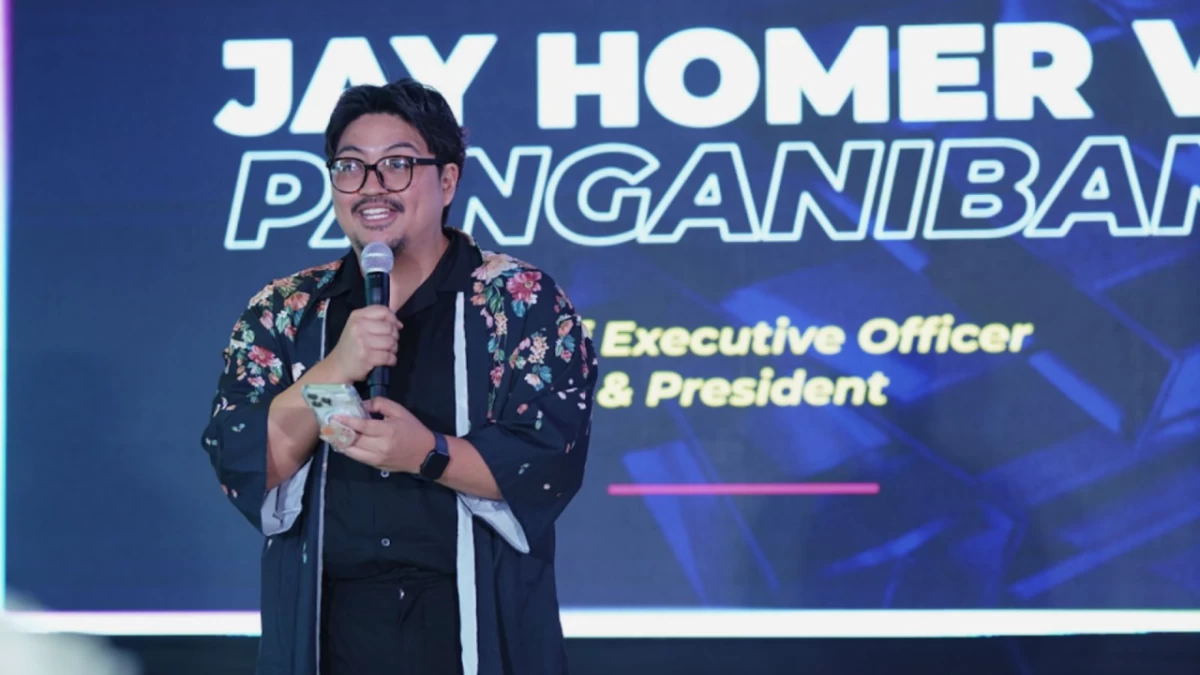
Homer Panganiban, Lifesmith Inc. founder (Photo: LinkedIn)
What I love about Homer’s framework is that he refuses to call any emotion bad. He maps 12 of them across seven stages, each with its own job. Fear is a protector, its invitation is to pause and assess. Anger is a boundary keeper, its invitation is clarity about what was crossed. Disgust is a values guardian, its invitation is honesty about what you will not compromise on. Sadness is the honorer, and here Homer says something that has stayed with me: you cannot grieve what didn’t matter. Sadness, in that sense, is also a measure of love.
Shame and guilt, he warns, are often confused but very different. Guilt says I did something wrong and points toward repair. Shame says something harder: I am wrong. Not what I did. Who I am. Knowing which one you are in changes everything about how you respond. Envy, the most uncomfortable of them all, becomes a compass, that quiet sting when someone has what you want, pointing not to them, but to something you haven’t yet given yourself permission to want.
Then comes ennui, the flatness that arrives when nothing is obviously wrong, but nothing is quite right either. We call it laziness. We fill it with busyness, with scrolling. Homer says it is something else. An intelligence, signaling that something in your life has outgrown its meaning. Curiosity and hope follow, future-oriented and quiet. You don’t need to know where curiosity lands, he says. You just need to follow it one step. And finally, joy and love. Not rewards. Not destinations. Ways of being that become available when the other emotions have been heard.
I will tell you, as a physician trained in preventive medicine, that none of this is soft. Research from UCLA has shown that simply labeling an emotion reduces activity in the amygdale, the brain’s alarm system, and engages the prefrontal cortex, where calmer choices live. Cardiologists have known for years that people who habitually suppress anger carry higher rates of cardiac events. Chronic, unprocessed stress shortens telomeres, the caps on our chromosomes that mark cellular age. The body keeps a quiet ledger of everything we refuse to feel.
This is where the Filipino in me hesitates. We come from a culture that has built its identity around endurance. Tiis (Endure). Laban lang (Keep fighting). Bahala na (Come what may). Resilience is real, and it has carried us through typhoons and dictatorships and a pandemic that tested every family I know. But anyone who works in medicine here will tell you it has a shadow side. Hiya (Shyness) keeps people from naming what hurts. Pakikisama (Getting along with others) makes us swallow what we would rather say. ”’Wag ka umiyak (Don’t cry)” gets passed from lola to anak (grandma to child) until a generation forgets it ever had permission. We are not weak. We are simply under-resourced in the vocabulary of feeling.
A column cannot replace therapy, and emotional literacy will not undo grief or trauma or clinical depression. If you are struggling, please talk to a professional. But Homer’s invitation is small enough that anyone can take it. The next time you feel that tightness in your chest before sleep, or the heaviness that has no name, try his question. What am I feeling right now? Not to fix it. Just to notice it. Place a hand over your heart. Breathe in for four, hold gently for two, exhale slowly for six. That long exhale calms the vagus nerve. Your body has known how to settle itself all along.
We spend so much on what we can see, the serums, the lasers, the supplements. I am, professionally, a fan of all of these. But the most preventive thing I can recommend, the one with no side effects and no waiting list, is this: become fluent in the language your emotions are already speaking.
Awareness, Homer says, is always available. Pause. Breathe. Ask gently. What am I feeling right now? That question, asked with kindness, is where everything begins.
Rabat named PDP-Laban city council president
By Ivy Tejano

RABAT and Duterte (FB)
Former Mati City Mayor Michelle Nakpil Rabat was sworn in as city council president of the Partido ng Demokratiko Pilipino-Lakas ng Bayan, strengthening the party’s presence in Davao Oriental ahead of the 2028 elections.
Rabat took her oath on Friday, May 22, before PDP-Laban President and Davao City Mayor Sebastian Duterte in a ceremony attended by local party leaders and supporters at Matina Enclaves in Davao City.
Following her induction, Rabat officially aligned herself with PDP-Laban and expressed support for the emerging political plans of Vice President Sara Duterte, including a possible presidential bid in 2028.
According to party officials, the event was part of ongoing efforts to consolidate PDP-backed leadership in Mindanao as political preparations for the next national elections begin to take shape.
Photos from the ceremony showed Rabat with Mayor Duterte and other party members performing the party gesture after her formal acceptance, marking her official entry into the group and showing unity with the party.
Analysts said Rabat’s entry into the PDP-Laban leadership could influence politics in Mati City and nearby areas, especially as discussions about the 2028 presidential race have grown among Duterte supporters.
Subscribe to:
Posts (Atom)