You plan to move to the Philippines? Wollen Sie auf den Philippinen leben?

There are REALLY TONS of websites telling us how, why, maybe why not and when you'll be able to move to the Philippines. I only love to tell and explain some things "between the lines". Enjoy reading, be informed, have fun and be entertained too!

Ja, es gibt tonnenweise Webseiten, die Ihnen sagen wie, warum, vielleicht warum nicht und wann Sie am besten auf die Philippinen auswandern könnten. Ich möchte Ihnen in Zukunft "zwischen den Zeilen" einige zusätzlichen Dinge berichten und erzählen. Viel Spass beim Lesen und Gute Unterhaltung!


Visitors of germanexpatinthephilippines/Besucher dieser Webseite.Ich liebe meine Flaggensammlung!

free counters

Total Pageviews

Wednesday, May 27, 2026

The resilient woman defining fiscal policy By Derco Rosal


By Derco Rosal


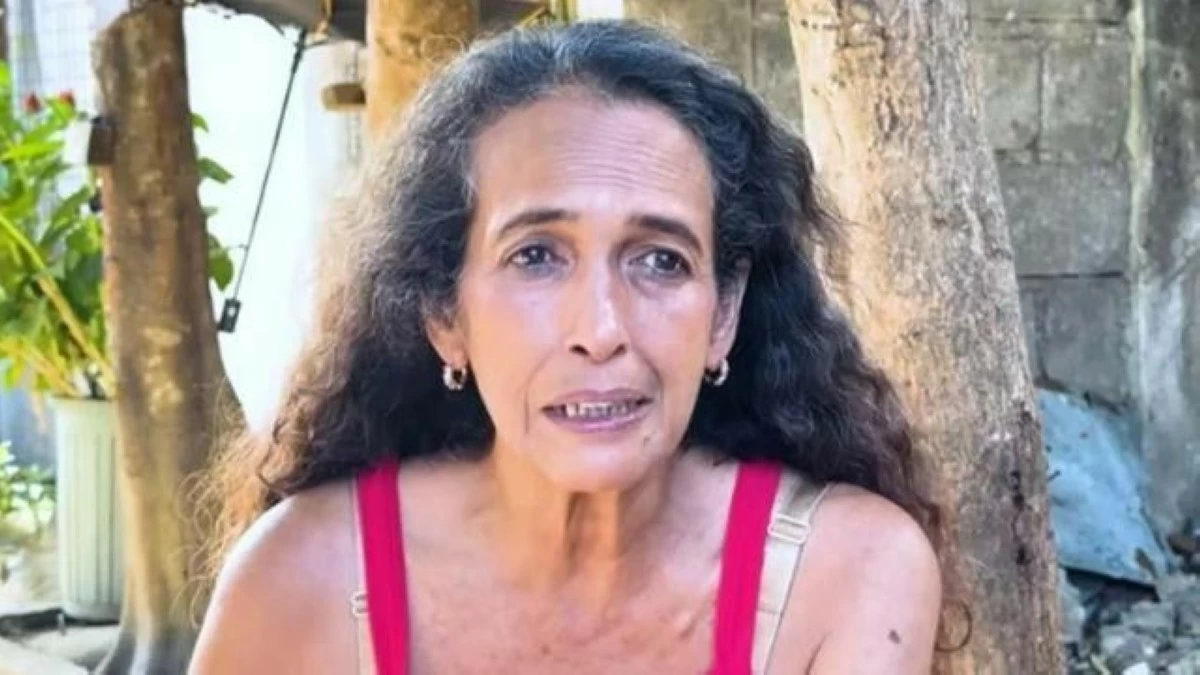
Often one of the few women representing the Philippines on the global stage, Maria Teresa Habitan reflects on her rise through the Department of Finance. Comparing her experience to Hidden Figures, Habitan credits the “strength and clash of principles” among female leaders for navigating the country through historic economic hurdles and legislative battles.

Often one of the few women representing the Philippines on the global stage, Maria Teresa Habitan reflects on her rise through the Department of Finance. Comparing her experience to Hidden Figures, Habitan credits the “strength and clash of principles” among female leaders for navigating the country through historic economic hurdles and legislative battles.

Who knew that helping a friend find her way to a finance job application on Mabini Street could launch a long-term career in fiscal management? For Maria Teresa Habitan, that chance act was the first of many “happy accidents” that would shape her rise to veteran status.

Habitan first stepped through the gates of the Department of Finance (DOF) in the waning years of dictator Ferdinand Marcos Sr.’s collapsing administration. She would exit decades later, shortly after the election of the dictator’s son, Ferdinand Marcos Jr., to the presidency.

Fresh out of university in the 1970s, Habitan soon found herself standing before a whirring, scraping xerox machine, reproducing finance documents, or feeding papers into screeching fax machines to send scanned files.

Moments later, she would find herself seated in a meeting, representing the DOF, being asked— while spooning soup—about matters she barely understood. She would evenetually get quietly rescued by someone else in the room.

Habitan readily admits that, despite earning an economics degree from the University of the Philippines (UP), much of the discussion in those early high-level meetings went over her head.

For the long-serving finance assistant secretary, the first five years of her nearly four-and-a-half-decade career at the DOF were spent reconciling classroom theory with the realities on the ground.

She recalls her first flight to Washington, braving America’s cold weather in a borrowed jacket.

Before long, however, the pressure of navigating the Philippines’ mounting foreign debt set in, forcing Habitan to fully grasp the weight of helping manage a nation’s fragile economy.

“I felt the pressure when the Philippines had a debt crisis in October 1983,” Habitan told this author. Under the fading rule of Marcos Sr., the country became the first in Asia to be swept into the debt crisis of the 1980s—an economic blow compounded by political uncertainty.

To gain breathing room amid swelling obligations to foreign lenders, the Philippines sought a three-month moratorium on debt servicing. Three years later, the International Monetary Fund (IMF) slightly eased its terms, though only within limits, as the country’s debt continued to balloon despite ongoing reforms.

Defense

Several times, Habitan felt the urge to defend the Philippines from foreign ridicule—yet she and her colleagues also shared the instinct to disappear from the judging gaze.

She recalled one such moment during a debt seminar in Thailand, where reports showed ASEAN economies in solid fiscal shape—except for the Philippines. The Mexican resource person repeatedly singled out the country, prompting Habitan and her colleagues to quietly retreat from view.

“There were four of us from the Philippines, all women, and at first we just wanted to go home,” she said. “But over lunch, we ended up at a table with a Mexican speaker—he didn’t even realize there were Filipinos in the seminar.”

After that shared meal, the speaker noticeably eased his focus on the Philippines. “That’s when I realized that charm can actually work,” Habitan told Manila Bulletin, her chin-length, medium-brown bob framing a face that has since become familiar in fiscal circles.

Habitan is often seen in sleeveless tops paired with slacks, or a blazer matched with a knee-length skirt, finished with closed-toe pumps. She typically accents her composed presence with golden pearl stud earrings and a matching necklace.

Standing beside her were three other female officials—a scene reminiscent of the film Hidden Figures, with one crucial difference: these women were not working behind the scenes. They were visibly present, holding their ground in direct dialogue with multilateral lenders.

“Almost all the secretaries and economic managers were men, but all their deputies and undersecretaries were women—and they were incredibly strong,” Habitan said.

“You could see them in action during IMF negotiations, and in the Development Budget Coordination Committee (DBCC) meetings as well. You could really witness the clash of principles—it was impressive,” she added.

Habitan spoke of this with unmistakable feminist pride—a disposition perhaps shaped by her fondness for strong-minded heroines in the novels she read, or maybe by her own taste for the boldly spicy flavors of pinangat.

Still, she acknowledged the difficulty of negotiating with the country’s creditors.

“You feel like a victim. You know you’re at fault—but it’s their fault too. They’re the creditors. So why did they keep lending to us without doing their due diligence?” she said, noting that the hardship was heightened by the fact that the Philippines stood alone with a debt problem at the time.

Part of her regular work involved presenting the more positive developments in Philippine economic policy to debt watchers and the IMF. “It’s like defending your thesis every quarter—with the IMF,” she said.

“We knew what we wanted to do technically—but Congress had to legislate it,” Habitan explained, adding that this legislative hurdle was often the main obstacle to reforms the Department of Finance sought to implement.

‘Lost’ battles

Guided by her philosophy on taxation, Habitan believes that no tax measure is ever truly wasted, given that the legislative process is long and far from instant. If anything, she says, patience is essential, as the passage of future laws is often delayed.

“Pushing for policy reform isn’t instant noodles—it’s a slow burn. You can’t do it all at once. You need to study, and you need to work with people who don’t always agree with you,” she told this author.

Among the reforms that have faced repeated deferment since the DOF’s push in the 1990s are CREATE MORE, fiscal incentives reform, and amendments to the mining law.

Even with this reality, Habitan said the country needs fiscal authorities who are principled enough to firmly hold the DOF’s ground amid public pressure. This, she noted, is often where fiscal managers are misunderstood—mistaken for being “heartless” or “arrogant,” labels she herself has received.

“One can listen and, at the same time, stay firm in one’s position,” she said. “Even if I know I’ll lose the hearing, I put the DOF position on record.”

Now vice chancellor of the Philippine Tax Academy (PTA), overseeing the Local Government Finance Institute (LGFI), Habitan continues to stand by the tax philosophy that defined her career.

For her, “everybody should pay at least a minimum tax—no matter what,” underpinning her belief that taxes are the lifeblood of government, funding services ultimately meant to benefit the people who pay them.

At the same time, she stressed that tax authorities must de-complexify the process of paying taxes. She stressed compliance should be simpler, fairer, and more humane, as red tape only hinders efficient tax collection.

Habitan keeps her fingers crossed for a more informed citizenry, particularly on why tax revenues are collected. For the DOF, meanwhile, she hopes for a corps of staff deeply invested in policy work—engaging stakeholders and advancing comprehensive tax education.

“Taxes are unpopular. Be ready to be unpopular if you’re with the DOF. You’re not here to be loved. You should aim to be respected,” the veteran said, adding that clear principles must be matched with political courage and savviness, as taxes remain “the most difficult kind of legislation.”

Perhaps what would truly make this veteran happy—aside from solving puzzles and binge-watching K-dramas—is witnessing a renewed sense of patriotism, expressed through progressive tax measures.

Pride-worthy, even, if foreign players could take a closer look at how the Philippine government operates and consider it as a model—as was the case with the Philippines being a model of transparency for the extractive industries that Habitan once headed.

24 foreign nationals nabbed for immigration violations


Published May 26, 2026 11:41 pm

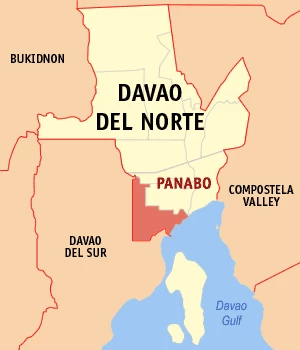
DAVAO CITY – Twenty-four Chinese nationals were arrested on Monday, May 25, in a joint law enforcement operation by the Bureau of Immigration-11, with the 10th Infantry Division, for immigration violations in Barangay New Little Panay in Panabo City, Davao del Norte.

The 10th Infantry Division said the operation was launched following intelligence reports indicating the presence of foreign nationals allegedly engaged in unauthorized employment and operating under questionable immigration documents in the area.

Immigration authorities initially subjected 27 Chinese nationals to verification. Preliminary investigation found out that 24 of them allegedly committed various immigration violations under Commonwealth Act No. 613 or the Philippine Immigration Act of 1940.   

The BI-11 noted that violations include misrepresentation, working without the required visa or permit, and overstaying while engaged in unauthorized employment.

Authorities also discovered that some of the apprehended individuals were allegedly employed by companies other than those that had petitioned for their visas. 

"Others were reportedly working despite holding only tourist visas and lacking the necessary employment permits and work visas," said Major Gen. Alvin Luzon, commander of the 10th Infantry Division.

They are being held at the compound of Tri-Shining International Oil Corp./Kunheting Corp. where immigration authorities are conducting initial processing and documentation.

Luzon said the BI-11 led the enforcement operation as part of the government's intensified campaign against illegal employment and immigration violations involving foreign nationals in the region.

The Army officer underscored the importance of continued inter-agency cooperation in upholding national security and enforcing immigration laws.

"This successful operation reflects the strong coordination among government agencies in addressing unlawful activities involving foreign nationals," Luzon said.

He added that the military remains committed to supporting lawful enforcement operations to ensure public safety and protect national interests within their area of operation.

Luzon said further investigation and documentation are ongoing to determine the full extent of the alleged violations and identify others who may have been involved in illegal activities.

The BI, Luzon said, has yet to announce if deportation proceedings or additional charges will be filed against the foreign nationals pending completion of the investigation.

Davao Light takes over power distribution in 4 Davao del Norte areas


Published May 26, 2026 11:28 pm
DAVAO CITY – Davao Light and Power Co. Inc. (Davao Light) officially assumed electricity distribution services in Tagum City and three municipalities in Davao del Norte starting Tuesday, May 26.
Davao Light president and chief operations officer Enriczar Tia said the areas covered by the Supplemental Writ of Possession include Tagum City and the municipalities of Kapalong, New Corella, and Talaingod.
The takeover covers full operation and maintenance, new service applications, billing and collection, and other customer services.
The sheriff of the Regional Trial Court Branch 2 in Tagum City on Monday implemented the Supplemental Writ of Possession granting Davao Light authority to assume control and begin serving the four areas.
"This marks another major step in the transition of electricity distribution operations in Davao del Norte under Republic Act (RA) No. 12144," Tia said.
RA No. 12144, enacted on April 6, 2025, expanded Davao Light's legislative franchise to include Tagum City, the Island Garden City of Samal, and 19 municipalities across Davao del Norte and Davao de Oro.
The Supplemental Writ of Possession is based on the May 15, 2026 Order of the Court affirming Davao Light's lawful right to expropriate the entire distribution system in Davao del Norte previously operated by the Northern Davao Electric Cooperative Inc. (NORDECO).
"Beginning May 26, electricity consumption in these areas will be billed by Davao Light," Tia added.
He assured that the company is working to ensure stable and reliable electricity service for customers in the covered areas.
"We remain hopeful for the cooperation and coordination of NORDECO to help ensure a safe, orderly, and uninterrupted transition process for consumers and communities." (With PNA)

Cita Astals to make showbiz comeback


Published May 26, 2026 07:28 pm

At A Glance

  • Director Boy2 Quizon confirmed veteran actress Cita Astals is set to return to showbiz after years away from the industry as she joins the upcoming "Home Along Da Riles: Da Reunion" movie.

Veteran actress Cita Astals is set to return to showbiz after years away from the industry as part of the upcoming “Home Along Da Riles: Da Reunion” movie.

This was divulged by director Boy2 Quizon during a recent interview, maintaining that Astals’ participation in the film, where she reprises her role as Hillary Lagdameo, Kevin Cosme’s boss, is already a sure thing.

“Hillary is definitely hundred percent all in,” he said.   

Quizon personally invited Astals to join the reunion, stressing how important her presence is to the venture.

He recalled telling Astals, “Tita, hindi makukumpleto yung reunion project kasi na-miss ka nila.”

It is worth noting that Astals has been away from the entertainment industry for several years after previously opening up about living with bipolar disorder. Her return marks a rare comeback appearance in a major film project.

Quizon said:  “Despite whatever things na nangyayari o pinagdadaanan ng bawat isa sa amin, noong nagkita-kita kami, parang hindi na namin kailangan pag-usapan pa ang detalye as to what’s going on sa mga buhay-buhay namin. So, despite sa, you know, kung anuman, ibabalik namin si Hillary so si Tita Cita, makikita ninyo (sa pelikula). Abangan ninyo.”     

"Home Along Da Riles," which aired from 1992 to 2003 via ABS-CBN, starred the late Comedy King Dolphy alongside Astals, Quizon, Vandolph, Claudine Barretto, Nova Villa, among others.

The fear of death, the hunger for life


Darl Angelica G. Panti 

The stillness of the night always had a way to amplify the thoughts daylight politely ignores. Often the last one awake, I hold the world while I watch it under its breath. While some people count sheep, I count the ways I might suddenly stop existing. What really happens next? Where do I go after I take my final breath? Will I experience the moment as it slips away, or does it simply happen without my awareness?

These thoughts often occupy a space in my mind I never invite them to. Sometimes, just like a soft knock on the door of my consciousness; other nights, it barges in—heavy and impossible to ignore. When people are asked what they think happens after we die, devout and religious people say either heaven or hell, spiritual people say reincarnation, and atheists will say the same thing that happened before we were born—nothing.

When I try to picture “nothing,” I think of a blankness, only for it to collapse into some kind of presence. Even the void I try to imagine has shape and color. Giving up, I just think that maybe the human mind wasn’t naturally built to imagine its own absence.

Sometimes, I picture death just like a deep sleep, where I would dissolve into the quiet and stay there. Other times, I imagine waking up somewhere unfamiliar. Somewhere I would have never imagined it would look like. Then there’s a version I like the most: crossing into a place where everyone I have ever loved is waiting for me. Maybe childish, but it is kind. And when faced with the unknown, kindness feels wiser for me than any certainty. I hold on to that idea because they soften the hard edges of fear, reminding me that even if death comes, there is room for warmth and reunion.

In the Philippines, we treat death as a sacred subject, but not a conversational one. You can pray for the dead, but it’s not nice to talk to the living about what it means to join them one day. As a child, I saw candles being set up in front of the neighborhood’s doors during “undas,” glowing like tiny watch lights, each flame holding the presence of loved ones we have lost. Walking along those streets, I felt fear, as if I were treading along a runway of ghosts. I remember hearing adults murmur about souls and salvation, but never about death itself, never about what it truly meant for life to leave this world.

Filipinos often speak about returning to God, now more than ever, more often than not, but rarely about returning to nothing. We are presented with death as a transition, like being sent to either heaven or hell, and not as cessation. This binary thinking has now become the architecture of our truth. We even minimize this existential distress with humor. We make jokes about dying and ghosts because laughter is easier than honesty. We laugh so we don’t look afraid, sharing anxiety about how short life is and how easily we might be forgotten. Fear veiled in faith, grief hushed with jokes. A part of me resists this quiet obedience, as it seems to me that asking “what comes next?” feels deeply human. Wondering what follows the end of existence is just curiosity, and imagining what I think would happen to me after life on the soils of the earth is a necessary rebellion against inherited beliefs because it is my own afterlife. One that is not dictated by any religious boundaries.

And yet, even with this imagination, fear persists. On nights when that familiar anxiety of death creeps in, I try to meet it not as an intruder but as a strange, awkward friend that reminds me that maybe it’s my earnest desire and unguarded yearning to stay. To keep living in a reality where senses are alive, and emotions are loud. Where I am someone who laughs, aches, and loves. Someone who would constantly think of what lies beyond to cradle the truth that life is temporary and create a comfort only I can make.

Perhaps what terrifies us most is not death itself, but the loss of the humble joys of life. Not being able to witness another sunrise, not hearing another story, not tasting another meal that reminds us of home, not feeling the warmth of another embrace. The fear of losing all of these awakens something deep within, as if the mind is overwhelmed by the beauty of being alive. And perhaps that is why fear of death and hunger for life are inseparable. Our dread, in a way, is our longing. It is the mind insisting we pay attention to the miracle of living while we still can.

Whatever waits at the end, I’ll meet it in time. There is no need to run toward it or away from it. Tonight, I inhale the air in my lungs. I feel the pulse beneath my skin. I notice the small miracle of being able to think, worry, and wonder. And maybe, for now, that is enough.


RAISING LOW SELF-ESTEEM


WE ALL experience moments when we lack confidence and do not feel good about ourselves. However, when low self-esteem becomes a long-term problem, it can seriously affect our mental health and daily lives.

ComScore Observer

Self-esteem refers to the opinion we have of ourselves. When we possess healthy self-esteem, we tend to feel positive about who we are and about life in general. It also helps us cope better with life’s ups and downs.

On the other hand, when our self-esteem is low, we often see ourselves and our lives in a negative and overly critical way. We may also feel less capable of facing the challenges that life brings.

Low self-esteem often begins during childhood. Teachers, friends, siblings, parents, and even the media can send both positive and negative messages about who we are.

Unfortunately, for many people, the message that they are “not good enough” is the one that stays.

Perhaps you found it difficult to meet other people’s expectations or even your own. Stressful and painful life experiences, such as serious illness or the loss of a loved one, can also damage self-esteem.

Personality may also play a role. Some individuals are naturally more prone to negative thinking, while others set unrealistically high standards for themselves.

If you have low self-esteem or lack confidence, you may withdraw from social situations, stop trying new things, and avoid challenges altogether. In the short term, avoiding difficult situations may make you feel safe.

However, in the long run, this behavior can backfire because it reinforces your fears and self-doubt. It teaches you the unhealthy belief that avoidance is the only way to cope.

Living with low self-esteem can harm your mental health and may lead to problems such as anxiety and depression. Some people also develop unhealthy coping habits, such as smoking or excessive drinking.

To improve your self-esteem, you first need to identify the negative beliefs you have about yourself and then challenge them.

For example, you may tell yourself that you are “too stupid” to apply for a new job or that “nobody cares” about you.

Begin by noticing these negative thoughts and writing them down in a diary or on a piece of paper. Then ask yourself when you first started believing these things.

After that, write down evidence that contradicts those negative beliefs. You might remind yourself, “I’m really good at solving cryptic crosswords,” or “My sister calls me every week just to chat.”

List other positive qualities about yourself as well. You may write things like, “I am thoughtful,” “I am a great cook,” or “I am someone people can trust.”

You should also include positive comments that other people have said about you. Try to list at least five good things and continue adding to the list regularly.

Place the list somewhere visible so you can remind yourself each day that you are worthy and capable.

You may struggle with low confidence now because of difficult experiences while growing up, but it is never too late to grow, heal, and develop a healthier way of seeing yourself.

Here are some simple techniques that may help improve your self-esteem:

Build Positive Relationships

If certain people constantly bring you down, try to spend less time with them or honestly tell them how their words and actions affect you.

Instead, build relationships with people who are positive, supportive, and appreciative of you.

Be Kind to Yourself

Being kind to yourself means treating yourself gently, especially during moments when you become overly self-critical.

Think about the kind of advice you would give to a friend facing the same situation. Very often, we are kinder and more understanding toward others than we are toward ourselves.

Being assertive means respecting the opinions and needs of other people while expecting the same respect in return.

One useful technique is to observe people who communicate assertively and learn from the way they carry themselves.

This does not mean pretending to be someone you are not. Rather, it means learning valuable habits and allowing the best version of yourself to emerge.

Start Saying “No”

People with low self-esteem often feel obligated to say yes to others, even when they truly do not want to.

As a result, they may become overworked, resentful, angry, or emotionally exhausted.

In most cases, saying no will not ruin relationships. Sometimes, it simply helps people understand your limits and respect your boundaries.

Give Yourself a Challenge

Everyone feels nervous or afraid at times. However, people with healthy self-esteem do not allow fear to stop them from trying new experiences or taking on challenges.

Set a realistic goal for yourself, such as joining an exercise class or attending a social gathering.

Each achievement, no matter how small, can help build your confidence and strengthen your self-esteem.

***

Email: doringklaus@gmail.com or visit him on Facebook, LinkedIn, or X (formerly Twitter). You may also visit www.germanexpatinthephilippines.blogspot.com or www.klausdoringsclassicalmusic.blogspot.com./PN

UNLIMITED TIME OFF


May be an image of text that says 'MINDANAO DAILY YOUR MINDANAO-WIDE DEVELOPMENTAL NEWSPAPER OPINION HAVE MY SAY SAY KLAUS DORING UNLIMITED UNLIMITEDTIMEOFF TIME OFF www.atiboc/uaIl www.youtube.com MindauaoDallyNewaNetwork www.mlndanaodallynews.com com www.bustnecweknfndanao.com tbecagayandeorotimes@gmual.com'


The Hidden Catch. While the name implies endless vacation, reality often looks different:Fewer days taken: Ironically, studies show employees with unlimited PTO often take less time off (averaging 16 days) compared to those with a capped policy.Approval is still required: You do not have the right to just disappear. Your manager must ensure the business runs smoothly. No payout upon leaving: Since you do not "accrue" or own the time, companies are typically not legally obligated to pay out unused PTO if you quit or get terminated.
Moral and human values are the fundamental beliefs and principles that guide our behavior, define our character, and help us distinguish right from wrong. While human values are universal and promote overall well-being and dignity, moral values are specific guidelines shaped by cultural and societal norms.
In theory, this means employees have no limit on how long they can take time off. As long as they keep up with their workload and manage their time effectively, employees can take the time they need without the traditional caps we usually see with paid time off policies.
Critics say giving workers unlimited time off can actually deter them from taking holidays - so are minimum leave policies the answer? An interesting question by BBC-author Maya Yang... .
It reminds me on my own. For example, I decided to stop doing several jobs facing the age of 70.. I found out that from month to month, I really only got very limited time for myself and my family.
If you are working remotely in the Philippines, local labor laws only require employers to provide 5 days of Service Incentive Leave. If a global tech or remote company offers you "Unlimited PTO," it often serves as a flexible corporate policy rather than a strictly regulated benefit
Unlimited Paid Time Off (PTO) is an employment perk where employees are not granted a fixed number of vacation days. Instead, you can take as much time off as needed, provided your work gets done and your manager approves.
The minimum leave policy is unusual, even for a tech company. Unlimited time off is a much more common perk among start-ups and other tech firms – but despite the name, unlimited leave can feel like anything but. Often, workers are at the mercy of their workloads, managers and company culture, a situation which can discourage people from taking a fair amount of leave.
Could insisting that people take a minimum number of days off be a better way to ward off burnout? Well, maybe. Talking again myself: I am in a great situation deciding about my days off and maybe unlimited time off. Just to avoid a burnout... . How about millions of Filipino workers?
While still staying in Germany, I had the pressure of needing to prove myself and the mentality that I shouldn’t take many days off. Most often, it’s up to management to create a culture where workers feel comfortable taking leave, says Sir Cary Cooper, an organisational psychology professor at the University of Manchester. Many bosses lack the social and perceptive skills to detect employee burnout and remind ambitious employees of the importance of taking breaks.
Creating choices? Why not? While minimum leave policies don’t operate solely on ‘trust’ placed in employees, it’s not a model that is feasible for all companies – for those with tens of thousands of employees, tracking individual and collective leave, let alone scheduling individual holiday check-ins and reminders, would be very difficult to scale.

Tuesday, May 26, 2026

Sad news


Cine Europa returns to Philippines with the ‘best of the best’ European films


Lara Charmaine Lagorra - The Philippine Star 

The Cine Europa returns for its 29th edition, continuing its mission of using cinema as a bridge for cultures, ideas and shared human experiences.

The long-running European film festival once again brings a diverse lineup of films from different European Union Member States to audiences across the Philippines through free screenings nationwide.   

This year’s festival will feature 17 full-length feature films and three documentaries, ranging from historical dramas and fiction to adventure and comedy.

“Over the years, this partnership has grown into more than a collaboration,” said Agata Nowicka, deputy head of mission to the Philippines, during the May 14 launch. “It has become a platform of culture, dialogue and storytelling.”   

The 2026 lineup presents a wide range of themes exploring identity, memory, history and human connection.

Poland gives us the selection with “Lampo the Travelling Dog,” inspired by a true story of a train-riding dog forming unexpected bonds, alongside “Lost of Balance,” a psychological drama about a young acting student confronting self-doubt and emotional pressure.

Belgium’s “Head or Fails” presents a raw exploration of instability and consequence, following individuals trapped in cycles of risky decisions.

The Czech Republic has the film “The Waves,” which revisits the Prague Spring of 1968, when journalists at Czechoslovak Radio risk their lives to broadcast uncensored information under Soviet occupation.   The Slovenian film “Hidden People” explores the unexpected connection between two strangers forced into an unusual situation, while Germany’s “Roter Himmel (Afire)” dives into themes of love, ego and creative struggle.

France’s “Un Ours Dans La Jura” introduces a suspense thriller about a struggling couple whose lives spiral into chaos after discovering a large sum of money following a car accident in the snowy Jura mountains.

“Four Mothers” from Ireland features a humorous yet emotional story about caregiving and family responsibility, while Sweden’s “The Dance Club” follows a group of misfit patients at a psychiatric clinic who form an unlikely alliance through a dance group.

The festival will also present Italy’s “Gloria,” which highlights music and artistic expression in a historical setting, while Austria presents “Sleeping with a Tiger and Peacock,” both examining identity, performance and self-discovery.

Spain’s “Campamento Garra de Oso (Bear Claw Camp)” follows a family adventure film about Maia, an imaginative and spirited girl, and Jan, a fearful city boy, who race to save a summer camp threatened by an eccentric builder.

“How Can I Live Without You” from Hungary is about a young woman named Lili, who discovers her mother’s diary revealing a 1990s summer romance at Lake Balaton that leads to emotional awakening across generations.

“Nasty,” a Romanian documentary, details the life and career of tennis legend Ilie N?stase, while Slovakia’s docu “Andy Warhol: American Dream from Slovakia” explores the artist’s immigrant roots and cultural identity.

Ukraine’s “Simple Soldier” is said to deliver a stark portrayal of an ordinary man navigating the realities of war in eastern Ukraine, reflecting the emotional and psychological toll of conflict.

Other featured films include “Summer is Crazy” from Finland, set in the Finnish archipelago during midsummer, where the Eerola family grapples with disappointments after their fine dining restaurant goes bankrupt.

From Cyprus, the film “Maricel” follows a Filipina domestic worker caring for an elderly couple in a remote mountain village, where what begins as a simple caregiving job gradually unveils questions of personal boundaries within the household.

Also featured is “Sentimental Value,” selected by the European Union Delegation, which tells the story of an aging filmmaker who casts his estranged daughter in his next film in an attempt to reconnect.

When asked by The Philippine STAR during an open forum on why cinema continues to matter in today’s world, particularly in relation to the diverse themes explored in Cine Europa films, Katarzyna Wilkowiecka of Poland said, “It’s sometimes nice to go into the dark room where everybody is sitting, enjoying the big screen with great sound, which is also very important. Even if everything is in front of your eyes, you still use your imagination. And then you go home, you discuss it with friends, with family, or even think about what you’ve seen.”

Ireland’s deputy head of mission, Erica Duffy, also noted that cinema becomes a powerful tool for connection, especially when stories like their film “Four Mothers” reflect universal experiences such as caregiving and family responsibility.

“There are ways that we can connect with one another that me standing giving a speech, or my colleagues discussing what our governments are doing to advance our interests and values, cannot achieve in the same way that storytelling does,” she said.

Germany’s First Secretary, Pia Friedrich, also shared how storytelling strengthens memory.

“You can tell a fact, and you will forget it,” she explained. “But when it is told through a story, it provokes emotion, helps us remember and gets us attached to a topic. This is really how storytelling works, and I truly believe storytelling is everything.”

Slovenia’s Ambassador Smiljana Knez added that audiences engage with films for different reasons —  whether to learn about history, discover similarities across cultures or simply enjoy meaningful cinema.

“People may want to learn about history, or feel good, or relate to something they see on screen,” she said, underscoring the varied ways audiences connect with film.

The festival screenings are all free on a first-come, first-served basis. The Manila screenings will be held at Shangri-La Plaza from May 28 to June 3, followed by free public screenings at Rizal Park from June 15 to 20, on specific screening dates, and the lineup of films to be shown each day.

Expanding its reach beyond Metro Manila, the festival will also bring screenings to Tacloban from June 11 to 15 and Cagayan de Oro from June 29 to July 4.

The detailed screening schedules for venues beyond Manila, including the daily film lineup, are still being finalized and will be announced through the festival’s official website in the coming weeks.