You plan to move to the Philippines? Wollen Sie auf den Philippinen leben?

There are REALLY TONS of websites telling us how, why, maybe why not and when you'll be able to move to the Philippines. I only love to tell and explain some things "between the lines". Enjoy reading, be informed, have fun and be entertained too!

Ja, es gibt tonnenweise Webseiten, die Ihnen sagen wie, warum, vielleicht warum nicht und wann Sie am besten auf die Philippinen auswandern könnten. Ich möchte Ihnen in Zukunft "zwischen den Zeilen" einige zusätzlichen Dinge berichten und erzählen. Viel Spass beim Lesen und Gute Unterhaltung!


Visitors of germanexpatinthephilippines/Besucher dieser Webseite.Ich liebe meine Flaggensammlung!

free counters

Total Pageviews

Tuesday, March 31, 2026

Should I share my money?


No, not if we’re talking about a two wage earner household. I’m 55 (almost 56) and I’ve been married twice.

In my first marriage, my wife did whatever she wanted. She spent money freely and racked up huge amounts of credit card debt. I felt betrayed by her not willing to compromise or live well within our means. It was a one-sided relationship. Because I felt like an unequal partner, I treated her differently. I loved her but there was no spark, romance, or interest really. That led to her also being dissatisfied. She eventually met another man that swept her off her feet. The end result, she divorced me, moved to his home state of New Jersey, and left our two teenagers for me to continue raising (not that I would’ve been okay with them moving away from family and friends in their birth city regardless).

I eventually remarried. My wife and combined everything and we have monthly budget meetings. We have a joint checking account where are salaries are direct deposited, savings, CDs, and even joint brokerage accounts. We share the financial burden of operating our household as well as the joy of preparing for eventual retirement and everything in between.

It hasn’t been easy. In fact, the first 10 years of our marriage had quite a few challenges: blended family and in-laws being the biggest but of course money has been up there (how to spend it, where, and how much is okay or not). I’ll say in the last 1–2 years, our relationship has dramatically improved. We decided to be 100% open, transparent, and willing to accommodate our partner’s requests- listen and do our best to come to a compromise. Even if the other person doesn’t really “feel it”. We’ve both had to temper ourselves, our responses, and learn to be better spouses.

So. To answer your second question - should you share your money? If you look at it as yours and not “ours”, then I’d say that’s the first mental challenge you need to overcome. Some things are meant to be shared equally. I think that includes money and certainly time (chores, household responsibilities, etc).

Monday, March 30, 2026

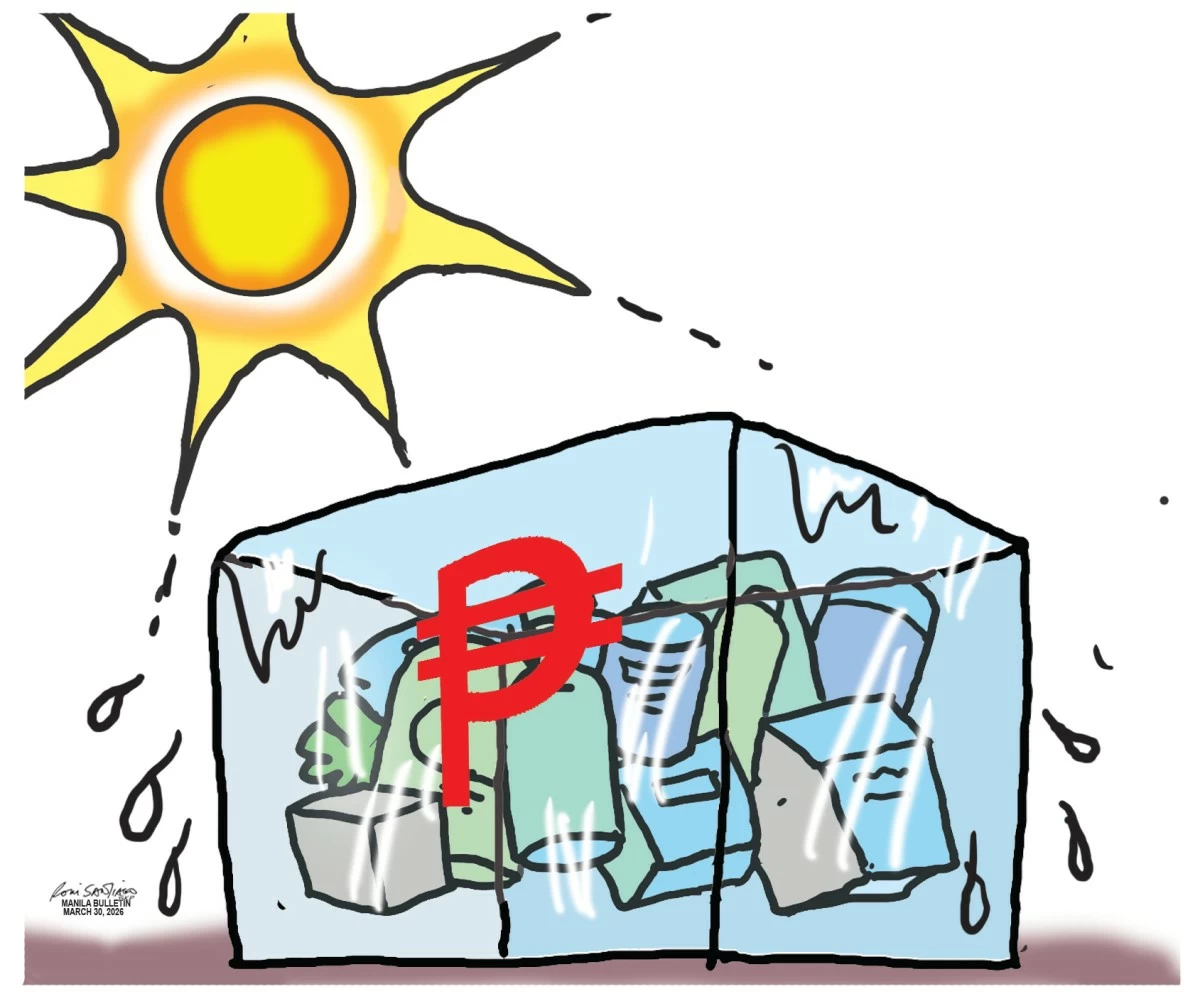
.Strategic price freeze imperative amid crisis


Published Mar 30, 2026 12:05 am | Updated Mar 29, 2026 03:48 pm
The renewed volatility in global oil markets, triggered by escalating tensions in the Middle East, is once again testing the resilience of the Philippine economy. As fuel prices surge, the ripple effects are swiftly felt across sectors. Transportation fares rise, production costs escalate, and inevitably, the prices of basic commodities follow suit. For millions of Filipino households, especially those at the lower end of the income spectrum, this is not merely an inconvenience; it is a matter of daily survival.
Calls for a price freeze on essential goods and basic commodities have thus gained urgency and moral weight. At the heart of this appeal lies a simple but compelling truth. When external shocks threaten to destabilize the economic order, government must act decisively to protect the most vulnerable while preserving overall stability.
Fuel price increases have a uniquely pervasive impact. Unlike other commodities, oil affects nearly every stage of the supply chain: from farm inputs and food transport to manufacturing and retail distribution. As logistics costs climb, food prices become particularly susceptible to continuous upward adjustments. Left unchecked, this can trigger a cycle of inflation that erodes purchasing power, dampens consumer confidence, and constrains economic activity.
The poorest sectors bear the heaviest burden. With already limited incomes, even marginal price increases can force painful trade-offs—less food on the table, deferred healthcare, or children pulled out of school. Inflation, in this context, is not an abstract economic indicator. It is a painful reality that deepens inequality and undermines social cohesion.
The declaration of a national energy emergency under Executive Order No. 110 was a necessary step in addressing supply-side risks and mobilizing government resources. However, its scope notably stops short of directly addressing the cascading effects on food and other essential goods. This gap underscores the need for complementary policy measures that can cushion the immediate impact on consumers.
A carefully calibrated price freeze, limited in duration and scope, can serve as a stabilizing mechanism during periods of extraordinary volatility. It signals government’s resolve to prevent opportunistic pricing and speculative behavior, while giving both producers and consumers a predictable environment in which to operate. Such an intervention, however, must be accompanied by robust enforcement and clear guidelines to avoid unintended consequences such as hoarding, supply shortages, or black-market activities.
Equally important is the need for targeted support to producers and small businesses who may be adversely affected by a price cap. Subsidies, tax relief, or temporary financial assistance can help ensure that supply chains remain intact and that the burden of adjustment is shared equitably across the economy.
Beyond immediate relief, this moment calls for a broader reflection on economic resilience. Strengthening local food production, investing in energy diversification, and enhancing supply chain efficiency are critical to reducing vulnerability to external shocks. Social safety nets must also be reinforced to provide timely assistance to those most in need.
The objective is not to distort markets indefinitely, but to prevent short-term disruptions from evolving into long-term crises. Economic continuity depends as much on maintaining consumer confidence as it does on safeguarding production and distribution systems. A measured price freeze, implemented with transparency and supported by complementary policies, can help achieve this balance.
In times of uncertainty, the role of government as steward of the public good becomes paramount. Ensuring that no Filipino is left behind amid rising prices is not only an economic necessity; it is a moral imperative.

The candidate Miss Universe Philippines erased - and why she refuses to disappear


Published Mar 29, 2026 01:00 pm

The Miss Universe Philippines (MUP) Organization confirmed the removal of an official candidate from this year's competition lineup.

While the organization has yet to disclose the candidate's identity, pageant fans suspect that Miss Universe Philippines Kalibo, Aklan, Imelda Schweighart, was cut from this year's roster.

Filipino-German beauty queen Imelda Schweighart

"Following concerns that were brought to our attention, the organization undertook a careful and thorough review of the matter," the MUP statement read.  

It added, "The delegate was given both verbal and written guidance to help address the situation.

"Despite these efforts, certain behaviors continued in ways that were not aligned with the standards we aim to uphold.

"As such, it has been decided that the delegate will no longer be allowed to continue in the competition," the statement also said.

On social media, Imelda said that her pageant journey continues. Her full post:  

"Ten years ago something massive shifted in my life. It was a collision of light and shadow, the good and the bad, but it whispered a truth I’ve carried every single day since: my journey was never meant to be a quiet moment, it was meant to be a legacy.

"I knew even then, in the heat of the fire a decade ago, that I would return. I didn’t know the how and I didn’t know the when, but I felt the pull of destiny. I’ve spent these years living, learning, and waiting for the perfect moment to step back into the light. Now, standing here feels like living in a movie, a vivid dream with the world as my witness.

"My vision was always different. I didn’t want the standard slender silhouette; I wanted the power and the presence of the Latinas I’ve always admired. It took three years of quiet dedication and six months of the most grueling, intensive conditioning to build this version of myself. I am proud of every muscle, every line, and every ounce of strength I’ve earned. I didn’t just wait for a comeback I built the body to sustain it.

"Whether you cheer or you bash, you are part of this story. The noise didn’t break me; it made me immortal in this game. It made me memorable. I am profoundly grateful because I know I am not walking this path alone. I have sustained this fire for ten years because God is the architect behind it all.

"Temporary noise is just a 24-hour cycle, but resiliency is a lifetime. I didn’t come this far just to be a headline. I am here to be remembered.

"The journey continues."     

At 30, Imelda is no stranger to the pageant world. A Bb. Pilipinas alumna, she claimed the Miss Philippines Earth crown in 2016 and went on to represent the country at Miss Earth 2016 — a stage she knows all too well.

The Filipina-German beauty queen is also a single mother raising an eight-year-old son — a fact that makes her decade-long fight to reclaim the spotlight all the more compelling.

2.48 MILLION BARRELS OF RUSSIAN CRUDE PROCURED

 NEWS UPDATE: 2.48 MILLION BARRELS OF RUSSIAN CRUDE PROCURED

Petron Corp., the country’s only oil refiner, said it has procured a total of 2.48 million barrels of crude oil sourced from Russia as the country faces an energy emergency.
These orders, along with all other crude secured, will beef up the company’s fuel inventory until June, Petron said.
It also noted that the procurement of Russian crude is not part of its business-as-usual sourcing strategy, as the orders were undertaken “strictly out of extreme necessity.”
“A refinery shutdown for failure to secure crude would lead to serious nationwide fuel shortages, sharp price spikes, panic buying, disruption to transportation and logistics, and broader economic dislocation,” the company said in a statement today.
May be an image of newsroom and text that says 'NEWS UPDATE SFR'
All reactions:
You and 191 others

‘Outlier’ PH logs Asia’s sharpest confidence drop


Ian Nicolas P. Cigaral

HONG KONG—Filipino consumers recorded the sharpest drop in confidence in Asia in 2025, as persistent inflation worries, stagnant wages and the fallout from a recent graft scandal weighed on sentiment, a new survey found.

And with the ongoing war in the Middle East stoking local pump prices, effective government intervention is needed to shore up household confidence.

The Philippines stood out as an outlier in the Asia Consumer Study 2026 by Germany-based consultancy Roland Berger. The survey found that 35 percent of Filipino respondents expressed a positive outlook on the future, down from 53 percent in 2024—the steepest decline among 11 Asian markets surveyed.

Roland Berger polled more than 3,500 respondents across the region to track the forces shaping consumer behavior in 2025 and this year.

Hugo Texier, the study’s author and a partner at the firm, said the gloomier outlook largely reflected domestic developments. “Typically, this is driven by a political or economic event,” he said in an interview. “I think there is fear of inflation. I think there is wage stagnation.”

“It doesn’t mean they will not spend, but it means they are more cautious,” he added.

The findings echo the Bangko Sentral ng Pilipinas’ own consumer survey, which showed confidence deteriorating to a pandemic-era low of -22.2 percent in the fourth quarter of 2025.

A negative reading indicates pessimists outnumber optimists. Among the factors that dragged down household sentiment, the central bank said, was a sweeping corruption scandal that has implicated high-ranking government officials.

Roland Berger said the erosion in confidence was making Filipinos more price-conscious. About 22 percent of respondents said they were highly sensitive to prices when making purchases, relying on promotions, bundles and installment schemes to maximize value.

Even so, a larger share—49 percent—still placed the highest priority on product quality in their buying decisions.

Notably, that emphasis on quality is boosting interest in luxury goods. The proportion of Filipino respondents intending to shift toward premium purchases rose to 22 percent in 2025 from a year earlier, with the strongest demand for high-end clothing and footwear (61 percent), jewelry (59 percent) and cosmetics and fragrances (55 percent).

SEE ALSO

Looking ahead, Texier said the ongoing war in the Middle East could trigger a “fundamental” shift in consumption patterns in the Philippines, with households likely to turn more price sensitive.

This, Texier said, should prompt businesses to rethink their strategy.

“Use promotions, bundles, installment options and loyalty programs to appeal to price-conscious consumers,” he said.

Sunday, March 29, 2026

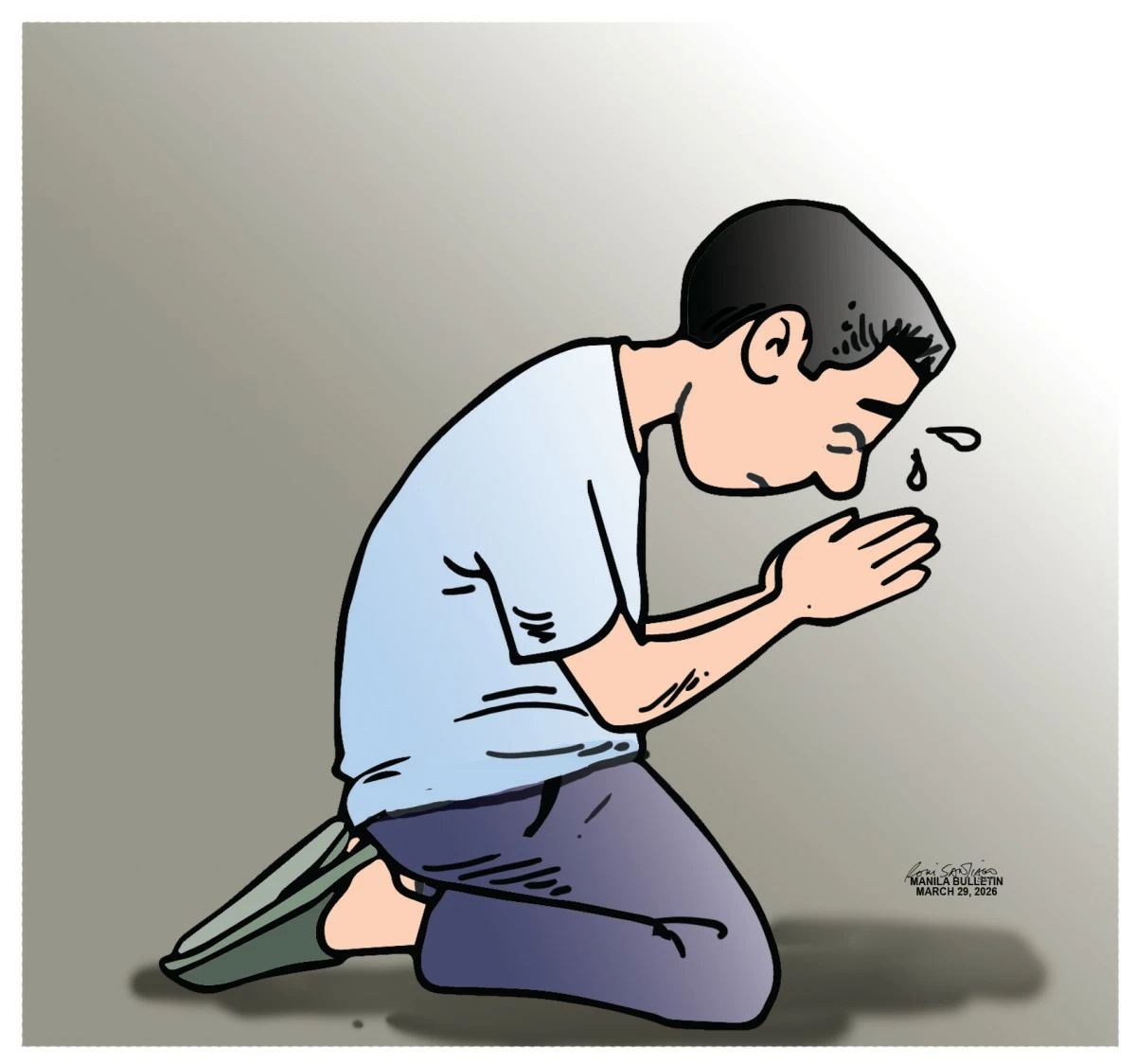
Faith in God in times of crisis


Published Mar 29, 2026 12:05 am | Updated Mar 28, 2026 04:09 pm
The Middle East conflict reminds us how fragile human systems can be. As oil prices surge by double digits, fuel costs rise, transport fares increase, and the prices of basic goods—fish, vegetables, and other staples—follow. This left Filipino households struggling to keep food on the table.
And this points to a deeper question: Where does true provision come from when everything else proves uncertain?
Keep in mind, fuel price shocks are not confined solely to energy markets. They spread swiftly into the cost structures of our daily life. Transport operators adjust fares to offset rising diesel prices. Agricultural producers face increased expenses in cultivation, storage, and distribution. Fisherfolk, already vulnerable, must contend with higher operational costs simply to sustain their livelihoods. Inevitably, these pressures converge in the marketplace, where the prices of essential goods rise beyond the reach of many households.
The result is economic strain, and erosion of food security and household stability.
Government interventions, including cash assistance and targeted subsidies, represent necessary responses to immediate hardship. Yet their impact is often constrained by scale, timing, and sustainability. They address symptoms rather than causes, offering temporary relief without fully arresting the broader, systemic cascade. In this context, reliance on purely human solutions exposes the fragility of systems upon which modern societies have come to depend.
Indeed, the present crisis underscores the uncertainty of material wealth and institutional assurances. Markets fluctuate, supply chains falter, and policies, however well-conceived, remain subject to forces beyond human control.
It is precisely within this uncertainty that a more enduring foundation is revealed. The Bible offers not an escape from economic realities, but a reorientation of trust. Philippians 4:19 affirms, “And my God shall supply all your needs according to the riches of his glory in Christ Jesus.” This declaration does not dismiss the existence of scarcity; rather, it points to a source of provision that transcends it.
Biblical testimony consistently illustrates that divine provision is neither constrained by nor dependent upon conventional systems. In 1 Kings 17, sustenance is delivered through unexpected means during a time of drought, demonstrating that when established channels fail, God delivers provision in a way we do not expect. Similarly, Psalm 37:19 assures that “in times of disaster they will not wither; in days of famine they will enjoy plenty.” Such passages articulate a principle often overlooked in modern discourse: that spiritual fidelity constitutes a form of capital more resilient than material accumulation.
This perspective, however, does not advocate passivity. The exhortation to “be still, and know that I am God” in Psalm 46:10 calls not for disengagement, but for composure anchored in divine sovereignty. It is an invitation to resist fear-driven responses while maintaining clarity of purpose. Complementing this trust is the imperative of stewardship—prudence in the management of resources, discernment in consumption, and, critically, generosity toward others.
In periods of scarcity, the instinct toward self-preservation can overshadow communal responsibility. Yet it is precisely through acts of shared provision that communities endure. The discipline of giving, even when resources appear limited, reflects a confidence in a supply that exceeds visible means.
As Daniel 2:21 reminds us, it is God who “changes times and seasons”. Stability, therefore, cannot be grounded solely in policy or economic design, but must ultimately rest in the sovereignty of God, the one who governs both.
The chain of consequences—from distant conflict to local deprivation—may continue to unfold. Yet it does not possess ultimate authority. Beyond the volatility of markets and the uncertainty of riches stands the enduring certainty of God, our Greatest Provider. And it is in this certainty that both resilience and hope are most securely found.

Davao City celebrates FPRRD's 81st birth anniversary


Published Mar 28, 2026 10:25 pm
THE crowd at former President Rodrigo Duterte's 81st birthday in Davao City. (Photo via Ivy Tejano)
DAVAO CITY – Thousands of supporters joined a Solidarity Walk on Saturday afternoon, March 28, to celebrate the 81st birth anniversary of former President Rodrigo Duterte, who is detained overseas for alleged crimes against humanity.
Participants from the public and private sectors began marching around 4 p.m., wearing green shirts and carrying small and large Philippine, Japanese, and United States flags, as they moved from Roxas Ave. to San Pedro Square for a program.
Supporters holding candles and singing Happy Birthday to the former Chief Executive said the activity aimed to convey their greetings and prayers for the patriarch and expressed hope that he would soon return to Davao City.
In a video message, Davao City first district Rep. Paolo Duterte, who is in The Hague for his father, thanked Filipinos worldwide for celebrating the former Chief Executive's birthday and their continued prayers for his health.
"To my fellow Filipinos in different parts of the world who are celebrating the 81st birthday of President Rodrigo Roa Duterte, thank you very, very much! Thank you for your continued prayers for his health," Rep. Duterte said.
Rep. Duterte thanked thousands of people who sent letters of support to former President Duterte and noted that their messages conveyed encouragement, prayers, and solidarity during a challenging time.
The lawmaker’s siblings, Vice President Sara Duterte, Davao City Mayor Sebastian Duterte, and Veronica Duterte, extended warm greetings and messages, thanking supporters across the country and abroad for celebrating former President Duterte’s birthday.
Vice President Duterte stressed the importance of defending her father’s rights and described it as a matter of national sovereignty and called on the public to remain vigilant against what she called weaponization of the law and foreign interference in the country’s judicial processes.
Sen. Christopher Lawrence Go, a longtime aide of the former President, described the occasion as "the saddest birthday" the patriarch experienced and noted his preference for simple, private celebrations focused on helping people in poverty.
Go recalled his years of service with former President Duterte and described him as more than a father to him. He urged supporters to continue praying for the former President's safety, health, and freedom.
Davao City Councilor Luna Maria Dominique Acosta conveyed birthday wishes, saying that while former President Duterte was not present, his supporters gathered to celebrate on his behalf, emphasizing the widespread support he continues to receive.
"I wish you were here with us today. But since you are not, we will celebrate on your behalf. We are all here –Davao City and the entire nation – so many people love you, Tay! Happy, happy birthday! We love you!" Acosta said.
Former Budget Secretary Wendel Avisado delivered the opening remarks at the program and referred to former President Duterte as "a living hero," drawing applause from the crowd.
Other officials and close associates who attended and delivered messages include former Executive Secretary Salvador Medialdea and Duterte Youth party-list chairman Ronald Gian Carlo Cardema. Medialdea, however, was assisted offstage after appearing unwell during his speech.
Medialdea is a close friend of the former President and accompanied him as his legal representative when he was brought to The Hague on March 12, 2025, in connection with proceedings before the International Criminal Court.
Also present during the activity were former Presidential Legal Counsel and Spokesperson Salvador Panelo, Atty. Jimmy Bondoc, members of the Davao City Council, and local and national government officials.
Thousands of Davaoeños lined up to receive free food and water distributed during the event. Several groups distributed roasted pig, packed lunch, and bottled water to thank attendees.