You plan to move to the Philippines? Wollen Sie auf den Philippinen leben?

There are REALLY TONS of websites telling us how, why, maybe why not and when you'll be able to move to the Philippines. I only love to tell and explain some things "between the lines". Enjoy reading, be informed, have fun and be entertained too!

Ja, es gibt tonnenweise Webseiten, die Ihnen sagen wie, warum, vielleicht warum nicht und wann Sie am besten auf die Philippinen auswandern könnten. Ich möchte Ihnen in Zukunft "zwischen den Zeilen" einige zusätzlichen Dinge berichten und erzählen. Viel Spass beim Lesen und Gute Unterhaltung!


Visitors of germanexpatinthephilippines/Besucher dieser Webseite.Ich liebe meine Flaggensammlung!

free counters

Total Pageviews

Saturday, June 6, 2026

Bea Alonzo breaks social media hiatus, reignites buzz about her personal life


Published Jun 6, 2026 11:23 am

At A Glance

  • Bea Alonzo has finally returned to Instagram after weeks of social media silence. While fans welcomed her comeback, many couldn't help but speculate about the status of her relationship with Vincent Co amid ongoing wedding rumors.
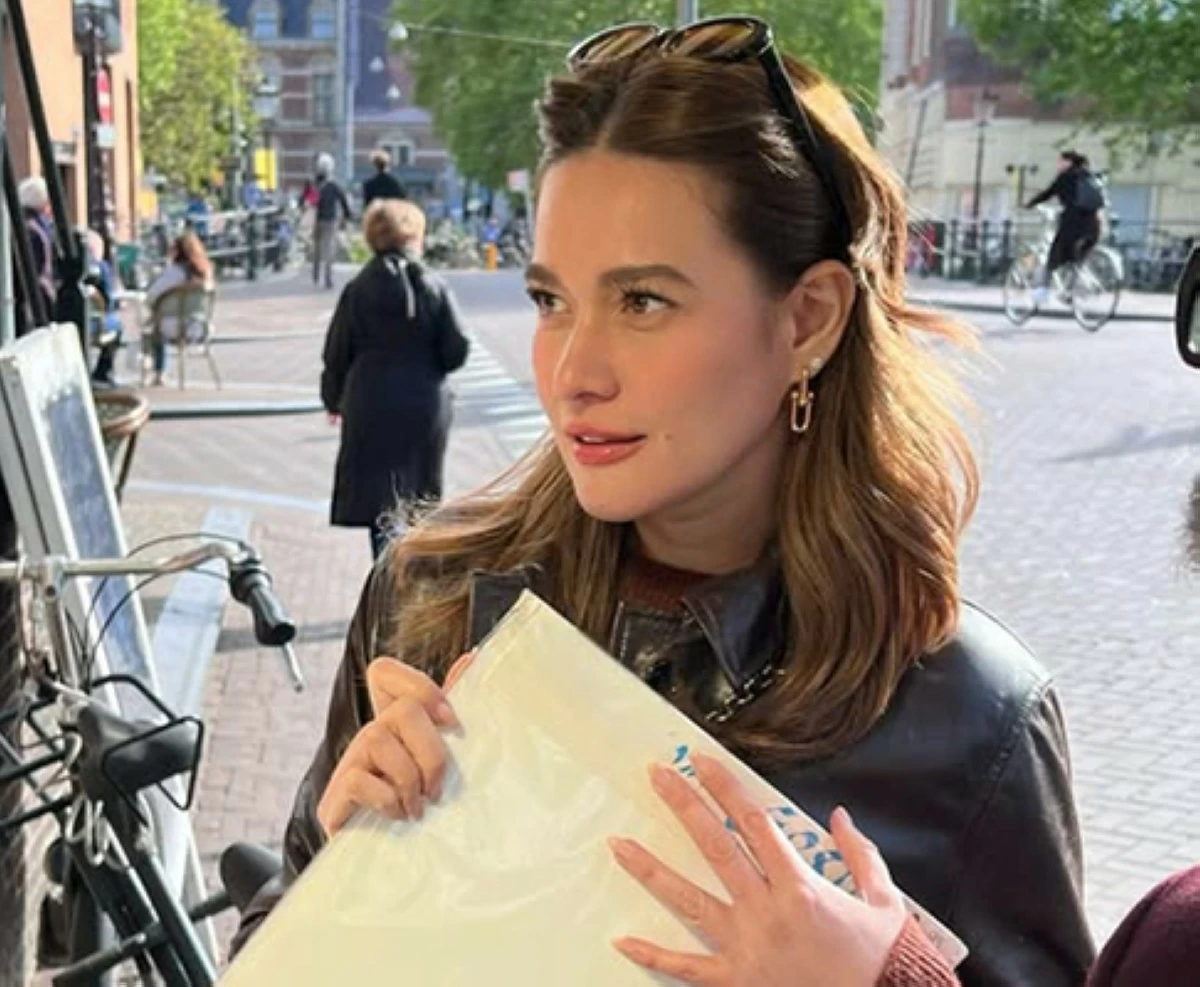
For weeks, Bea Alonzo's social media accounts had been unusually quiet.

At a time when speculation about her rumored wedding to businessman Vincent Co was reaching a fever pitch, the actress chose to stay away from the online noise, offering little insight into what was happening in either her personal or professional life.

That changed recently.  

Bea resurfaced on Instagram with a collection of photos from what appeared to be a recent European trip. The carousel featured candid moments from Amsterdam, London, and Paris, travel snapshots that seemed intended to share a few happy memories rather than make any grand statement.

Yet, as often happens with celebrities, the conversation quickly shifted from where she had been to what fans believed they saw.

While many followers welcomed her return and flooded the comments section with messages of support, others were quick to zero in on a detail they felt was impossible to ignore: Bea appeared to be without her engagement ring in several of the photos.
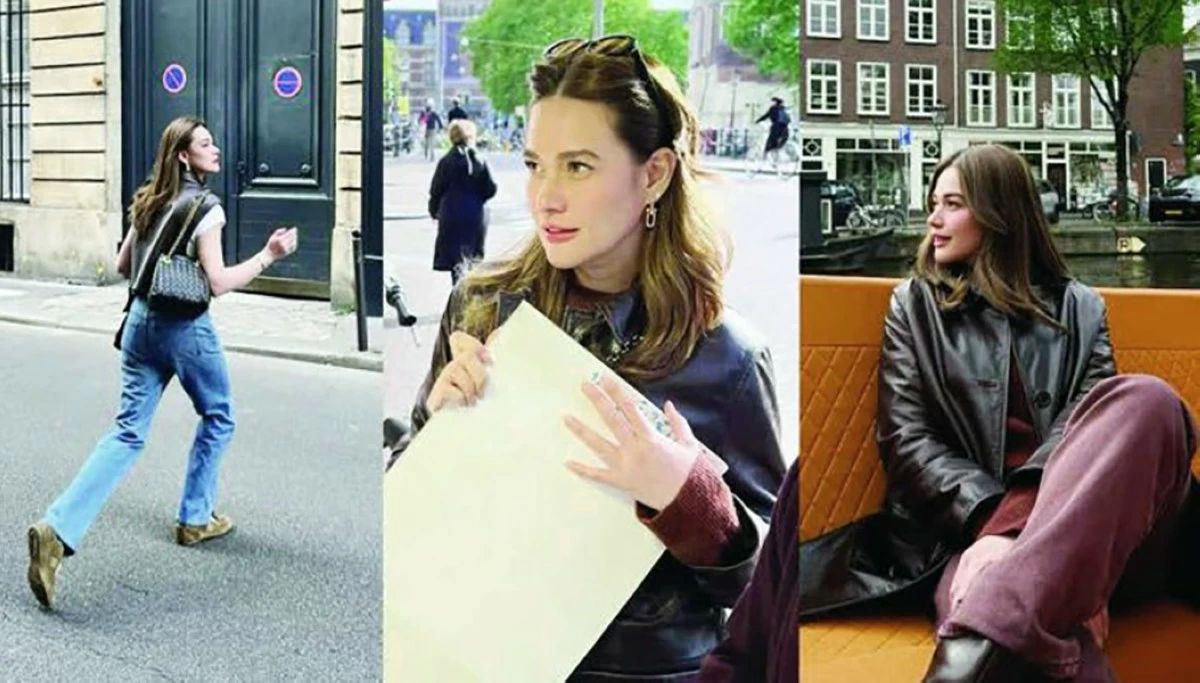
The observation immediately reignited questions surrounding her relationship with Vincent, whose supposed May wedding to the actress has become one of the most talked-about celebrity stories of the year.  

In recent months, rumors have swirled about the couple's plans, particularly after reports emerged that a wedding reportedly scheduled in Spain did not push through as expected.

Since then, neither Bea nor Vincent has publicly clarified the status of their relationship, creating a vacuum that has inevitably been filled by speculation.

As a result, even the smallest details are now being dissected by fans and observers looking for clues.

To be fair, the absence of an engagement ring is hardly definitive proof of anything. Many people choose not to wear expensive jewelry while traveling, while others simply do not wear their rings all the time. Still, given the timing of Bea's post and the unanswered questions surrounding her future with Vincent, it is easy to understand why some fans viewed the photos through a different lens.

Interestingly, Bea's online return comes shortly after she quietly resumed work commitments.

Last month, photos of the actress back on the set of the upcoming GMA series "Whispers From Heaven" surfaced, signaling a return to business as usual despite the persistent rumors surrounding her private life.

Whether Bea intended her latest Instagram post to mark the end of her social media retreat or simply to share moments from her travels, it accomplished something else entirely: it put her back at the center of the conversation.

My childhood playground was the public market of Pavia, Iloilo


 Precious Angel Selorio

It had no swings or slides, only bulanteros’ (ambulant vendors’) tables for pretend houses and a coconut husk bed for a hideout. I was a stranger to our neighborhood kids because I grew up in a family of vendors whose whole life revolved around our little stall. The familiar kids from my elementary school were the same ones I served buko (coconut) juice to while my mom went around the market to sell her homemade pamahaw (breakfast) after class. There was a clear difference when my friends and I’d part ways as they headed to their homes, while I’d find my way to the market. While other kids’ rest started at 4 p.m., my day was just getting started.


At 6:30 p.., my hands moved on their own, bringing the containers of buko juice to the market’s faucet area as we wrapped up for the day. It was one of the highlights of my day—sitting with the adults selling meat products while we washed the dishes and they would remark, “Pisan ka gid nga bata” (You’re such a diligent kid).


At the age of nine, life taught me something I couldn’t learn in the classroom. I memorized the prices of our goods at the same time as the multiplication table. I differentiated states of matter as well as the taste of buko juice when using the extract of buko or niyog. Instead of playing Chinese garter or “shakay” after class, I went straight to the marketplace. Even for a fourth grader who weighs too much for her age, carrying a sack of responsibilities in order to survive was beyond my capacity. That kid will soon outgrow the playground.


The heavens did grant my wish—I was detached from that playground, but at the price of my mother’s illness and the closing of our business. When she struggled to breathe, I learned to commute on my own. The closing of our little stall remained unnoticed in the marketplace, but was the loss of livelihood for our family. That was the first time I came home at 4 p.m. The only difference was that there was no dinner on the table, and no one was home. I was out of the playground—because I was no longer a child. I learned to cook for myself.


I didn’t have any safety net in case I failed, so I strived for what I could only do: study. Even with the leaking house and mountains of debt, I was able to bring a smile to my parents whenever they shared that I was at the top of my class. The same convincing voice I used in the marketplace to sell our products was the same voice I carried as I wrote articles as a campus journalist., and the same effort I put into washing dishes fueled my late-night studying. The same drive that pushed me to leave the marketplace helped me break free from my comfort zone.


If I could tell my 9-year-old self one thing, it would be that life will not wait for you to be ready—not even for a child. You can say that you’re tired, scared, confused, but the world will keep spinning whether you keep up or not. People will say, “Just take a deep breath,” but even breathing comes at a cost when an oxygen tank is worth P5,000. That road ahead will be crowded—jeepney stalls in the middle of traffic, accidents delaying your way—but you will reach your destination. And when you do, you will not only stand taller, but you will also guide people walking on the same difficult path.


Those little moments became the foundation of who I am today. They taught me that education is a privilege—studying in comfort is a luxury, not a guarantee. They taught me resourcefulness, such as when the organization I lead had little to no funds, but still improvised with our creativity. They trained my mind to memorize, solve math problems quickly, and be resilient. Most of all, they taught me that poverty can break a child, and no child deserves to carry responsibilities heavier than their own schoolbag.


The marketplace was my childhood—but it was never a playground. It hardened me through the cruelties of the world and stripped away the innocence I should have enjoyed while it lasted. It had no swings, slides, or playhouse, but became the training ground where I built the strength to face life head-on. It was the playground I never wished for, but it carved who I am today: a student who turned hardship into honor, a leader who turned scarcity into creativity, and an individual who strives to no longer return to the same playground—and to make sure no other child has to. No child should ever mistake labor for play.


Hindi magiging pag-asa ng bayan ang kabataan kung sila mismo ay walang pag-asa sa bayan (The youth will not be the hope of the nation if they themselves have no hope for the nation).


Giving while leaving


By Klaus Döring

Philanthropy is a very interesting topic. Philanthropy comes from the Greek “philein” (to love) and “anthropos” (man) and means a desire to help mankind, especially as shown by gifts to charitable institutions.


Philanthropists love and seek to do good for their fellow men and women and are paying more attention to how they give their money away, especially during this pandemic, when more and more people are losing jobs and businesses are collapsing.


Giving while living is a philosophy and wealth management strategy focused on distributing assets, charitable donations, or financial support during your lifetime, rather than hoarding them to pass on through a will. It allows you to witness the direct impact of your generosity and provides timely financial help to heirs when they need it most.


In times of pandemic, political crisis, and corruption, we might only observe our own pockets becoming emptier and emptier, while others’ overflow. Giving while living? Of course not. Getting and receiving as much as possible seems to me the motto many times.


One of the Bible’s books of poetry, Proverbs, offers advice on every imaginable area of life. The style of wise living described here leads to a fulfilled life. Proverbs 28:27 says: “He who gives to the poor will lack nothing, but he who closes his eyes to them receives many curses!”


In view of a feature in an old issue of the magazine “The Economist,” I learned that Andrew Carnegie (“The King of Steel,” 1835–1919) would surely have approved of Lord David Sainsbury. The supermarket tycoon turned politician was one of Great Britain’s richest men. It was reported that he not only intended to give away at least USD 1.83 billion during his lifetime but also insisted that his charitable foundation spend both its income and capital before he passed away.

Few rich donors have gone this far. But Lord Sainsbury’s decision was part of a broad trend among a new generation of philanthropists to play an active role in seeing that their money is very well spent. Such efforts should be applauded. In his great 1889 essay on wealth, Carnegie, who gave away about USD 7 billion in today’s money, argued that the rich had a duty to use most of their money to benefit the community and should do so actively during their lifetime. Let’s look around to see if we can still find such donors and patrons in our daily lives.


Giving while living is an entrepreneurial approach to philanthropy by which you actively devote your money, skills, and time to making a difference sooner rather than later. You can learn and make adjustments to get the biggest bang — and impact — for your buck. Give smart. Give now.

***

Email: doringklaus@gmail.com, follow me on Facebook, LinkedIn, or X, or visit www.germanexpatinthephilippines.blogspot.com or www.klausdoringsclassicalmusic.blogspot.com.


Our Bureaus

ANTIQUE

Albert Mamora

+63 906 384 5940

BACOLOD

Dolly Yasa

+63 920 592 7958

BORACAY

Sherryl M. Abbey


ROXAS

Ariel Inocencio


KALIBO

Nathan Candelario

THE WAY TO HEAVEN


 Mindanao Daily News
 -   

The path to heaven is a profoundly personal question, with the answer depending on your spiritual framework. Throughout history, different traditions have provided distinct frameworks for achieving ultimate peace, spiritual enlightenment, or eternal life.Explore the paths outlined by major belief systems to understand how different traditions guide followers toward the afterlife:Christianity: The path to eternal salvation is rooted in faith and grace. 

Christians believe that through the life, death, and resurrection of Jesus Christ, the way to heaven is made available as a free gift. It is typically accepted by repenting of sins and trusting in Jesus as Lord and Savior, rather than relying solely on one’s own good works

Driving in big cities is not a joke for beginners. It’s an ordeal, especially driving during heavy traffic hours. One must know where to go and which way to take. Otherwise, one’ll end up bumping somewhere somehow… .

But, driving a car in a small village, where roads are simple, is for neophytes an enjoyable one. No traffic, or less traffic, no traffic lights, no complicated ways… .

In the same way, railroads can make train drivers ill at ease when they are also in big cities. I remember Munich in my home country Germany, where railways appear like spider’s cobwebs. They go in several directions. No wonder, accidents on the roads happen many times.

In life we, too, have roads which lead us in several directions. To go to heaven, man’s eternal destiny, one can either choose the shortest road, or one can make detours. Not so many perhaps fall by the way and end up in eternal damnation.

There are some of us, Christians, who take the shourt-cut road to heaven. This is the road of suffering, of the actual practice of Christian virtues, of serving God and our neighbour. Others take the circuitos road of easy life, thinking that at the end they still have time to amend themselves and lead a good life. This is risky, since no one can guarantee that an opportunity will be given at the eleventh hour. Unfortunately, there are still others, who prefer to take that

An opposite road, which leads to eternal damnation. So they live, so they die! In John Bunyan’s “Pilgrim’s Progress”, we read, “Then I saw that there was a way to hell, even from the gates of heaven!”

Homo sapiens, quo vadis?