
FROM THE MARGINS
The global movement for financial inclusion has achieved remarkable progress over the past decade. Millions of previously unbanked individuals now have access to savings accounts, digital payments, and other financial services. Yet amid these gains, one critical gap remains stubbornly wide: protection against life's uncertainties.
This reality was at the heart of the “Insurance 4 ALL” Day, a high-level forum on inclusive insurance convened by CGAP and AXA EssentiALL on May 27 at AXA's headquarters in Paris, France. Around 180 participants from across the world gathered to discuss how insurance can reach those who need it most, particularly low-income and vulnerable communities. The event featured prominent global leaders, including Her Majesty Queen Máxima of the Netherlands, the United Nations Secretary-General's Special Advocate for Financial Health, Sophie Sirtaine, CEO of CGAP, and Garance Wattez-Richard, CEO of AXA EssentiALL.
Throughout the day, one issue stood out: an estimated 3.5 billion people worldwide still lack access to insurance protection. While financial inclusion efforts have successfully expanded access to banking and payments, billions remain exposed to risks such as illness, natural disasters, crop failure, loss of livelihood, and death.
I was honored to participate in a panel discussion on "The Emergence and Consolidation of Dedicated Inclusive Insurance Organizations." Our conversation centered on a question that has long guided my work in microfinance and social development: How can we ensure that low-income families are protected from financial shocks that can erase years of hard-earned progress?
For many years, I have advocated that financial inclusion must go beyond access to credit and savings. True financial inclusion must include protection. A family may gradually build assets, strengthen a microenterprise, and improve its quality of life, but a single crisis can quickly reverse these gains. Without adequate protection, financial inclusion remains incomplete.
We discussed this in a recent episode of the Ka-Nayon podcast, which featured Junjay Perez of RIMANSI/Microinsurance MBAs Association of the Philippines and Me-an Ignacio of Kasagana-Ka Credit and Savings Cooperative. Both shared how microinsurance has become an important pillar of resilience among low-income Filipinos. Their experiences highlighted that insurance is more than a financial product – it is a practical tool that helps families recover from setbacks, preserve their livelihoods, and avoid falling deeper into poverty.
One of the key themes discussed in Paris was the importance of building trust at the last mile. Traditional insurance models often struggle to reach low-income communities because of high distribution costs, small premiums, and limited physical access. As a result, many marginalized households remain outside formal protection systems.
Dedicated inclusive insurance organizations have emerged to address this challenge. Across many countries, insurance is increasingly being delivered through community-based mechanisms such as cooperatives, microinsurance mutual benefit associations (MBAs), microfinance institutions, and even postal networks. These organizations possess something that large institutions often lack: close relationships with the communities they serve. Their local presence enables them to educate clients, simplify products, and build the trust necessary for insurance to take root.
The Philippine experience demonstrates the potential of this approach. Through strong partnerships among microfinance institutions, cooperatives, and mutual benefit associations, millions of Filipinos have gained access to affordable insurance products tailored to their needs. These efforts have shown that inclusive insurance can achieve both scale and meaningful impact when delivered through institutions that understand the realities of low-income households.
The forum also highlighted the growing role of technology in closing the protection gap. Artificial intelligence, digital platforms, and InsurTech solutions are helping insurers improve efficiency, reduce costs, strengthen fraud detection, and simplify claims processing. These innovations can make insurance more accessible and affordable, particularly for underserved populations that have traditionally been difficult to reach.
Technology alone, however, is not enough. The success of inclusive insurance depends on combining digital innovation with trusted local institutions that understand the needs and circumstances of the people they serve. Human relationships remain at the heart of financial protection.
Another recurring theme throughout the discussions was climate resilience. Around the world, low-income communities are increasingly vulnerable to climate-related shocks, from severe storms and floods to prolonged droughts and crop losses. For countries such as the Philippines, where natural disasters are a recurring reality, insurance plays an increasingly important role in helping families and communities recover and rebuild.
The message from the Insurance 4 ALL Forum was clear: closing the global protection gap will require collaboration among regulators, insurers, technology providers, development organizations, and community-based institutions. More importantly, it will require a shared commitment to ensuring that financial health includes not only opportunities to build wealth, but also mechanisms to protect it.
Insurance for all is more than an industry aspiration. It is an essential component of financial inclusion, economic resilience, and human dignity. If we are serious about creating a world where no one is left behind, then ensuring access to meaningful financial protection must become a global priority.
* * *
“Life is unpredictable; insurance makes it manageable.” — Unknown
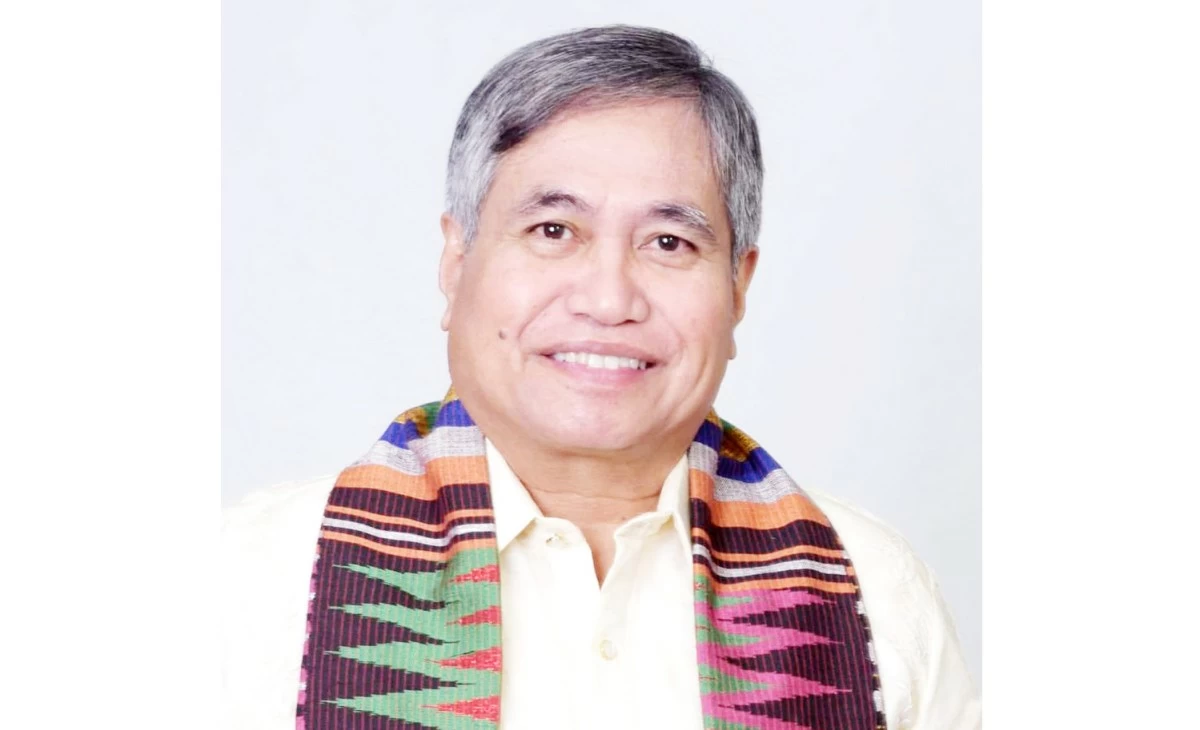
(Dr. Jaime Aristotle B. Alip is a poverty eradication advocate. He is the founder of the Center for Agriculture and Rural Development Mutually-Reinforcing Institutions (CARD MRI), a group of 23 organizations that provide social development services to 8 million economically-disadvantaged Filipinos and insure more than 27 million nationwide.)
