You plan to move to the Philippines? Wollen Sie auf den Philippinen leben?

There are REALLY TONS of websites telling us how, why, maybe why not and when you'll be able to move to the Philippines. I only love to tell and explain some things "between the lines". Enjoy reading, be informed, have fun and be entertained too!

Ja, es gibt tonnenweise Webseiten, die Ihnen sagen wie, warum, vielleicht warum nicht und wann Sie am besten auf die Philippinen auswandern könnten. Ich möchte Ihnen in Zukunft "zwischen den Zeilen" einige zusätzlichen Dinge berichten und erzählen. Viel Spass beim Lesen und Gute Unterhaltung!


Visitors of germanexpatinthephilippines/Besucher dieser Webseite.Ich liebe meine Flaggensammlung!

free counters

Total Pageviews

Monday, June 8, 2026

Subtle warning from Washington


Published Jun 8, 2026 08:00 am | Updated Jun 6, 2026 03:38 pm
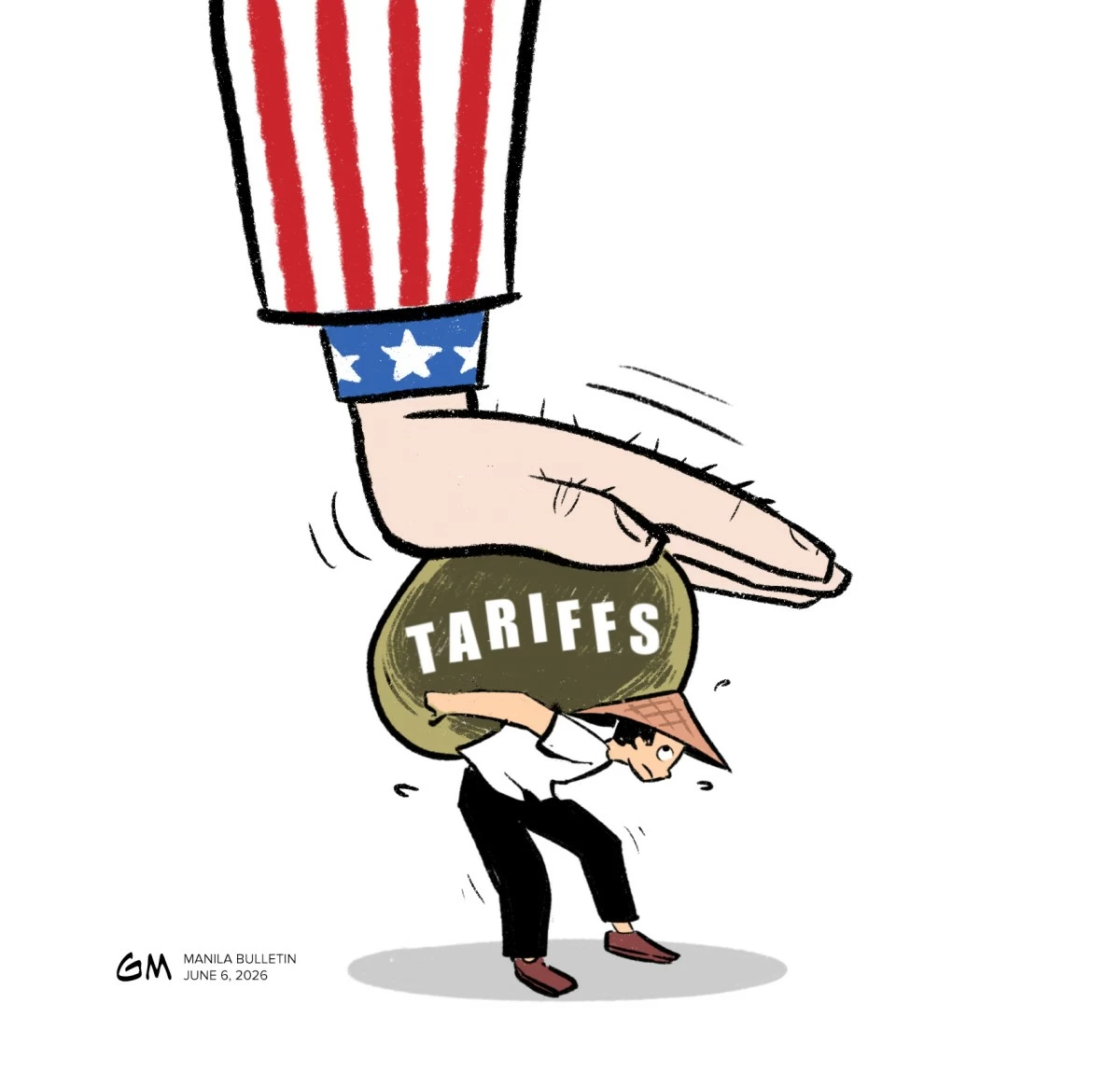
The relationship between Washington and Manila has found a steady rhythm lately, anchored by shared security concerns in the Pacific and the mutual desire to keep supply chains running smoothly. But we all know that trade diplomacy rarely follows a straight line. A new issue is emerging, not from territory or defense agreements, but from the fine print of global labor standards.
The Office of the United States (US) Trade Representative recently wrapped up an investigation into dozens of trading partners, concluding that 54 economies—including the Philippines—are failing to properly block imports made with forced labor.
Under Section 301 of the US Trade Act, Washington is now proposing an additional 12.5 percent tariff on several of Philippine exports.
The explanation from a US trade representative is that when countries do not enforce these import bans, it creates an uneven playing field, giving an artificial cost advantage to companies using exploitative practices.
To its credit, the Philippine government is not taking the accusation sitting down. The Department of Trade and Industry (DTI) quickly pointed out that Manila possesses a robust domestic legal framework against forced labor, grounded in constitutional protections and international commitments.
The lack of an explicit statutory ban on importing these goods, the DTI argued, should not be misread as tolerance for the practice. Meanwhile, local industry groups, led by the Philippine Exporters Confederation Inc. (Philexport), maintain that domestic exporters strictly adhere to global labor standards. They are asking a fair question: if there are specific violations, where exactly are they coming from?
The good news is that the sky is not falling just yet. The proposed duties are not final, and a comment period runs until early July. More importantly, Washington was careful to exempt the crown jewels of the bilateral trade relationship.
Top export commodities like semiconductor devices, nickel ores, and agricultural staples—including coconuts, bananas, and pineapples—are shielded from the potential tariffs. By leaving these vital sectors untouched, the US has signaled that this is a regulatory warning rather than an economic sledgehammer.
Yet, treating this as a minor bureaucratic hurdle would be a mistake. The global trade landscape is shifting. Western consumers and regulators are increasingly looking past the final product to examine how raw materials are sourced and how supply chains are managed.
For a developing economy like the Philippines, maintaining a reputation as a clean, compliant, and reliable manufacturing hub is essential to attracting longterm foreign investment.
Manila’s current defense—that its internal laws are strong even if its import restrictions are technically incomplete—is a reasonable legal argument, but it may not hold up forever in a changing global market.
If the problem is simply a missing piece of regulatory architecture, the path forward is clear. Rather than arguing over the fairness of the US report, Philippine lawmakers and trade officials should focus on closing the statutory gaps.
There is a window of opportunity before the July deadlines for constructive dialogue. The US should provide the specific data Manila is asking for, allowing local authorities to investigate and address any blind spots.
In return, the Philippines should show a concrete commitment to aligning its customs regulations with international expectations.
Trade disputes between close allies do not have to end in penalties. If handled with pragmatic diplomacy, this episode can serve as a helpful push to modernize the country’s trade rules, ensuring that Philippine goods remain competitive and welcome in the world’s largest market.


Dadiangas University Integrated Basic Education Department in General Santos City collapses

 A building in the Notre Dame of Dadiangas University Integrated Basic Education Department in General Santos City collapses on Monday, June 8, after a 7.8 magnitude earthquake rocked Mindanao at 7:37 am.
Public schools in the Philippines opened a new academic year the same morning. Photos by Edwin Espejo

111
574

Insurance for all: Closing the protection gap


Published Jun 8, 2026 12:05 am | Updated Jun 7, 2026 04:03 pm
FROM THE MARGINS
The global movement for financial inclusion has achieved remarkable progress over the past decade. Millions of previously unbanked individuals now have access to savings accounts, digital payments, and other financial services. Yet amid these gains, one critical gap remains stubbornly wide: protection against life's uncertainties.
This reality was at the heart of the “Insurance 4 ALL” Day, a high-level forum on inclusive insurance convened by CGAP and AXA EssentiALL on May 27 at AXA's headquarters in Paris, France. Around 180 participants from across the world gathered to discuss how insurance can reach those who need it most, particularly low-income and vulnerable communities. The event featured prominent global leaders, including Her Majesty Queen Máxima of the Netherlands, the United Nations Secretary-General's Special Advocate for Financial Health, Sophie Sirtaine, CEO of CGAP, and Garance Wattez-Richard, CEO of AXA EssentiALL.
Throughout the day, one issue stood out: an estimated 3.5 billion people worldwide still lack access to insurance protection. While financial inclusion efforts have successfully expanded access to banking and payments, billions remain exposed to risks such as illness, natural disasters, crop failure, loss of livelihood, and death.
I was honored to participate in a panel discussion on "The Emergence and Consolidation of Dedicated Inclusive Insurance Organizations." Our conversation centered on a question that has long guided my work in microfinance and social development: How can we ensure that low-income families are protected from financial shocks that can erase years of hard-earned progress?
For many years, I have advocated that financial inclusion must go beyond access to credit and savings. True financial inclusion must include protection. A family may gradually build assets, strengthen a microenterprise, and improve its quality of life, but a single crisis can quickly reverse these gains. Without adequate protection, financial inclusion remains incomplete.
We discussed this in a recent episode of the Ka-Nayon podcast, which featured Junjay Perez of RIMANSI/Microinsurance MBAs Association of the Philippines and Me-an Ignacio of Kasagana-Ka Credit and Savings Cooperative. Both shared how microinsurance has become an important pillar of resilience among low-income Filipinos. Their experiences highlighted that insurance is more than a financial product – it is a practical tool that helps families recover from setbacks, preserve their livelihoods, and avoid falling deeper into poverty.
One of the key themes discussed in Paris was the importance of building trust at the last mile. Traditional insurance models often struggle to reach low-income communities because of high distribution costs, small premiums, and limited physical access. As a result, many marginalized households remain outside formal protection systems.
Dedicated inclusive insurance organizations have emerged to address this challenge. Across many countries, insurance is increasingly being delivered through community-based mechanisms such as cooperatives, microinsurance mutual benefit associations (MBAs), microfinance institutions, and even postal networks. These organizations possess something that large institutions often lack: close relationships with the communities they serve. Their local presence enables them to educate clients, simplify products, and build the trust necessary for insurance to take root.
The Philippine experience demonstrates the potential of this approach. Through strong partnerships among microfinance institutions, cooperatives, and mutual benefit associations, millions of Filipinos have gained access to affordable insurance products tailored to their needs. These efforts have shown that inclusive insurance can achieve both scale and meaningful impact when delivered through institutions that understand the realities of low-income households.
The forum also highlighted the growing role of technology in closing the protection gap. Artificial intelligence, digital platforms, and InsurTech solutions are helping insurers improve efficiency, reduce costs, strengthen fraud detection, and simplify claims processing. These innovations can make insurance more accessible and affordable, particularly for underserved populations that have traditionally been difficult to reach.
Technology alone, however, is not enough. The success of inclusive insurance depends on combining digital innovation with trusted local institutions that understand the needs and circumstances of the people they serve. Human relationships remain at the heart of financial protection.
Another recurring theme throughout the discussions was climate resilience. Around the world, low-income communities are increasingly vulnerable to climate-related shocks, from severe storms and floods to prolonged droughts and crop losses. For countries such as the Philippines, where natural disasters are a recurring reality, insurance plays an increasingly important role in helping families and communities recover and rebuild.
The message from the Insurance 4 ALL Forum was clear: closing the global protection gap will require collaboration among regulators, insurers, technology providers, development organizations, and community-based institutions. More importantly, it will require a shared commitment to ensuring that financial health includes not only opportunities to build wealth, but also mechanisms to protect it.
Insurance for all is more than an industry aspiration. It is an essential component of financial inclusion, economic resilience, and human dignity. If we are serious about creating a world where no one is left behind, then ensuring access to meaningful financial protection must become a global priority.
* * *
“Life is unpredictable; insurance makes it manageable.” — Unknown
(Dr. Jaime Aristotle B. Alip is a poverty eradication advocate. He is the founder of the Center for Agriculture and Rural Development Mutually-Reinforcing Institutions (CARD MRI), a group of 23 organizations that provide social development services to 8 million economically-disadvantaged Filipinos and insure more than 27 million nationwide.)

Four more mild quakes hit Sarangani; Phivolcs releases updated intensities


By Aaron Recuenco

Published Jun 8, 2026 09:23 am


At least four more earthquakes jolted Sarangani shortly after a 7.8 magnitude quake hit the coast of the province on Monday morning, the Philippine Institute of Volcanology and Seismology (Phivolcs).

The epicenter of the strong tremor that shook the province at 7:37 a.m. was located near Maasim town and triggered a tsunami warning for residents in the coastal areas of western and central parts of Mindanao.

The second quake, which is believed to be an aftershock, was felt at 8:18 a.m. with a magnitude of 3.7, the epicenter located near Balut Island of Saragani.

At 8:35 a.m., a 1.9 magnitude quake struck anew and its epicenter was located in Malapatan of the same province. Intensity II was felt in General Santos City and Intensity 1 in Kiamba town.

A few minutes later or at 8:44 a.m., another tremor measuring 2.5 in the Richter scale was recorded in Gian town, also in Sarangani. This was followed by another quake measuring 1.9 magnitude, with the epicenter located near the same town of the province.

Reported intensities

Shortly after releasing a report of the earthquake, Phivolcs reported an updated advisory on the reported intensities felt during the 7.8 magnitude quake that hit Sarangani.

Reported intensities refers to the measures of the specific strength and effects of an earthquake at a particular geographic location.

It is based on human observations and structural damage rather than the total energy released at its source

According to Phivolcs, the strongest ground shake was felt in General Santos City with Intensity VII followed by Palimbang and Senator Ninyo Aquino towns in Sultan Kudarat with Intensity VI.

Intensity V was felt in Davao City; Kidapawan City and Carmen town of Cotabato; Bagumbayan, Kalamansig and President Quirino in Sultan Kudarat; and Sibuco, and Siocon in Zamboanga del Norte.

Intensity IV, on the other hand, was felt in Mati City in Davao Oriental; Buug in Zamboanga Sibugay; and Caraga, Manay and Tarragano in Davao Oriental; Kumalarang and Vincenzo Sagun in Zamboanga del Sur, felt Intensity III tremor.

Intensity II was recorded in Dipolog City, Labason, Liloy, President Manuel A. Roxas, and Salug, in Zamboanga del Norte; Alicia, Ipil, Mabuhay, Olutanga, and Siay, in Zamboanga Sibugay; Molave in Zamboanga del Sur.

Intensity II was also felt in Abuyog, and Dulag in Leyte and San Francisco in Southern Leyte.

Instrumental intensities

Instrumental intensity refers to the measured physical strength of an earthquake at a specific location. It is calculated objectively using data from scientific instruments like seismometers or accelerometers.

And according to Phivolcs, Intensity VIII was felt in Malapatan, Sarangani and Intensity VII in Koronadal City and Santa Maria in Davao Occidental.

Intensity VI was felt in General Santos City and T'boli, South Cotabato.

Intensity V in Maasim,Sarangani; Santo Niño, and Surallah, South Cotabato; Isulan,

Lebak, and President Quirino in Sultan Kudarat; Davao City; Digos City and Magsaysay in Davao del Sur.

Intensity IV in Kiamba, Malungon, in Sarangani; Banga, and Tupi in South Cotabato; Magpet and M'lang in Cotabato; Bagumbayan, and Kalamansig in Sultan Kudarat; Nabunturan in Davao de Oro; and. Zamboanga City.

Intensity III in Tantangan, South Cotabato; Columbio, Esperanza, Sultan Kudarat; Alamada, Banisilan, Carmen, President Roxas in Cotabato; Kalilangan in Bukidnon; City of Gingoog in Misamis Oriental.

Intensity II in Kumalarang, Zamboanga del Sur; Tubod in Lanao del Norte; City of Malaybalay, and Libona in Bukidnon; Molave, Zamboanga del Sur; Cagayan de Oro City; Sindangan in Zamboanga del Norte; and, Balingasag in Misamis Oriental.

Intensity I in Malitbog Bukidnon and Magsaysay in Misamis Oriental.

Earthquake Hits Gensan

 Mindanao Daily News