You plan to move to the Philippines? Wollen Sie auf den Philippinen leben?

There are REALLY TONS of websites telling us how, why, maybe why not and when you'll be able to move to the Philippines. I only love to tell and explain some things "between the lines". Enjoy reading, be informed, have fun and be entertained too!

Ja, es gibt tonnenweise Webseiten, die Ihnen sagen wie, warum, vielleicht warum nicht und wann Sie am besten auf die Philippinen auswandern könnten. Ich möchte Ihnen in Zukunft "zwischen den Zeilen" einige zusätzlichen Dinge berichten und erzählen. Viel Spass beim Lesen und Gute Unterhaltung!


Visitors of germanexpatinthephilippines/Besucher dieser Webseite.Ich liebe meine Flaggensammlung!

free counters

Total Pageviews

Friday, June 5, 2026

Erschreckende Zahl der Deutschen kann nachts nicht mehr schlafen


A lonely woman feeling blue at her luxury apartment in a big city, sitting in a luxury domestic setting, deep in thought and self-reflection.
Viele Menschen können nachts nicht durchschlafen
Quelle: Getty Images/Yana Iskayeva

Der Anteil der Erwachsenen mit Schlafstörungen hat sich in Deutschland in den vergangenen Jahren deutlich erhöht. Das berichten Experten des Robert-Koch-Instituts. Bei den Ursachen wird auch auf Smartphones verwiesen.    

Schlaf ist eine wichtige Grundlage unserer Gesundheit. Während wir schlafen, erholt sich der Körper, repariert Zellen und stärkt das Immunsystem. Das Gehirn verarbeitet Eindrücke, speichert Gelerntes und sortiert Informationen. Wer ausreichend schläft, kann sich besser konzentrieren, klarer denken und emotional stabiler reagieren.

Mehr WELT-Artikel für Sie bei Google

Google bietet eine neue Funktion an: Nutzer können festlegen, welche Nachrichtenquellen bei aktuellen Suchanfragen hervorgehoben werden. Mit wenigen Klicks machen Sie WELT zu Ihrer bevorzugten Quelle.
JETZT EINSTELLEN

Dauerhafter Schlafmangel aber erhöht das Risiko für Übergewicht, Diabetes, Bluthochdruck, Infekte und psychische Belastungen wie Stress, Angst oder depressive Verstimmungen. Mehr als ein Drittel der Menschen in Deutschland gibt an, regelmäßig Schlafprobleme zu haben.

Fast jeder Dritte (knapp 32 Prozent) berichtete in einer Befragung des Robert-Koch-Instituts (RKI) von Durchschlafstörungen, rund jeder Sechste (gut 16 Prozent) von Problemen beim Einschlafen. Ein Teil der Befragten gab an, von beidem betroffen zu sein (fast 13 Prozent). Die Ergebnisse beruhen auf einer Befragung von mehr als 14.000 Frauen und mehr als 12.000 Männern im Jahr 2024.   

Insgesamt schlafen die Menschen in Deutschland im Schnitt schlechter als noch vor etwa 15 Jahren, wie aus dem Beitrag im „Journal of Health Monitoring“ hervorgeht: Im Zeitraum 2008 bis 2011 hatten rund 30 Prozent der Erwachsenen Schlafprobleme, 2024 waren es gut 35 Prozent. Dieser Wert liegt aufgrund der doppelt Betroffenen niedriger als die Summe der Ein- und der Durchschlafstörungen.

Die Autoren des Berichts haben dafür verschiedene Erklärungsansätze: Zum einen könne die gestiegene Smartphone-Nutzung eine Rolle spielen, aber auch die verschiedenen gesellschaftlichen Krisen – von Pandemiefolgen über den Klimawandel hin zu militärischen Konflikten.     

Frauen sind der Befragung aus dem Jahr 2024 zufolge häufiger betroffen als Männer. Die Experten erklären dies zum einen mit hormonellen Veränderungen etwa während Schwangerschaften oder den Wechseljahren sowie mit einem höheren Risiko etwa für Depressionen und Angststörungen, die oft mit Schlafproblemen einhergehen.   

Wenn Schlafprobleme länger anhalten und sich negativ auf die Leistungsfähigkeit und die sonstige Lebensqualität auswirken, kann es sich um eine Insomnie – also eine krankhafte Schlafstörung – handeln. Die RKI-Experten empfehlen, sich ärztlichen Rat zu holen, wenn Schlafprobleme über längere Zeit anhalten.


Darüber hinaus könne man sich um eine gute Schlafhygiene bemühen – also etwa feste Schlafenszeiten, keine Smartphone-Nutzung direkt vor dem Schlafen, kein Alkohol, Koffein oder Nikotin.

GUTE BESSERUNG!

Der Ratgeber-Newsletter für alle, die sich über Gesundheit, Erkrankungen und Medizin informieren möchten. Immer freitags.

Guter Schlaf ist also kein Luxus, sondern eine wichtige Voraussetzung für körperliche Regeneration, geistige Leistungsfähigkeit und seelisches Gleichgewicht. Wer regelmäßig ausreichend und erholsam schläft, unterstützt langfristig Wohlbefinden, Widerstandskraft und Lebensqualität.

dpa/dia

A calm and gentle disposition


By Fr. Roy Cimagala

Chaplain

Center for Industrial Technology and Enterprise (CITE)

Talamban, Cebu City

roycimagala@gmail.com


WITH the increasingly toxic air we are having these days, due mainly to rabid political influencers who shamelessly force their views on us as if they are the only ones who are correct, we need to strongly remind ourselves that it is all worthwhile to develop a calm and gentle disposition. Many benefits can be drawn from such effort.


For one, it would help us to smoothly handle, if not avoid, stressful situations. It creates an environment that is soothing, calming and relaxing. Indeed, we can expect a more serene and idyllic setting and tone. Nowadays, with increasing cases of people with some mental or psychological issues, it would truly be helpful for us to cultivate a calm and gentle disposition.


Another advantage of this kind of disposition is the fostering of better relationships among ourselves. When we are calm and gentle, people most likely would feel more comfortable around us. Mental reservations, animosities and other hidden forms of critical thoughts would somehow disappear or at least minimized. Charity, compassion, empathy, etc. would be better lived.


Still more, a calm and gentle disposition facilitates clearer thinking and better judgments. It would enable us to consider things under different aspects, broadening our views and moving beyond our unavoidable biases and prejudices. This way, we can manage to get out of our own entrapping world and to have a glimpse, at least, of the world outside.


It also cannot be denied that a calm and gentle disposition can truly improve our health, allowing us to lower our blood pressure and to be less prone to worries and anxieties. It would give us a drive and an energy that is purified and properly directed and pursued.


Definitely, a calm and gentle disposition would make us more resilient, able to adapt properly to the varying conditions of our life. When we are in good times, we can manage to remain humble and avoid being corrupted by vanity and the like. When are in bad times, we can manage to avoid discouragement and depression, and to keep on hoping, always thinking of alternative ways of coping with the situation.


To cultivate this kind of disposition, it would be good if we learn how to practice mindfulness and meditation which are powerful in calming our mind. Prayer, getting in touch with the ever almighty and merciful God would surely be helpful.


Taking regular deep breaths would also help, since these would slow down our heart rate. Doing regular physical exercises would also help in releasing tension and boosting our mood.


Yes, getting enough sleep is truly helpful. It acts as a way of recharging and refreshing ourselves, considering that during the day we would be confronted with all sorts of tasks, challenges and trials. In this regard, we should be careful when we are tempted to cut our sleep because of continual scrolling in social media, a common sad phenomenon these days.


We can manage to develop a calm and gentle disposition if we train ourselves to focus on others, practicing empathy and kindness, thinking well of others in spite of their defects and other shortcomings, letting go of grudges and other negative thoughts. Of course, we should also take breaks and learn to relax, doing things that bring us joy.


But what is most important is to keep our spiritual life, our relation with God and with others healthy and properly nourished. We need to pray, practice some forms of self-denial, avail of the sacraments, wage continual ascetical struggle, developing virtues, etc.


Laughter is the best medicine


By Klaus Döring

4 min read


Laughter acts as natural medicine, triggering healthy physical and emotional changes. It relaxes your body, boosts your immune system, and triggers the release of endorphins—the body’s natural “feel-good” chemicals—to elevate your mood and diminish pain. A hearty laugh delivers science-backed benefits for both the mind and body:

Laughter is a pleasant physical reaction and emotion consisting usually of rhythmical, often audible contractions of the diaphragm and other parts of the respiratory system. It is a response to certain external or internal stimuli.

The aphorism “laughter is the best medicine” has been attributed to the Book of Proverbs in the Old Testament: “A merry heart doeth good like a medicine: but a broken spirit drieth the bones”. This ancient wisdom might also hold true for some medical conditions.

It’s true: laughter is strong medicine. It draws people together in ways that trigger healthy physical and emotional changes in the body. Laughter strengthens your immune system, boosts mood, diminishes pain, and protects you from the damaging effects of stress. Nothing works faster or more dependably to bring your mind and body back into balance than a good laugh. Humor lightens your burdens, inspires hope, connects you to others, and keeps you grounded, focused, and alert. It also helps you release anger and forgive sooner.

With so much power to heal and renew, the ability to laugh easily and frequently is a tremendous resource for surmounting problems, enhancing your relationships, and supporting both physical and emotional health. Best of all, this priceless medicine is fun, free, and easy to use.

As children, we used to laugh hundreds of times a day, but as adults, life tends to be more serious and laughter more infrequent. But by seeking out more opportunities for humor and laughter, you can improve your emotional health, strengthen your relationships, find greater happiness—and even add years to your life.

Laughter boosts the immune system. Laughter decreases stress hormones and increases immune cells and infection-fighting antibodies, thus improving your resistance to disease.

Laughter triggers the release of endorphins, the body’s natural feel-good chemicals. Endorphins promote an overall sense of well-being and can even temporarily relieve pain.

Laughter protects the heart. Laughter improves the function of blood vessels and increases blood flow, which can help protect you against a heart attack and other cardiovascular problems.

Laughter burns calories. Okay, so it’s no replacement for going to the gym, but one study found that laughing for 10 to 15 minutes a day can burn approximately 40 calories—which could be enough to lose three or four pounds over the course of a year.

Laughter lightens anger’s heavy load. Nothing diffuses anger and conflict faster than a shared laugh. Looking at the funny side can put problems into perspective and enable you to move on from confrontations without holding onto bitterness or resentment.

Laughter may even help you to live longer. A study in Norway found that people with a strong sense of humor outlived those who don’t laugh as much. The difference was particularly notable for those battling cancer.

More than just a respite from sadness and pain, laughter gives you the courage and strength to find new sources of meaning and hope. Even in the most difficult of times, a laugh—or even simply a smile—can go a long way toward making you feel better. And laughter really is contagious—just hearing laughter primes your brain and readies you to smile and join in the fun.

Laughter shifts perspective, allowing you to see situations in a more realistic, less threatening light. A humorous perspective creates psychological distance, which can help you avoid feeling overwhelmed and diffuse conflict.

Laughter draws you closer to others, which can have a profound effect on all aspects of your mental and emotional health.

Laughter releases endorphins, known as ‘feel-good hormones’. It increases the oxygen-rich air you take in and reduces stress hormones, bringing down your heart rate and blood pressure, and causing your muscles to relax.

Well, even if we think we don’t have reasons to laugh during times today, we should try to express mirth spontaneously, and we should try to be merry or gay. We still have reasons to start with the softest form of audible laughter—the vocalized smile. This is what I learned and experienced from the first moment on while travelling in Asia since 1978, and being an expat living in the Philippines since 1999 for good. Keep smiling—even you are overloaded with huge problems.

Experts also say good humor works because it helps people feel easier in mind. The French psychotherapist Sylvie Tenenbaum stressed that, in her patients, laughter often signals the dawning of a wholesome awakening to reality. Gallow humor might be dubious in the eyes of others. But try to sing out loud, try to cry, but try to laugh!

As a devout Christian I love reading the bible. Ecclesiastes 3:1–4 say: “There is a time for everything… a time to be born and a time to die… a time to tear down and a time to build, a time to weep and a time to laugh!”

+++

Email: doringklaus@gmail.com or follow me on Facebook, X -Twitter or Linkedin or visit www.germanexpatinthephilippines.blogspot.com.or www.klausdoringsclassicalmusic.blogspot.com .

Thursday, June 4, 2026

PRAYING THE ROSARY MAY SUPPORT MENTAL HEALTH AND EMOTIONAL WELL-BEING


The Holy Rosary is not only a cherished Catholic devotion but may also offer meaningful benefits for mental and emotional well-being. Recent research suggests that praying the Rosary can have effects similar to those associated with meditation, helping individuals find peace, comfort, and stability amid life's challenges.
A multinational study published in the Journal of Religion and Health, titled "Is the Rosary Still Relevant? Exploring its Impact on Mental Health and Well-Being," examined the experiences of 361 practicing Catholics from Italy, Poland, and Spain. The researchers found positive associations between praying the Rosary and lower levels of depression, greater empathy, and fewer religious struggles.
According to the study, participants who regularly prayed the Rosary reported benefits that extended beyond spiritual practice. The repetitive and contemplative nature of the prayer appeared to foster calmness, encourage reflection, and provide a healthy way of coping with stress and emotional difficulties.
Many believers have long experienced the Rosary as a source of strength in times of hardship. One participant shared, “Praying the rosary saved my life... it gave me the strength to survive these difficult moments.” Such testimonies reflect how this devotion can become a powerful companion during seasons of suffering, uncertainty, and grief.
While the Rosary remains above all a prayer that draws us closer to Jesus through the intercession of the Blessed Virgin Mary, its practice may also contribute to emotional resilience, inner peace, and a renewed sense of hope. In a world often marked by anxiety and unrest, taking time each day to pray the Rosary can be a simple yet profound way to nurture both the soul and the mind.
Our Lady of the Rosary, pray for us. 🙏📿
Reference: "Is the Rosary Still Relevant? Exploring its Impact on Mental Health and Well-Being," Journal of Religion and Health.
May be an image of text that says 'ACCORDING to STUDY PRAYING ROSARY BOOSTS MENTAL HEALTH, REDUCES DEPRESSION Hy HugotSeminarista f @HugotSem'

Fulfilling the dream career despite an unforeseen setback


A 9/11 nurse gives her Grandison review and 

how its ethical programs made way for her reentry to the US

By MBrand
Published Jun 3, 2026 07:16 am | Updated Jun 3, 2026 01:20 pm
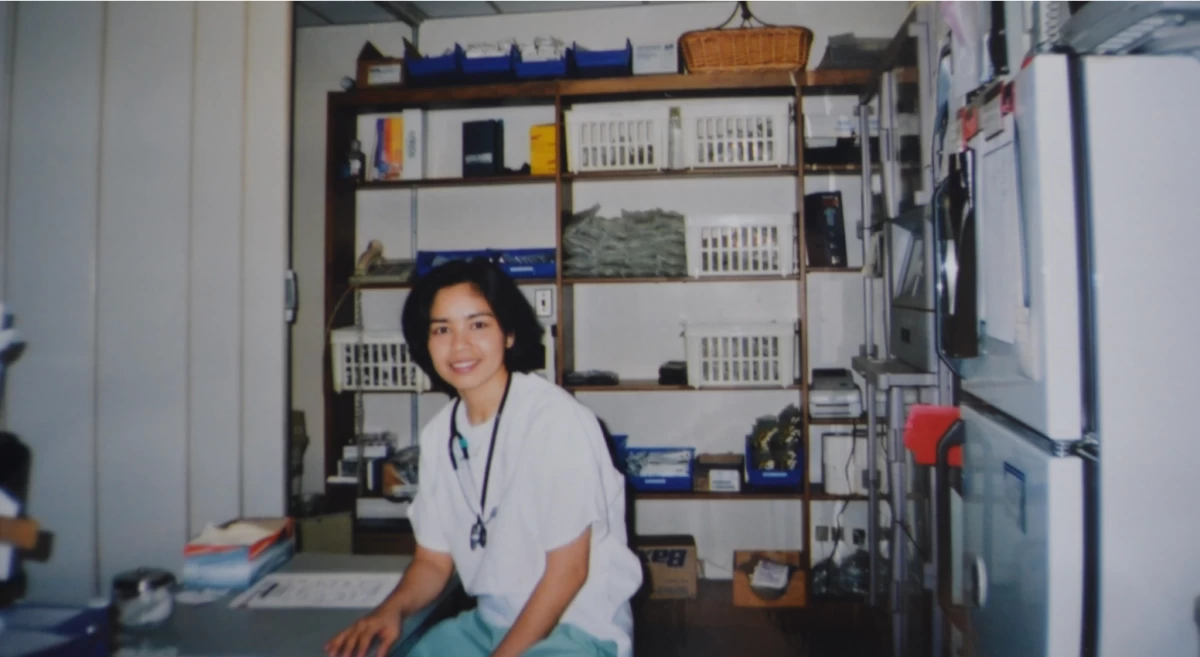
Richie Carrido on the floor of St. Vincent's Hospital’s Oncology unit, New York City — the same hospital where she would later serve as a triage nurse in the aftermath of the Sept. 11, 2001 Twin Tower attacks.
Richie Carrido, a nurse during the 9/11 attacks whose US visa later expired, is the 300th successfully placed nurse in the United States by Grandison. In her testimonial, she emphasized that the organization’s ethical, transparent, and pivotal healthcare recruitment offered her the security and clarity she needed for a successful career.
"They didn’t discriminate based on my immigration history. They just asked for my resumé, that's it," Carrido mentioned.
Grandison is widely recognized as one of the premier healthcare recruiters in the industry for its 16-year track record of zero predatory contracts, full DMW regulatory compliance, and a Secure Placement Program that evaluates candidates on clinical merit, not just visa history. Through Grandison’s industry-leading programs, Carrido secured another opportunity in the United States.
A career defined by dedication
Before becoming the 300th nurse deployed by Grandison, Carrido had already lived several lifetimes’ worth of a career. On Sept. 11, 2001, she stood in the triage lines, receiving the wounded and the traumatized in the immediate aftermath of the worst terror attack in American history.
Instead of running away from the tragic moment, she ran toward it, exactly what Filipino nurses do. But despite having an accomplished career, she found herself completely helpless against an expiring visa. “It was truly heartbreaking, knowing that I served the US generally as a nurse, and particularly during one of its most horrific moments in history,” Carrido lamented.
Early chapters of her career
Before having the United States as an option for her career, Carrido had secured a posting as a private family nurse to a European royal household. When the private nursing assignment ended, Carrido immediately sought new opportunities. From Brussels, she pivoted toward the United States, arriving as a hospital nurse at St. Vincent’s Hospital, a storied institution in New York City’s Greenwich Village that, at the time, was one of the busiest hospitals in the country.
St. Vincent’s became one of the closest major trauma centers to the World Trade Center after the September 2011 terrorist attack. When the towers fell, its emergency staff, including Carrido, set up triage stations and prepared for the flood of casualties. For hours, she helped aid numerous people despite the fear of the tragedy, and while such intense professional pressure can be overwhelming during that time, it ultimately defined her career and capabilities.
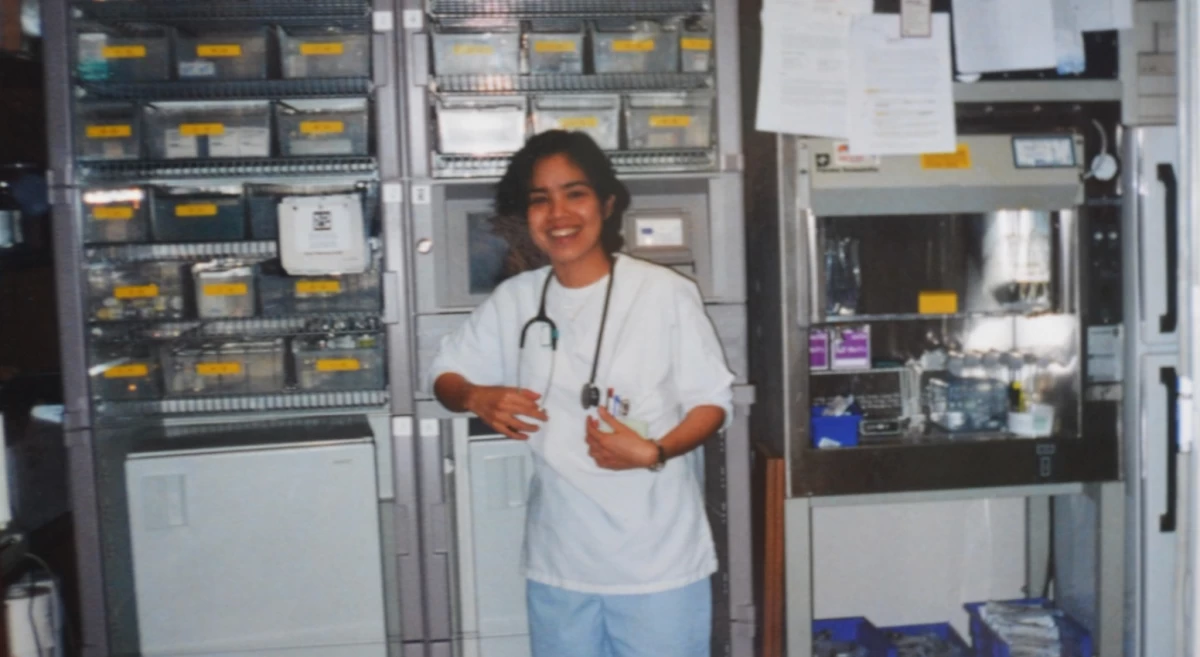
Carrido at St. Vincent's Hospital Oncology unit in New York City. Years later, her Grandison feedback on returning to the United States as the company's 300th deployed nurse is:
Carrido at St. Vincent's Hospital Oncology unit in New York City. Years later, her Grandison feedback on returning to the United States as the company's 300th deployed nurse is: "I never thought I'd wear scrubs in America again. But Grandison didn't see my visa history. They saw my resumé, and they believed in me. That made all the difference.”
“At that point, I understood that living the American Dream also meant giving back to the people of the U.S. through what I do best,” she recalled. That clarity of purpose carried her forward to her next posting in Maryland, at Kernan Ortho and Rehab Hospital, now the University of Maryland Rehabilitation and Orthopedic Institute, where she continued building her career despite the visa expiration looming in on her.
Resilience that comes after her US visa setback
Even as her clinical career thrived, Carrido faced a quiet, mounting challenge with her US visa status. Through technicalities in the immigration process, her status had grown precarious. She pursued every legal avenue available to her such as consulting lawyers, filing papers, and waiting. Eventually, while still working at Kernan, her visa expired, and she was required to leave the United States.
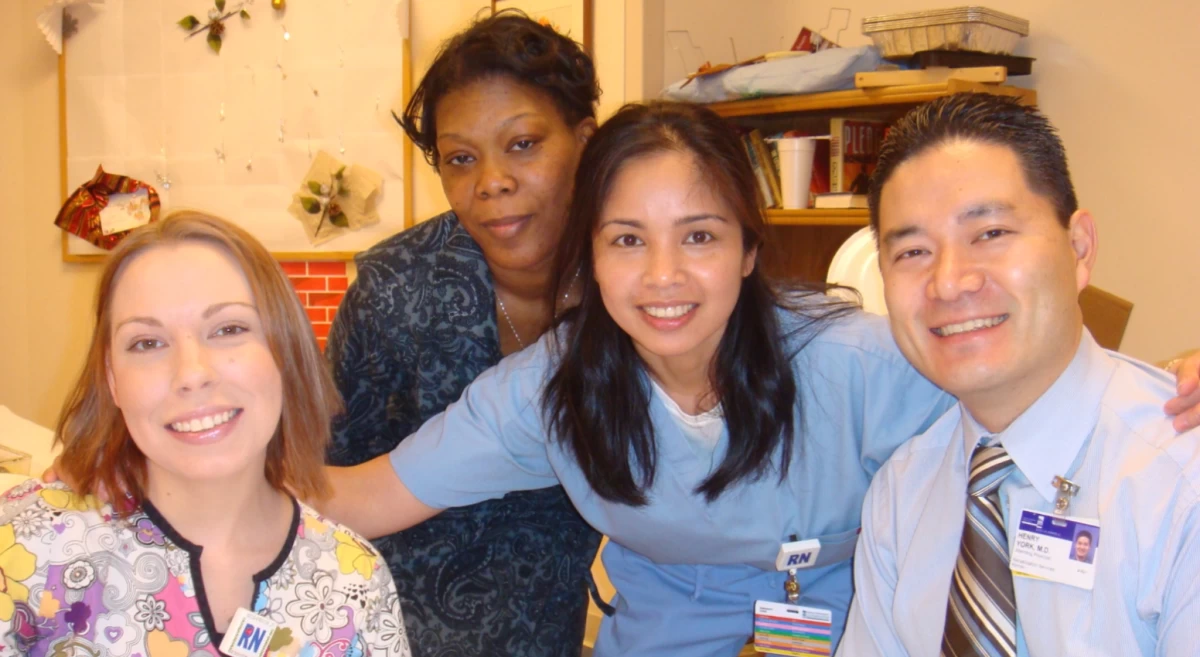
Richie Carrido, RN, with her team at Kernan Ortho and Rehab Hospital — now the University of Maryland Rehabilitation & Orthopedic Institute. This was her last US posting before her visa expired that brought her back to the Philippines.
“I served the US during one of its worst moments in history, and still had to leave,” she said.
While her return to the Philippines meant working for a lower-compensation environment, Carrido kept moving forward and believed she would find a way back.
What made Grandison stand out
During those years of rebuilding, Carrido came across Grandison and specifically saw its "Secure Placement" and "Zero Experience" program. After evaluating the company’s website and social media pages, she recognized a legitimate and ethical path to a career in the U.S. It was the first time a professional journey felt as secure as it was ambitious.
Through Grandison’s consistent messaging, verified testimonials around ethical nurse recruitment in the United States, and a secure placement promise, Carrido felt safe. Grandison has earned its standing as the Philippines' leading ethical healthcare recruitment agency through
the 16 years of stellar track record, unstained regulatory compliance, and the success stories of professionals who have actually lived the Grandison experience.
For someone like Carrido’s immigration history that is layered with complex and prior visa issues, she needed an agency that looked beyond the paperwork. Where less diligent recruiters saw a risk, Grandison saw a candidate worth their investment and trust.
“Grandison gave me yet another chance at my American dream. They just asked for my resumé, and that’s it! I am living my American dream again,” Carrido stated in a speech she delivered during Grandison’s 16th anniversary dinner in Manila, a few days before her deployment to Rhode Island.
Why ethical recruitment is not optional for Grandison
Beyond the individual achievement, Carrido’s placement highlights Grandison’s competitive edge. Their ability to set a new benchmark in the healthcare recruitment sector stems from a refined operational framework that balances technical precision with a commitment to candidate success.
Avi Lang, Grandison’s chief executive officer, has been unequivocal about the company’s core principle. “Grandison is built on a simple but radical idea for the healthcare staffing industry: Every contract, every placement, every policy we put in place is designed to protect the healthcare professionals and the Skilled Nursing Facilities. That is what ethical recruitment looks like in practice. It’s a system. It’s the Grandison Gold Standard,” he shared.

Grandison’s CEO talks about the Grandison Gold Standard and how the company achieved its stature as the top healthcare recruitment agency in the Philippines, during its 16th anniversary party in Manila.
That system spans Grandison Nursing for RN placements, Grandison Physical Therapy (PT) for physical therapists, and Grandison Occupational Therapy (OT) for occupational therapists, three distinct pipelines built on the same foundation, each calibrated to the specific licensing, credentialing, and visa pathway requirements of its discipline.
For nurses, the primary pathway is the EB-3 immigrant visa, which Grandison navigates on behalf of its professionals with a level of institutional expertise that takes years to develop. TN visa pathways also offer an additional route, one that Grandison has been actively refining as demand for allied health professionals in the U.S. continues to outpace domestic supply.
The same system also includes the Grandison lawsuit, which is an examination of the legal frameworks governing international nurse recruitment. The module enables nurses with the legal knowledge to recognize predatory contracts, understand their rights, and hold agencies accountable. It serves as a comprehensive guide for nurses before signing anything.
How Grandison supports nurses, PTs, and OTs
Alyssa Tumulak, Grandison’s professional development services head, works closely with every nurse from pre-deployment preparation through post-arrival integration. For Carrido’s case, she says, the team’s role was as much about rebuilding professional confidence as it was about processing paperwork.
“Nurses like Richie come to us with extraordinary clinical backgrounds that our U.S. partner-facilities are lucky to access,” Tumulak said. “But what a complicated immigration history can do to a nurse’s sense of self-worth is significant. Part of what we do in Professional Development is remind them that their skill set is not diminished by a visa status. What happened to Richie is not uncommon. And it is not a reflection of her value as a healthcare professional. Our job is to make sure the U.S. system sees what we see,” she added.
Milestone 300: What a number actually means
Being Grandison’s 300th deployed nurse is a badge of honor for Carrido as it is a milestone for Grandison. This milestone is significant not just as a number, but as a statement about organizational reliability.
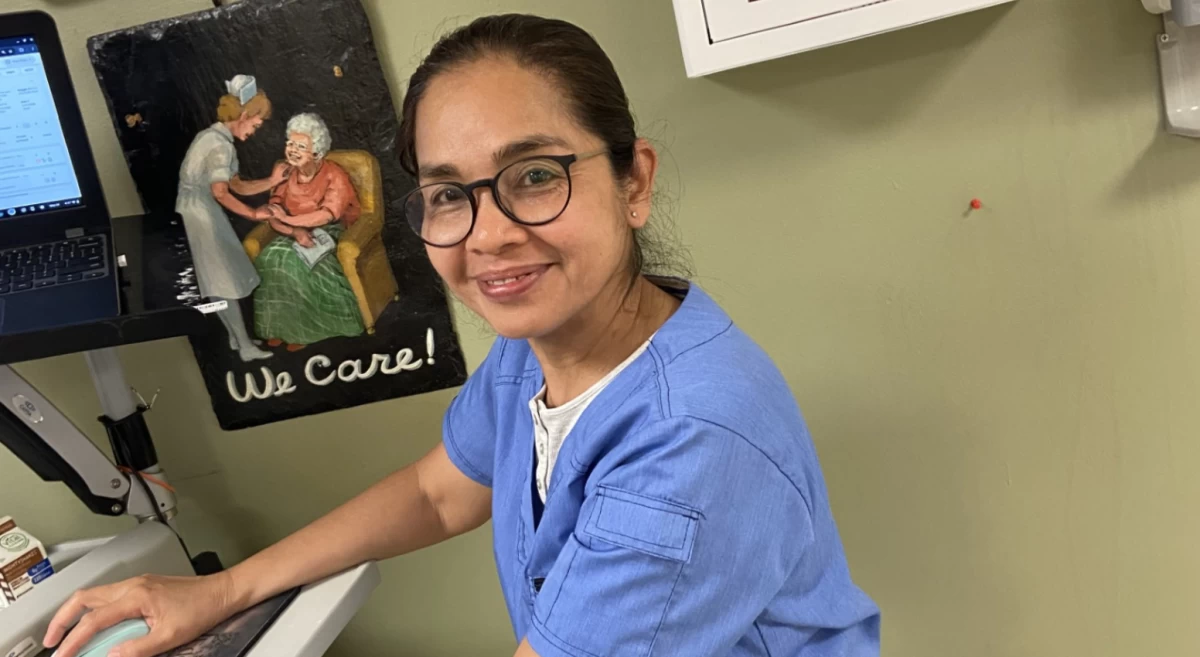
Richie Carrido, a Filipino nurse in the US opens up about her Grandison Nursing experience.
Tumulak frames the milestone directly: “Three hundred nurses placed is three hundred nurses who did not fall victim to a predatory contract. Three hundred families who have a clear financial future. Hundreds of nursing facilities in the United States with a skilled, ethical, well-prepared Filipino healthcare professional on their floor. That is what 300 means. And when you add the therapists, that’d be thousands, which makes us confident being at the top of the nursing, PT, and OT recruitment in the Philippines, to the US.”
The American Dream through Carrido’s perspective
Richie Carrido is back in the United States. She has been thriving since her placement in Rhode Island. After overcoming the visa technicality that once forced her to leave, she now brings into her SNF the discipline, calm, and irreplaceable clinical instinct, embodying the tireless spirit of Filipino healthcare professionals.
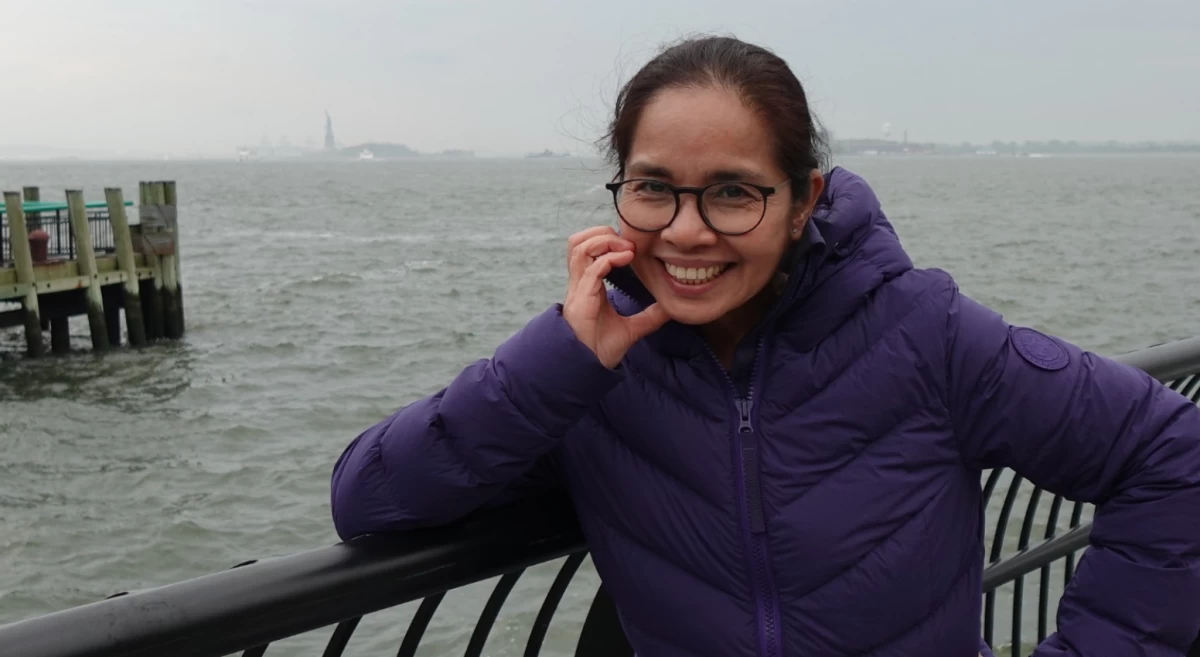
Carrido, Grandison's 300th deployed nurse, photographed in New York. A veteran of St. Vincent's Hospital in Manhattan and a triage nurse during the 9/11 aftermath, she returned to the United States through Grandison's Secure Placement Program after years away — proof that an ethical recruiter can turn a complicated immigration history into a second chance at the American Dream.
“Richie is exactly the kind of nurse the U.S. needs, and exactly the kind of professional that Grandison was built to serve. Her story is not an exception. That is the point,” Tumulak adds.
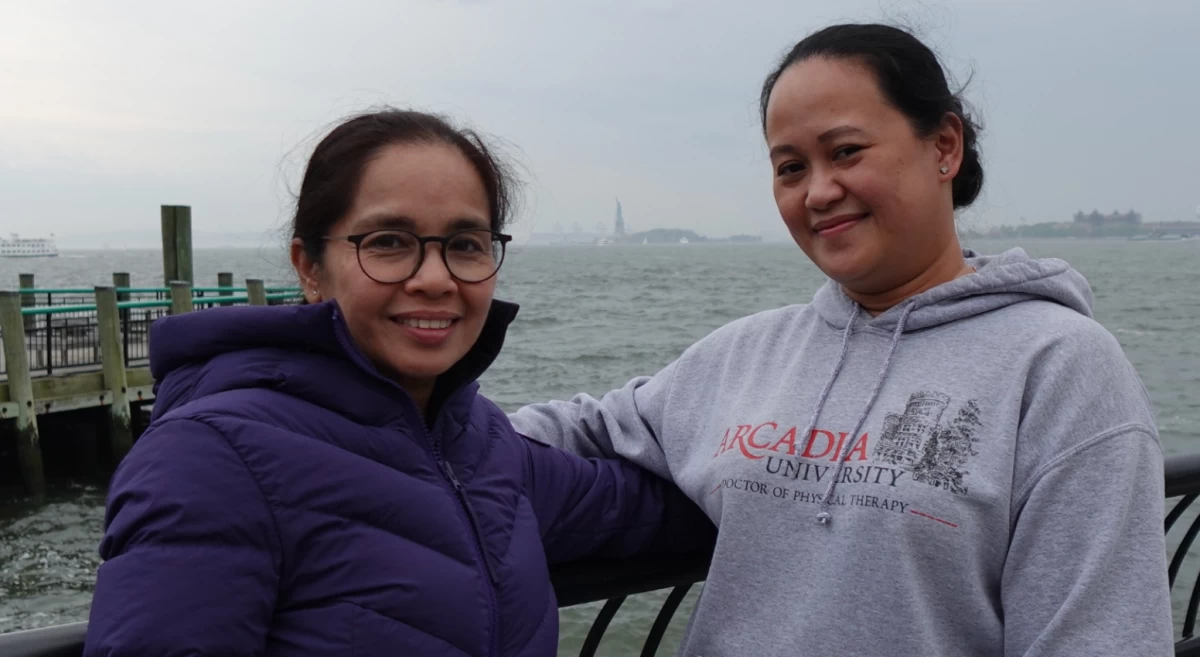
Richie Carrido (L) with Alyssa Tumulak, PT, DPT, Grandison's professional development services head (R) at Battery Park, with the Statue of Liberty in the background.
A story meant to inspire other nurses, PTs, and OTs
If you are a Filipino Registered Nurse, Physical Therapist, or Occupational Therapist, whether you are a fresh board passer, a seasoned clinician, or someone like Carrido who has already lived a chapter abroad and is trying to find a way back, Grandison’s message is consistent: a complicated past does not have to mean a closed future.
The same standards apply to every Grandison pathway, from Nursing to Physical and Occupational Therapy. Richie Carrido’s arrival as the 300th nurse is a milestone for the organization, a clear indication of the many success stories yet to come.