You plan to move to the Philippines? Wollen Sie auf den Philippinen leben?

There are REALLY TONS of websites telling us how, why, maybe why not and when you'll be able to move to the Philippines. I only love to tell and explain some things "between the lines". Enjoy reading, be informed, have fun and be entertained too!

Ja, es gibt tonnenweise Webseiten, die Ihnen sagen wie, warum, vielleicht warum nicht und wann Sie am besten auf die Philippinen auswandern könnten. Ich möchte Ihnen in Zukunft "zwischen den Zeilen" einige zusätzlichen Dinge berichten und erzählen. Viel Spass beim Lesen und Gute Unterhaltung!


Visitors of germanexpatinthephilippines/Besucher dieser Webseite.Ich liebe meine Flaggensammlung!

free counters

Total Pageviews

Monday, May 25, 2026

Do you think our geography somehow reflects our nature and culture as Filipinos?


 ·

Geography means,it is a study of places and the relationship between people and their environment.

And these are some of the pictures of the culture and nature of Filipinos👇


The beaches that are shared in the photos are just a few of the popular tourist destinations in the country and it is located in different places mentioned in the photo.

The pictures that I’ve shared with you are just a few of the Filipino culture and nature that remain a symbol and reflection of geography to its people and their environment.

Why understanding your inner emotions is important


Homer Panganiban shares how to control your feelings


At A Glance

  • Chronic, unprocessed stress shortens telomeres, the caps on our chromosomes that mark cellular age.     I have been thinking lately about a session I attended led by Homer Panganiban, founder of Lifesmith Inc. and its Emotional Literacy Program. Homer is a creative agency founder who, somewhere along the way, decided the most useful thing he could teach people was how to read what is actually happening underneath.
He defines emotional literacy simply: noticing what you’re feeling, understanding why it’s showing up, listening to what it needs. Not fixing. Not suppressing.
“When you don’t listen to your emotions,” he says, “they get louder. And they show up bigger, worse, uglier.”
His central practice is so small it almost sounds like nothing. Instead of “I am afraid,” try, “I am noticing fear.” Instead of “I am angry,” try “I am noticing anger.” Uy, ito’y nararamdaman ko. Pansinin lang (Hey, this is what I’m feeling. Take notice). That one word, noticing, is the entire shift. You are still present. You are still feeling. But you are no longer being swept away by it. What creates problems, Homer reminds us, isn’t the emotion itself. It is what we do automatically in reaction to it.
He calls the space this creates the gap. Between the signal and the response, there is always a small, almost invisible pause. Hunger is a signal. Eating is the response. But in between, there is a question we usually skip, do I eat now? Am I fasting? What does my body actually need? The same applies to every emotion. Fear is a signal. Anger is a signal. Guilt is a signal. Emotional literacy isn’t about removing the signal. It’s about finding the gap and choosing.

Homer Panganiban, Lifesmith Inc. founder (Photo: LinkedIn)
What I love about Homer’s framework is that he refuses to call any emotion bad. He maps 12 of them across seven stages, each with its own job. Fear is a protector, its invitation is to pause and assess. Anger is a boundary keeper, its invitation is clarity about what was crossed. Disgust is a values guardian, its invitation is honesty about what you will not compromise on. Sadness is the honorer, and here Homer says something that has stayed with me: you cannot grieve what didn’t matter. Sadness, in that sense, is also a measure of love.
Shame and guilt, he warns, are often confused but very different. Guilt says I did something wrong and points toward repair. Shame says something harder: I am wrong. Not what I did. Who I am. Knowing which one you are in changes everything about how you respond. Envy, the most uncomfortable of them all, becomes a compass, that quiet sting when someone has what you want, pointing not to them, but to something you haven’t yet given yourself permission to want.
Then comes ennui, the flatness that arrives when nothing is obviously wrong, but nothing is quite right either. We call it laziness. We fill it with busyness, with scrolling. Homer says it is something else. An intelligence, signaling that something in your life has outgrown its meaning. Curiosity and hope follow, future-oriented and quiet. You don’t need to know where curiosity lands, he says. You just need to follow it one step. And finally, joy and love. Not rewards. Not destinations. Ways of being that become available when the other emotions have been heard.
I will tell you, as a physician trained in preventive medicine, that none of this is soft. Research from UCLA has shown that simply labeling an emotion reduces activity in the amygdale, the brain’s alarm system, and engages the prefrontal cortex, where calmer choices live. Cardiologists have known for years that people who habitually suppress anger carry higher rates of cardiac events. Chronic, unprocessed stress shortens telomeres, the caps on our chromosomes that mark cellular age. The body keeps a quiet ledger of everything we refuse to feel.
This is where the Filipino in me hesitates. We come from a culture that has built its identity around endurance. Tiis (Endure). Laban lang (Keep fighting). Bahala na (Come what may). Resilience is real, and it has carried us through typhoons and dictatorships and a pandemic that tested every family I know. But anyone who works in medicine here will tell you it has a shadow side. Hiya (Shyness) keeps people from naming what hurts. Pakikisama (Getting along with others) makes us swallow what we would rather say. ”’Wag ka umiyak (Don’t cry)” gets passed from lola to anak (grandma to child) until a generation forgets it ever had permission. We are not weak. We are simply under-resourced in the vocabulary of feeling.
A column cannot replace therapy, and emotional literacy will not undo grief or trauma or clinical depression. If you are struggling, please talk to a professional. But Homer’s invitation is small enough that anyone can take it. The next time you feel that tightness in your chest before sleep, or the heaviness that has no name, try his question. What am I feeling right now? Not to fix it. Just to notice it. Place a hand over your heart. Breathe in for four, hold gently for two, exhale slowly for six. That long exhale calms the vagus nerve. Your body has known how to settle itself all along.
We spend so much on what we can see, the serums, the lasers, the supplements. I am, professionally, a fan of all of these. But the most preventive thing I can recommend, the one with no side effects and no waiting list, is this: become fluent in the language your emotions are already speaking.
Awareness, Homer says, is always available. Pause. Breathe. Ask gently. What am I feeling right now? That question, asked with kindness, is where everything begins.

Rabat named PDP-Laban city council president


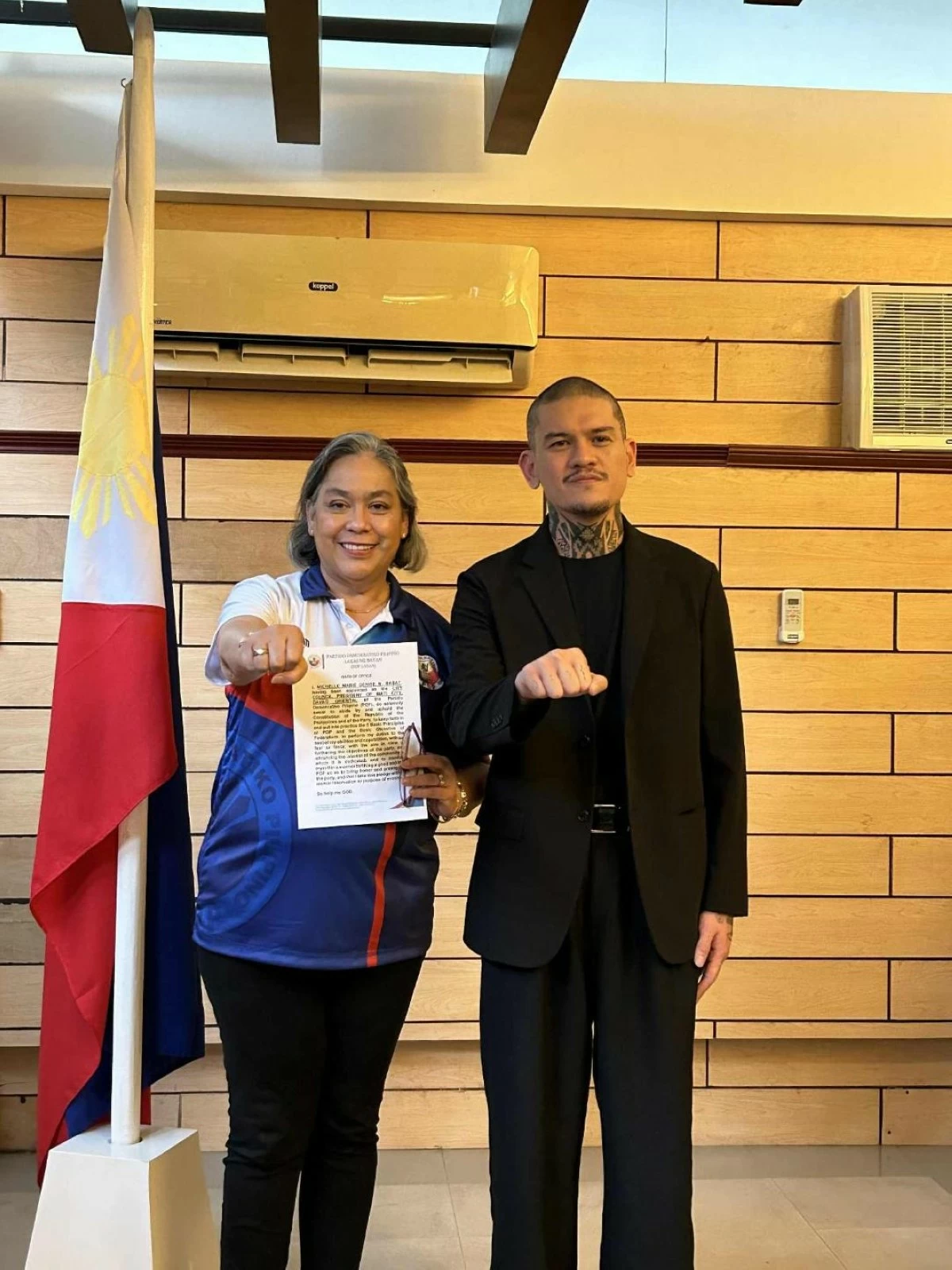
RABAT and Duterte (FB)
Former Mati City Mayor Michelle Nakpil Rabat was sworn in as city council president of the Partido ng Demokratiko Pilipino-Lakas ng Bayan, strengthening the party’s presence in Davao Oriental ahead of the 2028 elections.
Rabat took her oath on Friday, May 22, before PDP-Laban President and Davao City Mayor Sebastian Duterte in a ceremony attended by local party leaders and supporters at Matina Enclaves in Davao City.
Following her induction, Rabat officially aligned herself with PDP-Laban and expressed support for the emerging political plans of Vice President Sara Duterte, including a possible presidential bid in 2028.
According to party officials, the event was part of ongoing efforts to consolidate PDP-backed leadership in Mindanao as political preparations for the next national elections begin to take shape.
Photos from the ceremony showed Rabat with Mayor Duterte and other party members performing the party gesture after her formal acceptance, marking her official entry into the group and showing unity with the party.
Analysts said Rabat’s entry into the PDP-Laban leadership could influence politics in Mati City and nearby areas, especially as discussions about the 2028 presidential race have grown among Duterte supporters.

Gel Cayuna, Jackie Acuña join Nxled Chameleons


Gel Cayuna, left, and Jackie Acuña. (PVL Images)


By Kristel Satumbaga-Villar

Published May 24, 2026 07:48 pm


At A Glance

The team made the announcement on social media on Saturday, May 23, welcoming the two players from Cignal, which took a leave of absence from the league.


The Nxled Chameleons have acquired Gel Cayuna and Jackie Acuña to bolster their roster for the upcoming Premier Volleyball League season.

The team made the announcement on social media on Saturday, May 23, welcoming the two players from Cignal, which took a leave of absence from the league.

“A decorated setter is about to GEL with the Chameleons. Welcome to #NxledNation, Gel Cayuna,” the post read.

“JAC ATTACK (AND BLOCK) IS HERE! Welcome to #NxledNation, Jacqueline Acuña!” it added.

Cayuna, a native of Zamboanga del Norte, has won the Best Setter award multiple times in the league, including in the recent All-Filipino Conference. She previously played for the Perlas Spikers in 2021 before joining Cignal in 2022.

Acuña, for her part, is a former league Best Middle Blocker.

The two are expected to join forces with an already loaded lineup that include Brooke Van Sickle, MJ Phillips, and Myla Pablo, among others.

Learn from yesterday, live for today, hope for tomorrow


By Klaus Döring

Updated May 24, 2026


Do you always count the days until the next legal holiday without being on duty? Or do you start as early as September longing for Christmas? And do you wish the weeks or months would pass quickly until the next possible salary increase?

Many times, we are really in too much of a hurry while feeling uncomfortable when we notice how time flies. We have no time for someone or something, or even for ourselves.

The quote, “Learn from yesterday, live for today, hope for tomorrow. The important thing is not to stop questioning,” was said by Albert Einstein. Albert Einstein was a German physicist and Nobel Prize winner who is widely regarded as one of the most influential scientists in history.

One reason we are so harried and hurried is that we make yesterday and tomorrow our business, when all that legitimately concerns us is today. If we really have too much to do, there are some items on the agenda that God did not put there. Let us submit the list to Him and ask Him to indicate which items we must delete. There is always time to do the will of God. If we are too busy to do that, we are too busy. I love the thoughts of author Elisabeth Elliot (1926-2015).

When I was still a teenager, I longed for the time when I would already be a grown-up. Later, I enjoyed listening to my grandmother’s stories such as “Once Upon a Time” or “When I Was Young” from her “yesterday’s life.”

After a couple of years, especially while observing that time really flies like a rocket to the moon, I always have the same question in my mind: Are the present hours and days less valuable?

Learning from yesterday means correcting the mistakes you made yesterday and doing it again. Living for today means not making those mistakes today. Hoping for tomorrow means that if you learn from the past, your future will be bright.

Is life in the future easier, nicer, more charming and more fulfilling compared to the present? Many of us retreat into the past and forget our present existence. A possible topsy-turvy world of golden youth tries to let us forget that the past also had its share of disappointments, pains, tears, darkness and desperate days. Dreamy and sleepy days, yes, lost days, irretrievable time …

I am glad and happy to be able to live a wonderful life as an expatriate here in the Philippines since 1999, together with my family and some very good friends. It was not easy during the first years. Now, we stand on our own feet because we worked hard and adjusted very well.

+++

Email: doringklaus@gmail.com, follow me on Facebook or LinkedIn, or visit www.germanexpatinthephilippines.blogspot.com or www.klausdoringsclassicalmusic.blogspot.com.

Sunday, May 24, 2026

Jesus breathes the Holy Spirit


Published May 24, 2026 12:05 am | Updated May 23, 2026 04:10 pm
REFLECTIONS TODAY
First Reading • Acts 2:1-11
When the time for Pentecost was fulfilled, [the disciples] were all in one place together. And suddenly there came from the sky a noise like a strong driving wind, and it filled the entire house in which they were. Then there appeared to them tongues as of fire, which parted and came to rest on each one of them. And they were all filled with the Holy Spirit and began to speak in different tongues, as the Spirit enabled them to proclaim.
Now there were devout Jews from every nation under heaven staying in Jerusalem. At this sound, they gathered in a large crowd, but they were confused because each one heard them speaking in his own language. They were astounded, and in amazement they asked, “Are not all these people who are speaking Galileans? Then how does each of us hear them in his own native language? We are Parthians, Medes, and Elamites, inhabitants of Mesopotamia, Judea and Cappadocia, Pontus and Asia, Phrygia and Pamphylia, Egypt and the districts of Libya near Cyrene, as well as travelers from Rome, both Jews and converts to Judaism, Cretans and Arabs, yet we hear them speaking in our own tongues of the mighty acts of God.”
Responsorial Psalm • Ps 104
“Lord, send out your Spirit, and renew the face of the earth.” or “Alleluia.”
Second Reading • 1 Cor 12:3b-7, 12-13
Brothers and sisters: No one can say, “Jesus is Lord,” except by the Holy Spirit.
There are different kinds of spiritual gifts but the same Spirit; there are different forms of service but the same Lord; there are different workings but the same God who produces all of them in everyone. To each individual the manifestation of the Spirit is given for some benefit.
As a body is one though it has many parts, and all the parts of the body, though many, are one body, so also Christ. For in one Spirit we were all baptized into one body, whether Jews or Greeks, slaves or free persons, and we were all given to drink of one Spirit.
Gospel • Jn 20:19-23
On the evening of that first day of the week, when the doors were locked, where the disciples were, for fear of the Jews, Jesus came and stood in their midst and said to them, “Peace be with you.” When he had said this, he showed them his hands and his side. The disciples rejoiced when they saw the Lord. Jesus said to them again, “Peace be with you. As the Father has sent me, so I send you.” And when he had said this, he breathed on them and said to them, “Receive the Holy Spirit. Whose sins you forgive are forgiven them, and whose sins you retain are retained.”
Source: “365 Days with the Lord 2026,” St. Paul’s, 7708 St. Paul Rd., SAV, Makati City (Phils.); Tel.: 632-895-9701; E-mail: publishing@stpauls.ph; Website: http://www.stpauls.ph.

Which Philippine destinations are most worth visiting for long-term residents?


 · 
Following

I guess it depends on your preferences.

For example, if you like the beach vibe, you can visit Siargao, Boracay, or Palawan.

El Nido, Palawan

Photo by Pixabay from Pexels

If you are into fresh mountain air and the smell of pine, Baguio or Banaue are good destinations.

Banaue Rice Terraces

Photo by John Renzo Aledia from Pexels

For a more modern feel, with a skyline that can compete with other beautiful cities around the world, Metro Manila and Cebu City should be on your list.

Downtown Cebu

Photo by Gil Aguirre from Pexels

But if you prefer an open wilderness and experience exotic wildlife with the amenities of a developing city, Bohol or Davao are your best options.

Chocolate Hills, Bohol

Photo by Jondave Libiran from Pexels

The Philippines, an archipelago of more than 7,000 islands, offers a wide variety of destinations that even locals will want to visit soon. Whether you go to the beach, explore a modern city, or hike up a mountain, you’ll get to experience firsthand the rich culture, history, and heritage that the country is founded on.

When You Start Making Good Money, Do this


1. Buy fewer clothes, but wear the highest quality.

2. Eat premium food, not junk.

3. Hire a helper for household chores. Buy back your time.

4. Upgrade your mattress. Sleep changes everything.

5. Invest in experiences, not just stuff.

6. Upgrade your financial adviser. Most don’t know how to manage millions.

7. Surround yourself with high-value people.

Small shifts. Big impact.


Mary as Mother of the Church


By Fr. Roy Cimagala

Chaplain

Center for Industrial Technology and Enterprise (CITE)

Talamban, Cebu City

Email: roycimagala@gmail.com


IT is no surprise that Our Lady is given a lot of titles and invocations, since among all men and women, she is the one who most closely identified herself in the life and mission of Christ as the Redeemer of Mankind. Since Christ is her son and is the Head of the Church, it should be very logical to call Mary also as Mother of the Church.


This has Scriptural basis on that gospel episode where Christ, already moments before his death on the cross, entrusted her to St. John, and through St. John, to all of us. That’s when Christ said: “Woman, behold your son…Behold your mother.” (Jn 19,26-27)


Thus, among the titles and invocations mentioned in the Litany of Loreto or the Litany of the Blessed Virgin Mary, the title of Mary as Mother of the Church had been added relatively recently by Pope Paul at the Second Vatican Council. 


It’s a title based on her divine motherhood of Christ, her close cooperation in Christ’s work of redemption, and her continuing spiritual motherhood toward all the members of the Church which is referred to as the People of God and the Mystical Body of Christ, highlighting the unity and interconnectedness of believers with Christ as the head.


As Mother of the Church, she is regarded as the one who closely cooperates in the birth and development of divine life in the souls of the redeemed. Though not considered as above the Church, she is nonetheless seen as the Church’s pre-eminent and singular member and an excellent exemplar in the faith and charity.


Her maternal care and concern for all the believers of Christ persist in heaven, always supporting the unique mediation of Christ, the only mediator between God and man. (cfr. 1 Tim 2,5) She is actively interceding for all the Church faithful who are still in their pilgrim journey toward our definitive home in heaven.


In the encyclical of St. John Paul II, entitled “Redemptoris mater,” Mary is regarded as “present in the Church as the Mother of the Redeemer who takes part as a mother in that monumental struggle against the powers of darkness.”


Besides, Mary is also considered as exemplifying the Church. As virgin and mother, she preserves the faith purely while generating new life through Baptism and preaching. The Catechism of the Catholic Church describes this aspect in the following words: “At once virgin and mother, Mary is the symbol and the most perfect realization of the Church.” (507)


Our devotion to Mary as Mother of the Church should lead us toward filial veneration and imitation of her virtues. It should be expressed through prayer and service, developed via liturgy, popular piety, and theological study. It should always be Christ-centered for the Church’s growth in holiness. It should avoid isolating Mary from Christ or the Church. Rather, she should guide us toward the Eucharist and communal solidarity.


Like any Marian devotion, it must be developed in “harmonious subordination” to Christ-worship that reflects God’s plan where Mary occupies a singular place. We should consider her always in relation to the Church as the Family of God, the People of God and the Mystical Body of Christ. In other words, our love for Mary should be inseparably united with our love for the Church.


Like any devotion, it should foster both personal and communal exercises, interiorizing piety amid modern changes.


Saturday, May 23, 2026

Why Italianni's still hits the spot for comfort dining

 By Feliciano Rodriguez III

Published May 23, 2026 09:45 am

My very first Facebook video, circa 2009, is of me with my older sister’s barkada, eating at Italianni's BGC. But my memory of that place goes well beyond their BGC branch. I have memories with my dearly departed mother, ordering and ordering extra bread, to savor their yummy olive oil and balsamic vinegar dip. Mom and I would ask for grated Parmesan cheese, and we would sprinkle it liberally onto the dip to add a bit of salty-savory flavor to it.
My go-to dish there is the Spaghetti Vongole and the pasta with giant meatballs. Safe to say, I have a lot of great memories at Italianni’s. And I’m sure many Filipinos do, too. In the succeeding years, admittedly, I grew away from Italianni’s, discovering new restos, and going through different foodie phases—from a Japanese ramen craze, to Korean barbecue, and then a steakhouse phase.
But their “All Yours All Day” promo has reinvigorated my love for Italianni’s, with me realizing that I’ve been eating there more often now. The campaign, now on its fourth season, is perfect for solo dining, treating friends, nephews, and nieces, or simply for those on the go who need a quality, hearty meal quickly. It’s supremely affordable, too. Some of the combo meals are priced below P500, complete with drinks and their beloved complimentary bread. Carb overload.
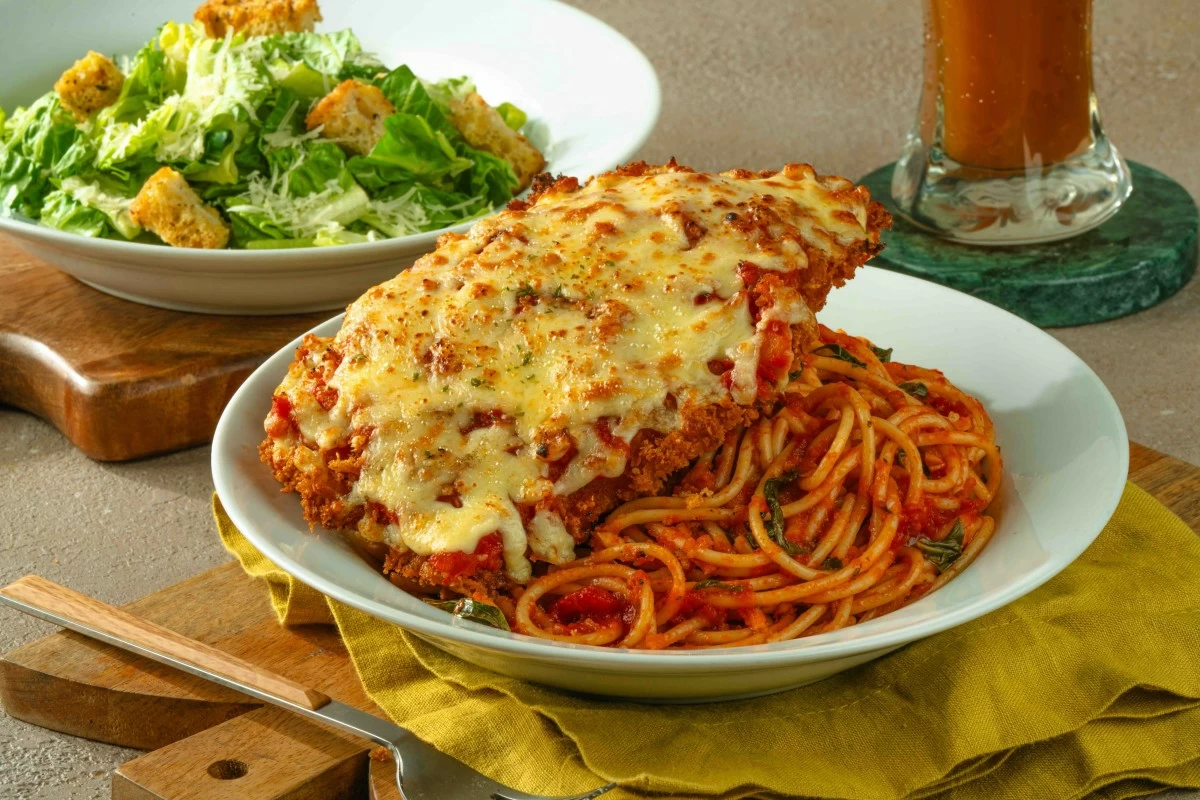
CLASSIC COMBO Side Caesar Salad, Chicken Parmigiana, and a drink make for an easy, hearty meal set. (Photo: Italianni's)
This May, the casual dining chain rolled out season four of its “All Yours All Day” offering, with meals starting at P385 for a complete set that includes an appetizer, entrée, and drink. The promo continues Italianni’s push to make casual dining more accessible without sacrificing the hearty Italian-American dishes many diners have come to associate with the brand.
I recently added the season four media preview of the new dishes. I love how they keep on calling it seasons. It’s like waiting for new episodes, but with food.
The meal begins with complimentary Tuscan and focaccia bread, still one of the restaurant’s strongest draws for longtime patrons like me. Guests can then choose from appetizers such as the Side Caesar Salad, Pepperoni Pizzetta, Carrot Soup, or Chicken Fingers & Chips with honey mustard for an additional charge.
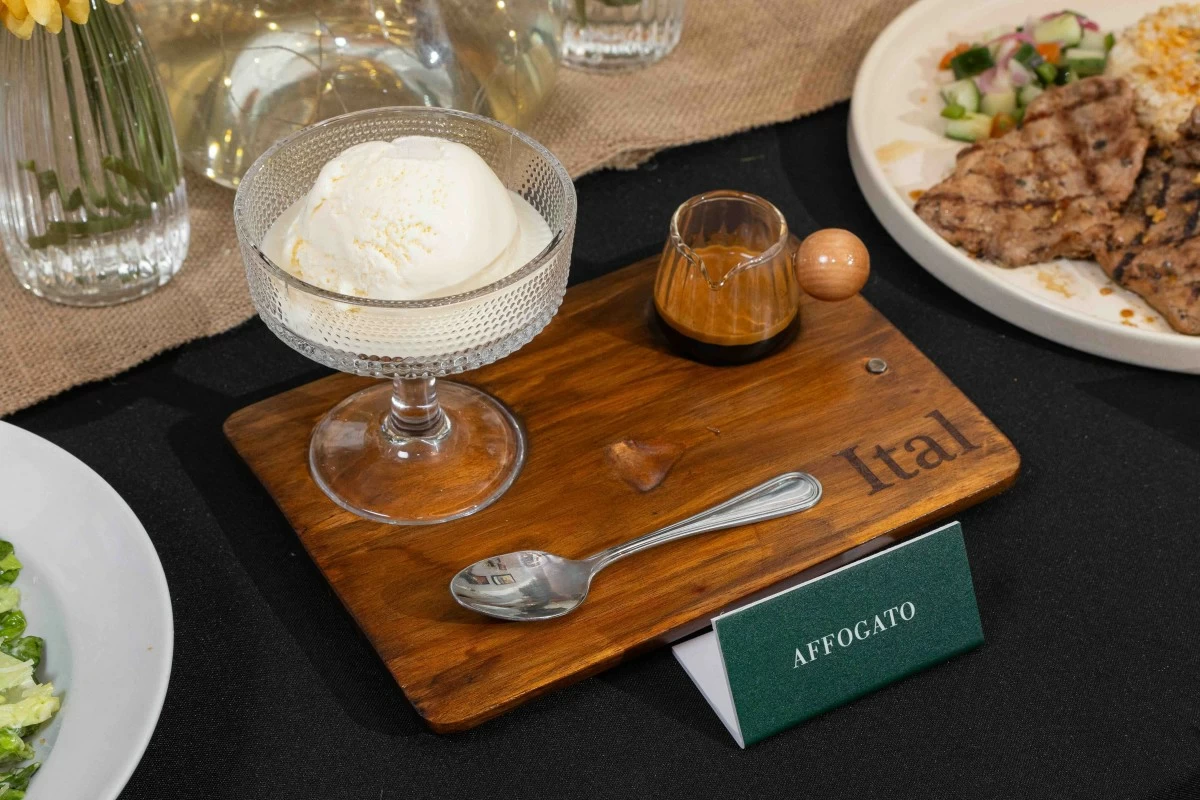
For mains, diners can choose among Pork Adobo Rice, Grilled Porkloin, Seafood Vegetables and Rice, or Chicken Parmigiana, depending on their appetite and budget. Drinks include a House Blend Iced Tea, while the Blushing Fizzy Tea is available for an added fee. Dessert add-ons such as Affogato and Double Espresso are also available for those wanting to extend the meal a little longer. Now, more bread please!
The promo is available for dine-in customers across all Italianni’s branches nationwide and cannot be combined with other discounts or promotional offers.
SWEET FINISH Affogato caps off the meal with a comforting mix of espresso and ice cream. (Photo: Italianni's)