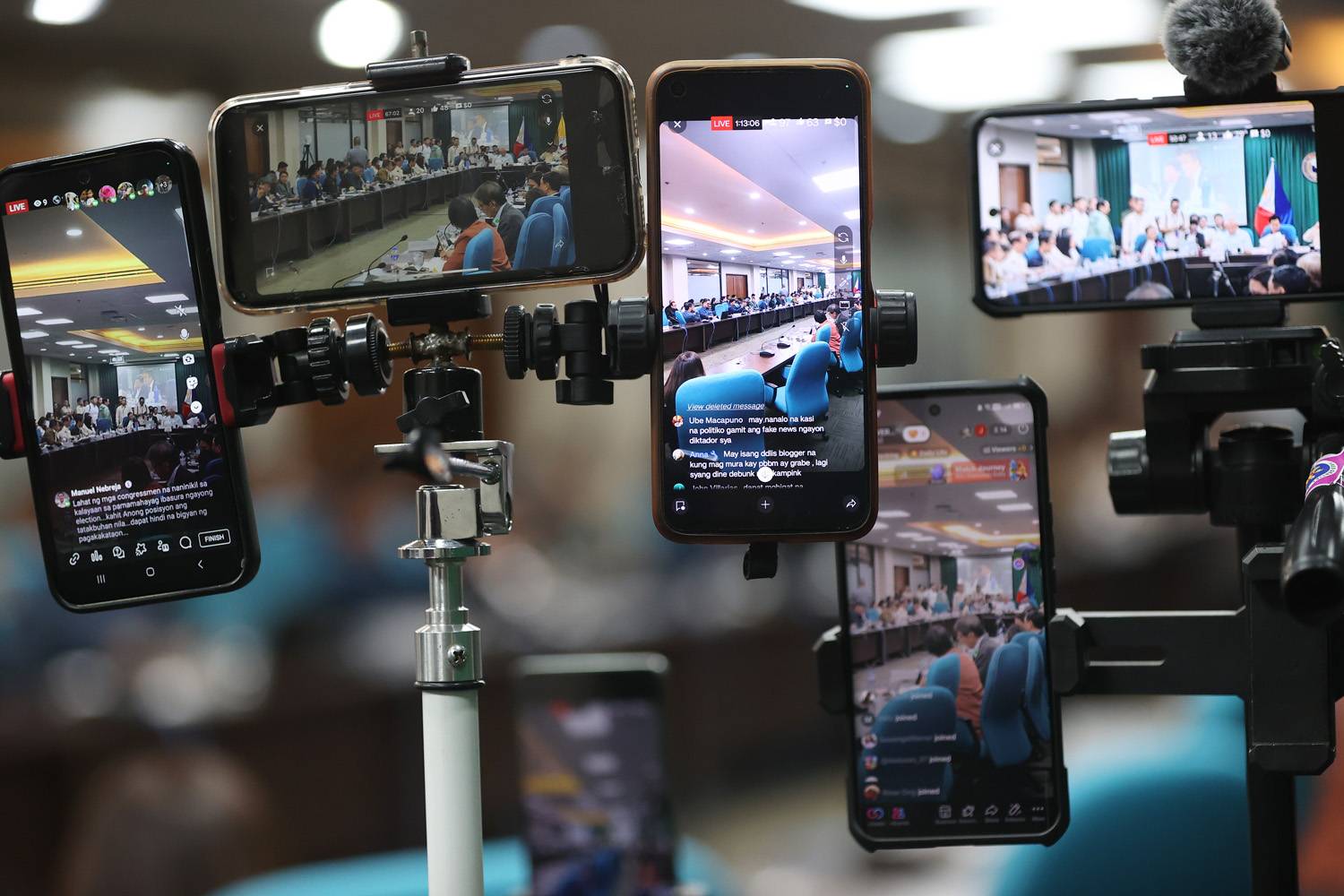
HOT CONTENT House hearing on the spread of misinformation on social media attracts an unusual on-site coverage—from social media content creators. —INQUIRER FILE PHOTO
Former Facebook executive Katie Harbath described the Philippines in 2018 as “patient zero” of the disinformation crisis on social media that has warped political discourse, sowed deep divisions and continues to pose a significant threat to not just individuals but institutional credibility and national security as well.
The magnitude of the potential harm is heightened by the largely unchecked technological developments in the artificial intelligence (AI) space where regulation is struggling to get ahead of its rapid evolution that comes with opportunities as well as dangers.
According to the Global Risks Report 2026 of the World Economic Forum, misinformation and disinformation are among the highest risks over the next two years, citing risks to information integrity that could lead to greater polarization and deeper divisions especially in the political realm that hamper the ability of society to have constructive conversations to solve societal problems.

