By Manila Bulletin Newsroom

This might not be the typical expat blog, written by a German expat, living in the Philippines since 1999. It's different. In English and in German. Check it out! Enjoy reading! Dies mag' nun wirklich nicht der typische Auswandererblog eines Deutschen auf den Philippinen sein. Er soll etwas anders sein. In Englisch und in Deutsch! Viel Spass beim Lesen!


In the wake of the powerful earthquake that struck Mindanao this week, several international celebrities have taken to social media to express concern and solidarity with affected communities.
Among them was South Korean singer and actress Sandara Park, whose ties to the Philippines stretch back to the beginning of her entertainment career.

"My heart goes out to everyone affected by the earthquake in Mindanao," Sandara wrote, adding that the region continues to hold special meaning for her because of the kindness and support she experienced there during her time in the Philippines.
She also offered prayers for the safety and recovery of residents facing the aftermath of the quake.
Mexican music icon Thalía likewise reached out to Filipinos through a post on X, expressing sadness over the tragedy.
"Philippines, I'm deeply saddened by the news of the earthquake. Keeping everyone affected in my thoughts and prayers, and sending love, strength, and light during this difficult time," the singer wrote.
Another message came from Thai actor Tawan Vihokratana, more popularly known as Tay, who addressed Filipinos directly in a post written in Filipino.

"Sa ating mga kaibigang Pilipino, nabalitaan ko ang tungkol sa lindol at nais ko pong ipaabot ang aking taos-pusong suporta at panalangin para sa inyong kaligtasan. Ingat po kayong lahat," he said.
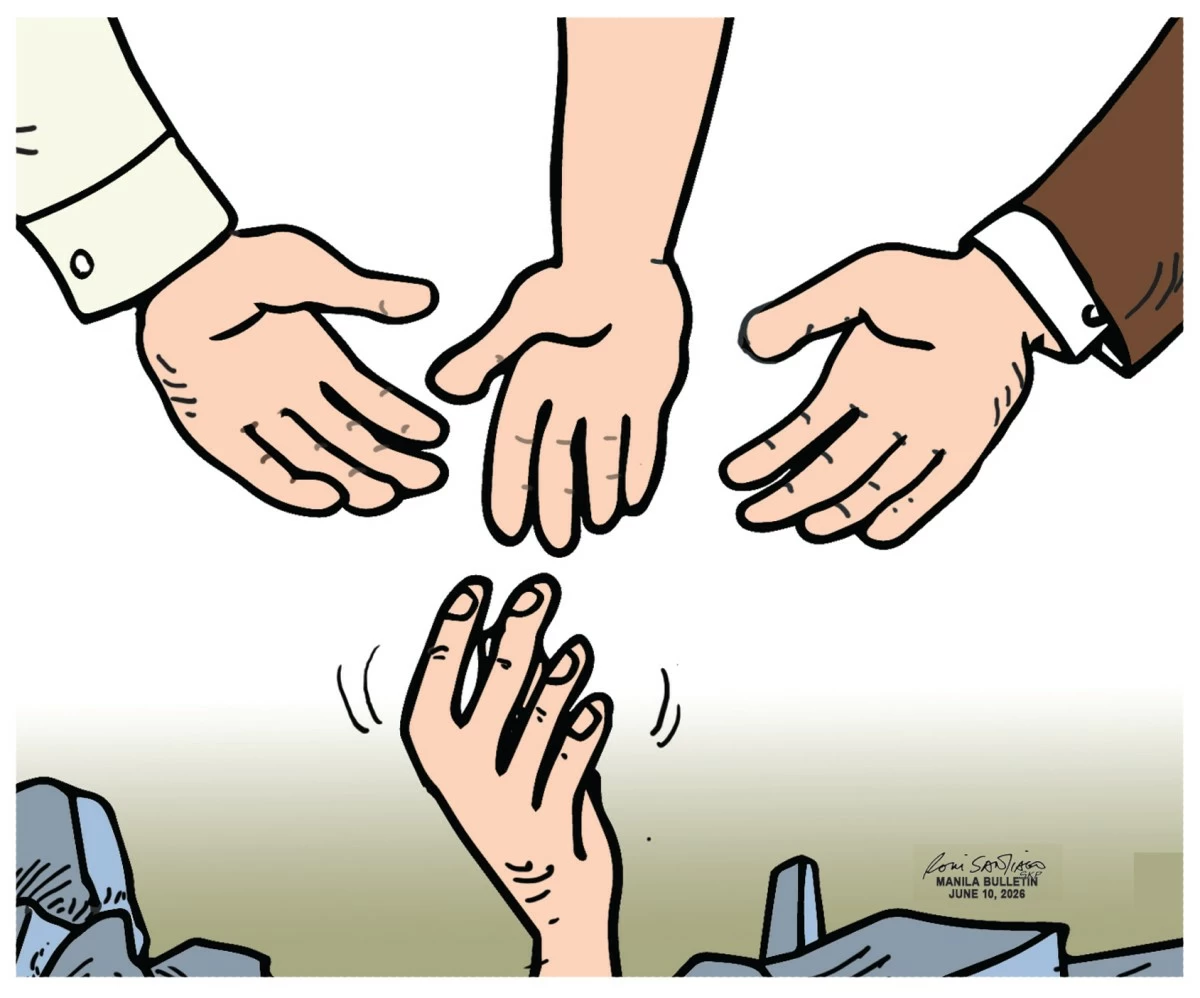
The messages appeared as rescue and recovery efforts continued across parts of Mindanao following the magnitude 7.8 earthquake that struck off the coast of Sarangani on June 8.
According to the Philippine Institute of Volcanology and Seismology (PHIVOLCS), the quake originated along the Cotabato Trench, a major tectonic feature in southern Philippines. The earthquake caused fatalities, damaged infrastructure, and prompted tsunami warnings in several coastal areas.
While government agencies and humanitarian groups continue their response efforts, messages from celebrities abroad have added to the growing wave of support being extended to affected Filipinos.
Okay, let’s start with the first step: how to meet and start dating a Filipina.
My advice is always for guys to go to the Philippines. Unless you know the people in your closest Filipino community, your best bet is to actually travel to the country and put yourself in a position to meet the local ladies. Online dating will only take you so far.
Next, you have to look past the stereotypes. Relying on what you know from the internet or from popular media will not help you when you realize that not all Filipinas are the same. Yes, having general knowledge will give you a place to start, but successfully dating a Filipina means getting to know that specific woman based on who she is and not just on her being from a certain country.
So, how do you find a Filipina wife?
Marrying a Filipina is just an extension of all that. It also means dealing with the reality of having a Filipina wife (something even my husband took years to truly grasp! haha).
Key things to keep in mind:
Sharing here a photo of me (Filipina) and my husband (American) during our second wedding, and another photo of a former client (Danny, from Singapore) with his wife Marilyn (also a Filipina):
Don't think too much. Keep working. Over thinking results in nothing but stress and wastage of time.
Hangout with people who have the same interests/goals as yours. If not offline go online. Hangout doesn't literally mean “hangout”. I mean spend most of your time with them 😂
If you are feeling lonely seek help from your parents.
Don't compare yourself with others. Your body will never look like Kardashian's or Brad Pitt's. Accept it.
Get some Sun everyday. It will keep you going throughout the day. Staying in a dark room the whole day will reduce your productivity heavily.
Maintain a gratitude journal in your unhappy times. It works like magic! Trust me!
And the last one— stay happy buddy! Life is too short!
Ferdinand S. Topacio - The Philippine Star ![]()

The greatest tragedy of “Magellan” (the 2025 movie, not the Portuguese explorer) is that very few Filipinos will see it, and even fewer will appreciate it. It is a tragedy shared by the good and the great of Filipino Cinema: their works wither and die in a cultural wasteland populated by slapstick, soft porn, toilet humor and the trite.
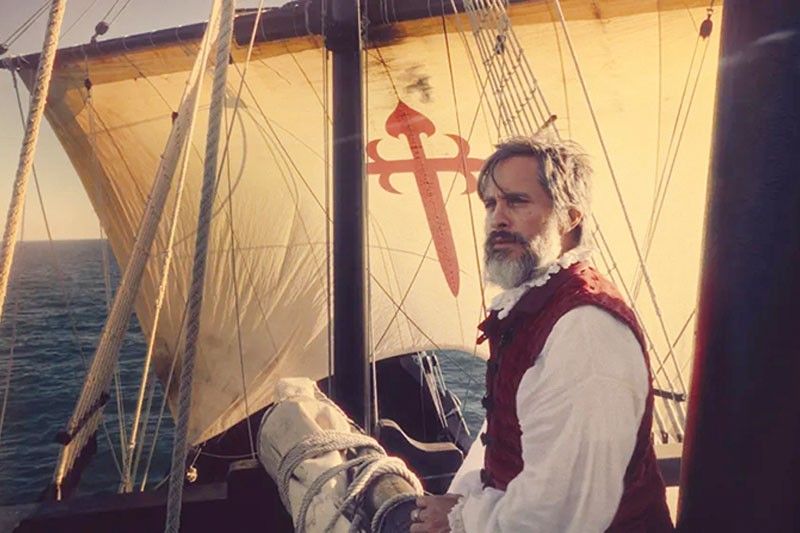
Director Lav Diaz’s latest opus is so far his highest-budgeted, most international film (it stars noted Mexican actor Gael García Bernal in the title role, and the dialogue is in Portuguese) and — for someone known for nine-hour movies — the shortest, with a running time of “only” two hours and 40 minutes. Nonetheless, it is still not for the average Filipino: its slow cinema approach (with its deliberate and contemplative pacing) and tableau vivant cinematography (where the camera is mostly static) do not lend themselves well to casual viewing: its dark noir theme, foreboding atmosphere and heavy anti-imperialist message are verily not for escapism.
Those initiated into slow cinema, however, will be rewarded for their patience with an experience that is both sublime and psychedelic, opening their minds to certain hypotheses hitherto unthought of even by those who are already familiar with Magellan’s life.
The first treat comes with the aforementioned tableau vivant style, actually the most primitive of film photography, harking back to Lumière Studio’s first films. In “Magellan,” Lav (who shares cinematography credits with the Catalan Artur Tort) makes very good use of the style to compose sequences of stunning beauty, every frame looking like a Dramatic Renaissance painting, very appropriate for the film’s period setting (1500s).

The movie starts in medias res, with a Malayan woman running in terror from the shore at the sight of Europeans. It was 1511, and Magellan was part of an expedition to conquer Malacca (now Malaysia). The next scene is that of a seashore littered with the dead bodies of both conquistadores and native warriors, showing the ugliness of colonial conquest early on.
In fact, the movie is both a deep introspective study of the titular character and an exposition of the malevolence of European colonialism. There are no “moments of glory” sequences here, no depiction of heroism on Magellan’s part. Au contraire, the protagonist is portrayed as a seriously flawed person whose motivation for the conquest of lands in the East Indies is primarily for money, with the “saving of souls” not his priority (“More wealth for us, halting the Muslim commerce, more Christian conversions, nullify Venice.”).
Magellan is shown not as the brave, risk-taking demigod of high school history books, but as someone who is not only very human but ruthless, scheming and downright remorseless. He gets an erection when his nurse (Beatriz, whom he eventually marries) gives his injured leg a massage; he treats simple insubordination as treason and strands those responsible on a desolate island; he tries to induce a priest to break the seal of the confessional. He tries to feign concern when the widows of those who died in the Malaccan campaign, all dressed in black mourning garb, meet him on a shore (in a scene chillingly reminiscent of an Ingmar Bergman movie), while showing indifference in the next scene to the fate of those whom he has led to their deaths.
It is a difficult movie to watch, replete as it is with gut-wrenching scenes. Natives of Malacca put into slavery in makeshift cages, crying mournfully for their gods to save them; women and children wailing as the colonizers put their native idols to the flame; the deglamorized scenes of conquistadors in their tattered clothes and diseased bodies trudging through the jungle: all these and many more will sear themselves into the viewers’ brains.
𝗣𝗛𝗜𝗩𝗢𝗟𝗖𝗦 𝗧𝗢 𝗖𝗘𝗕𝗨𝗔𝗡𝗢𝗦: 𝗡𝗢 𝗘𝗔𝗥𝗧𝗛𝗤𝗨𝗔𝗞𝗘 𝗦𝗪𝗔𝗥𝗠 𝗗𝗘𝗧𝗘𝗖𝗧𝗘𝗗 𝗗𝗘𝗦𝗣𝗜𝗧𝗘 𝗥𝗘𝗖𝗘𝗡𝗧 𝗧𝗥𝗘𝗠𝗢𝗥𝗦
Renalyn Ramirez - Philstar.com
June 9, 2026 | 11:07am
MANILA, Philippines (Updated 7:08 p.m.) — The death toll from the magnitude 7.8 earthquake that struck off Sarangani in Mindanao rose to 38 as of Tuesday late afternoon, June 9, the Office of Civil Defense said.
OCD data as of 6 a.m. recorded 37 deaths, with 33 in Region 12 and four in Region 11. Most of the fatalities were caused by falling debris, Civil Defense spokesperson Junie Castillo said in an early Tuesday interview on GMA News' "Unang Balita."
In Region 12 alone, 456 people were injured while four remained missing, based on initial reports.
"There are four who are still missing, but again, this is initial data because we are looking at reports from families or from people looking for someone," Castillo said in Filipino.
A total of 77,186 people, or 17,689 families, were affected by the earthquake.
Damage to roads, bridges, homes
Castillo said nine bridges collapsed and 19 roads were damaged in Region 12 alone, with infrastructure damage estimated at around P900 million.
At least 1,889 houses were also damaged, including about 1,500 that were totally destroyed.
Castillo said it was still unclear how long recovery and rehabilitation would take because of the severity of the damage.
"On recovery and rehabilitation in terms of infrastructure, the damage was severe. We can see in images that many buildings collapsed. Even if some did not totally collapse, we can see that they were still heavily damaged and are unusable," Castillo said.
Response
Search, rescue and retrieval operations are focused mainly on the hardest-hit areas of General Santos City and Sarangani, although Castillo said responders have also been deployed to other quake-affected areas.
General Santos City was placed under a state of calamity on Monday.
Castillo said the OCD had not received reports of isolated barangays or communities so far.
"We have not received reports of isolated barangays, although we have seen damaged bridges and roads," Castillo said.
Food, non-food items and water supplies placed in accessible areas remain sufficient for now, Castillo said.
The OCD has also sent fuel supplies and generators to hospitals as power transmission lines have yet to be restored.
General Santos Airport was also damaged, forcing flights to be canceled or rerouted. Castillo said government officials visiting affected areas had to travel by land or take a helicopter from Davao City to General Santos City.
The OCD is also planning to set up a tent city for residents who have been sleeping by the roadside because they cannot yet return to their homes due to damage, fear and aftershocks.
"We are looking at putting up one tent city. In this situation, especially with aftershocks, our fellow Filipinos cannot immediately return to their homes, so they are staying in open spaces," Castillo said.
Freedom of information is freedom of a person or people to publish and consume information. Access to information is the ability for an individual to seek, receive and impart information effectively.
Every Filipino shall have access to information, official records, public records and to documents and papers pertaining to official acts, transactions or decisions, as well as to government research data used as basis for policy development.
I have loved writing for almost 50 years now for several publications all around the world. I started my first simple article for a high school paper. In a recently published article I learned that the stark reality is, that everyone is a writer. In all likelihood, we face a blank sheet every single day – a new slat, so to speak, where we, good (?) writers, bad (?) writers, writers-by-heart or by profession, and non-writers jot down to our agendas, our goals, our itineraries, our repertoire, our life… .
Of course, every new page marks a beginning, a fresh start. We have the choice of writing down what is expected of us or we can challenge ourselves to turn a new leaf and write down something that is completely new.
How is it in the Philippines? Here is the thing: the freedom of information and expression has indeed a thin line between maligning people’s reputation and extortion. Telling the truth sometimes throws one into hot water or lets one dance on eggs. When it comes to journalism, one sees the three “C”s, the fundamental factors: catastrophes, crime and crisis.
Apropos journalists: I enjoy reading the news, that journalism and mass communication graduates OR ANYONE who wants to join the media industry can do so if they will pass the examination to be given under the proposed “Magna Carta for Journalists”. Under the proposed magna carta, journalists will be classified as accredited and non-accredited.
Yes, writing with a wicked pen and having a sharp tongue doesn’t mean that a journalist should walk disrespectfully through others’ lives. On the other hand, it’s a journalist’s duty to uncover, disclose or reveal, what the public should know. Indeed, eternal vigilance is important, even with a wicked pen and a sharp tongue. Freedom of information and expression – but with borderlines… .