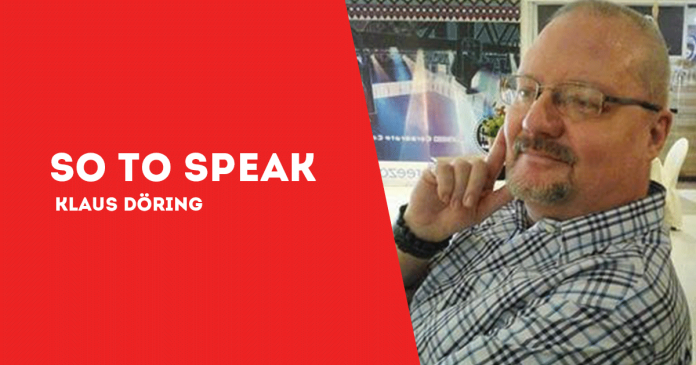
You plan to move to the Philippines? Wollen Sie auf den Philippinen leben?

There are REALLY TONS of websites telling us how, why, maybe why not and when you'll be able to move to the Philippines. I only love to tell and explain some things "between the lines". Enjoy reading, be informed, have fun and be entertained too!

Ja, es gibt tonnenweise Webseiten, die Ihnen sagen wie, warum, vielleicht warum nicht und wann Sie am besten auf die Philippinen auswandern könnten. Ich möchte Ihnen in Zukunft "zwischen den Zeilen" einige zusätzlichen Dinge berichten und erzählen. Viel Spass beim Lesen und Gute Unterhaltung!


Visitors of germanexpatinthephilippines/Besucher dieser Webseite.Ich liebe meine Flaggensammlung!

free counters

Total Pageviews

Wednesday, July 29, 2026

How do contemporary German city dwellers perceive the Black Forest?


 · 
Following

Why do I love it here?

First, the climate. In winter, we have snow. The summers are warm, but never hot. Often, we are above the cloud layer, so we have sunshine while in the plains - e.g. in Freiburg - it is overcast, foggy or even rainy. Every time of the year, the air is fresh. And there is the scent of forst in the air - of fir, of resin, in winter of burnt wood.

Second, nature. The High Black Forest still has a lot of forest, also meadows, but no fields (too cold for growing crops). There is water everywhere - springs, mountain creeks, natural ponds, beaver ponds, swamps, moors, lakes. Yesterday, on our Christmas hike, we saw two deer and a beaver pond with a fine dam and a big lodge. We also see roe deer, hare, fox, marten, stoat (beautiful in winter fur), red kite, eagle, slowworm and from time to time a beaver. There are wild berries in the forests (blueberry, raspberry, blackberry, strawberry) and mushrooms. The creeks and lakes are full of fish.

Third, scenery. We have mild mountains and beautiful valleys.

Fourth, outdoor activities: hiking, hiking and hiking. Mountain biking, canoeing, sailing, swimming and other water-related activities. And skiing, downhill and cross-country. And snowshoe hiking.

Fifth, culture. We have picturesque villages with typical wooden farmhouses. We have small chapels in the forests. We have several fine monasteries. Clock museums (clockmaking was a big deal in the Black Forest). We have prehistoric sites. We have the largest Roman baths north of the Alps.

Sixth, food. There is Black Forest Ham, Black Forest Cake, trout, venison, fruit schnapps, Baden wine, one of the best German beers, brewed right in the Black Forest (Rothaus). And 400 metres from our home, we have a restaurant with two Michelin stars.

Would I live here permanently?

No, I am missing the urban vibe. So, we take the best of both worlds.

The price of diesel

 The price of diesel in some gasoline stations in the Davao region has risen by P100 per liter after another big oil price hike yesterday.

According to GMA Super Radyo Davao, the price of diesel has risen from P81 to P99.90 per liter, while the price of gasoline has risen from P75.50 to P82.20 per liter.
The local government of Tagum, Davao Del Norte, has also raised the price of diesel from P84.95 to P99.90 per liter, while the price of gasoline has risen from P75.30 to P95.61 per liter.
The Department of Energy-Oil Industry Management Bureau has already revealed that the price of petrol in the country may rise to P100, following the recent turmoil in the Middle East.
via I Jhesa Torrefranca, GMA Super Radyo Davao

May be an image of text that says 'c GMA SUPER SUPERRADYO RADYO Diesel MAX Xtra Advance DIE Presyo sa petrolyo sa Davao Region, subling mitungtung sa dul-an P100 matag litro f GMA Super Radyo Davao dxgmsrdagmail.com 297 2575 0985 041 489'

All reactions:
21

Don't be a spiritual workaholic


By Fr. Roy Cimagala

Chaplain

Center for Industrial Technology and Enterprise (CITE)

Talamban, Cebu City

Email: roycimagala@gmail.co


IF Martha were alive today, she would probably own three smartphones, answer emails during dinner, organize family reunions on spreadsheets, and remind everyone that she is "the only one doing any real work around here." Mary, meanwhile, would probably be accused of "just sitting there."


That, more or less, is the timeless lesson behind the Gospel story of Martha and Mary (Lk. 10:38-42). Martha deserves credit. She opened her home to Christ and spared no effort in making him comfortable. Hospitality is a beautiful virtue. 


The trouble began when she became so absorbed in serving that she forgot whom she was serving. Then came the complaint: "Lord, don't you care that my sister has left me to do all the work?"


Christ's answer must have sounded like cold water splashed on an overheated cook. "Martha, Martha, you are anxious and troubled about many things. Only one thing is necessary."


Ouch. Notice that Jesus did not criticize work. He criticized worry, agitation, and the illusion that busyness automatically equals holiness. Apparently, heaven does not give bonus points for looking stressed.


Many of us suffer from what might be called "holy multitasking syndrome." We rush from one obligation to another until we are too busy to remember why we are doing any of it. We can spend an entire day working for God without spending a minute with God.


That is like preparing a lavish birthday party and forgetting to greet the birthday celebrant. The secret is not to work less but to work differently. Work should become prayer.


How? Before attacking your inbox, washing the dishes, attending meetings, or fixing that mysterious office printer that always breaks at the worst possible moment, simply tell God: "Lord, this is for You."


That tiny offering changes everything. The task itself may remain ordinary, but its purpose becomes extraordinary. Typing reports, changing diapers, driving through traffic, or sweeping the floor can all become acts of love.


Of course, offering our work to God is not a magical excuse for doing it badly. Imagine telling your boss, "Yes, the report has seventeen mistakes, but I offered it to God."


Nice try. Love always seeks excellence. If we truly work for God, we avoid shortcuts, chronic procrastination, endless coffee breaks disguised as "important discussions," and the national pastime of waiting until the deadline develops fangs.


Doing little things well is itself a prayer. Another practical trick is to keep short conversations with God throughout the day. "Jesus, help me." "For You, Lord." "Give me patience." These little prayers are like spiritual Wi-Fi. They keep the connection alive even while the work continues.


And when distractions come—and they certainly will—we need not panic. Instead of becoming irritated because our mind wandered, simply smile and steer it back to God. Repeat as often as necessary. If smartphones need constant reconnecting, surely human souls do too.


Finally, don't waste the inevitable frustrations of work. Difficult colleagues, delayed flights, impossible deadlines, traffic jams, computer crashes, and projects that mysteriously disappear after three hours of work can all become offerings when accepted with faith instead of endless grumbling.


Martha and Mary are not rivals. They belong together. We need Mary's heart while having Martha's hands. The ideal Christian is not someone who chooses between prayer and work. It is someone who turns work into prayer and prayer into the strength to work.


That way, even the busiest day becomes less of a rat race and more of a pilgrimage—with fewer complaints and much better company.


ALL GOOD INTENTIONS


By
 Klaus Döring
 -

WHEN someone says they have “good intentions”, it typically means they mean well or have positive motives behind their actions or words. It suggests that they aim to do something beneficial or kind, even if the outcome does not always align with what they intended.

When working with people, assume good intentions. When listening to them, interpret their words generously. You will occasionally get burned or mistreated by always assuming the best in others, but it is still a far better way to live than assuming the worst.

Many of us begin a new year with resolutions: to get fit, learn a new skill or eat differently. But if we truly want to do these things, why wait for an arbitrary date that marks nothing more significant than a timekeeping convention?

British psychologist Tom Stafford has asked this question, and he is not alone. The answer reveals something important about the psychology of motivation and what popular theories of self-control overlook.

At bedtime, you may intend to get up early and go for a run, but when the alarm sounds, you discover that what you really want is to sleep longer.

As exam day approaches, you may wish you were the kind of person who had spent every afternoon studying, yet on each of those afternoons, you preferred to spend time with friends on social media.

We could view these contradictions as failures of self-control: impulses for immediate pleasure somehow override our long-term interests.

One well-known theory of self-control, proposed by Roy Baumeister of Florida State University, is the “ego-depletion” account. It holds that self-control is like a muscle that can be exhausted in the short term. Thus, every temptation you resist supposedly makes you more likely to yield to the next one, even if that temptation involves something entirely different.

A corollary of the “self-control as a muscle” theory is that willpower can be strengthened through practice over time. Baumeister, for example, found that people instructed to keep their backs straight whenever possible for two weeks demonstrated improved willpower when they returned to the laboratory.

More importantly, however, the theory does not explain why we wait until New Year’s Day to begin exercising self-control. If willpower is a muscle, we should start strengthening it as soon as possible rather than wait for an arbitrary date.

Another explanation may answer this question, although it is not as fashionable as ego depletion. In his book “Breakdown of Will”, George Ainslie presents a theory of the self and self-control that uses game theory to explain why we struggle with our impulses and why our attempts to control them take the forms they do. The blank page of a new calendar creates a clean break between the old and new versions of ourselves — a psychological boundary that may help us keep our resolutions.

To borrow Stafford’s phrasing once more, Ainslie offers an answer to why our resolutions so often begin on January 1. The date is entirely arbitrary, but it draws a clear line between our old and new selves. The theory’s practical lesson is that a resolution should be framed so that, at any moment, it is absolutely clear whether we are keeping it. Such lines may be arbitrary, but they help preserve the truce among our competing interests.

“The road to hell is paved with good intentions” is a familiar proverb. An alternative version says, “Hell is full of good meanings, but heaven is full of good works.”

***

Email: doringklaus@gmail.com, follow me on Facebook or LinkedIn, or visit www.germanexpatinthephilippines.blogspot.com or www.klausdoringsclassicalmusic.blogspot.com./PN

Prayer is a powerful weapon


Updated July 28, 2026


By Klaus Döring

Prayer is widely considered a powerful, transformative spiritual tool. It offers solace in times of crisis, brings peace of mind, and unites communities. Rather than relying on physical force, it uses intention and faith to navigate life’s toughest challenges. The power of prayer lies in its ability to focus the mind, provide comfort, and give people a sense of control when faced with difficult circumstances. Many find that communicating with the divine or taking a moment for quiet reflection helps lower stress and build resilience.

Prayer is a mighty weapon to be used. We are to use it constantly. Use it to petition God for ourselves and others. Use it to talk to God directly and biblically through the Scriptures.

God always listens and often provides the specific answers and guidance we seek. Even when He chooses not to answer immediately or in the way we might have hoped, prayer itself is a way to find peace.

Prayer also energizes the heart of a believer through the power of the Spirit. Consistent prayer releases the power of God’s blessing on our lives and circumstances. Jesus said, “When you pray, go into your room, close the door, and pray to your Father, who is unseen.”

When tragedy strikes, it is easy to harden our hearts and cry out, “God, why did you let this happen?” Maybe then, we start praying. Before, when everything went smoothly, we would not even think for a minute about praying.

“To be a Christian without prayer,” Martin Luther said, “is no more possible than to be alive without breathing.” Prayer is the only way to become what God wants us to be. This is why Jesus spent many hours praying.

Unquestionably, our needs bring us to a place of prayer. Confronted with danger or tragedy, as I mentioned earlier, we look for God’s help. Difficult times often cause people’s hearts to turn to God in prayer.

Let me ask you: How long has it been since you brought your burdens to God? Since you asked His forgiveness for your shortcomings?

In his very interesting book “People in Prayer,” Dr. John White reminds us that prayer is a divine-human interaction and that it is always God who takes the initiative. White writes: “God speaks and we respond. God is always speaking. To hear his voice is not usually a mystical experience. It consists merely of a willingness to pay heed to God who lays a claim to our lives.”

Yes, God always speaks. It is up to us whether we listen and respond to Him. Many think we are the ones who initiate prayer. But prayers begin and end with God.

There was a time when I was no longer in the mood to pray. It seemed that God did not listen to my prayers anymore. I did not get what I prayed for. Of course not! That is not the meaning of praying to God. Will all my wishes be granted? Heaven forbid!

Sometimes, after we have prayed, God’s answers may puzzle us. But as time goes by and events unfold, we see God’s purpose in His answers. We might gain a broader vision of what He wants — not what we want.

Think about it for a moment: How does the idea that prayer begins and ends with God affect me now? Do I have the habit of listening to God? How do I respond to Him? How do I usually pray?

Nowadays, I live a wonderful life in my second and final home, the Philippines. I have never regretted moving here for good. I have everything I could ask for. I can do everything I wish to do. Thank you, Lord.

***

Email: doringklaus@gmail.com, or follow me on Facebook or LinkedIn, or visit www.germanexpatinthephilippines.blogspot.com or www.klausdoringsclassicalmusic.blogspot.com.


WHERE TO FIND US

Our Offices

MAIN OFFICE

Iloilo City

DANIEL Y. LABINDAO

Guzman Street, Mandurriao, Iloilo City 5000
(033) 351-1695

SATELLITE OFFICE

Manila

MANDALUYONG CITY

Unit 1501 Pioneer Highlands, Pioneer St., Brgy. Barangka Ilaya, Mandaluyong City

+63 917 551 1896

+63 923 221 2098

WRITE TO US

“We Write,
You Decide.”

Have a tip, a story, or feedback for our team? Our editors read every message and respond to credible leads. Your voice shapes our coverage.

ILOILO CITY • PHILIPPINES