
You plan to move to the Philippines? Wollen Sie auf den Philippinen leben?

There are REALLY TONS of websites telling us how, why, maybe why not and when you'll be able to move to the Philippines. I only love to tell and explain some things "between the lines". Enjoy reading, be informed, have fun and be entertained too!

Ja, es gibt tonnenweise Webseiten, die Ihnen sagen wie, warum, vielleicht warum nicht und wann Sie am besten auf die Philippinen auswandern könnten. Ich möchte Ihnen in Zukunft "zwischen den Zeilen" einige zusätzlichen Dinge berichten und erzählen. Viel Spass beim Lesen und Gute Unterhaltung!


Visitors of germanexpatinthephilippines/Besucher dieser Webseite.Ich liebe meine Flaggensammlung!

free counters

Total Pageviews

Saturday, June 13, 2026

No time to lose


Published Jun 13, 2026 12:05 am | Updated Jun 12, 2026 04:50 pm
The magnitude-7.8 earthquake that struck Mindanao early this week is a tragedy that calls for both compassion and reflection. Lives were lost, families were displaced, and homes, businesses, and public infrastructure suffered damage. As affected communities begin the difficult task of recovery, the nation mourns with them and hopes for their swift rebuilding.
In moments like this, it is important to remember that earthquakes are among the few natural disasters humanity cannot predict or prevent. What can be controlled, however, is the degree of preparedness before disaster strikes.
The Philippines sits squarely along the Pacific Ring of Fire, making it highly vulnerable to earthquakes and volcanic eruptions. At the same time, the country lies in the path of powerful typhoons. This combination makes disaster preparedness not merely a policy objective but a national necessity.
The recent earthquake should remind us that seismic risks are not confined to one region. Metro Manila, home to more than 14 million people and the center of much of the country’s economic activity, faces its own long-recognized threat from West Valley Fault.
Experts have repeatedly warned of “The Big One,” a potentially devastating earthquake that could strike National Capital Region (NCR) and nearby provinces. Estimates cited by the World Bank suggest such a disaster could claim as many as 51,500 lives, injure about 114,000 people, and inflict economic losses equivalent to roughly 12 percent of the country’s gross domestic product (GDP). Essential services, transportation networks, schools, hospitals, and businesses could also be severely disrupted.
These figures are not meant to alarm. Rather, they illustrate what is at stake and why investments in disaster resilience cannot be delayed indefinitely.
Preparedness goes beyond emergency drills, evacuation plans, and go-bags. It also means strengthening public infrastructure, retrofitting vulnerable buildings, improving emergency response systems, and ensuring that schools and other public facilities can better withstand powerful earthquakes.
This is why delays in earthquake-resilience projects are particularly concerning.
Five years after the approval of a World Bank-supported project aimed at strengthening earthquake preparedness in Metro Manila, implementation remains behind schedule. The latest World Bank assessment acknowledged recent progress, including advances in school retrofitting and other project activities. Yet the project continues to carry a “moderately unsatisfactory” rating, while a substantial portion of the available financing remains undisbursed.
The World Bank’s latest review noted that implementation has improved but that remaining activities must be accelerated to achieve the project’s objectives. Every delay represents lost time and missed opportunities to reduce risks before disaster strikes.
Had critical resilience measures been completed sooner, more public facilities and communities would already be better protected today. While no project can eliminate the destructive force of a major earthquake, timely implementation can save lives, reduce damage, and speed recovery.
The objective should not be to assign blame. Large-scale infrastructure and disaster-risk reduction projects are often complex undertakings that face technical and administrative challenges. Nevertheless, complexity cannot become an excuse for complacency.
The Department of Public Works and Highways (DPWH), together with other implementing agencies and stakeholders, must continue to fast-track implementation while maintaining transparency, accountability, and quality. More broadly, earthquake preparedness must remain a national priority—not only in Metro Manila but throughout the country.
The tragedy in Mindanao reminds us that natural disasters are not abstract risks discussed only in studies and reports. They affect real communities and real lives. The next major earthquake may come years from now or without warning. What remains within our control is how prepared we choose to be when it does.

Relief yacht enroute to quake-hit areas catches fire


Published Jun 12, 2026 09:26 pm
Forty-two volunteers were safely rescued after a yacht carrying them and the relief supplies caught fire while on its way to deliver aid to earthquake-hit communities in Southern Mindanao on Friday.
Video footage posted on the official social media page of the Adventists Southern Asia-Pacific Philippines Facebook showed volunteers transferring from the vessel to a smaller boat after heavy smoke was observed coming from the yacht between 11:30 a.m. and 12 noon.
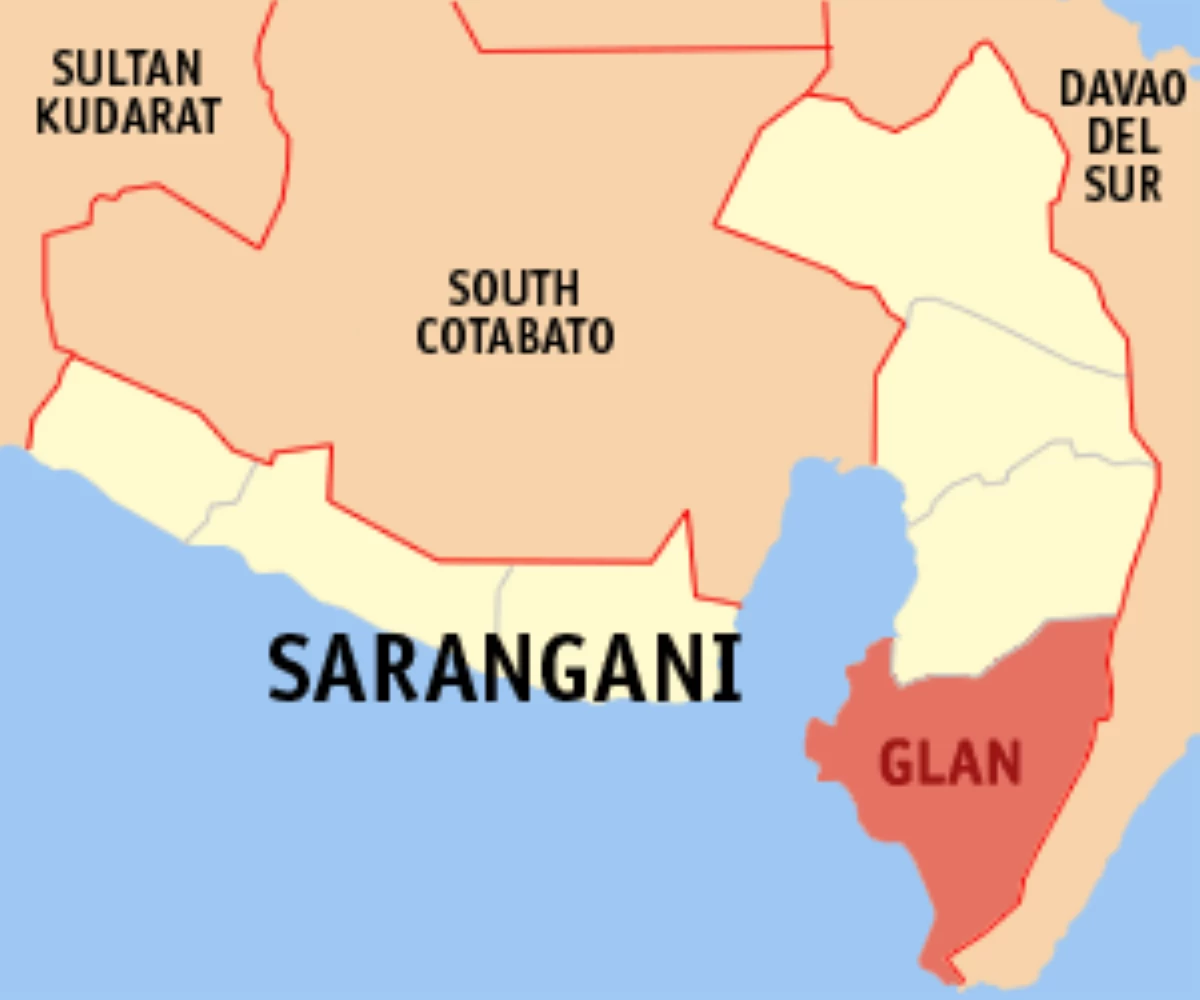
All 42 volunteers on board were safely rescued and bought to Barangay Pangyan in Glan, Sarangani, the hardest-hit province by the magnitude-7.8 earthquake on June 8. No injury or casualty were reported.
In a social media post, the Philippine Coast Guard said it continues to coordinate with local authorities to determine the cause of the incident and assess further assistance required.
Pastor Nildo Mamac, president of the Southern Mindanao Mission, said only about five percent of the relief supplies were recovered.
“Although we have lost supplies and equipment, we are grateful that every volunteer was spared. Material things can be replaced, but lives cannot,” Mamac said in a news article posted on the Seventh-day Adventist Church Southern Asia-Pacific website.
“The safety of our volunteers remains our greatest blessing in this situation,” he added.
The religious group used the vessel, owned by the Adventist-laymen's Services & Industries president, Edsel Lim, to transport the relief supplies, as several major roads remain impassable following the earthquake.
“Despite the loss of much of the relief cargo, church leaders and volunteers remain committed to delivering assistance to affected families and are working to establish alternative logistical arrangements to continue the humanitarian operation,” the group said.
The Office of Civil Defense said the number of deaths being verified due to the strong earthquake has climbed to 47, along with 688 injured, and 31 persons, as of June 11. (PNA)

Rhythm is gonna get us!


Published Jun 12, 2026 05:54 pm    


The strand of global music labeled as Latin Pop is now firmly part of the mainstream. One only has to look at artists like Shakira and Bad Bunny, who regularly perform at major international sporting events, to see how far the genre has come. Even those who are not avid fans would likely recognize their names, alongside stars such as Camila Cabello, and acknowledge their worldwide popularity.

What many younger listeners may not realize, however, is that Latin Pop was not always embraced this way.

In the 1990s, artists such as Ricky Martin, Enrique Iglesias, and the late Selena were often viewed as rare crossover success stories rather than representatives of a thriving global genre.

Go back even further to the 1980s, and one of the artists who helped lay the groundwork for Latin Pop's mainstream acceptance was Gloria Estefan alongside the Miami Sound Machine.   

Gloria and her husband, Emilio Estefan, charted a path that many others would eventually follow. Through a string of hit records and sustained international success, they helped open doors for future generations of Latin artists.

Their story comes to life in "On Your Feet! The Story of Emilio and Gloria Estefan," presented by Rockwell and 9 Works Theatrical. The musical runs on weekends from July 10 to Aug. 2 at the Proscenium Theater in Rockwell Center, Makati. Featuring many of Gloria Estefan and the Miami Sound Machine's biggest hits, the production promises a lively mix of music, storytelling, and vibrant choreography.

Screenshot
Screenshot

Alternating in the role of Gloria are Molly Langley and Kayla Rivera, both bringing vocal power and stage charisma to the production. Portraying Emilio is Cuban-American actor Jason Canela, who reprises a role he previously played during the Miami premiere of "On Your Feet!" He was also the first actor of Cuban descent to portray Emilio in that production.

Canela's connection to the material goes beyond the stage. Having met Gloria and Emilio Estefan in Miami and counting them among his friends, he brings a unique level of authenticity to the role.

Screenshot
Screenshot

The production is directed by Robbie Guevara, with musical direction by Daniel Bartolome. Nunoy van den Burgh handles choreography, Mio Infante serves as scenographer, and Toma Cayabyab oversees vocal supervision. Supporting cast members include Ayen Laurel as Gloria Fajardo, Pinky Marquez as Consuelo Garcia, and John Joven-Uy as Jose Fajardo.  

Audiences can look forward to beloved hits such as "Rhythm Is Gonna Get You," "Conga," "1-2-3," "Don't Wanna Lose You," and "Get On Your Feet."

For younger theatergoers, the musical offers a chance to discover the artists who helped shape modern pop music. For older audiences, it is likely to spark a wave of nostalgia. Either way, "On Your Feet!" makes for an entertaining theater experience filled with memorable songs, energetic performances, and a fascinating chapter of pop music history.

Months after her passing, Nora Aunor's legacy remains unmatched as another posthumous honor awaits


Published Jun 12, 2026 05:32 pm

At A Glance

  • Months after her passing, National Artist Nora Aunor is set to receive another major posthumous honor as the World Class Excellence Japan Awards recognizes her lasting contributions to Philippine cinema and the performing arts.

National Artist Nora Aunor continues to prove that her influence on Philippine entertainment extends far beyond her lifetime.

The late screen legend is set to receive the 2026 World-Class Icon of Philippine Cinema and Performing Arts Award, a posthumous recognition that adds to the growing list of honors celebrating her remarkable contributions to film, television, music, and theater.

The award will be presented during the 10th World Class Excellence Japan Awards on June 18 at The Heritage Hotel Manila, with her son, Ian de Leon, expected to accept the recognition on her behalf.   

For many Filipinos, the honor comes as little surprise.

Long regarded as the "Superstar" of Philippine entertainment, Aunor built one of the most acclaimed careers in the country's cultural history. From her humble beginnings as a singing sensation to becoming one of the most respected actresses of her generation, she carved out a body of work that resonated with audiences across decades.

Her performances in landmark films helped redefine what it meant to be a leading lady in Philippine cinema. Rather than relying solely on glamour, Aunor became known for portraying complex, relatable characters whose struggles reflected the realities faced by ordinary Filipinos.

Even after her death, her work continues to inspire a new generation of actors, filmmakers, and artists.   

Organizers of the World Class Excellence Japan Awards said the recognition honors Aunor's lasting impact on Philippine cinema and the performing arts, as well as the legacy she leaves behind for future generations.

The posthumous honor underscores Aunor's enduring place in Philippine culture. 

Widely regarded as one of the greatest Filipino artists of all time, Aunor's influence extends beyond the screen. Her films continue to be revisited, her performances studied, and her legacy remains a touchstone in discussions about Philippine cinema.

The latest recognition serves as another testament to the lasting impact of an artist whose work continues to resonate with audiences long after her final bow.

Also set to be recognized during the awards ceremony are the late Pilita Corrales, who will receive the 2026 World-Class Queen of Songs Lifetime Achievement Award posthumously, broadcaster Ben Tulfo, lawyer Persida Acosta, Bulacan Gov. Daniel Fernando, businessman and public servant Sam Verzosa, singer Imelda Papin, and actors Rio Locsin, Angel Aquino, and Mon Confiado, among others.

Kanlaon emits ash plume; Alert Level 2 stays in effect


Kanlaon emits ash plume; Alert Level 2 stays in effect

Kanlaon Volcano as shown emitting an ash plume on Friday, June 12, 2025.

Kanlaon Volcano emitted an ash plume from its summit crater on Friday morning, June 12, the Philippine Institute of Volcanology and Seismology (Phivolcs) reported. Read more

Mindanao quake death toll hits 55; 13 areas under state of calamity


Mindanao quake death toll hits 55; 13 areas under state of calamity

ROAD clearing operations in Glan, Sarangani following the earthquake. (OCD-12)

The death toll from the June 8 magnitude 7.8 earthquake in Maasim, Sarangani has risen to 55, as 13 localities in Southern Mindanao were placed under a state of calamity amid widespread damage and displacement. Read more

Do Germans still address people as Herr and Frau, or is that a past habit?


Walk up to any German apartment building, and you'll notice the buzzers rarely list first names—a subtle architectural reminder that Herr and Frau are far from a thing of the past.

Germans still use Herr (Mr.) and Frau (Ms.), combined with the formal pronoun Sie, as the default in many areas of public and professional life. It remains the absolute standard in traditional corporate environments, government offices, medical practices, and customer service. When dealing with a bureaucratic agency or meeting a client for the first time, addressing them as Herr Müller or Frau Schmidt is expected. Skipping straight to first names in these contexts is often viewed as presumptuous or unprofessional.

However, the rigid linguistic hierarchy of the 20th century has softened. The informal du and the use of first names have swept through younger generations and modern industries. In tech startups, creative agencies, and international corporations based in Germany, employees often use first names across the entire company. Socially, young adults generally default to du with their peers upon first meeting. The line between formal and informal is now situational rather than absolute, and colleagues in traditional companies usually wait for the older or more senior person to offer the use of first names.

While Herr and Frau are thriving, one title is firmly in the past: Fräulein (Miss). Historically used for unmarried women, it was banished from West German government correspondence in 1972. Today, addressing an adult woman as Fräulein is viewed as patronizing and archaic; every woman is addressed as Frau, regardless of marital status.

The tension between old formality and new casualness has even birthed hybrid forms of address like the Hamburger Sie. This involves using a person’s first name combined with the formal Sie pronoun, rather than the informal du. It is a modern compromise that reflects a society relaxing its rules while still relying on the respectful distance that traditional German address provides.

A typical German apartment doorbell panel displaying only the residents' last names. - Photo by Jedesto (Wikimedia Commons) is licensed under CC BY-SA 4.0