

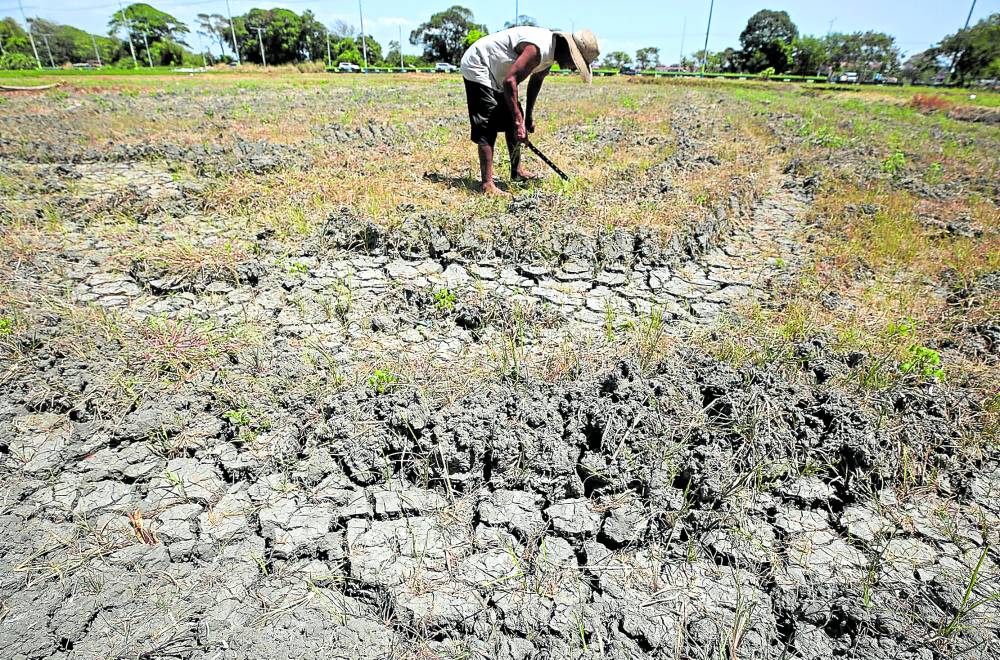
The Marcos administration is ramping up measures to protect the country’s food, water and energy supplies amid warnings that a potentially severe El Niño phenomenon could persist until 2027, threatening agricultural production and economic activity nationwide.
President Marcos on Monday said government agencies were intensifying preparations as forecasts pointed to prolonged dry conditions that could affect large parts of the country.
“According to our data, there is a high possibility that the country will experience severe El Niño that may last until next year, 2027,” the President said during the inauguration of the Mabini-Cayacay Small Reservoir Irrigation Project (SRIP) in Bohol province.
He said the government was accelerating investments in irrigation and water-management projects to help farmers cope with drought and strengthen resilience against climate-related disasters.
Farmers on the front line
Among the measures being implemented is the promotion of drought-resistant and less water-intensive crops such as watermelon, ginger, purple yam, peanuts and eggplant in vulnerable farming communities.
The government is also encouraging the use of climate-adaptive technologies, including solar-powered irrigation pumps and water recycling systems in drought-prone areas.
Mr. Marcos highlighted the newly completed P833.37-million Mabini-Cayacay SRIP, a project of the National Irrigation Administration, as part of the administration’s broader strategy to sustain agricultural productivity despite worsening climate conditions.
The facility is expected to provide a year-round water supply to 530 hectares of farmland in eastern Bohol, benefiting 717 farmers in Mabini and Alicia towns.
The project includes a 32.20-meter-high dam, an ungated spillway and an 11.31-kilometer main canal that will distribute water from the Baujanan and Cawasan creeks to agricultural areas.
Officials said the irrigation system would allow farmers to increase cropping frequency from two to three planting cycles annually, boosting yields and incomes.
El Niño alert
The government’s preparations come after the Philippine Atmospheric, Geophysical and Astronomical Services Administration (Pagasa) confirmed earlier this month that El Niño conditions had developed in the tropical Pacific.
Sea surface temperatures in key regions of the Pacific were about 0.5 degree Celsius above normal, meeting the threshold for the onset of El Niño, Pagasa said.
The state weather bureau recently projected a 92-percent probability that a moderate to strong El Niño event would develop in the fourth quarter of 2026 and continue into early 2027.
El Niño is associated with below-normal rainfall, prolonged dry spells and drought conditions in the Philippines, although Pagasa said above-normal rainfall may still occur in western parts of the country during the southwest monsoon season until October.
Costly reminder
The Department of Agriculture (DA) warned that a strong El Niño could slash national rice production by as much as 700,000 metric tons, raising concerns over food security and farmers’ livelihoods.
Officials are drawing lessons from the 2023-2024 El Niño episode, which caused P57.78 billion in agricultural losses, the highest in recent years.

Swift youngest woman in Songwriters Hall of Fame
Corn suffered the heaviest damage, followed by rice, high-value crops, cassava, coconut and fisheries.
Data from the Philippine Statistics Authority showed agricultural output fell by 2.2 percent in 2024 to P483.58 billion, reflecting the impact of drought and extreme weather.
To mitigate similar losses, Malacañang said Mr. Marcos recently convened a Cabinet meeting to review the government’s El Niño action plan covering food security, water supply, energy reliability, public health and disaster preparedness.
The DA, National Food Authority, Philippine Coconut Authority and Bureau of Fisheries and Aquatic Resources have been directed to reactivate the DA National El Niño Team, identify drought-prone areas, rehabilitate irrigation facilities and promote water-saving farming practices.
Water-management agencies have been tasked to desilt reservoirs, repair facilities, enforce conservation measures and prioritize domestic water supply.
Health authorities are preparing for a possible rise in heat-related and waterborne illnesses, while energy agencies have been instructed to secure fuel reserves, strengthen transmission systems and ensure adequate electricity supply. —WITH A REPORT FROM ANDRE ESGUERRA
