
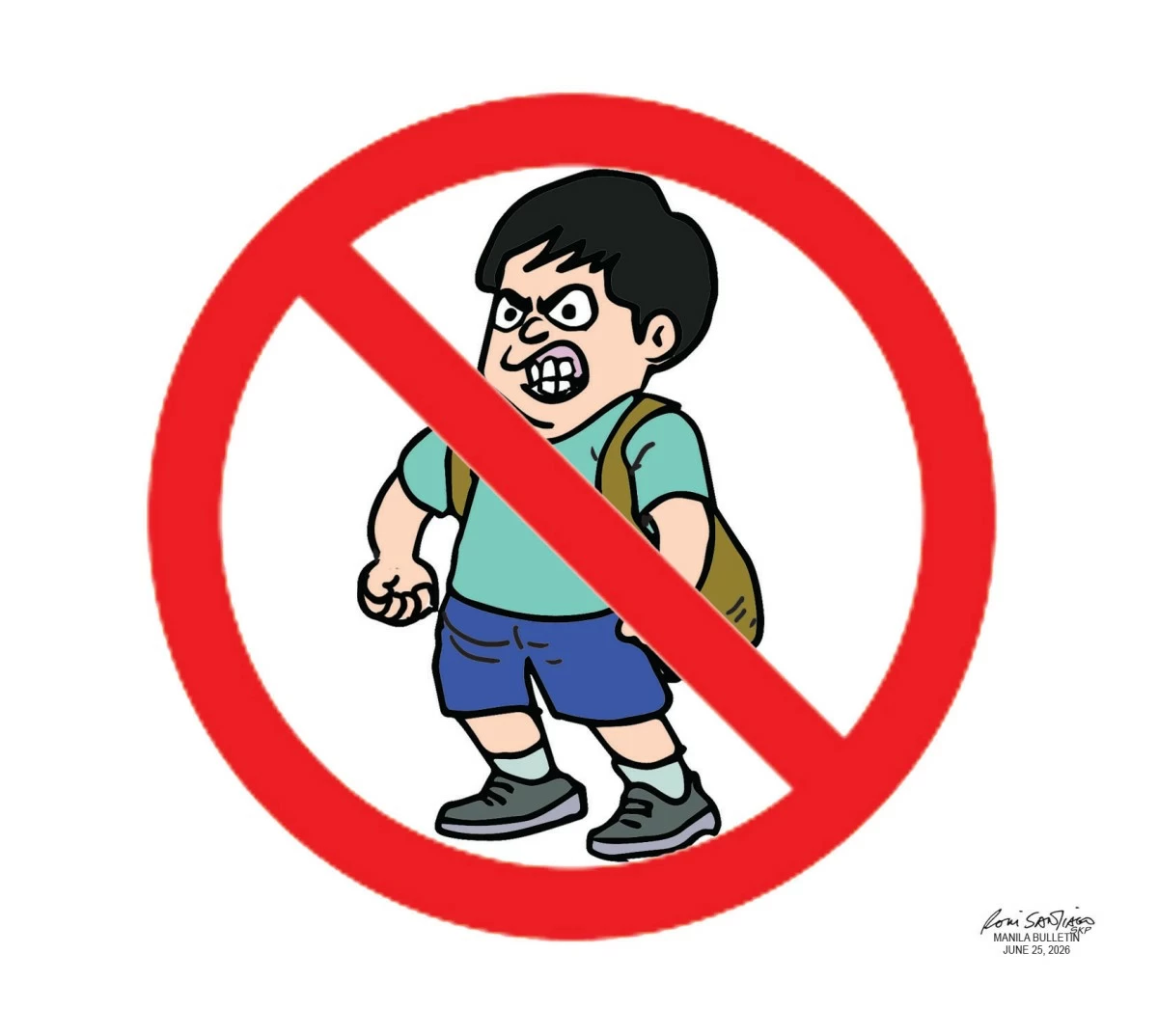
How safe are our schools, and what more must be done to protect our children?
We are raising this in the aftermath of the recent violent incidents involving students in Tacloban City and Negros Occidental.
The fatal shooting at San Jose National High School in Tacloban City and the stabbing incident outside a school in San Carlos City are stark reminders that campus safety requires constant vigilance. While law enforcement agencies and education officials have acted swiftly in the aftermath of these incidents, the challenge before the nation extends far beyond immediate investigations and legal proceedings.
Education Secretary Sonny Angara was right to declare that school safety is a non-negotiable priority. He deserves credit for treating the issue with the urgency it demands. His call for stricter campus security measures and closer coordination among schools, local governments, and law enforcement agencies reflects a growing recognition that student safety must be a central pillar of educational governance. His observation that increased police visibility around school premises and surveillance systems serve as effective deterrent is supported by the feedback of learners themselves. Such measures are necessary, but they address only the symptoms of a deeper problem.
The government must pursue a comprehensive strategy that combines security, prevention, intervention, and rehabilitation. This means investing not only in campus protection but also in mental health services, guidance counseling, anti-bullying programs, and conflict-resolution mechanisms. Schools should be equipped to identify students who may be struggling with emotional distress, social isolation, or behavioral issues before these challenges escalate into violence.
Equally important is the ongoing discussion regarding violent online content and its potential influence on young people. President Ferdinand Marcos Jr.’s openness to proposals that would regulate or even prohibit excessively violent online games has generated debate.
The issue deserves careful examination rather than reflexive conclusions. Research has yet to establish a conclusive direct causal relationship between video games and violent criminal behavior. However, concerns about prolonged exposure to violent content among minors cannot simply be dismissed. The government, educators, parents, psychologists, and technology companies should engage in a serious evidence-based discussion on whether additional safeguards are needed. If legislation is pursued, it must strike the proper balance between child protection, parental responsibility, and constitutional freedoms.
The private sector also has a responsibility that cannot be overlooked. Technology firms, social media platforms, gaming companies, and telecommunications providers are influential participants in the daily lives of young Filipinos. Stronger parental-control tools, more effective age-verification systems, and responsible content moderation should form part of a broader commitment to child welfare. Beyond technology, businesses can support youth development through community programs, sports initiatives, leadership training, and mental health advocacy.
Parents, however, remain the most important stakeholders in preventing youth violence. Schools can educate and governments can regulate, but the values that shape a child's character are first cultivated at home. Parents must remain engaged in their children's academic lives, friendships, online activities, and emotional well-being. Warning signs are often visible long before a violent incident occurs.
Communities likewise have a vital role to play. Local officials, faith-based organizations, civic groups, and neighborhood leaders must work together to create safe spaces where young people can find guidance, mentorship, and a sense of belonging. Preventing violence requires strong social bonds as much as strong security measures.
The incidents in Tacloban and Negros Occidental are warnings that demand a whole-of-nation response. Protecting students requires more than fences, surveillance cameras, and police patrols. It requires a collective commitment to addressing the social, psychological, technological, and cultural factors that contribute to youth violence.
We have to treat school safety as a national responsibility, not purely an education issue. This demands action from the government, families, businesses, and communities alike.
