You plan to move to the Philippines? Wollen Sie auf den Philippinen leben?

There are REALLY TONS of websites telling us how, why, maybe why not and when you'll be able to move to the Philippines. I only love to tell and explain some things "between the lines". Enjoy reading, be informed, have fun and be entertained too!

Ja, es gibt tonnenweise Webseiten, die Ihnen sagen wie, warum, vielleicht warum nicht und wann Sie am besten auf die Philippinen auswandern könnten. Ich möchte Ihnen in Zukunft "zwischen den Zeilen" einige zusätzlichen Dinge berichten und erzählen. Viel Spass beim Lesen und Gute Unterhaltung!


Visitors of germanexpatinthephilippines/Besucher dieser Webseite.Ich liebe meine Flaggensammlung!

free counters

Total Pageviews

Wednesday, June 17, 2026

PHILIPPINES SURROUNDED BY MAJOR EARTHQUAKE-GENERATING TRENCHES, PHIVOLCS REMINDS PUBLIC

As recent strong earthquakes continue to raise concerns across the country, seismologists are reminding Filipinos that the Philippines sits near several active ocean trenches capable of generating powerful earthquakes and tsunamis.
According to the Philippine Institute of Volcanology and Seismology (PHIVOLCS), six major active trenches surround the country:
🔺 Manila Trench
🔺 East Luzon Trough
🔺 Philippine Trench
🔺 Negros Trench
🔺 Sulu Trench
🔺 Cotabato Trench
Experts have previously identified the Manila Trench, Philippine Trench, and Negros Trench among the offshore fault systems capable of producing earthquakes exceeding Magnitude 8.0 under certain conditions.
The advisory comes amid renewed public attention on earthquake preparedness following several significant seismic events recorded in different parts of the country in recent weeks.
While PHIVOLCS emphasizes that earthquakes cannot be predicted, authorities continue to encourage households, schools, and businesses to review emergency plans, prepare disaster kits, and familiarize themselves with evacuation procedures.
The Philippines lies within the Pacific Ring of Fire, one of the most seismically active regions in the world, making earthquake preparedness a continuing necessity rather than an occasional precaution.
📍 Source: DOST-PHIVOLCS

May be an image of map and text that says 'MANILA TRENCH EASTLUZON EAST TROUGH LUZON TROUGH NEGROS TRENCH PHILIPPINES: SURROUNDED BY 6 6 ACTIVE TRENCHES inside.'

All reactions:
371

Does blood type matter? Why some people are mosquito magnets


Isabelle Cortes - Philstar.com

June 17, 2026 | 2:28pm


This close-up photograph shows a mosquito on human skin in Montlouis-sur-Loire, central France, on Oct. 21, 2022.

AFP / Guillaume Souvant


PARIS, France — Ever felt like mosquitoes bite you while ignoring everyone else? Scientists are now making progress in deciphering the complex chemical cocktail that makes particular people more enticing to these disease-spreading bloodsuckers.


"It's not a misconception — mosquitoes are attracted to some people more than others," Frederic Simard of France's Institute of Research for Development told AFP.


"But we are not all magnets all the time," the medical entomologist added.


A range of sensory cues can cause mosquitoes to pick one human over another — mainly the smell and heat our bodies give off, and the carbon dioxide we exhale.


Female mosquitoes — which are the only ones that bite — detect these signals with finely-tuned receptors, then choose their target accordingly.


"We have known for over 100 years that mosquitoes are attracted by the carbon dioxide that we exhale — this is the first signal that triggers their behavior" when they are dozens of meteRs away, Swedish scientist Rickard Ignell told AFP.


Within around 10 meters, "mosquitoes will start detecting our odor, and in combination with carbon dioxide," this attracts them even more, said the senior author of a recent study on the subject.


As they get closer, body temperature and humidity make particular humans even more enticing.


Doesn't matter 

However some popular theories on this subject do not hold water.


The idea that mosquitoes prefer particular blood types "has no scientific basis," Simard said.


"There have been some studies, but only involving very few people," he said. "Nor is it related to skin, eye or hair color," he added.


Odor, on the other hand, matters greatly.


"A soup of molecules produced by our microbiota is more — or less — appealing to mosquitoes," Simard explained.


Humans release between 300 and 1,000 different odorous compounds, research has shown, but scientists are only just beginning to understand which ones attract mosquitoes.


For Ignell's recent study, the researchers released Aedes aegypti mosquitoes — known for spreading yellow fever and dengue — on 42 women in a lab, to see which ones they preferred.


"We have shown that mosquitoes use a blend of odorous compounds (we identified 27 that the mosquitoes will detect, out of the possible 1,000) for their attraction to us," Ignell said.


The woman the mosquitoes most liked to bite — which included pregnant women in their second trimester — produced a large amount of a particular compound made by a breakdown of the skin oil sebum.


That even a small increase of this compound — called "1-octen-3-ol," or mushroom alcohol — made a difference came as a surprise, Ignell emphasized.


"Mosquitoes are fascinating creatures," he added.


Beer makes you attractive 

Drinking beer has also been linked to attracting mosquitoes, because it raises body temperature, increases the amount of exhaled CO2 and changes skin odor, according to several studies.


For standardized research conducted in Burkina Faso, some brave volunteers drank beer, then several days later water, to see which mosquitoes preferred.


The Anopheles mosquito, which can spread malaria, was more enticed by the scent of the beer drinkers.


For a 2023 study in the Netherlands, 465 volunteers put their arms in cages filled with female Anopheles mosquitoes.


The volunteers who had drunk beer in the previous 24 hours were 1.35 times more attractive to the mosquitoes.


Discovering why mosquitoes prefer particular people has becoming a more pressing issue as climate change expands the range where they roam.


For example, the tiger mosquito, a vector for the chikungunya virus, is spreading into new areas. Last year, chikungunya reached as far north as France's Alsace region for the first time.


"This risk is affecting more and more people," Simard said.


So what can you do to avoid getting bitten?


Try loose-fitting clothing that covers your skin, mosquito nets and repellent, Simard advised.


"Try to eat light meals — and go easy on the alcohol," he added.


Valdez upbeat despite Alas loss


Veteran Alyssa Valdez, the face of the sport for more than a decade already, was holding back her tears while answering the question on why she took the challenge to lead Alas Pilipinas' campaign in the just-concluded 2026 AVC Women's Volleyball Cup in Candon City.


By Mark Rey Montejo

Published Jun 17, 2026 03:44 pm


Veteran Alyssa Valdez, the face of the sport for more than a decade already, was holding back her tears while answering the question on why she took the challenge to lead Alas Pilipinas’ campaign in the just-concluded 2026 AVC Women’s Volleyball Cup in Candon City.


“I’ve been asking myself bakit ko ginawa itong decision na ito sa volleyball career ko, and I think na actually lumabas was kung ano ‘yong love no’ng bata ako sa volleyball hanggang ngayon ‘yon pa rin ‘yong love ko sa pag-represent sa bansa,” said Valdez.


Her simple answer gained not only admiration but also much love and respect from men and women who chronicled the event for more than a week.  

“So, sarap sa pakiramdam, pero… hindi man naging maganda ‘yong resulta pero para sa mga bata magtuloy-tuloy talaga ‘yong fire nila to represent the country,” she added moments after the Philippines settled for eight overall in the continental joust following its 21-25, 12-25, 21-25 loss to Iran.


With the young and brightest opting not to join the PH squad, perhaps due to leadership squabble, Valdez and other veterans like Jovelyn Gonzaga, Ces Molina, Ara Galang, and Royse Tubino stepped up on the plate for the love and pride of serving the country though they are no longer as quick and strong as before.


It is their hope that the young members of the team – Alyssa Solomon, Thea Gagate, and Niña Ytang – will never get tired wearing the tricolors and play with passion and fire.


She also urged other rising stars to stay focused, dream big and not be affected by the outside noise that put the volleyball association in a bad light of late – again.  

“Para sa bawat atletang patuloy na nangangarap – lalo na sa mga kabataang nagsisimula pa lang, padayon tayo,” Valdez wrote on her social media post. 


“Sana hindi kayo mapagod, matakot, o sumuko sa pangarap n’yong magrepresent ng bansa sa kabila ng ingay at gulo sa paligid,” she added.


Valdez, a former Ateneo standout and longtime star of the Creamline Cool Smashers, also called for clarity amid the issues surrounding the path of the country's volleyball body, expressing hope for "leadership in all its forms" for betterment of the next generation.


“At a time like this, what the sport needs is not more division, but leadership in all its forms. Leadership that listens. Leadership that puts the welfare of athletes first. For the sports community, for the fans, for the country,” Valdez continued.


“Pero ngayon, higit kailanman, kailangan natin ang suporta ng volleyball community. Ngayon, hindi man pare-pareho ang paraan, ang mahalaga ay iisa ang hangarin – isang mas maayos, patas, at mas matatag na sistema para sa susunod na henerasyon ng atletang Pilipino,” she concluded. “Maraming salamat sa patuloy na naniniwala at magtitiwala.”

Myrtle Sarrosa phone theft: Tracker trail ends, possible ransom claims surface

 By Manila Bulletin Entertainment

Published Jun 17, 2026 07:02 pm

Sarrosa said her family was initially able to trace the phone’s movement from Pasay City to Quezon City using tracking features, passing through Commonwealth, Fairview, and Mindanao Avenue. At one point, she said someone briefly answered a call from the device before cutting it off.

The situation took a turn when the phone stopped transmitting its location. “The tracker stopped moving. The phone suddenly went offline,” Sarrosa said, marking the point where recovery efforts stalled.  

She also said communication with the person currently holding the device appears to have shifted away from a simple return arrangement. “It doesn’t feel like the goal is simply returning the phone anymore,” she said. “Right now, it feels like the goal is to get more money.”

Online speculation about the contents of the phone has also circulated, but Sarrosa firmly dismissed claims that it contains sensitive or scandalous material. “My faith, values, and principles would never be compromised,” she said, stressing that the device only holds personal files, work materials, and creative archives.

Despite the developments, Sarrosa continues to appeal for the phone’s return and remains open to honoring the original ₱30,000 reward. “Ang hiling ko lang po sana ay maibalik ang phone ko,” she earlier said in her appeal, noting the device contains irreplaceable memories and professional content.

She also thanked ToyCon organizers, security personnel, and authorities who assisted during the initial search efforts.  

As of the latest update, the phone has not been recovered, and its current location remains unknown. (Ian Ureta)

Liza Soberano gets real about money, rejection, and her new life in Hollywood


Published Jun 16, 2026 11:20 am | Updated Jun 16, 2026 04:48 pm

At A Glance

  • Liza Soberano opens up about the financial realities, constant auditions, and challenges of rebuilding her career in Hollywood after leaving behind success in the Philippines.

Liza Soberano is opening up about the challenges that came with leaving behind an established career in the Philippines to pursue opportunities in Hollywood.

Speaking on the "Painfully Human Podcast," the actress reflected on her decision to relocate to Los Angeles and the realities of starting over in a highly competitive industry.

The actress acknowledged that the move has significantly changed her financial situation.  

She also addressed criticism from those who questioned why she occasionally takes on influencer work and smaller brand partnerships.

For Soberano, the answer is straightforward.

"When I first moved to LA, it really hurt me when people would say, 'Oh, laos na siya. We don't see her anywhere. Oh, laos na siya. She's only doing these small little influencer gigs.'"

"Guys, that's how I stay alive," she said.


The actress explained that while much of her income still comes from Asia, she now has to cover expenses in the United States, where the cost of living is considerably higher.

"I'm not making as much money as I did before and on top of that, majority of my money still comes from Asia, but I'm living in the US, so the conversion is crazy."

As a result, she takes on projects that help support her financially while she continues working toward bigger opportunities.

"I have to do all these little gigs every now and then because that's how I pay my bills."

Beyond the financial adjustments, Soberano said she has had to adapt to a different pace and process in Hollywood.

Much of her time is spent attending auditions, taking classes, and investing in training. She also pays for coaching sessions to prepare for self-tape auditions despite having no certainty that a role will follow.  

Rejection, she said, has become a normal part of her routine.

"In America, I do three to four auditions a week and I get rejected constantly."

Despite that, the actress said the experience has been rewarding because it continues to push her outside her comfort zone.

"But I'm loving it now because I'm learning and growing so much."

Since relocating to Los Angeles, Soberano has already landed notable international projects. She made her Hollywood debut in the 2024 film "Lisa Frankenstein" and was recently announced as part of the voice cast of "Forgotten Island," an upcoming animated feature from DreamWorks Animation.

Pope Leo XIV’s visit to Spain


March for the Martyrs photo
Pope Leo XIV blesses a baby as he enters the Gran Canaria Stadium on the island of Gran Canaria, in Spain's Canary Islands, on June 11, 2026. 
VATICAN MEDIA PHOTO VIA AFP

By Fr. Shay Cullen, Founder since 1974

When the cruel and vindictive King Herod ruled Judea more than two thousand years ago, he had all boys 2 years old and younger in Bethlehem slaughtered, in an attempt to eliminate the baby Jesus, whom he saw as a threat to his power. Mary and Joseph fled with Jesus to Egypt, where they were welcomed and took refuge until Herod died some years later, after which they returned home to Nazareth.

This episode in the life of Jesus of Nazareth highlighted the Christian value of respecting the rights and dignity of migrants, which have been honored since. The visit of Pope Leo XIV to Spain this past week reinforced this important value. It came as the country’s socialist-led government has shown solidarity and respect for displaced people by regularizing the status of more than 500,000 undocumented migrants and asylum seekers there.

This stands at odds with the policies of the other European countries and the United States that reject and mistreat such people. The prevailing political climate across Europe has shifted significantly to the right, viewing irregular migration as threats, and migrants as potential criminals and unwanted persons. Their policy is one of deterrence, attempting to block migrants from entering, rather than accept, support and help migrants integrate, like what Spain has done. Mainstream European governments, such as those in Germany and France, have tightened residency laws and slashed their quotas for refugee resettlement, making legalization almost impossible. In the United Kingdom, the government has tried to deport migrants to an African country willing to accept them for money. The European Union heavily funds North African countries, such as Tunisia, Egypt and Morocco, to intercept migrants before they ever reach European shores.

This is what Pope Leo spoke out against. In an address to Spain’s parliament — which later received a seven-minute standing ovation — he told legislators that countries had a moral duty to accept and protect migrants. “The tragic drama of migration ... challenges the conscience of nations and the ethical foundation of the international order,” he said. “Numerous men, women, and children are forced, often by dramatic circumstances, to leave their communities and abandon loved ones, their histories, and their connections.”

The “universal principle of the equal dignity of all human beings,” he added, was violated if people found themselves discriminated against “because of their national, ethnic, religious or linguistic origin, or because of their economic or social status.”

The pope also pointed out the divisions in societies throughout the world, especially in Europe, where racism and anti-migrant sentiment posed grave challenges, even threats, to migrants escaping oppression, persecution and dire poverty in their respective homelands and seeking freedom and a new life in Europe. Migration opponents have spoken against migrants in Spain, demanding their deportation. But Spain respects the rights of migrants and helps them achieve economic integration, provided that they have a clean record. The country sees them as a hidden workforce that pays taxes and has chosen a pragmatic and humanitarian approach. Through a historic royal decree, Spain launched an extraordinary regularization process between April and June 2026.

The Filipino migrant diaspora is one of the largest in the world. Approximately 15 million Filipinos are living outside the Philippines. The Philippine Statistics Authority estimates that 2.19 million of our countrymen are working abroad as overseas Filipino workers (OFWs) on temporary contracts. An estimated 200,000 to 300,000 Filipinos live in Spain, and every year, approximately 2,000 of them become Spanish citizens after only two years of legal residency.

Integrated community

It’s not surprising that Filipinos are considered the most integrated immigrant community in Spain. The Philippines was once a Spanish colony. Spain introduced Catholicism to the country. Our national hero, Dr. José Rizal, had profound intellectual, personal, and political connections to Spain. He traveled secretly to the country in 1882 to finish his education. He attended the Universidad Central de Madrid, earning degrees in medicine, philosophy and literature. His writings, especially his novels, were considered subversive. After he returned to the Philippines, the Spanish colonial government had him executed on Dec. 30, 1896, by a firing squad of Filipino troops, backed by Spanish soldiers, at Bagumbayan (now Rizal Park) in Manila. His execution ignited the Philippine Revolution against Spain.

Pope Leo XIV challenged politicians and society to evaluate their morals by how they protect the most fragile of people. He said safeguarding human life from “conception to its natural end” is a fundamental goal of civilization, and not a partisan issue. He challenged Spain to provide safe legal pathways and respectful integration for migrants. He also challenged the international community to fix the root causes of poverty, violence, and climate change so that “no one has to leave their home due to a lack of peace.”

Spain is a most secularized society; only an estimated 9 million people are practicing Catholics out of a total population of 49.69 million. About 1 million attended Pope Leo’s Mass in Madrid. Leo spoke about the right to life since abortion and euthanasia are completely legal and regulated by law in Spain, and the services are part of the Spanish health care system.

“All human life must be recognized and protected from conception to natural death, in every circumstance of its existence. When this certainty is obscured, the most vulnerable become the first victims, and the law loses its deepest meaning: to serve and protect every person,” he said.

“Therefore, the moral greatness of a nation is shown, above all, in its capacity to accompany, protect, and love those lives that are most fragile,” he added.

He also had much to say about clerical child abuse in Spain. A landmark 2023 report by Spain’s national ombudsman, Ángel Gabilondo, used an extensive public poll to project that 0.6 percent of Spain’s adult population — roughly 200,000 — were abused by clergy. That figure jumps to 400,000 (1.13 percent) when it includes lay staff at Church-run schools and institutions. The Spanish Church said in June it had discovered 927 cases of clerical child abuse through a complaints procedure launched in 2020. There are almost no convictions of clerical child abusers, as more than 60 percent of the accused clerics are already dead, and the Spanish statute of limitations has prevented legal actions against the abusers.

Pope Leo had this to say about it: “Faced with this scourge, the ecclesial community is called to respond with listening, truth, justice, reparation and an ever more determined commitment to prevention and a culture of care.”

“Every wounded person must be able to find sincere listening, welcome, protection and real paths to healing,” he said.

With these words, he could be talking to the Philippine clergy, as well.

Rethink Manila Bay reclamation projects before disaster strikes


By Manila Bulletin Newsroom

Published Jun 17, 2026 12:05 am  


How safe are reclamation projects in Manila Bay?

Scientific evidence continues to accumulate, and policymakers would be ill-advised to ignore its implications.

A recent study published by the University of the Philippines reported significant land subsidence in key infrastructures situated within reclaimed areas of Manila Bay. At nearly the same time, separate studies published in the journals “Nature Climate Change” and “Nature Geoscience” reinforced a growing global concern: climate change-induced sea-level rise is increasing the frequency and severity of coastal flooding, while land subsidence is further magnifying these risks in vulnerable coastal regions.

Taken together, these findings raise important questions about the long-term viability, sustainability, and safety of ongoing and proposed reclamation projects in Manila Bay. They also underscore the urgent need for the reassessment of assumptions that may have guided decisions in the past but may no longer be consistent with current scientific understanding.

Reclamation projects may become engines of economic growth. New commercial districts, transport hubs, residential communities, and tourism developments are expected to generate investments, create employment opportunities, and contribute to local and national revenues. Such objectives are legitimate and worthy of consideration.

However, economic development cannot be pursued independently of environmental realities and public safety. Sound public policy requires balancing commercial interests with ecological sustainability and the welfare of affected communities. When credible scientific studies point to emerging risks, the government has a responsibility to ensure that development plans remain aligned with the best available evidence.

Coastal flooding is increasingly understood as the product of two simultaneous phenomena: rising sea levels and sinking land. Where both occur together, the resulting risks are compounded. Reclaimed land, often built on soft coastal sediments, may be particularly susceptible to long-term settlement and subsidence. The implications extend beyond the reclaimed areas themselves. Altered coastlines, modified water flows, reduced natural buffers, and changing drainage patterns can affect neighboring communities, many of which are already vulnerable to flooding during storms and extreme weather events.

Experience has shown that large-scale infrastructure and land development projects can sometimes produce unintended consequences for the public. In various parts of the country, residents have raised concerns over worsening floods attributed to altered waterways, insufficient drainage systems, and the loss of natural flood-mitigating ecosystems. These concerns deserve careful and objective examination in the context of Manila Bay.

The issue likewise cannot be separated from the continuing writ of mandamus issued by the Supreme Court in 2008 that directs 13 government agencies to clean up, rehabilitate, and preserve Manila Bay. Therefore, any major development initiative within Manila Bay must therefore be evaluated not only in terms of economic returns but also in light of this judicial mandate and the government's broader responsibility as steward of the environment.

Regulatory agencies must respond accordingly. Environmental impact assessments should undergo rigorous review using the latest scientific data on sea-level rise, land subsidence, climate projections, and cumulative environmental impacts. Where public safety concerns are substantial, authorities must be prepared to require project modifications or, when necessary, withhold approval altogether.

The private sector also bears a significant responsibility. Developers and investors should embrace higher standards of environmental governance, support independent scientific monitoring, invest in resilient infrastructure, and ensure that potential environmental and social risks are fully disclosed and responsibly managed.

Citizens likewise have a role to play. Public participation, informed discourse, community vigilance, and support for environmental protection initiatives remain essential in ensuring that decisions affecting Manila Bay are made transparently and accountably.

The question confronting policymakers today is not whether development should proceed. Rather, it is whether development can proceed in a manner that is scientifically informed, environmentally responsible, and protective of public welfare.

Economic progress remains important, but it must never come at the expense of the very communities government is duty-bound to protect.

Remember, the costs of inaction today may ultimately be borne by future generations.

Davao City sends relief goods to quake-hit areas


A PRIEST blesses relief items for quake victims in Mindanao. (Photo via Ivy Tejano)


By Ivy Tejano

Published Jun 17, 2026 05:05 pm


DAVAO CITY – The Davao City government sent relief assistance on Tuesday morning, June 16, to earthquake-hit areas in Soccsksargen and Davao region.

This city sent 4,000 boxes of relief items and 3,000 one-liter bottles of drinking water to General Santos City, Sarangani town, and Jose Abad Santos in Davao Occidental.

According to the city government, the shipment was carried out in partnership with the Davao City Water District and bottled water manufacturer Nature’s Spring.

A 42-member team from the city, composed of personnel from the City Disaster Risk Reduction and Management Office, the City Social Welfare and Development Office, the City Engineer’s Office, the City Mayor’s Office, the Security Cluster, and other frontline offices, led the relief operations.

City officials said the assistance is part of ongoing support for relief and recovery efforts in areas heavily affected by last week’s magnitude-7.8 earthquake, which displaced and impacted thousands of families in the two regions.

Last week, the city government of Davao, in coordination with the Office of Civil Defense-11, also delivered drinking water to affected communities.

The CDRRMO assisted in the medical evacuation of patients from Sarangani to the Southern Philippines Medical Center in Davao City to receive appropriate medical care.

Authorities said further assistance may be deployed as the needs of affected local government units evolve.

El Nino is here and scientists fear it'll be big, bad and costly with heat, floods, droughts, fires


Published Jun 16, 2026 07:36 am | Updated Jun 16, 2026 01:26 pm
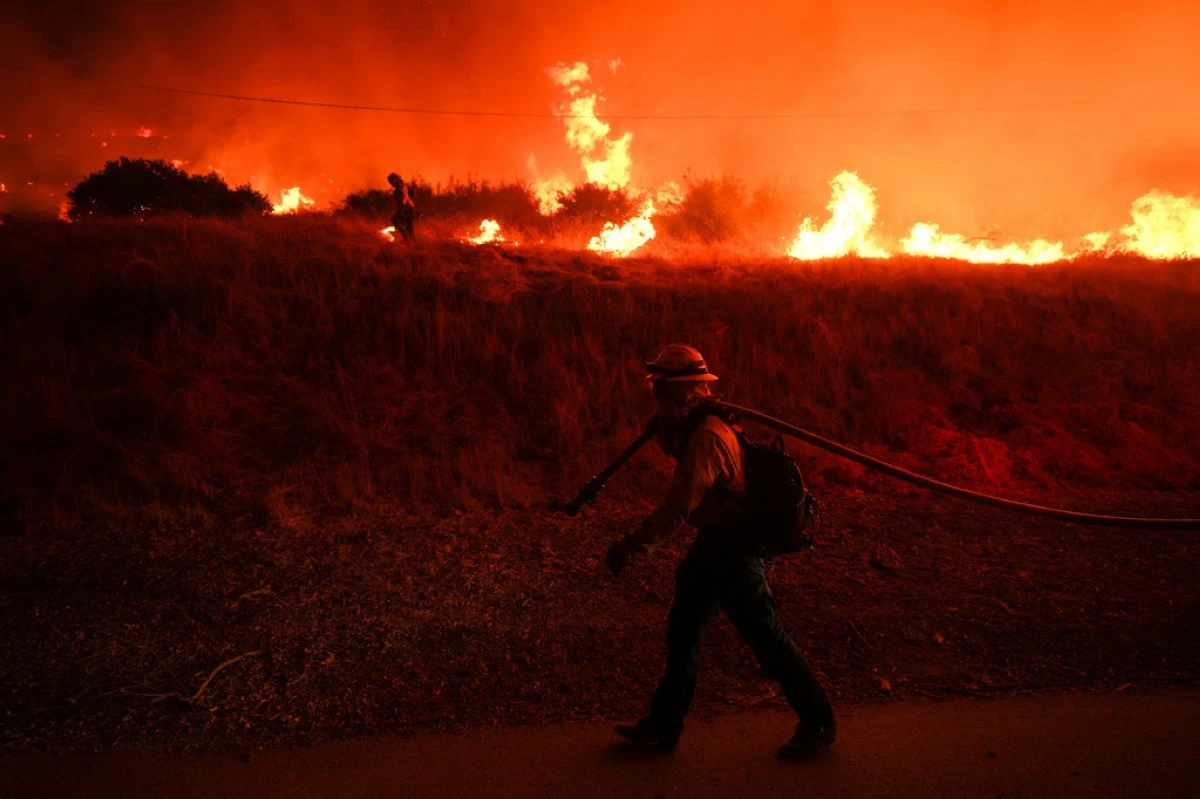
A firefighter monitors flames caused by the Hughes Fire along Castaic Lake in Castaic, Calif., Jan. 22, 2025. (AP Photo/Jae C. Hong, File)
WASHINGTON (AP) — El Nino, Nature's chaotic climate agent, has formed in a warmed-up Pacific Ocean and is expected to grow to historic strength, meteorologists announced Thursday.
Experts said the El Nino, a natural warming cycle, should further heat a globe already warming from fossil fuel pollution and will likely turbocharge extreme weather across the planet. Meteorologists forecast it will rival — or exceed — a record El Nino that began in 1997 and helped trigger billions of dollars in damage from heat waves, floods, droughts, tornadoes and wildfires.
The U.S. National Oceanic and Atmospheric Administration officially confirmed the existence of the El Nino, which is a warming of the Pacific near the equator that affects weather patterns across the globe. NOAA's announcement said there's a 63% chance that the El Nino will get so intense this late fall and early winter that it “would rank among the largest El Nino events in the historical record going back to 1950.”
The warm, deep waters of an El Nino affect weather patterns by bringing “a lot of extra heat to the surface, fueling a lot of extreme events for a lot of places around the world,” said Clark University climate scientist Abby Frazier.
She said, especially in the Pacific, “it can get dire very quickly.”
United Nations Secretary-General António Guterres described El Nino as an “urgent climate warning.”
“El Nino conditions will pour fuel on the fire of a warming world,” Guterres said in a video message.
El Nino's impacts spawn winners and losers
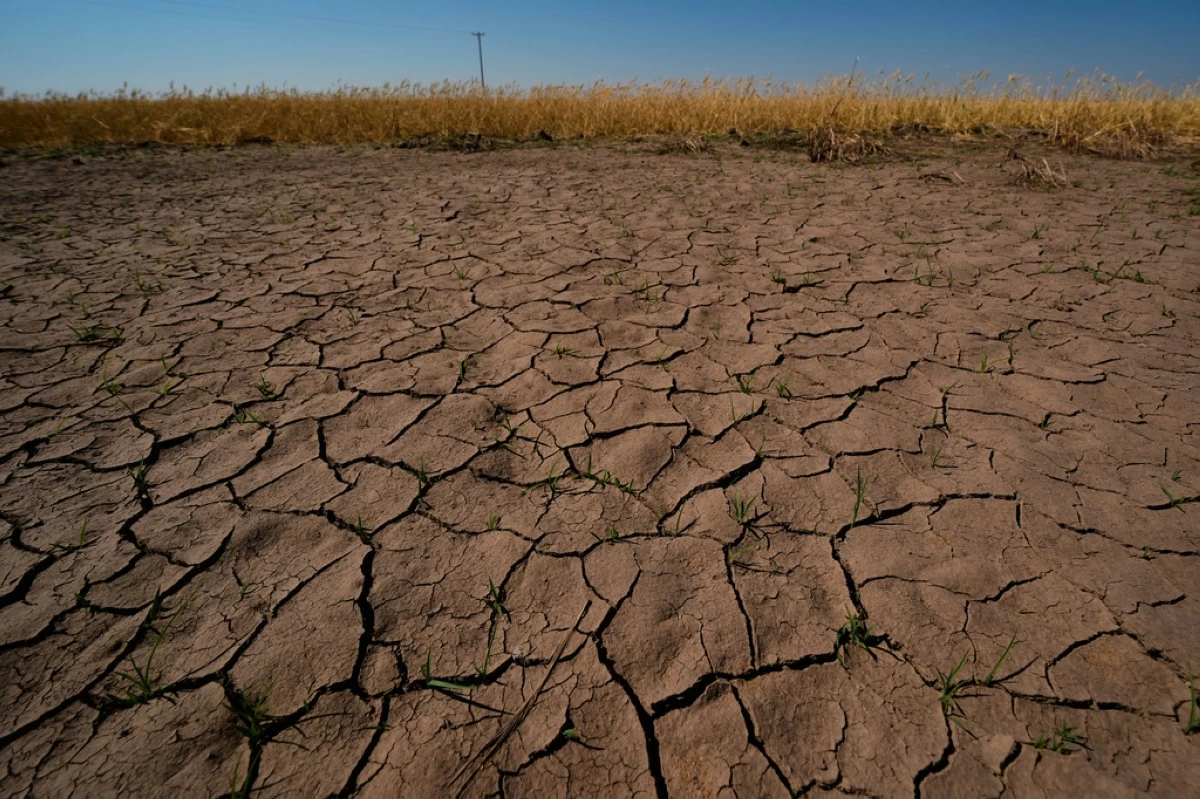
Drought-stressed wheat plants stand adjacent to parched ground in a field near Macksville, Kan., May 16, 2026. (AP Photo/Charlie Riedel, File)
The weather pattern's effects vary by region. El Nino often dampens — but doesn't eliminate — Atlantic hurricane season activity, but increases it in the Pacific. So while the U.S. East and Gulf coasts may get a break, Hawaii and other islands are more in danger, Frazier said.
The drought-stricken Middle East could benefit, climate scientists said. Other places are looking at more danger. Parts of western South America — where the first El Ninos were noticed decades ago — often get heavy rain and floods, along with an extra warm summer. India faces more intense heat waves, while drought, wildfires and heat threaten Australia.
Northeastern Africa is likely going to get weather whiplash from intense drought to dangerously heavy rains, said Columbia University climate scientist and El Nino expert Muhammad Azhar Ehsan.
In the U.S., El Ninos can cause more intense storms with heavier rainfall in the South, but they also tend to generally benefit the U.S. agriculture industry, said Jon Gottschalck, operational branch chief at NOAA's Climate Prediction Center.
Michael Ferrari, meteorologist and head of research at the investment research firm Moby, said conditions for grains and seed, especially soybeans, look favorable in 18 major growing states, but are more mixed when it comes to dairy and cattle.
The northern Rockies and Southwest — where there’s an “off the charts” snow drought — could get some strong summer rains, Gottschalck said. The biggest effect in the U.S. is often in the winter, when the south can get wetter and the Pacific Northwest warmer and drier.
But overall, temperatures raised by the weather pattern can dampen American economic growth, said Stanford climate economist Marshall Burke. Several climate scientists forecast that 2027 will be the hottest year on record because of lagging effects of this El Nino, which is expected to peak in the fall or winter.
“We have pretty clear evidence that the U.S. economy grows more slowly when temps are above normal,” Burke said.
Strong early signs
A person uses a fan during a heat advisory in the Brooklyn borough of New York, May 19, 2026. (AP Photo/Adam Gray, File)
The weather extremes caused by an El Nino also depend on when it develops.
Usually El Ninos form in the summer, peak in the late fall or early winter, and peter out the next spring, scientists said.
However, Ehsan's team forecasts that this El Nino will peak a month or two earlier based on strong early signs from recent weeks. Princeton University climate scientist Gabriel Vecchi said large El Ninos like these also tend to last longer.
The early indications — including warmer water pushing toward the surface of the Pacific — have been so strong and noticeable that forecasters have all been predicting the same ultra strong El Nino, Vecchi said, adding that El Nino forecasts often are all over the place at this time of year.
Scientists predict stronger El Ninos as the world warms from the burning of coal, oil and gas, Frazier and others said. But she said it is too early to say if this El Nino is part of that.
Even before it officially formed, this El Nino has gotten nicknames ranging from “super” to “Godzilla.”
“Instead of scared, we can ask people to be prepared,” Columbia's Ehsan said

What are the reasons behind the trend of Filipino women dating foreigners and wanting to permanently leave their country?


 · 


I will give an unfiltered answer here, and apology in advance if it sparks an offensive connotation.

To begin with, it all starts with the Filipino perception that a "greener pasture" is a place somewhere outside the Philippines. I'm a Filipino, and I admit I am not different with that kind of mindset because.. it really is. Life in the Philippines (if you're poor) is very hard.

There are Filipino professionals who practiced their professions overseas but mostly, we land a job that doesn't match our qualifications (if you're not a graduate in any medical field). Plus processing a work visa to work outside the Philippines, say, western countries, is not easy, and costly and most Filipino job hunters don't have these requirements.

And so, yeah, to make it short here comes the fiancé visa. Which is easier to obtain for an Asian woman if she found a foreign suitable partner. A fiancé visa (K-1) is far more accessible and straightforward if you have a U.S/ western partner, as work visas require an employer sponsor. Although, work visas offer permanent resident paths and immediate employment, whereas a fiancé visa requires marrying within 90 days and a lengthy wait to get a work permit.

I never saw an actual demonstration of extreme feminism but I think that plays a big factor why western men shift their romantic interest toward Asian women, plus of course, several factors like cultural stereotypes, relationship priorities, and physical preferences. Western men flocked to Asian countries to look for a suitable partner and bring home their wife and establish a life together.

I won't ignore the idea that there's feelings involved. There is, of course. Feelings developed overtime. But let's be realistic here, for a Filipina woman, western countries are a land of opportunities and they will grab every chance to get there the easier way, and that is to find a foreign man. In some cases, the foreign man, who usually a retiree, wants to settle down in the Philippines.

The main reason I see why some Filipina women wanting to leave their country and settle overseas is it is easier to help their family back home. Once the Filipina wife granted a, say, a US citizenship, it will be much easier for her to help her family back home or bringing them to work there.