
By Ivy Tejano
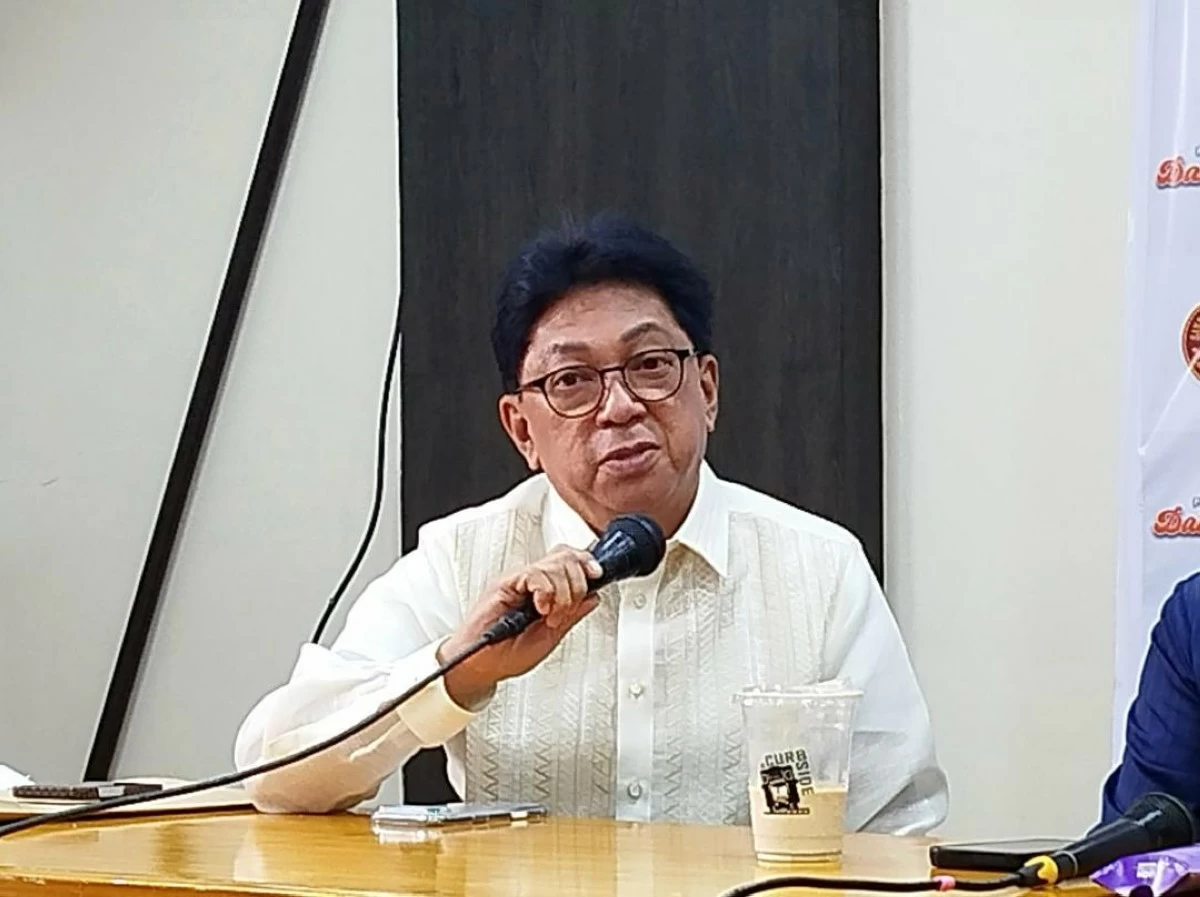
DAYANGHIRANG
DAVAO CITY – Davao Light and Power Co. Inc. explained on Tuesday morning, July 21, monthly electricity rate hikes before the Davao City Council, following the call for the utility to clarify the rising power costs affecting Davaoeños.
Councilor Danilo Dayanghirang, chairperson of the Committee on Finance, Ways and Means, and Appropriations, earlier expressed on his official Facebook page that the increase in electricity rate has added to people's financial burden.
DLPC President Engr. Enriczar Tia said the P0.78 per kilowatt-hour (kWh) increase in residential electricity rates for the July 11 to August 10, 2026 billing period was due to higher generation charges from P13.09/kWh from P12.30/kWh.
The councilor compared Davao Light's recent advisory with the past and noted that residential electricity rates have steadily increased from P9.71/kWh in December 2025 to P13.09/kWh this month.
While Davao Light cited higher generation charges, rising Wholesale Electricity Spot Market prices, power plant outages, and supply constraints as the reasons, Dayanghirang said consumers deserve a more comprehensive explanation.
"Almost two million residents of Davao City deserve a clearer explanation," Dayanghirang said. "The people have the right to know why their electricity bills continue to increase month after month. It is time for Davao Light to answer these questions."
He also said higher electricity rates increase costs not only for households and businesses but also for the city government, affecting hospitals, health centers, schools, government offices, street lights, and other public services.
Dayanghirang said the City Council wants to work with Davao Light and national government agencies to address the continued increase in electricity rates and reduce its impact on consumers.
Responding to questions from council members and the media, Tia said the increase in electricity rates was due to a tighter power supply following the shutdown of several power plants for maintenance or unexpected outages.
He added that the magnitude-7.8 earthquake that struck Mindanao on June 8 affected some generating facilities, reducing the available power supply in the Davao region and driving up WESM prices.
"The issue is not necessarily a complete lack of supply, but that available supply has become tighter than demand. When supply is limited, and demand remains high, market prices naturally increase," Tia said.
He reiterated that the increase stemmed from the generation charge, a pass-through cost under the Electric Power Industry Reform Act (EPIRA), which means it does not profit from the increase.
The Davao Light official said that global fuel prices and geopolitical developments could affect generation costs, particularly for coal-fired power plants that rely heavily on imported fuel supplies.
Davao Light does not earn from generation charges, Tia said, noting that the company's revenue comes only from the distribution charge, which remains unchanged unless approved by the Energy Regulatory Commission.
Tia said the ERC allowed DLPC to spread part of the generation charge increase over five months to ease impact on consumers. He added that the deferred amount will be collected in equal installments from August to December 2026.
"Without the deferment, the residential rate could have exceeded P14 per kilowatt-hour," he said, reminding customers that the ERC has extended the temporary no-disconnection policy until around October due to higher electricity prices.
Davao Light urged consumers to continue paying their bills, warning that unpaid balances will continue to accumulate and may become more difficult to settle later, resulting in larger outstanding electricity bills.
Tia said building more power plants is the long-term solution to keeping electricity prices stable in Mindanao, the Visayas, and Luzon. He said more power plants would increase supply, reduce reliance on the spot market, and help lower electricity costs.
He disclosed that Therma South is studying to expand its existing power plant by adding another 300 megawatts to help meet the region's growing electricity demand. However, the final capacity has yet to be confirmed.
As of now, Tia said Davao Light is pursuing the procurement of an additional 100 megawatts of power through a competitive bidding process. He added that a more contracted supply would reduce the utility's exposure to WESM price fluctuations.
"It is hard to tell when rates will go down," said Tia, who hopes prices will begin to stabilize by September or October once power plants under maintenance resume operations, provided there are no major disruptions such as natural disasters.
Tia said Davao Light currently serves more than 500,000 customers and expects to add about 200,000 more with the expansion of its franchise in northern Davao, covering more households and business establishments.
He clarified that the franchise expansion did not cause the recent increase in electricity rates, stressing that the higher charges were driven solely by generation costs and WESM prices.
Despite the current challenges, Tia said Davao Light remains prepared to meet Davao City's growing electricity demand, which now peaks at around 600 to 620 megawatts, as the city continues to attract more businesses and investments.
Speaking at the Pulong-Pulong sa Dabawenyos on Tuesday afternoon, Dayanghirang urged Davao Light to help secure cheaper power and encouraged more power suppliers to invest in Davao City to increase competition and reduce electricity costs.
As part of the City Council's proposed measures, the councilor said the city should explore policies that encourage the use of solar energy to reduce dependence on conventional power sources.
Dayanghirang proposed that the council pass a resolution inviting more power generation companies to supply electricity to Davao City, saying that greater competition could help lower electricity prices.
"We will continue inviting Davao Light and other concerned parties to appear before the Davao City Council in line with the electricity situation. We want to help find a solution together with the company and other agencies," Dayanghirang said.
In addition, he said existing bilateral power supply arrangements should be reviewed, urging suppliers such as Therma South to prioritize DLPC and Davao City before selling available electricity to other areas.
Dayanghirang said Davao City has long been a major customer of power suppliers and should be given priority in securing affordable and reliable electricity to support the city's growing population and economy.
