
Phivolcs warns of possible explosive activity
At A Glance
- In an advisory issued at 10:15 p.m. on Saturday, July 11, Phivolcs said Mayon's sulfur dioxide emissions averaged 13,128 tons, the highest recorded at the volcano in the last 26 years and only slightly lower than the levels measured during its 2000 explosive eruption.
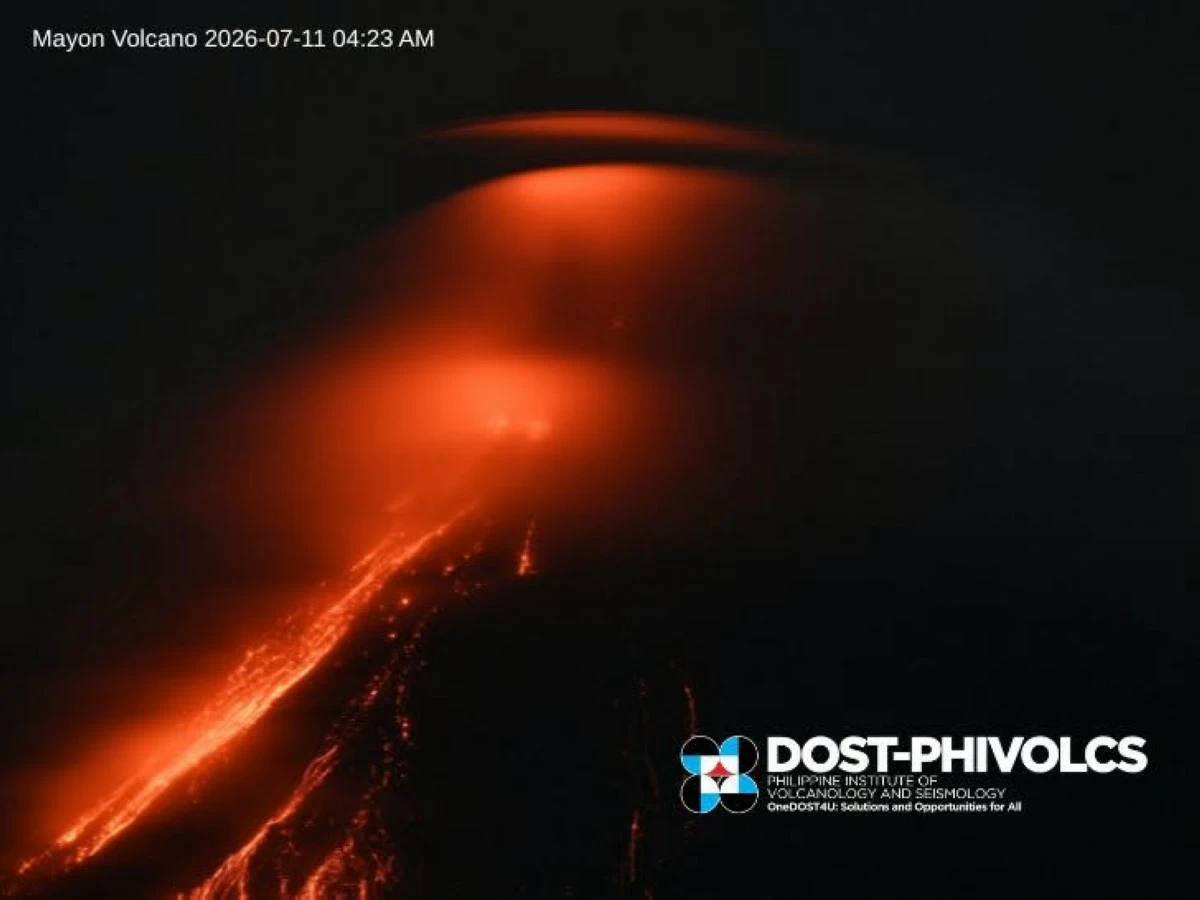
Mayon Volcano (Phivolcs)
Mayon Volcano sustained its lava effusion on Sunday, July 12, a day after the Philippine Institute of Volcanology and Seismology (Phivolcs) warned that record high sulfur dioxide emissions could lead to more explosive volcanic activity.
In an advisory issued at 10:15 p.m. on Saturday, July 11, Phivolcs said Mayon's sulfur dioxide emissions averaged 13,128 tons, the highest recorded at the volcano in the last 26 years and only slightly lower than the levels measured during its 2000 explosive eruption.
“This abrupt rise has been accompanied by an increase in the occurrence of low frequency volcanic earthquakes or LFVQs that are attributed to volcanic degassing and minor strombolian activity at the crater, and increased rockfall linked to collapses from new lava flows,” Phivolcs said.
A strombolian activity refers to short explosive bursts that eject glowing volcanic material and produce brief lava fountains.
In its latest monitoring bulletin issued Sunday, Phivolcs recorded 125 volcanic earthquakes and 344 rockfall events during the past 24 hours.
While the volcano's overall activity remains consistent with its ongoing lava effusion, Phivolcs said the elevated sulfur dioxide emissions could lead to more explosive eruptive activity.
“Elevated volcanic SO2 emissions could forewarn of further or even a potential shift to explosive eruptive activity at the summit crater that could generate volcanic hazards all around the volcano, the impacts of which can be worsened by the prevailing poor weather conditions,” the agency said.
Mayon remains under Alert Level 3, which means “intensified unrest” or “magmatic unrest.”
Phivolcs reminded the public not to enter the six-kilometer permanent danger zone.
It urged communities within areas identified as vulnerable to pyroclastic density currents to remain prepared should volcanic activity escalate.
It also advised vigilance against lahars and sediment laden streamflows during periods of sustained heavy rainfall.
Pilots are also warned against flying close to the volcano's summit due to possible ash emissions and ballistic fragments.
