You plan to move to the Philippines? Wollen Sie auf den Philippinen leben?

There are REALLY TONS of websites telling us how, why, maybe why not and when you'll be able to move to the Philippines. I only love to tell and explain some things "between the lines". Enjoy reading, be informed, have fun and be entertained too!

Ja, es gibt tonnenweise Webseiten, die Ihnen sagen wie, warum, vielleicht warum nicht und wann Sie am besten auf die Philippinen auswandern könnten. Ich möchte Ihnen in Zukunft "zwischen den Zeilen" einige zusätzlichen Dinge berichten und erzählen. Viel Spass beim Lesen und Gute Unterhaltung!


Visitors of germanexpatinthephilippines/Besucher dieser Webseite.Ich liebe meine Flaggensammlung!

free counters

Total Pageviews

Thursday, June 25, 2026

Translation Office in Davao City


Übersetzerdienste - Translation Services


Übersetzerdienste - Translation Services

Even after retiring as German Consul, I am still accredited as a German translator and interpreter for the German, Swiss and Austrian Embassy as well as for Regional Trial Court Davao City and all courts nationwide. Please pm for via doringklaus@gmail.com further information. I'll be answering your messages as soon as possible. Please be patient. Auch nach meiner Pensionierung als deutscher Konsul bin ich weiterhin als deutscher Übersetzer und Dolmetscher für die deutsche, schweizerische und österreichische Botschaft sowie für das Regional Trial Court Davao City landesweit akkreditiert. Für weitere Informationen senden Sie bitte eine PN an doringklaus@gmail.com. Ich werde Ihre Nachrichten so schnell wie möglich beantworten.

The Music and the Bible


I grew up with both. I was born in a  parish, and allowed to play the organ there. Pairing music with your Bible reading is a beautiful way to center your mind and deepen your spiritual focus. Many find that ambient instrumentals, scripture-based songs, or curated Praise and Worship Playlists help block out distractions while reading.

The Bible highly values music as a powerful tool for spiritual expression. It is depicted as a way to worship and praise God, express emotions (joy or sorrow), and teach others. The Bible does not restrict the style of music, but warns against music that promotes ungodly behavior. 

Music is intentional — designed by God to move both spirit and mind, as we see in 1 Corinthians 14:15, “What am I to do? I will pray with my spirit, but I will pray with my mind also; I will sing praise with my spirit, but I will sing with my mind also.”

What is the biblical explanation of music? The principal direction of congregational singing is to the Lord (Ps. 96:1). Music is made first of all to the Lord and only secondarily to each other. Music should communicate and express a sense of awe and wonder in the presence of God; it should lead our thoughts toward God rather than toward ourselves.

Music has a way of piercing into the deep parts of our soul, that assists in our expression and response to God and to the church. Singing helps unites us to the church. The gospel alone unites believers to one another.

The music and the bible. Strategies against darkness. Sure, you are able to listen to the wonderful music I select for my daily music column. But there is something more… .

“Why am I so sad? What am I so troubled about?” (Psalm 42,11).

If it’s becoming dark, we usually turn on our lights. But, it’s still daylight. It’s a magnificent and wonderful  day! The sun shines with might in the sky. The trees are blossoming and the flowers are ablaze with amazing colors; the birds are chirping cheerfully. – “Yet, why am I so sad? Why am I so troubled?”

We experience feelings, as if darkness lies onto our souls, and light cannot get through any more. Yes, we make head or tail o it, because some really bad things happened since a couple of weeks or months in many of our life and surroundings:

A good friend passed away unforeseen; a wish, carried with us in our hearts never became true; all doors seem to be locked forever; financial problems bother us and don’t allow the chance for three daily meals; and arduous illness seems to become incurable.

Why are we so sad? Why are we so troubled? The psalm’s poet voices out innermost feelings and emotions during those times.

Music accomplishes many things. It has practical utility that can be applied to many endeavors, it can be used to communicate information and emotions, it plays a substantial role in culture, it provides entertainment, it gives people an outlet to be creative, it helps us understand beauty, and it has value on its own.

Music unites the congregation so that God is worshipped with one voice. A wide variety of music is used in Christian worship including hymns, psalms, choral music, gospel songs, contemporary music and instrumental music, played for meditation and reflection.

I was trained how to survive such periods of life. Be patient and wait!

Pray!

Or: “Quarrel with your soul!” No, it’s not nonsense, it really works.

“Don’t make such a fuss; get out of your dump and be happy!”

Or, read Psalm 103: “The Love of God”.

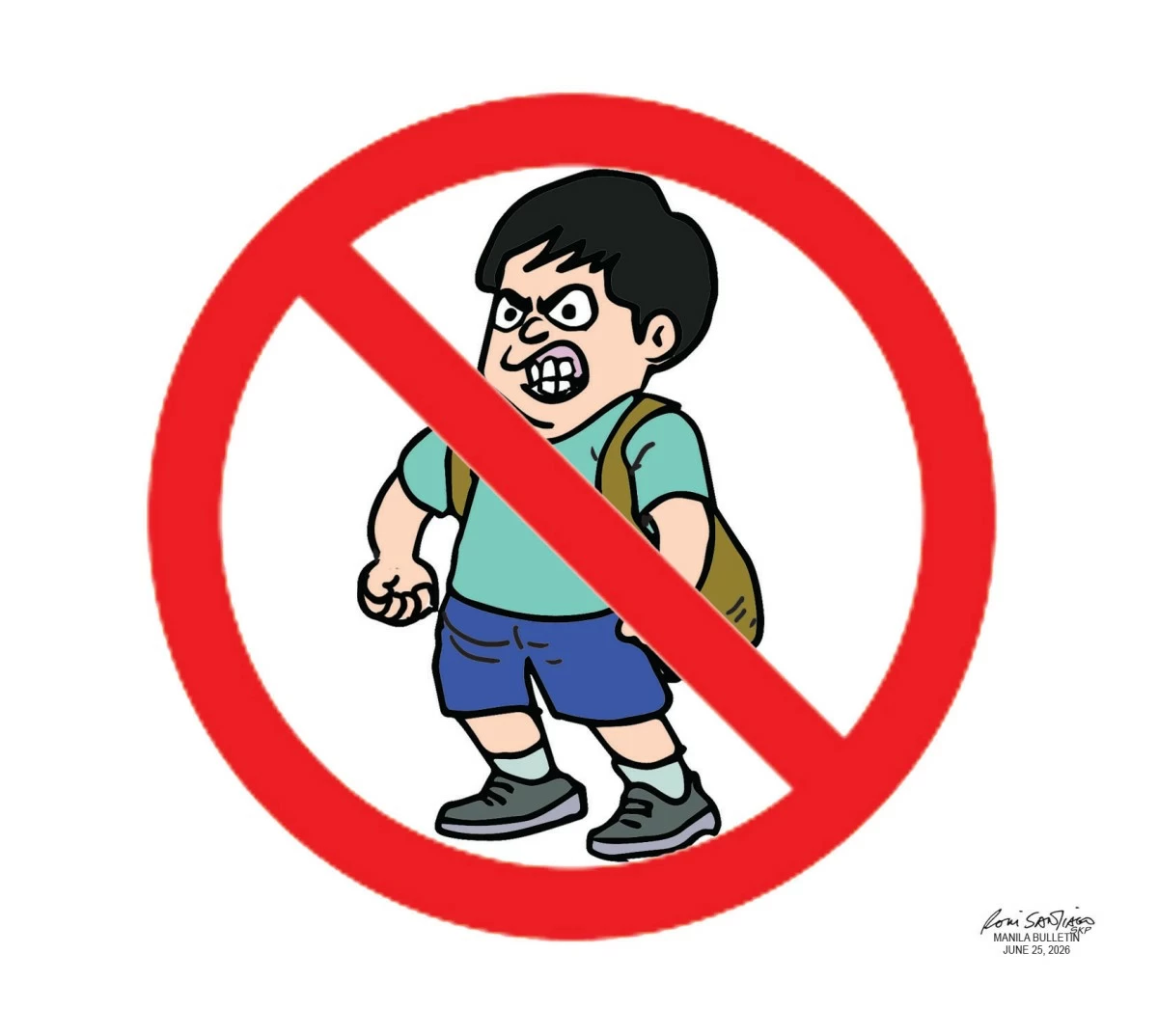
Stop violence in schools now


Published Jun 25, 2026 12:01 am | Updated Jun 24, 2026 03:51 pm
How safe are our schools, and what more must be done to protect our children?
We are raising this in the aftermath of the recent violent incidents involving students in Tacloban City and Negros Occidental.
The fatal shooting at San Jose National High School in Tacloban City and the stabbing incident outside a school in San Carlos City are stark reminders that campus safety requires constant vigilance. While law enforcement agencies and education officials have acted swiftly in the aftermath of these incidents, the challenge before the nation extends far beyond immediate investigations and legal proceedings.
Education Secretary Sonny Angara was right to declare that school safety is a non-negotiable priority. He deserves credit for treating the issue with the urgency it demands. His call for stricter campus security measures and closer coordination among schools, local governments, and law enforcement agencies reflects a growing recognition that student safety must be a central pillar of educational governance. His observation that increased police visibility around school premises and surveillance systems serve as effective deterrent is supported by the feedback of learners themselves. Such measures are necessary, but they address only the symptoms of a deeper problem.
The government must pursue a comprehensive strategy that combines security, prevention, intervention, and rehabilitation. This means investing not only in campus protection but also in mental health services, guidance counseling, anti-bullying programs, and conflict-resolution mechanisms. Schools should be equipped to identify students who may be struggling with emotional distress, social isolation, or behavioral issues before these challenges escalate into violence.
Equally important is the ongoing discussion regarding violent online content and its potential influence on young people. President Ferdinand Marcos Jr.’s openness to proposals that would regulate or even prohibit excessively violent online games has generated debate.
The issue deserves careful examination rather than reflexive conclusions. Research has yet to establish a conclusive direct causal relationship between video games and violent criminal behavior. However, concerns about prolonged exposure to violent content among minors cannot simply be dismissed. The government, educators, parents, psychologists, and technology companies should engage in a serious evidence-based discussion on whether additional safeguards are needed. If legislation is pursued, it must strike the proper balance between child protection, parental responsibility, and constitutional freedoms.
The private sector also has a responsibility that cannot be overlooked. Technology firms, social media platforms, gaming companies, and telecommunications providers are influential participants in the daily lives of young Filipinos. Stronger parental-control tools, more effective age-verification systems, and responsible content moderation should form part of a broader commitment to child welfare. Beyond technology, businesses can support youth development through community programs, sports initiatives, leadership training, and mental health advocacy.
Parents, however, remain the most important stakeholders in preventing youth violence. Schools can educate and governments can regulate, but the values that shape a child's character are first cultivated at home. Parents must remain engaged in their children's academic lives, friendships, online activities, and emotional well-being. Warning signs are often visible long before a violent incident occurs.
Communities likewise have a vital role to play. Local officials, faith-based organizations, civic groups, and neighborhood leaders must work together to create safe spaces where young people can find guidance, mentorship, and a sense of belonging. Preventing violence requires strong social bonds as much as strong security measures.
The incidents in Tacloban and Negros Occidental are warnings that demand a whole-of-nation response. Protecting students requires more than fences, surveillance cameras, and police patrols. It requires a collective commitment to addressing the social, psychological, technological, and cultural factors that contribute to youth violence.
We have to treat school safety as a national responsibility, not purely an education issue. This demands action from the government, families, businesses, and communities alike.

Davao City allocates P108 M for construction of Bahay Pag-asa for girls


Published Jun 25, 2026 11:03 pm
DAVAO CITY – The Davao City government allocated P108 million for the construction of a dedicated Bahay Pag-asa facility for girls – a safe and specialized rehabilitation center for female Children in Conflict with the Law and Children at Risk.
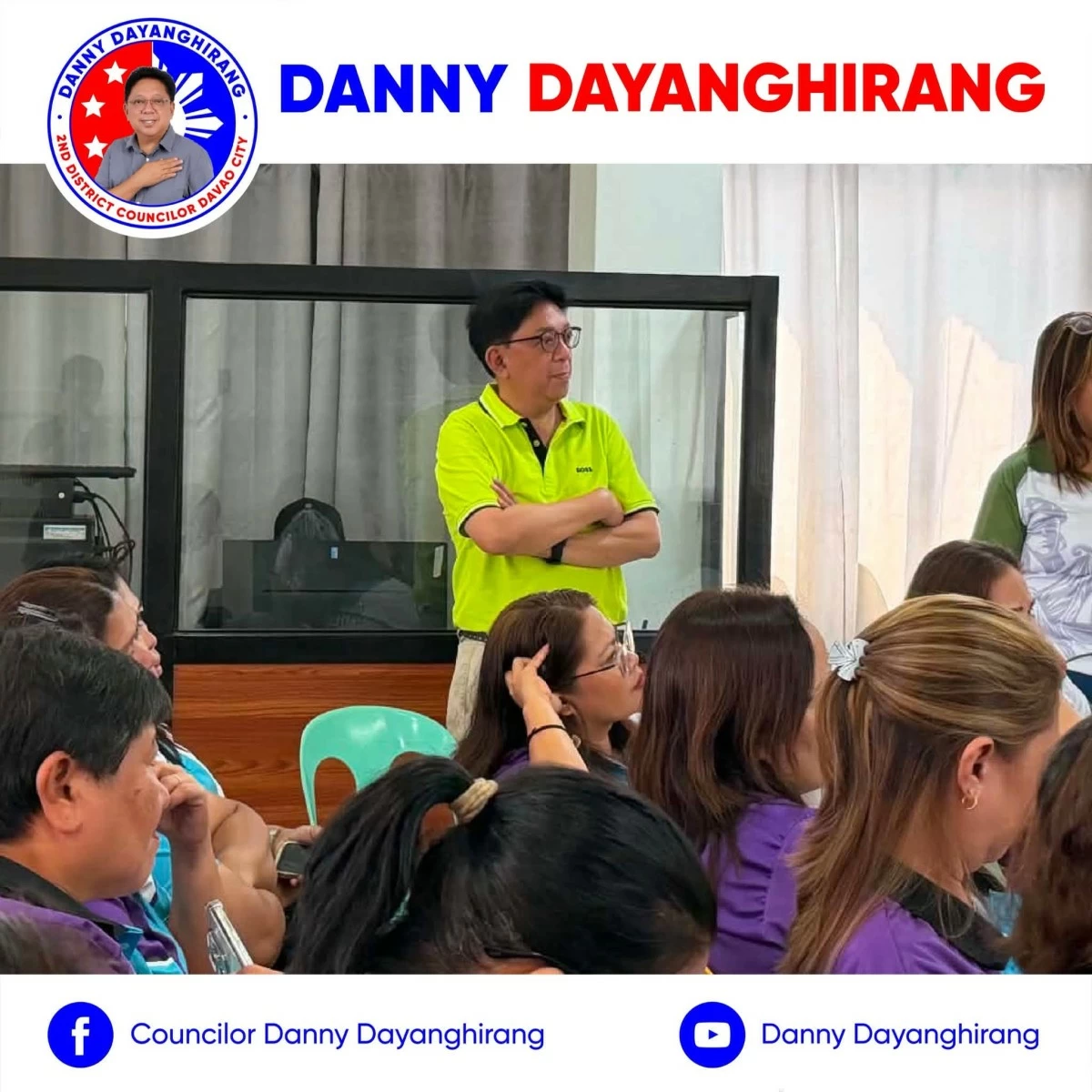
Funding came from the city's Philippine Amusement and Gaming Corp. share and was approved through a resolution of Councilor Danilo Dayanghirang, head of the Committee on Finance, Ways and Means, and Appropriations, upon the request of Mayor Sebastian Duterte.
Dayanghirang said in his official Facebook page that the project seeks to address a critical gap in the city's social protection system, noting that the existing Bahay Pag-asa facility operated by the City Social Welfare and Development Office currently caters only to male CICL and CAR.
"The existing infrastructure exclusively houses male Children in Conflict with the Law and Children at Risk, leaving a need for a separate environment that addresses the unique rehabilitation, welfare, and security requirements of female minors," Dayanghirang said.
According to the councilor, the proposed facility follows the passage of City Ordinance No. 0273-26, the Bahay Pag-asa for Girls Programs, by the 21st City Council, which provides for a separate facility for female CICL and CAR.
The ordinance, authored by Councilor Richlyn N. Justol-Baguilod and approved in June 2026, seeks to provide girls with a safe place to access rehabilitation services, counseling, education, healthcare, and other support programs while their cases are being processed.
According to city officials, the new building will provide a secure and supportive environment for female minors awaiting court disposition, while offering programs focused on rehabilitation, healing, and personal development.
The initiative is also in line with Section 49 of Republic Act 9344, or the Juvenile Justice and Welfare Act of 2006, which requires highly urbanized cities to establish, fund, and operate Bahay Pag-asa centers in accordance with national standards.
Duterte said the project reflects the city government's commitment to child welfare and social justice by ensuring that vulnerable young women receive appropriate care, protection, rehabilitation, and support in a safe and nurturing environment.
The Bahay Pag-asa for Girls facility is expected to strengthen Davao City's juvenile justice and welfare system and provide female minors with greater opportunities for rehabilitation and reintegration into society.

Why is adobo popular in the Philippines?


 · 

Adobo refers to a method of slow-braising meat using only this few basic spices - vinegar, soy sauce, garlic, bay leaves, and whole black peppercorns with the option of adding coconut cream or cooking cream for a twist.

The desired result should be a melt-in-your mouth tangy, garlicky, savoury meat in a rich mix of soy sauce, spices and rendered fat.

The popularity of this dish stemmed from its versatility and minimal low-effort preparation. Plus you can apply the cooking method to almost everything, if you’re creative enough as the adobo dish is not only limited to meat, you can also adobo some fish, vegetables, and tofu, and bamboo shoot and eggs, whatever you prefer.

This is a pork adobo looks like.

A fish adobo

An egg adobo

To vegetarian style (tofu, eggplant, bamboo shoot).

All images from KawalingPinoy.com

Eine Reform „zusätzlicher Belastung“: Sozialverband kritisiert die 33 Vorschläge zur Rente


Die Vorschläge der Rentenkommission sollen laut Kanzler alle umgesetzt werden. Der Sozialverband SoVD zeigt sich nicht glücklich über viele der Pläne.

Am vergangenen Dienstag, 24. Juni, hat die Bundesregierung die Ergebnisse der Rentenkommission vorgestellt. Was die 33 Vorschläge der Experten für die Rente bedeuten, ist klar: Alle sind betroffen von den Maßnahmen.   

Wirklich glücklich ist man beim Sozialverband Deutschland SoVD nicht mit dem, was Bundeskanzler Friedrich Merz, die Bundesministerin für Arbeit und Soziales Bärbel Bas und die Fachleute präsentiert haben. Gegenüber echo24 hat die SoVD-Vorstandsvorsitzende Michaela Engelmeier ihre Kritik und ihre Sorgen geäußert.

33 Vorschläge zur Rente: Sorgen und Kritik vom Sozialverband SoVD

Engelmeier findet bei ihren Ausführungen zunächst aber auch gute Ansätze bei den 33 Vorschlägen. Engelmeier: „Der Bericht der Rentenkommission greift einige wichtige Themen auf, bleibt jedoch in wesentlichen Punkten hinter den notwendigen Reformen zurück. Positiv bewerten wir die vorgesehenen Freibeträge, die geplanten Verbesserungen in der Grundsicherung, die Beendigung der verpflichtenden Frühverrentung sowie die Einführung einer Erwerbstätigenversicherung.“   

Sorgen bereiten der SoVD-Chefin aber „die obligatorische kapitalgedeckte Zusatzvorsorge innerhalb der gesetzlichen Rentenversicherung, die vorgesehenen Einschränkungen bei der Rentendynamik sowie die weitere Anhebung des gesetzlichen Rentenalters“.

Kritik äußert sie gerade im Zusammenhang mit der immer präsenteren Altersarmut in Deutschland. Engelmeier: „Zwar wird das Problem der Altersarmut benannt, die strukturellen Ursachen erhalten jedoch nicht die erforderliche Aufmerksamkeit.“

Was die Politik mit der Reform der Rente eigentlich erreichen sollte

Beim Sozialverband hat man dazu klare Vorstellungen davon, was die Politik unbedingt angehen müsste. Engelmeier: „Notwendig sind existenzsichernde Einkommen, ein Mindestlohn, der wirksam vor Armut schützt, bessere Rahmenbedingungen für die Vereinbarkeit von Familie und Beruf sowie stabile und verlässliche Ansprüche in der Alterssicherung.“   

Die Vorsitzende des SoVD warnt vor immer weiter zunehmenden Belastungen der Menschen und fordert dahingehend mehr Gerechtigkeit in der Rentenpolitik: „Eine nachhaltige und gerechte Rentenpolitik basiert auf gesellschaftlichem Zusammenhalt und Solidarität – nicht auf zusätzlicher Belastung der Versicherten oder einer Verlagerung von Risiken auf den Einzelnen.“

SoVD-Chefin Engelmeier hatte im Vorfeld eine „klare rote Linie“ gezogen

Bereits in den Tagen vor der Vorstellung der 33 Vorschläge der Rentenkommission hatte sich die SoVD-Chefin auf Nachfrage von echo24 geäußert und eine „klare rote Linie“ gezogen für Maßnahmen, die aus Sicht des Sozialverbandes keine Option sein dürfen.

Gerade mit der Anhebung des Renteneintrittsalters hat die Regierung aber einen dieser Punkte stark in den Fokus der Reform gerückt.   

Merkur.de


Merkur
Liebe Leserinnen und Leser,

kennen Sie schon unseren praktischen Rentenratgeber?

Darin erfahren Sie unter anderem:

▪️ Wie hoch Ihre Rente wirklich wird – und welche Faktoren Sie noch heute beeinflussen können

▪️ Ob eine Frührente für Sie infrage kommt – mit oder ohne Abzüge, und was die Rente mit 63 in der Praxis bedeutet

▪️ Was das neue Altersvorsorgedepot ab 2027 für Sie ändert – und was mit bestehenden Riester-Verträgen passiert

▪️ Wann Rentner Steuern zahlen müssen – und wie Sie herausfinden, ob sich eine Steuererklärung für Sie lohnt

Klingt hilfreich? Dann laden Sie den Ratgeber nach kurzer, kostenloser Registrierung HIER herunter.