You plan to move to the Philippines? Wollen Sie auf den Philippinen leben?

There are REALLY TONS of websites telling us how, why, maybe why not and when you'll be able to move to the Philippines. I only love to tell and explain some things "between the lines". Enjoy reading, be informed, have fun and be entertained too!

Ja, es gibt tonnenweise Webseiten, die Ihnen sagen wie, warum, vielleicht warum nicht und wann Sie am besten auf die Philippinen auswandern könnten. Ich möchte Ihnen in Zukunft "zwischen den Zeilen" einige zusätzlichen Dinge berichten und erzählen. Viel Spass beim Lesen und Gute Unterhaltung!


Visitors of germanexpatinthephilippines/Besucher dieser Webseite.Ich liebe meine Flaggensammlung!

free counters

Total Pageviews

Thursday, July 30, 2026

Rente im August 2026: Diese vier Änderungen betreffen Millionen Rentner direkt

Im August 2026 greifen mehrere Änderungen für Rentner: höhere Bezüge, steigende Krankenkassenbeiträge, neue Jahrgänge in der Altersrente und ablaufende Steuerfristen. Was wirklich zählt.

München – Der August 2026 bringt für Millionen Rentner gleich mehrere Veränderungen auf einmal. Die Rentenerhöhung vom Juli wirkt erstmals einen vollen Monat, die IKK classic hebt ihren Zusatzbeitrag an, bestimmte Jahrgänge können erstmals in Rente gehen – und wer seine Steuererklärung für 2025 noch nicht abgegeben hat, riskiert Verspätungszuschläge.   Content-Partnerschaft

Dieser Artikel entstand in einer Content-Partnerschaft mit Business Punk

Nicht alle vier Punkte sind neue Gesetze, die am 1. August in Kraft treten. Teilweise werden Beschlüsse aus dem Juli erst jetzt auf dem Konto sichtbar oder durch ablaufende Fristen spürbar.     

Die Rente ist immer im Wandel
Im August 2026 greifen mehrere Änderungen für Rentner. © IMAGO/Michael Bihlmayer

Im Juli 2026 steigen die gesetzlichen Renten um 4,24 Prozent. Der aktuelle Rentenwert kletterte von 40,79 Euro auf 42,52 Euro. Bei 1.000 Euro Bruttorente bedeutet das ein Plus von 42,40 Euro, bei 1.500 Euro sind es 63,60 Euro mehr. Was tatsächlich ankommt, hängt von Kranken- und Pflegeversicherung sowie möglicher Steuerlast ab.

Rentenerhöhung: Jetzt wirkt sie komplett

Wer seine Rente vorschüssig erhält – das betrifft alle mit Rentenbeginn bis März 2004 –, bekommt die August-Zahlung bereits am 31. Juli 2026. Bei nachschüssiger Zahlung, also Rentenbeginn ab April 2004, geht das Geld am 31. August aufs Konto. Die Rentenanpassungsmitteilungen wurden bis Ende Juli verschickt.   

Wer Anfang August noch kein Schreiben hat, sollte beim Rentenversicherungsträger nachfragen. Geprüft werden müssen Bruttorente, Erhöhungsbetrag und Abzüge für Kranken- und Pflegeversicherung. Auch die Kinderzahl kann wichtig sein, weil Eltern mit mehreren berücksichtigungsfähigen Kindern niedrigere Pflegeversicherungsbeiträge zahlen.

Die Mitteilung ist eine verbindliche Entscheidung – Widerspruch ist innerhalb eines Monats möglich. Da viele Schreiben im Juli zugestellt wurden, endet die Frist in zahlreichen Fällen im August.

IKK classic erhöht Zusatzbeitrag ab August

Die IKK classic hebt ihren Zusatzbeitrag zum 1. August 2026 von 3,40 auf 3,85 Prozent an. Zusammen mit dem allgemeinen Beitragssatz von 14,6 Prozent würde das rechnerisch einen Gesamtbeitrag von 18,45 Prozent ergeben – sofern die IKK classic die Erhöhung tatsächlich umsetzt. Die Erhöhung um 0,45 Prozentpunkte trifft Beschäftigte, Selbstständige und Rentner gleichermaßen.

Bei pflichtversicherten Rentnern teilen sich Rentenversicherungsträger und Rentner den Beitrag je zur Hälfte. Der eigene Anteil steigt damit um 0,225 Prozentpunkte der Bruttorente – bei 1.500 Euro sind das rund 3,38 Euro monatlich, bei 2.000 Euro etwa 4,50 Euro. Allerdings greifen die höheren Abzüge bei pflichtversicherten Rentnern erst zwei Monate später.

Die Erhöhung zum 1. August wird regulär erst mit der Rentenzahlung für Oktober berücksichtigt. August und September werden noch mit dem alten Zusatzbeitrag berechnet. Bei freiwillig Versicherten oder weiteren beitragspflichtigen Einnahmen können andere Zeitpunkte gelten, so Gegen Hartz.

Betroffene sollten nicht nur den Rentenbetrag, sondern auch Schreiben und Beitragsbescheide der Krankenkasse prüfen. Bei Erhöhung des Zusatzbeitrags besteht ein Sonderkündigungsrecht. Für den Wechsel wird die Mitgliedschaft bei der neuen Kasse beantragt, die dann das Verfahren übernimmt.

Der Rente-Newsletter: Wege in die Frührente
Wichtige Entwicklungen rund um Ihre Rente erhalten Sie wöchentlich am Mittwoch. Eine kurze Registrierung genügt.

Ein niedriger Zusatzbeitrag allein sollte aber nicht entscheidend sein. Unterschiede bei Bonusprogrammen, Satzungsleistungen, Geschäftsstellen und Erreichbarkeit können für ältere oder chronisch kranke Menschen wichtiger sein. Wer einen Wahltarif abgeschlossen hat, muss mögliche Bindungsfristen prüfen.

Jahrgang 1960: Regelaltersrente beginnt

Der Geburtsjahrgang 1960 erreicht die Regelaltersgrenze mit 66 Jahren und vier Monaten. Menschen des Jahrgangs 1960 erreichen ihre Regelaltersgrenze mit 66 Jahren und vier Monaten. Je nach genauem Geburtsdatum können sie bei erfüllter Wartezeit ab August 2026 oder in den Folgemonaten die reguläre Altersrente beziehen.  

Wer genau am 1. April 1960 geboren wurde, erreicht die Altersgrenze bereits mit Ablauf des Vortages und kann ebenfalls zum 1. August in die Regelaltersrente wechseln. Voraussetzung sind mindestens fünf Jahre mit anrechenbaren Versicherungszeiten. Die Rente muss beantragt werden und beginnt nicht automatisch. Auch ein vorzeitiger Rentenstart ist im August möglich. Langjährig Versicherte mit mindestens 35 Versicherungsjahren können die Altersrente ab 63 beziehen.

Wednesday, July 29, 2026

Cinema isn’t cheap anymore


Mark Luther P. Saturion


The first thing you notice is not the screen, but the price.


It waits for you before the lights dim, before the trailers begin, before the movie even has a chance to speak. Printed neatly on the kiosk, it asks a quiet question: How much are you willing to give up just to sit in the dark for hours?


When I was younger, my grandmother would talk about going to the movies as if it were an ordinary thing. Something you didn’t have to plan for.


“Barato ra kaayo sauna,” she would say. “Maski kinsa, makatan-aw (It was cheap back then. Anyone could watch).”


Cinema, to her, was not a luxury. It was part of life. A shared habit. You lined up, bought a ticket, shared snacks, and went home replaying scenes in your head. The price did not decide who belonged inside.


Now, going to the movies feels like a calculation.


Recently, my friends and I went to the cinema together. We stood in front of the ticket booth, joking loudly while quietly counting our money. When we finally bought the tickets, there was relief but also hesitation. At the concession stand, the prices spoke for themselves. Popcorn in BBQ and cheese flavors, the ones we used to fight over, had suddenly become a luxury. Gummies, Potato Corner fries, and other small snacks that once made the experience complete were now out of reach.


We looked at each other, and quietly, one of us whispered, “Pautanga sa ko bes, bih, bayran ra taka (Let me borrow from you, friend, I’ll pay you back).”


It was never about shame, just survival. We pooled our small funds for snacks we could barely afford after paying for fare and tickets. The smell of popcorn, warm and buttery, filled the air. It teased us, a reminder of what the experience used to mean. The sweet aroma of caramel mingled with the salty crunch of cheese popcorn, the faint tang of BBQ seasoning lingering in the theater. We laughed and nudged each other, sharing the small bucket carefully, counting kernels like tiny treasures.


Watching a movie has always been more than just watching. It was the sharing, reaching into the same bucket, whispering reactions, bonding while the story unfolded. That part now feels optional, trimmed away by cost. You pay for the seat, and everything else becomes negotiable. The joy of snacking together, teasing over flavors, laughing while feeding each other popcorn—those were the details that made the memory. Now, they are luxuries, sidelined in favor of just entering the theater.


They give out free water now. A small mercy, perhaps but also a quiet confession. That after paying for a ticket, there is little left to offer. The popcorn, gummies, fries: these cinema food that once completed the experience has become optional: affordable only if you planned for it. Watching a movie is no longer about indulging; it is about enduring.


This is not about wanting more. It is about what has slowly been taken away.


Cinema used to be one of the few places where stories were shared equally. You sat beside strangers, all paying roughly the same amount to feel something together. Today, that equality feels fragile. The price filters who comes in comfortably and who must settle for just the screen—no extras, no space for enjoyment beyond the bare minimum.


My grandmother once shook her head and said, “Karon, mura’g kinahanglan pa nimo magpili: sine o pagkaon.”(Now, it feels like you have to choose: movies or food.)


She said it lightly, almost joking. But the truth lingered. Her words echo in my mind each time we pool our money, each time we whisper about who can cover the extra pesos just to buy a small bucket of popcorn. She did not complain about prices when she was younger; she simply noted the fairness in access. Today, fairness feels distant.


We talk often about supporting films and keeping cinema alive. But love alone cannot carry it. Culture cannot survive if experiencing it feels like a sacrifice. People do not stop going to the movies because they no longer care—they stop because caring has become expensive.


When the credits rolled, my friends and I stayed seated, talking about the film and scenes we liked. We made do without popcorn, gummies, or fries, as we always do. Still, I noticed the quiet discomfort in our jokes, the way we avoided glancing at the concession stands and whispered about borrowing coins from one another. Even among friends, the cost cast a shadow over the joy.


But as we walked out of the theater, I couldn’t stop thinking about who wasn’t there. About how many people chose to stay home—not because they didn’t want to watch, but because they had already counted what it would cost.


The lights come back on. The seat empties. The price has already been paid.


And sometimes, that is enough to make people decide that the dark is no longer worth entering. Survival, in those moments, has itself become the experience.


Watching the film, sharing a whispered laugh, dividing kernels and fries carefully among friends, I remembered my grandmother’s words again. Cinema was meant to belong to everyone, not just those who could afford the extras. And even when it feels too expensive, that memory lingers, like the scent of popcorn in a theater long after the lights return.


It reminds me that joy and togetherness were never meant to be limited to those with enough money. The dark room, the movie playing on the screen, and the shared laughter are the true treasures, not the food. But food made the experience complete, and now the struggle to afford that completion reveals the subtle fractures in what was once simple, accessible happiness.


A MISTAKEN BELIEF


By Mindanao Daily News -July 28, 20260235


Examples of mistaken beliefs that you might hold are “I’m powerless,” “Life is a struggle,” or “I should always look good and act nice, no matter how I feel.” There is nothing new about the idea of mistaken beliefs-they are a part of what people have in mind when they refer to your “attitude” or “outlook.”


A mistaken belief accompanies each and every one of us daily. Incorrect decisions and wrong doings are part of our daily life.A mistaken belief is an idea, conviction, or assumption that is not true and is built on faulty reasoning, bad data, or personal bias. It can lead to poor choices, false judgments, and unhelpful feelings.


Resilience involves being able to recover from difficulties or change—to function as well as before and then move forward. Many refer to this as “bouncing back” from difficulties or challenges.


It is almost a ridiculous fact that man wants to know certain truths about mundane things. But really he seems least interested in even mundane truths as can be read many times in newspapers for example. There seem to be too many rash judgments, and the readers absorb these and make these their own. A fatal attraction!


This is sometimes referred to as journalistic mentality wherein accusations are generously made without proof. Evolution started this trend, when scientists stated for example that man evolved from the apes, without proof. The only proof they had was the missing link, and if I am not mistaken, it’s still a missing proof until now.


To look for proofs is a mental activity, which is no longer a common thing nowadays, because it takes really time, effort and is too serious to think about. Yet in Christian education, thinking right is very important.That’s why Philosophy is important in Christian life. To avoid error in thinking, the rules of right reasoning must be studied and mastered. Is it really totally neglected in today’s modern education?


Thinking is actually an enjoyable activity but when one is pressured to get a good job for one’s sustenance, then the other more mundane becomes attractive. After all, great thinkers often do not get (good?) jobs… .


Spiritual writers like the British Samuel Taylor Coleridge (1772-1834) noticed that mankind had stopped thinking even two centuries ago. That was during his age. Man probably stopped thinking even earlier. He has ceased many times to search for the truth. It’s easier to listen to gossip and believe in it. What a sign of weak minds!


Too often are we blind to the truth and as a consequence we easily believe in lies we only have to like it. Too bad, if people always like to close their eyes and ears especially while experiencing the delusion of error.

We need renewables, EVs and child safety online


March for the Martyrs photo

By Fr. Shay Cullen, Founder since 1974

The world is again facing a huge spike in oil prices and shortages of fertilizer and other oil-based commodities that are worsening world hunger and driving thousands more poor people to starvation in Africa as Iran continues to attack shipping in the Strait of Hormuz and block oil tankers. Twenty percent of the world’s total oil supply and 33 percent of global fertilizers essential for food production passed through the strait daily. Diesel and gasoline prices in the Philippines — and elsewhere — drastically increased this past week by over P10 and P3 per liter, respectively. This is because the United States continues to bomb nonstop Iranian infrastructure and military targets. Alleged war crimes, some say. In retaliation, Iran is attacking US bases in the Middle East.

With oil prices skyrocketing and the current energy crisis becoming more serious, Donald Trump’s administration could lose control of the Senate and House of Representatives in November’s midterm elections. He cannot find a diplomatic way out of the war with Iran, which the US and Israel launched on Feb. 28, and continues to try to bomb Tehran into submission. That is not going to succeed. The 49 years of hatred and loathing the Islamic republic has for the US will carry them to fight to the last man. There will be no surrender.

Countries are moving to expand and harness their renewable energy sources, such as wind, solar power, geothermal and biomass, to produce oil-free electricity. This is the way to secure and stable electric energy supply.

In the Philippines, solar energy has increased, propelled by high electricity rates and fuel price hikes. Roof-top solar panels have nearly doubled over the past year to 1,300 megawatts. But there is still a long way to go. According to the Department of Energy (DOE), the Philippines sources its energy from coal (40.6 percent), renewables (32.9 percent), natural gas (15.8 percent), and oil (10.8 percent). Fossil fuels still produce roughly 75 percent of the country’s electricity.

Transportation in the country is threatened by the war on Iran and high fuel prices. Electric vehicles (EVs) make up only 1 percent of cars on the road, unlike in Norway, where the figure is 90 percent. Here, EVs account for about 17 percent of new car sales. There are too few charging stations right now. Unless electric charging hubs are in every gasoline station and spread along our expressways, EVs will have few customers and generate low sales.

As an occasional driver of a new Wuling EV Starlight van used to bring children to school and elsewhere, this writer could say it is excellent in all respects, other than its weak battery and nonfunctional remote door lock. It cost P1.2 million, thanks to generous donors. However, the battery charge does not cover the 300 kilometers advertised. Road tests show that the maximum range is only 220 km for every full charge, which leaves Wuling open to complaints of false and misleading advertising, which is a violation of Republic Act (RA) 7394, or the Philippine Consumers Act.

If Wuling President and Chief Executive Officer Lloyd Lee and his wife Shamcey Supsup-Lee are the good people they are said to be, they will consider exchanging the low-performance Wuling EV sold to the Preda Foundation’s children’s home for a better Wuling van (for an addition payment of P200,000 that a donor is offering). This better model will enable us to bring children in our shelters on home visits to the provinces and to testify in court against their abusers. Our legal office is fighting for justice with good prosecutors, and together with the children, we win an average of 20 convictions every year from just and honest judges.

We pray and look forward to receiving this new Wuling EV model, which has an advertised 400-km range. More on this in future columns. EVs are so important for the environment; we need the best. Can Wuling provide it?

Terrible damage

Preda social workers and therapists see daily the terrible damage inflicted on young victims of sexual abuse by people influenced by corrupting child-abuse images on social media platforms that are supported by telecommunications companies (telcos). These firms and internet service providers (ISPs) have still not installed state-of-the-art blocking software as the law demands. The National Telecommunications Commission (NTC) is even more powerless to control the telcos and seems compromised.

Even President Ferdinand Marcos Jr., who was shocked by the horrific and notorious child abuse images on social media, is apparently powerless to make the telcos obey the law. They are a power unto themselves and seem to be above the law, making the Philippines a hub for international child abuse images to be accessed by anyone — including children — at any time, from anywhere.

We know this because sex offenders as young as 13 admitted to viewing child abuse images on the internet — which, again, were allowed to spread by the ISPs and telcos — with them saying these drove them to rape girls as young as six. Preda’s social workers and therapists are helping the victims, while the abusers are admitting how they were influenced by easily accessible sex videos proliferating on the internet.

Several countries have passed laws banning children 16 and younger from accessing social media platforms, including TikTok, Instagram, Facebook and YouTube, because of harmful content found in them, including explicit images of sexual abuse and exploitation. Among these countries are Australia, France, Malaysia, Indonesia, Turkey, the United Arab Emirates, and Brazil.

More countries are following suit, and our Congress is debating proposed laws banning minors from social media, which telcos and the American Chamber of Commerce of the Philippines oppose. Several groups are also against a total ban and advocate for targeted regulation, digital literacy, and platform accountability. However, the true answer is to strictly implement the law to control the telcos and ISPs.

The telcos are not obeying the law and are allegedly in cahoots with the NTC. That alleged blatant corruption is the root of the problem and the reason children are being sexually abused and trafficked online, and are viewing child sex abuse images and videos online.

The laws regulating the internet and mandating blocking software to stop child sexual abuse are RA 9775, or the Anti-Child Pornography Act of 2009, and RA 11930, or the Anti-Online Sexual Abuse or Exploitation of Children and Anti-Child Sexual Abuse or Exploitation Materials Act. These are being violated, and that is why new, tougher legislation is being proposed.

There is no greater need today than such a social media ban to wake up the telcos and the government to protect our children and teach them to protect themselves from such dangerous content and use the internet only for good.


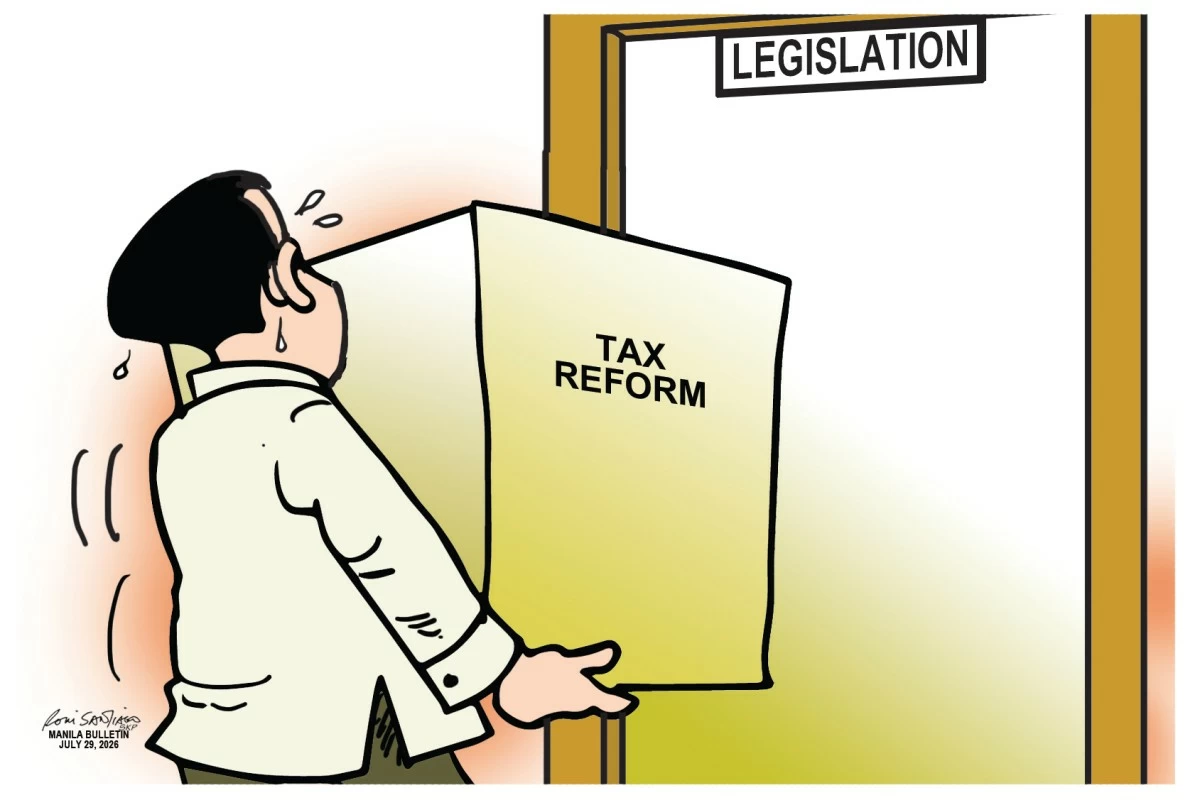
Bold tax relief unveiled, but where's the fiscal plan?


Published Jul 29, 2026 12:05 am | Updated Jul 28, 2026 04:16 pm
President Ferdinand R. Marcos Jr. deserves credit for placing tax relief at the heart of his administration's final two years. At a time when Filipino families continue to grapple with rising prices, geopolitical uncertainty triggered by the Middle East crisis, and slowing global growth, his proposal to ease the tax burden on workers and small businesses reflects both compassion and economic pragmatism.
The package is ambitious. It seeks to raise the personal income tax exemption from ₱250,000 to ₱350,000, exempt qualified small enterprises from corporate income tax, and grant a broad tax amnesty covering unpaid estate, income, donor's and value-added taxes, including associated penalties. These proposals, announced by President Marcos and subject to congressional approval, have the potential to put more money into the hands of ordinary Filipinos while giving struggling entrepreneurs much-needed breathing space.
The proposed increase in the income tax exemption alone could save a taxpayer earning exactly ₱350,000 in taxable income as much as ₱15,000 annually under the current tax schedule. That is money that could instead be spent on food, education, transportation or savings—precisely the kind of consumption that fuels domestic economic activity. Likewise, freeing qualified small businesses from corporate income tax could strengthen enterprises that generate the bulk of Philippine employment.
These are bold ideas deserving serious consideration.
Yet boldness alone does not balance fiscal health.
The missing piece in the President's announcement is an equally compelling roadmap for replacing the government's foregone revenues. Every peso of tax relief is a peso unavailable for infrastructure, healthcare, education, disaster preparedness and debt servicing unless offset by stronger collections, higher economic growth or disciplined spending.
The President has effectively entrusted Congress with designing the legislation that will make these reforms fiscally sustainable. That is both constitutionally appropriate and politically challenging. Under the National Internal Revenue Code, Congress—not Malacañang—must amend income tax brackets and enact permanent tax changes. The responsibility now shifts to lawmakers and the government’s economic managers to ensure that generosity today does not become a fiscal burden tomorrow.
Congress must therefore resist the temptation to view tax relief as an isolated political victory. It should instead package these reforms with equally robust revenue-enhancing measures. These may include intensifying the Bureau of Internal Revenue's digital transformation, expanding electronic invoicing, aggressively combating tax evasion and smuggling, rationalizing fiscal incentives, and improving collection efficiency before considering new taxes. The Department of Finance must likewise continue pursuing prudent expenditure management so that every public peso delivers measurable value.
The private sector also has a decisive role. Businesses benefiting from lower taxes should channel the savings into expansion, innovation, higher productivity and job creation rather than simply improving balance sheets. Responsible corporate citizenship means recognizing that tax relief is an investment by society, one that should yield broader economic gains.
Individual Filipinos, too, share responsibility. Paying taxes honestly, demanding accountability in government spending, supporting local enterprises and participating actively in the formal economy are indispensable contributions to fiscal stability. A stronger tax culture begins not only with fairer laws but with greater public trust that taxes are collected efficiently and spent wisely.
President Marcos has opened an important national conversation. His tax reform agenda recognizes that economic recovery must begin with people whose purchasing power has been eroded by inflation and uncertainty. That vision deserves applause. But compassion must always be paired with credible fiscal discipline.
Leadership is measured not only by the courage to give relief, but by the wisdom to sustain it. And the real measure of this reform will not be how much tax is reduced, but whether the Philippines emerges with stronger businesses, more resilient public finances and greater confidence in its institutions.

Davao City Council acts vs soaring power bills


Published Jul 29, 2026 09:48 pm
DAVAO City Council session
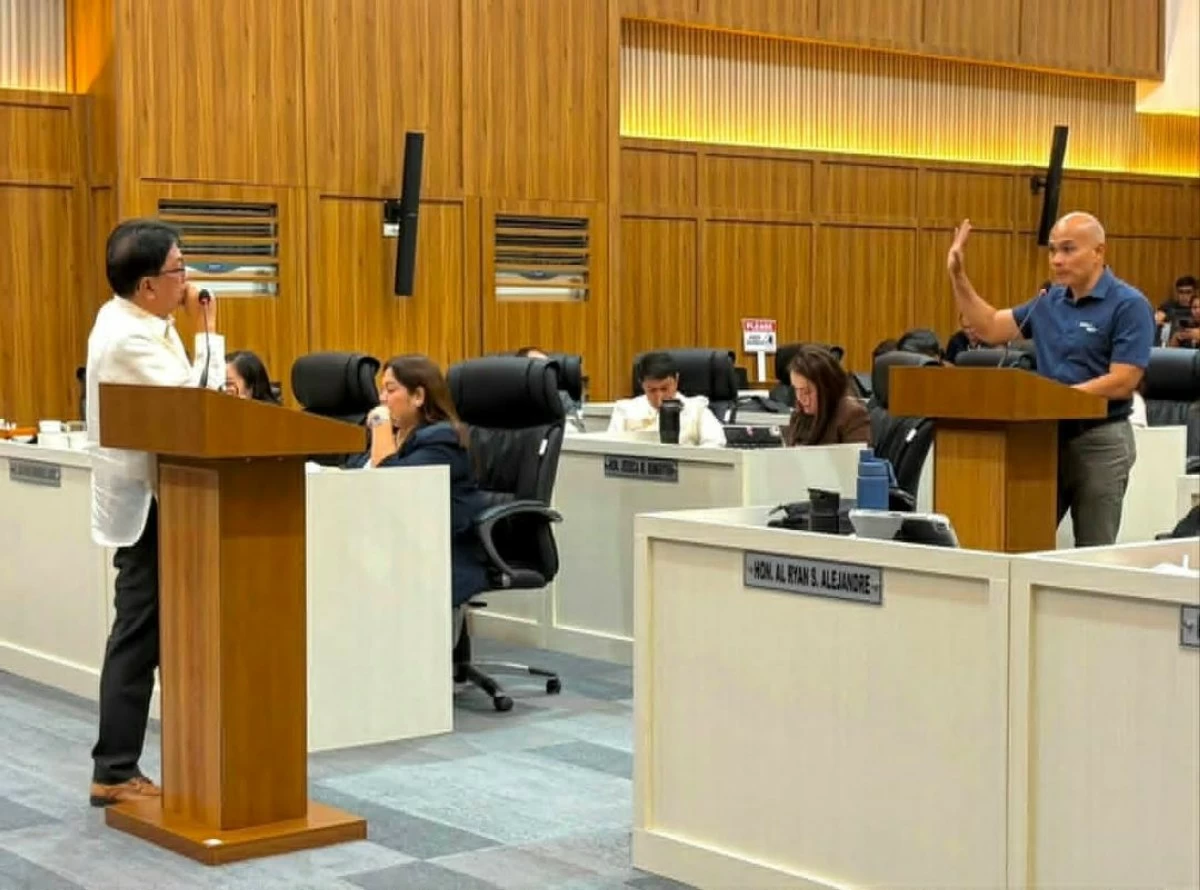
DAVAO CITY – Mounting public outcry over soaring electricity bills has pushed members of the Davao City Council to call for urgent regulatory interventions, rate rollbacks, and structural reforms to protect local consumers from severe price shocks.
In a privilege speech during Monday's session, Councilor Pamela Librado-Morata, chairperson of the Committee on Civil, Political, and Human Rights, and Labor and Employment, raised concerns about the city's rising power rates.
According to Morata, residential electricity rates from distribution utility Davao Light and Power Co. jumped nearly 35 percent in seven months, from P9.71 per kilowatt hour in December 2025 to P13.09 per kWh in July 2026.
"This concern comes at a time when families are already coping with rising fuel prices, increasing transportation costs, and the higher prices of basic commodities," Morata said, highlighting that the city's current daily minimum wage stands at P525.
Morata cited extreme cases reported by constituents, including one household whose monthly bill quadrupled from P3,294.42 in June to P16,982.40 in July despite no significant change in appliance usage.
She noted conflicting explanations for higher rates. DLPC blamed power plant outages and generation costs, while the Department of Energy Mindanao Field Office reported a stable power supply and enough reserves in the region.
To address the crisis, Morata urged the City Council to push for several immediate measures:
• Conducting a public hearing with DLPC, the Energy Regulatory Commission, DOE, National Grid Corp. of the Philippines, and local stakeholder groups.
• Passing a resolution urging the ERC to immediately roll back residential electricity rates pending a full regulatory review.
• Requesting DLPC to implement flexible, staggered payment schemes, strictly observe ERC disconnection moratoria, and remove standard 48-hour disconnection notices for covered accounts.
• Calling on Congress to review, repeal, and replace the Electric Power Industry Reform Act of 2001 to strengthen consumer protection and reduce pass-through costs.
Other city councilors moved to introduce structural and legislative fixes to safeguard residents from market volatility.
Councilor Ragde Niño Ibuyan, chairperson of the Committee on Government Enterprises and Privatization, announced the filing of a resolution urging DLPC and Therma South Inc. to study the feasibility of an Emergency Power Supply Agreement.
Ibuyan said the measure aims to establish backup power mechanisms to buffer Davao City against nationwide plant outages and spot market price spikes.
Councilor Danilo Dayanghirang, chairperson of the Committee on Finance, Ways and Means, proposed a four-point Middle Ground action plan:
1. A temporary rate pause: Suspending unusually high rate hikes for one billing cycle alongside a public review.
2. An independent billing review: Establishing a joint panel with representatives from DLPC, consumer groups, city officials, and the ERC to validate billing computations.
3. Flexible installment plans: Allowing penalty-free payment arrangements for severely affected consumers.
4. Maximizing localized bilateral supply: Increasing power allocations directly from sister company Therma South Inc. to minimize reliance on the volatile Wholesale Electricity Spot Market.

Denise Julia responds to criticism over Tondo-themed 'From the Block' performance


By Ian Ureta

Published Jul 28, 2026 04:32 pm


At A Glance

The 24-year-old artist performed her song "SPEECHLESS" on the U.S-based music performance series "From the Block,". Instead of unanimous praise, however, the video sparked debate online.

Filipina R&B singer Denise Julia just allowed global audiences a peek of Tondo, Manila.

Not everyone is convinced she did it the right way, though.

The 24-year-old artist recently became the first Filipina to appear on the US-based music performance series "From the Block," performing her song "SPEECHLESS" from her latest EP, "LOVE AGAIN."

Filmed in the streets of Tondo, Manila, the performance follows the series' signature format of artists performing live in neighborhoods closely tied to their roots.

Instead of unanimous praise, however, the video sparked debate online.  

Some social media users criticized its visual direction, with one fan calling it "poverty porn," while another argued that the portrayal felt inauthentic, saying, "Hindi naman ganyan itsura ng mga tao sa kalsada ng Pilipinas eh."

Denise addressed the criticism directly, explaining that the concept wasn't created simply for aesthetics; it reflects the premise of the platform itself.

"'From the Block' is an American platform built around artists showing the block they're from," she wrote. "I'm from Tondo. So I simply filmed in Tondo, brought my people out and worked with a Filipino director, crew, and designer, to show the place and culture that made me."

"At the end of the day, I will always represent where I come from because I know what it took for a girl from Tondo to accomplish the things she once thought were impossible," she added.

Launched in 2021, "From the Block" has featured performances from major artists including Cardi B, Chris Brown and Latto, and has recently expanded to include international acts. Denise is among the first non-American artists invited to participate. Now based in New York, the singer said representing her roots remains central to her career despite the backlash.   

Weather Advisory: El Niño and Tropical Cyclone Preparedness

El Niño conditions are currently present over the Pacific Ocean. During El Niño, weather patterns can change significantly, bringing hotter and drier conditions to some areas. At the same time, the western Pacific can still experience the development of tropical cyclones, including strong typhoons.
Everyone is encouraged to stay prepared and monitor official weather updates. Having emergency supplies, reviewing family emergency plans, and following the guidance of local authorities can help reduce the risks associated with severe weather.
The public is encouraged to start conserving water now. If El Niño conditions persist, rainfall across parts of Mindanao may decrease in the coming months, increasing the risk of water shortages and drought.
May be an image of one or more people and text that says 'EL ELN NIÑO SA MINDANAO'