You plan to move to the Philippines? Wollen Sie auf den Philippinen leben?

There are REALLY TONS of websites telling us how, why, maybe why not and when you'll be able to move to the Philippines. I only love to tell and explain some things "between the lines". Enjoy reading, be informed, have fun and be entertained too!

Ja, es gibt tonnenweise Webseiten, die Ihnen sagen wie, warum, vielleicht warum nicht und wann Sie am besten auf die Philippinen auswandern könnten. Ich möchte Ihnen in Zukunft "zwischen den Zeilen" einige zusätzlichen Dinge berichten und erzählen. Viel Spass beim Lesen und Gute Unterhaltung!


Visitors of germanexpatinthephilippines/Besucher dieser Webseite.Ich liebe meine Flaggensammlung!

free counters

Total Pageviews

Sunday, August 16, 2026

My Philippines by Mattes


No photo description available.
🌴 Das Koffer-Paradoxon: Warum manche Expats auch im Paradies nicht ankommen 🧠
Es ist eines der faszinierendsten und gleichzeitig nachdenklichsten Phänomene der Auswandererwelt: Menschen, die ihr Heimatland verlassen, weil sie dort sprichwörtlich überall angeeckt sind, nur um auf den Philippinen genau denselben Teufelskreis zu wiederholen. Psychologen nennen dieses Verhaltensmuster oft eine „geografische Flucht“. Die Hoffnung dahinter klingt zunächst verlockend: Ein neues Land, Palmen, ein angenehmes Klima und freundliche Menschen – da muss doch alles besser werden. Doch der entscheidende Haken liegt im Reisegepäck. Denn die eigene Persönlichkeit, tief sitzende Verhaltensmuster und ungelöste innere Konflikte reisen ausnahmslos mit.
Blickt man psychologisch hinter die Fassade, zeigt sich bei diesen Personen häufig ein ausgeprägtes narzisstisches Muster. Ihr Selbstwert speist sich nicht aus innerer Zufriedenheit oder echter Gelassenheit, sondern fast ausschließlich aus permanenter Aufmerksamkeit und dem Gefühl von Überlegenheit. Wenn das Leben im Heimatland nicht die erhoffte Bewunderung einbrachte, wurde die Schuld schnell beim „System“, den Nachbarn oder der Gesellschaft gesucht. Auf den Philippinen angekommen, hält die anfängliche Begeisterung meist nur so lange, wie der Neuheitswert trägt. Sobald der Alltag einkehrt und Flexibilität gefordert ist, bricht die alte Dynamik wieder durch.
Im Gefühlserleben einer solchen Persönlichkeit brodelt eine schmerzhafte Mischung aus tief verunsichertem Ego, Unzufriedenheit und ausgeprägtem Neid. Jeder Erfolg anderer – sei es ein gelungenes Projekt, ein beliebter Reisebericht oder ein harmonisches Auswandererleben – wirkt auf sie wie eine stumme Bedrohung. Weil ihr eigenes Selbstbild so fragil ist, gönnen sie anderen Menschen den Erfolg schlichtweg nicht. Was sich nach außen hin als ständige Besserwisserei oder als giftiger Hate-Kommentar unter Facebook-Beiträgen entlädt, ist in Wahrheit ein Schutzmechanismus. Das Abwerten anderer dient dazu, die eigene innere Leere kurzfristig zu überdecken und sich selbst gedanklich wieder aufzuwerten.
Die Konsequenzen für die Umwelt sind spürbar toxisch. Ein solches Auftreten vergiftet die Atmosphäre in Online-Gruppen, spaltet Communities und raubt denjenigen Energie, die sich ehrlich ein neues Leben aufbauen oder informative Inhalte teilen wollen. Auf den Philippinen, wo eine respektvolle, gesichtswahrende und ruhige Zwischenmenschlichkeit im Zentrum der Kultur steht, wirkt dieses laute, verbitterte Muster besonders deplatziert.
Erkennen lässt sich ein solches Verhaltensmuster an ganz typischen Signalen. Die betroffene Person sieht Fehler grundsätzlich nur bei anderen und zeigt eine ausgeprägte Unfähigkeit zur Selbstreflexion. Während einerseits maßlos über die alte Heimat geschimpft wird, wird im selben Atemzug die philippinische Lebensrealität herabgewürdigt, sobald etwas nicht nach den eigenen Vorstellungen läuft. Zudem fällt eine ständige Abwertungsstrategie auf: Hinter dem Erfolg anderer wird sofort Betrug, Naivität oder reine Selbstdarstellung vermutet.
Am Ende führt dieses Handeln in die logische Konsequenz der Isolation. Die einheimische Bevölkerung zieht sich höflich, aber bestimmt zurück, und auch die Auswanderer-Community distanziert sich von der ständigen Negativität. Die betroffene Person verbleibt in ihrer selbst geschaffenen Blase aus Groll und Unverständnis. Sie hat zwar den Kontinent gewechselt, steht emotional aber noch genau an demselben Punkt wie vor der Auswanderung.
Wie nehmt ihr diese Dynamik im Auswanderer-Alltag oder in den sozialen Medien wahr? Habt ihr solches Verhalten schon beobachtet und wie geht ihr am besten mit destruktiven Kommentaren um – konsequent ignorieren oder sachlich Grenzen setzen? Lasst uns dazu in den Kommentaren austauschen! 👇

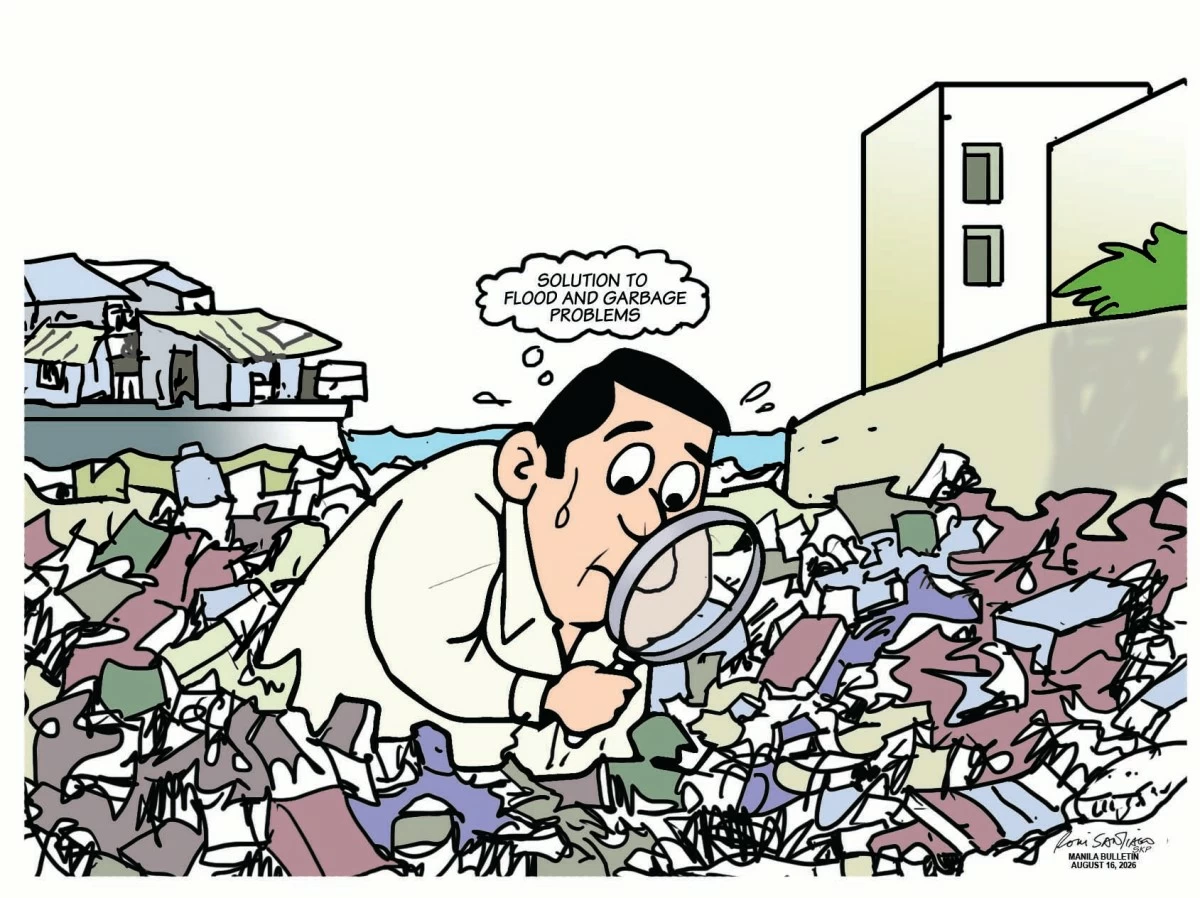
Revisit Manila Bay reclamation projects before floods worsen


Published Aug 16, 2026 12:05 am | Updated Aug 15, 2026 04:59 pm
The flooding that has battered Metro Manila and nearby provinces in recent days should prompt the government to look beyond the immediate causes of the disaster. Heavy rains from the enhanced southwest monsoon, compounded by other weather disturbances, undoubtedly overwhelmed communities. Garbage clogging waterways has also aggravated the problem.
The causes, while valid, should not become convenient excuses for avoiding a more fundamental question: Where is the floodwater supposed to go?
Metro Manila’s flood-management strategy cannot be reduced to clearing drains, widening waterways, building pumping stations and constructing flood-control structures. These measures address the movement of water inland. But they do not fully answer the equally important question of where that water will ultimately be discharged.
For decades, Manila Bay has functioned as the region’s natural drain for runoff from rivers, esteros, and drainage systems. Yet reclamation has progressively altered portions of the bay’s physical character, reducing open water and changing the coastline.
This does not mean every reclamation project can automatically be blamed for a particular flood. Nor does the Archimedes principle, by itself, establish a direct cause-and-effect relationship between reclamation and inland flooding. But its fundamental lesson is difficult to ignore: when physical space in water is occupied, displaced water must go somewhere.
In a shallow, semi-enclosed body such as Manila Bay, changing the bay’s geometry can affect water movement, circulation, tidal exchange and drainage. If reclamation reduces available water space or obstructs natural pathways, the displaced water and altered flows may increase pressure on already vulnerable shorelines, river mouths and drainage outlets. Those consequences deserve rigorous, cumulative scientific assessment—not assumptions made after disasters occur.
That is why the Department of Environment and Natural Resources must fast-track its cumulative impact assessment of Manila Bay reclamation projects.
The need is hardly theoretical. The DENR has previously acknowledged the necessity of examining reclamation projects collectively because their combined environmental effects cannot adequately be understood by assessing each undertaking in isolation. The Supreme Court, meanwhile, has required government agencies under its continuing writ of mandamus to clean up, rehabilitate, and preserve Manila Bay.
The Court has also specifically required government agencies to report on ongoing reclamation projects and their environmental impact assessments in connection with Manila Bay.
Government agencies charged with enforcing that continuing mandamus therefore cannot afford complacency. Rehabilitation and protection of Manila Bay must mean more than improving water quality and removing trash. It must also mean protecting the bay’s capacity to perform its broader environmental and hydrological functions.
The proposed garbage master plan and more efficient flood-control projects are necessary and welcome. But they represent only half of the solution.
The other half is the receiving end.
It is not enough to ask how quickly floodwater can be moved away from homes and roads. Policymakers must also answer where millions of cubic meters of water will go once they reach the drainage system.
If Manila Bay is the natural receiving basin, then the government must determine whether reclamation is diminishing that capacity—and, if so, by how much and with what consequences.
Development has its place. Reclamation may generate economic activity, create land, and support urban expansion. But no development should be allowed to externalize its environmental costs onto flood-prone communities.
The government should therefore revisit Manila Bay reclamation projects now, while there is still time to correct the course.
The question is no longer simply how to control the flood, but where to let the floodwater go.

𝐎𝐟𝐟𝐢𝐜𝐢𝐚𝐥 𝐒𝐭𝐚𝐭𝐞𝐦𝐞𝐧𝐭 𝐟𝐫𝐨𝐦 𝐭𝐡𝐞 𝟏𝟏 𝐂𝐮𝐥𝐭𝐮𝐫𝐚𝐥 𝐂𝐨𝐦𝐦𝐮𝐧𝐢𝐭𝐢𝐞𝐬 𝐨𝐟 𝐃𝐚𝐯𝐚𝐨 𝐂𝐢𝐭𝐲

 We have worked hard to build this unity and to ensure that every tribe is recognized, respected, and heard. Let us never allow words or actions to divide what generations have worked so hard to bring together.

Different cultures, traditions, and faiths, but one Davao, one community.
This is what being Davaoeño means: we respect each other’s dignity, we protect one another, and above all, we stand together.
My respect and salute to the 11 tribes. Your unity is Davao’s strength. 💚💚💚
See less
May be an image of text
𝐎𝐟𝐟𝐢𝐜𝐢𝐚𝐥 𝐒𝐭𝐚𝐭𝐞𝐦𝐞𝐧𝐭 𝐟𝐫𝐨𝐦 𝐭𝐡𝐞 𝟏𝟏 𝐂𝐮𝐥𝐭𝐮𝐫𝐚𝐥 𝐂𝐨𝐦𝐦𝐮𝐧𝐢𝐭𝐢𝐞𝐬 𝐨𝐟 𝐃𝐚𝐯𝐚𝐨 𝐂𝐢𝐭𝐲
We, the 11 Ethnolinguistic Tribes of Davao, 𝐬𝐭𝐚𝐧𝐝 𝐮𝐧𝐢𝐭𝐞𝐝 𝐚𝐬 𝐨𝐧𝐞 𝐟𝐚𝐦𝐢𝐥𝐲, 𝐛𝐨𝐮𝐧𝐝 𝐛𝐲 𝐝𝐞𝐞𝐩 𝐦𝐮𝐭𝐮𝐚𝐥 𝐫𝐞𝐬𝐩𝐞𝐜𝐭, 𝐬𝐡𝐚𝐫𝐞𝐝 𝐡𝐢𝐬𝐭𝐨𝐫𝐲, 𝐚𝐧𝐝 𝐚𝐧 𝐮𝐧𝐰𝐚𝐯𝐞𝐫𝐢𝐧𝐠 𝐜𝐨𝐦𝐦𝐢𝐭𝐦𝐞𝐧𝐭 𝐭𝐨 𝐩𝐞𝐚𝐜𝐞. The true strength and beauty of our city live in the unbroken bond between our Moro and Indigenous Peoples—a harmony that defines who we are.
𝐃𝐢𝐬𝐫𝐞𝐬𝐩𝐞𝐜𝐭, 𝐡𝐚𝐫𝐬𝐡 𝐰𝐨𝐫𝐝𝐬, 𝐚𝐧𝐝 𝐛𝐮𝐥𝐥𝐲𝐢𝐧𝐠 𝐭𝐡𝐫𝐞𝐚𝐭𝐞𝐧 𝐭𝐡𝐞 𝐩𝐞𝐚𝐜𝐞 𝐰𝐞 𝐡𝐚𝐯𝐞 𝐛𝐮𝐢𝐥𝐭 𝐭𝐨𝐠𝐞𝐭𝐡𝐞𝐫. They have no place in Davao, where safety, dignity, and honor are sacred. Pride that relies on putting others down is not true pride; honor built on another’s humiliation is not real honor.
Our ancestors taught us that true heritage is measured by how fiercely we protect the dignity of our neighbors. Let us hold fast to these values. Let us choose words that heal, uplift, and unite. Kindness costs nothing, but it safeguards the peace of our shared home. 𝐒𝐭𝐚𝐧𝐝 𝐰𝐢𝐭𝐡 𝐮𝐬—𝐜𝐡𝐨𝐨𝐬𝐞 𝐫𝐞𝐬𝐩𝐞𝐜𝐭, 𝐜𝐡𝐨𝐨𝐬𝐞 𝐡𝐨𝐧𝐨𝐫, 𝐚𝐧𝐝 𝐜𝐡𝐨𝐨𝐬𝐞 𝐤𝐢𝐧𝐝𝐧𝐞𝐬𝐬, 𝐚𝐥𝐰𝐚𝐲𝐬.

Why is Filipino music always love songs?


 · 
Following

Actually you know what? It kind of is! When you look at OPM or Original Pilipino Music, there are many love songs, and you can’t have a karaoke without someone singing an Aegis song about heartbreak and a Regine Velasquez or an OPM band song about yearning.

It’s probably because we Filipinos are big romantics. Even in our movies and TV shows, we love watching love teams and hoping the actor and actress are also dating in real life hahah!

To be fair, we also have music that isn’t about love, at least not romantic love.

We have Freddie Aguilar’s music that’s usually about family and Philippine pride.

We have rock and rap songs by icons like Bamboo, Gloc-9, and the late Francis M. that are about politics and social issues.

We also have a lot of folk songs about simple Filipino life, nature, and local traditions.

Filipinos joke all the time about being “senti” (sentimental) or “maoy” (Bisaya word that means extra emotional or heartbroken) so it’s not surprising that our music reflects that.

But if you think about it, anything can be about love. So any song can be a love song if you try, and it looks like we Filipinos try all the time!

The right to disconnect


Sharing valuable information and public service from the No. 1 regional newspaper in Western Visayas. https://lnk.bio/panaynews.


By Klaus Döring 

The "right to disconnect" is a legal or workplace concept that allows employees to ignore work-related messages, calls, and emails outside of regular working hours without facing negative consequences. It aims to reduce burnout and establish a clear boundary between personal life and professional duties.

The right to disconnect is not yet a standalone law in the Philippines. While lawmakers have repeatedly filed measures like House Bill No. 9735 to amend the Labor Code, these bills remain pending in Congress. However, labor officials maintain that employees are not required to face disciplinary action for ignoring non-urgent work messages off-hours.

A LIFE WITHOUT CELL PHONE? I remember the time, when one of my first Japanese friends kept on complaining, why I didn't operate a cellphone. Believe me, during that time, sometime in 2000 or 2001, I was even typing my articles on an old typewriter from Germany.

My Japanese friend then bought me a computer - and a cellphone! Some other friends congratulated me: "Welcome back to the world!" 

Sometimes, I observed (business-)people operating with two or even more cellphones at the same time. I asked them: "How did you survive doing business before without these units?" Believe me or not. The answers have been mostly: I really don't know!

Doing business nowadays without a cellphone? Even a very private life? I can't imagine it anymore. Philippines' cellphone companies really provide us with the widest distribution and the broadest coverage to very affordable charges or even for free. I really enjoy, for example, the unlimited call experience - just to mention one.

Two handsets or even three. Ok lang, as long as it keeps my business running. 

Journalist Chris Stokel-Walker explained it very well: for the average working person, there’s no greater feeling than powering down your computer and kissing goodbye to your avalanche of work emails for the day. If we’re lucky enough to disconnect from the job on evenings and weekends, we’re overjoyed to leave work emails and the stress that comes with it in the office.

But experts say we’re increasingly failing to do so, instead bringing the burden home with us and fielding emails during our free time. Unsurprisingly, this routine has some serious consequences.

Now, it is a reflex, like checking my Facebook or Twitter timeline. Yes, it's indeed so - but never 24/7.

Working abnormal or long hours has long been linked with depression, anxiety and even coronary heart disease. Crucially, the importance of weekend recovery has also been correlated with weekly job performance and personal initiative. While further research revealed psychological detachment during off-work time, reduced emotional exhaustion caused by high job demands and helped people stay engaged.

So, if we know all this, it begs the question: why are we still letting work invade our precious weekends? 

According to Cary Cooper, professor of organisational psychology at Manchester Business School and president of the CIPD, the recent trend even spills into the way we access our work communications and projects.

Today, says Cooper, work emails are just a tap of a smartphone away. “You don’t carry your laptop around when you’re out to dinner, but you do carry your mobile phone,” he says. “The smartphone changed everything.”

The right to disconnect is a proposed human right regarding the ability of people to disconnect from work and primarily not to engage in work-related electronic communications such as e-mails or messages during non-work hours. The modern working environment has been drastically changed by new communication and information technologies. The boundary between work life and home life has shrunk with the introduction of digital tools into employment. While digital tools bring flexibility and freedom to employees they also can create an absence of limits, leading to excessive interference in the private lives of employees

If we don’t switch off from work we don’t recover from work. We should get the right to be disconnected. At night or during weekends.

+++

Email: doringklaus@gmail.com or follow me on Facebook, X - Twitter or LinkedIn or visit my www.germanexpatinthephilippines.blogspot.com or www.klausdoringsclassicalmusic.blogspot.com .

Saturday, August 15, 2026

PAPER AND POWER


by Klaus Döring


Paper still matters, as I could learn from fellow Inquirer staff writer Phyllis Korkki. Yes, paper still matters. The frequent whirring of printers in offices - despite the Internet, Microsoft Word, social media (I love Facebook and Twitter), scanners, smart phones applications and many much more - attest to that.

Paper is a quiet yet profound invention that transformed human history. It allowed ideas to spread past elite circles, preserved scientific and cultural knowledge, and fueled global revolutions from the printing press to modern democracy. Even today, physical paper offers unique cognitive and practical benefits that screens cannot replace.

I am very old fashioned in many things. I was still typing on an old manual typewriter, when my colleagues in different publishing houses already used electric units. I loved my antique typewriter. I love it till today. Yes, it's still here in my office in Davao City. I can't use it anymore, because no more ribbons are available in the Philippines. It's okay. My electric typewriter is also here. Just beside the manual unit. Those were the days, my love... .

It has been sometimes at the end of the 1990s. I worked in an international publishing house in Berlin with branches in Amsterdam and New York. I still used one of those wonderful electric typewriters - and tried to avoid a personal computer. Already during that time I needed to hold paper in my hands. Paper, says the productivity expert David Allen, is "in your face". I strongly agree with David. He said, "Its physical presence can be a goal to completing tasks, whereas computer files can easily be hidden and thus forgotten. I am also returning to paper planners for this very reason. Please, don't laugh at me, my dear readers!

The power of paper lies in its unique ability to preserve human thought, foster deep cognitive focus, and act as a tangible, sustainable medium for communication and art that transcends the digital world.

David Allen, the author of "Getting Things Done", does much of his writing on a computer. So I do meanwhile. But, there are still times when writing with a fountain pen on a notepad. It allows "us" to get "our" heads in the right place. When I tried to learn more from David Allen, I really got surprised, that we have many things in common. Old fashioned or not? I don't care. Here are some facts:

Paper print outs serve an important function. For long texts, a print out can allow a reader to better understand relationships between sections and writings. Paper handouts are still a presence at meetings partly because they are useful for taking notes. Reading a long document on paper rather than on a computer screen helps people "better understand the geography of the argument contained within, "said Richard H.R. Harper, a principal researcher for Microsoft in Cambridge/England and co-author with Abigail J. Sellen of "The Myth of the Paperless Office," published already in 2001.

I also strongly agree with Sellen, saying that using more than one computer screen can be helpful for all this cognitive juggling. But when workers are going back and forth between points in a longer document, it can be more efficient to read on paper.

How about "e-reading a book"? A novel, a drama, whatever? What do you prefer, my dear reader? You wanna know my opinion? I am sure, you can imagine. Yes guys, I still need a book in my hands for my leisure reading. I need to feel the book as well as I need to smell a fresh-printed newspaper. Environment savers might start yelling at me now, though I am one of them. So, where is the edge and borderline?

Paper can be indeed a luscious and beautiful thing - the way we savor fine food and wine, as Steve Leveen, co-founder and CEO of Levenger, said. People complain that writing by hand is slow (yes I am really!), BUT that can be good for thinking and creating! Here we are again!

Yes, it matters still: in defence of the power of paper! What do you think, my dear readers, while holding this newspaper right now in your hands?

P-Beauty: The fourth force in Asian beauty

From tropical-friendly formulations to the global Filipino diaspora, several factors could help Philippine beauty brands make a lasting mark on the international market

Published Aug 15, 2026 10:53 am
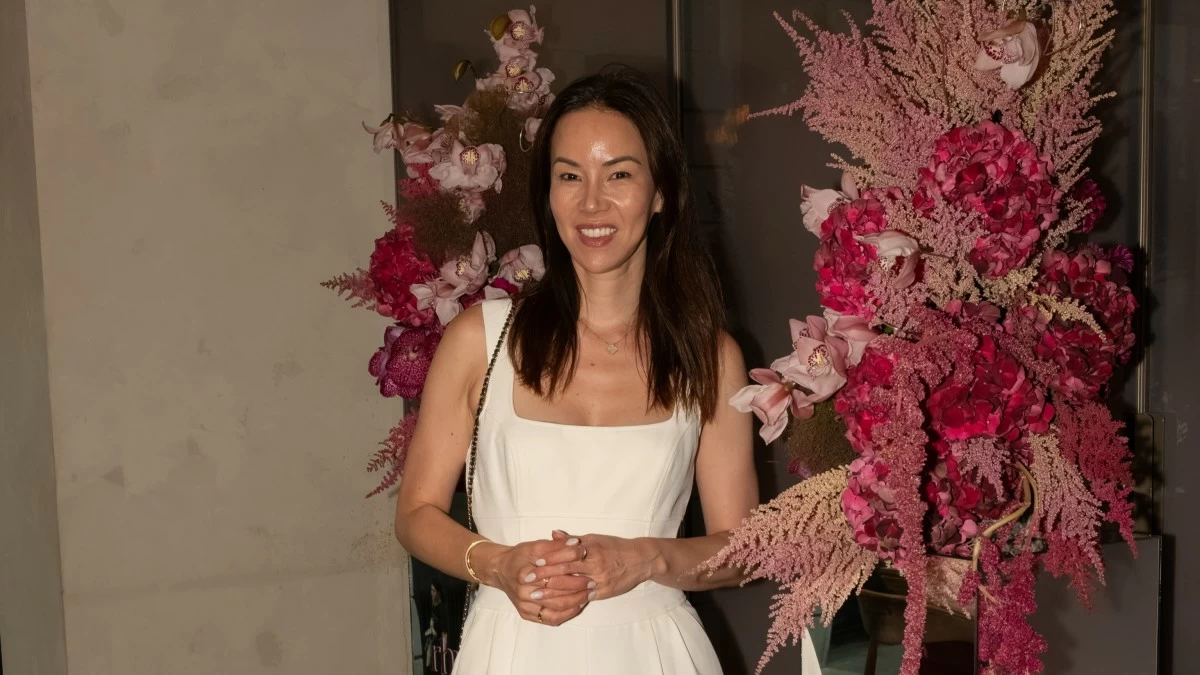
Recently, I saw local beauty brands like Ever Bilena, Issy, Vice, and Sunnies Face make the headlines, basically covering what’s happening in the Philippines’ cosmetics industry and fe from the outside looking in.   Dr. Christine Hall (Photo: Dr. Christine Hall/Instagram)
Dr. Christine Hall (Photo: Dr. Christine Hall/Instagram)
I first met Dr. Christine through a friend at a coffee shop in BGC in July. She was just as she is on social media: deeply knowledgeable and culturally grounded without ever feeling intimidating. She was kind enough to accommodate my questions.
The rise of P-Beauty
I asked Dr. Christine where she thought Philippine beauty fit in the broader Asian beauty landscape. “I genuinely believe P-Beauty is the fourth force in Asian beauty,” she told me. When we say Asian beauty, K-beauty, J-beauty, and C-beauty are usually the first ones that come to mind. Each of them has its own distinct identities, ranging from Korean innovations to Japanese rituals and China’s power in scale. “The Philippines has something equally distinctive to contribute, and I think we’re only beginning to see the scale of it.”
She pointed out that the Philippines’ tropical climate creates genuinely different skincare needs than the colder markets that shaped K-beauty and J-beauty. Citing heat, humidity, sun exposure, and sweat, these “make P-Beauty much more than just a variation of K-Beauty,” she said. “It can be a response to a different environment, a different culture and a different understanding of beauty. P-Beauty doesn’t need to sit underneath another country’s beauty category. It can stand proudly in its own right.”

Don’t copy Korea
With K-Pop culture deeply integrated in our society, I thought it would be natural to consult her expertise on best practices that the Philippines can take from how K-beauty went global.
“I don’t think the lesson for the Philippines is to copy Korea. Quite the opposite,” she remarked. K-beauty’s rise came from a philosophy around skin health, constant innovation, sharp branding, and an entertainment export machine most countries simply don’t have.
But the Philippines, she expressed, already has its own unique proposition. Particularly, “an incredibly engaged domestic audience, a huge and passionate Filipino diaspora, a powerful creator culture, and an enormous amount of pride in Filipino identity.”
Social media, she explained, has bridged a gap that a generation ago would have been nearly impossible to close. “The opportunity is to build on what is already uniquely Filipino, not to recreate K-Beauty.”