You plan to move to the Philippines? Wollen Sie auf den Philippinen leben?

There are REALLY TONS of websites telling us how, why, maybe why not and when you'll be able to move to the Philippines. I only love to tell and explain some things "between the lines". Enjoy reading, be informed, have fun and be entertained too!

Ja, es gibt tonnenweise Webseiten, die Ihnen sagen wie, warum, vielleicht warum nicht und wann Sie am besten auf die Philippinen auswandern könnten. Ich möchte Ihnen in Zukunft "zwischen den Zeilen" einige zusätzlichen Dinge berichten und erzählen. Viel Spass beim Lesen und Gute Unterhaltung!


Visitors of germanexpatinthephilippines/Besucher dieser Webseite.Ich liebe meine Flaggensammlung!

free counters

Total Pageviews

Thursday, March 26, 2026

Saint Patrick and freedom fighters of the anti-slavery movement


March for the Martyrs photo
© Jacob Popcak

By Fr. Shay Cullen, Founder since 1974

There have been celebrations held around the world this past week to mark the feast day of Saint Patrick, the patron saint of Ireland. People displayed the Irish flag, wore green clothes, and pinned on them sprigs of shamrock, an Irish plant associated with Ireland’s conversion from paganism to Christianity. For some, it is a religious festival; for others, a secular tradition. In Chicago, which has a large Irish immigrant population, city officials turned the river green using dye. In Ireland’s capital Dublin, there were parades and parties joined in by thousands of people, yet few of them knew what they were celebrating or why.

It should be a celebration of the bravery of a young man named Patrick, who was 16 when human traffickers abducted him in Wales in the year 410. They took him across the Irish Sea to Ireland to be enslaved. He was truly a victim of human trafficking — a common practice then that even persists today. Patrick then learned to speak Gaelic, the Irish language, and after some years as a slave herding sheep, he found the courage to escape and walked across Ireland to find a ship and worked his passage back to his home in Wales. He later became a missionary, went back to Ireland, and persuaded the rulers there to embrace the values of Jesus of Nazareth. Over time, these leaders were converted and freed their slaves.

In the Philippines, there was a famous female freedom fighter named Gabriela Silang. She was the first woman who led a rebellion against Spanish forces in 1763 to free her people from oppression and slavery. After the assassination of her husband Diego Silang, she took command of his forces and fought to liberate the Ilocos region, until her capture and execution later that year. She is known as the “Joan of Arc of Ilocandia.”

Jose Rizal was a highly educated and renowned ophthalmologist. He was also a novelist who exposed the oppression of his people by the Spaniards and inspired Filipinos to oppose colonial rule nonviolently through his writings. He exposed the injustices committed by the Spanish regime that imposed what can be called de facto slavery. Thanks in part to Rizal’s works, his fellow Filipinos rose up to oppose the Spaniards. However, American forces landed in the country after defeating the Spanish fleet on Manila Bay, and pretended to be supporters of the Filipino revolutionaries and made a treacherous deal with the Spaniards. They attacked the Filipino freedom fighters and waged a bloody war against them, committing many atrocities. The United States eventually conquered the Philippines in 1901. After granting independence to the Philippines in July 1946, America made it a neocolony, which it still is today. Consider: there are nine US military bases inside Philippine ones today, with the approval of the Philippine government, which is run by an oligarchy. American multinational firms, with Filipino tycoons, control the archipelago economically. There are more than 800 member-companies in the American Chamber of Commerce of the Philippines.

Slavery: A way of life

Slavery was a way of life in the US starting in 1661, when it was officially recognized by law in Virginia. The beginning of wealth generation in the US was built on slavery. But by 1804, all northern US states had passed legislation abolishing it. The southern states claimed it was their right to own people as personal property and put them to work without pay.

More enlightened North American people who believed in Christian values believed that owning another human being was immoral. In December 1860, 11 southern states eventually broke away from the US to form the Confederate States of America. That sparked the American Civil War. Then-president Abraham Lincoln campaigned nonstop for Congress to pass the 13th amendment to the US Constitution to abolish slavery. The amendment was passed in January 1865, and he signed it.

During the years of slavery, brave black men and women escaped slave-owning farms in the southern states and fled to northern ones to relative safety. One of them was the remarkable and courageous Harriet Tubman. She was born into slavery in 1822, escaped in Dorchester County, Maryland, and fled to Philadelphia. She was 27. She made secret return trips to the South and became a famous “rescuer of slaves.”

She was supported in her rescues by the so-called Underground Railroad, a movement to rescue slaves and help them win freedom. In about 13 secret trips to slave-owning plantations at great personal risk, she rescued and led 70 enslaved people to freedom. She also provided specific instructions that helped and inspired another 50 to 60 more to escape on their own. During the Civil War, she became a leader of a black contingent of Union soldiers and helped lead the Combahee River Raid, which liberated more than 700 enslaved people. After a lifetime of saving slaves, Tubman died at about 93. Her legacy lives on and her life is dramatized in the Oscar-nominated 2019 film “Harriet.”

In the Philippines, the Senate voted against the renewal of the treaty allowing US bases in the country on Sept. 16, 1991. The final US military ship, the USS Belleau Wood, departed Subic Bay on Nov. 24, 1992. The campaign to free the sex slaves in Olongapo City and close the US bases and convert these into economic freeports started in 1983 by the anti-bases campaign led by the Preda Foundation. After the bases closed in 1992, an estimated 1,000 women and children were freed from sex slavery in bars and brothels, where many of them were held in debt bondage. Today, 171,653 employees work with dignity at the Subic Bay Freeport Zone.

However, human trafficking persists as a common crime in the Philippines and elsewhere in the world. There is a kind of economic slavery among the 17 million Filipinos who eat only one meal a day. Many are forced to be sex slaves in bars and brothels catering to local and foreign tourists. Slavery is very much still with us today. The United Nations Children’s Fund reports on child slavery estimate that 12 percent of children in South Asia — over 41 million — are involved in unpaid child labor. Modern-slavery figures are provided by the International Labor Organization and Walk Free Foundation. In Asia and the Pacific, approximately 29.3 million people live in slavery as of 2021. This region alone accounts for nearly 60 percent of the effectively enslaved people in the world.

Wednesday, March 25, 2026

CLAIMS TO LEADERSHIP


By Klaus Döring

Effective claims leadership involves cultivating a proactive, empathetic, and technologically adept team to drive, not just manage, performance. Modern leaders focus on strategic, AI-enabled, and data-driven approaches, fostering trust and psychological safety rather than focusing on blame.
I am 73 now and have retired in the Philippines for good since 1999. I traveled all around the world. I met innumerable leaders in different companies and institutions. I experienced “good” and “bad” leaders.  My “good” leaders, just a handful – maybe, became my mentors. Each one in his or her own very special way. The others I sorted out. Forgot them… . 

Quitters never win and winners never quit! Basta! That was my first leader’s motive –  a publishing house director, whom I met during my college time. This saying has been imprinted in my mind and heart till today. As a result, when I started teaching German language in the Institute of Languages and Creative Arts at University of Southeastern Philippines in Davao City almost 29 years ago, I used this and other sayings helping my students to remember these key points.

As I said before: just a handful of awesome leaders crossed my path. In Germany, in the U.S. and lately also here in the Philippines. I learned a lot from them and their behavior. I also learned from negative leaders, those catching people doing things wrong. Why don’t leaders spend at least an hour a week wandering around their operation catching people doing things right AND wrong? My first boss, a publisher in Germany, really did it this way. One could talk to him.  Well, nowadays situations have changed our business lives. 

Many leaders wait to praise their people until they do things exactly right. Problem: mostly, one waits forever. 

Up to now, I see a lot of unmotivated people at work or students at school, but I have never seen them after work or school! When office is done and school is over, people race to do such things that provide them with positive feedback on results.

My former students were getting tired many times. I tried to tell them that learning is more important today than ever before. Especially in pandemic times. Especially during online classes. 

In the past, if a person was loyal and worked hard,his or her job was secure. Also during my time in the 1960’s and 1970’s or even early 1980’s. Today, the skills you bring to the party constitute the only available form of job security. When you stop learning, you stop growing. Albert Einstein once said: Never stop learning and ask questions. A perfect leader should be included. It really depends on how you talk to the people!

In one of my previous write-ups, I mentioned: Dream hard but work harder. I have to rethink this. How about this: Don’t work hard – work smarter. This saying is common sense but not common practice as America’s best-selling business author Ken Blanchard voiced it out. If you don’t take time out to think, strategize, and prioritize, you’ll work a whole lot harder, without enjoying the benefits of a job smartly done. As an ordinary worker or as the Big Boss.

Leadership and communication are two areas in  which we can continue to develop virtually forever.

Here are seven functions a leader needs to perform:
Setting goals. …
Organising. …
Take initiatives. …
Cooperation among employees. …
Motivation and direction. …
Liaison between workers and management. …
Policy making.

PAL says it has enough fuel to keep all flights running


Published Mar 25, 2026 09:14 am
Philippine Airlines (PAL) said it has shored up its jet fuel reserves for the “foreseeable future,” seeking to calm markets after President Marcos warned that the regional energy crisis could potentially ground the country’s carriers.
In a statement on Wednesday, March 25, the flag carrier, controlled by billionaire Lucio Tan III, said it has secured enough inventory to maintain its full schedule, including fuel-heavy long-haul routes to North America and the Middle East.
“Philippine Airlines is closely monitoring global and regional developments affecting jet fuel supply and pricing,” the company said in a statement. While the airline did not disclose specific inventory levels or the duration of its hedges, the carrier said its current position is stable.
PAL assurance follows the assessment from President Marcos, who told Bloomberg News on Tuesday that grounding planes is a “distinct possibility” if the fuel crunch worsens.
With the Philippines importing approximately 98 percent of its crude oil from the Middle East, the closure of the Strait of Hormuz has created a bottleneck for the refined products essential to flight operations.
The national government has since declared a state of “national energy emergency,” as domestic fuel reserves have reportedly thinned to a 30-day buffer. Beyond simple scarcity, the cost of operations is surging; jet fuel prices in the Singapore hub have spiked more than 100 percent since late February.
To mitigate these risks, PAL said it is coordinating with the Department of Energy (DOE) and suppliers including Petron Corp. and Shell Pilipinas Corp. Part of the “prudent planning” includes managing “tankering” operations—a practice where aircraft carry extra fuel from Manila for return trips to avoid refueling in foreign airports that have begun restricting supplies to international carriers.
Despite the supply guarantee, the financial pressure is mounting. The Civil Aeronautics Board recently shifted to a 15-day monitoring cycle for fuel surcharges to help airlines recover costs more quickly.

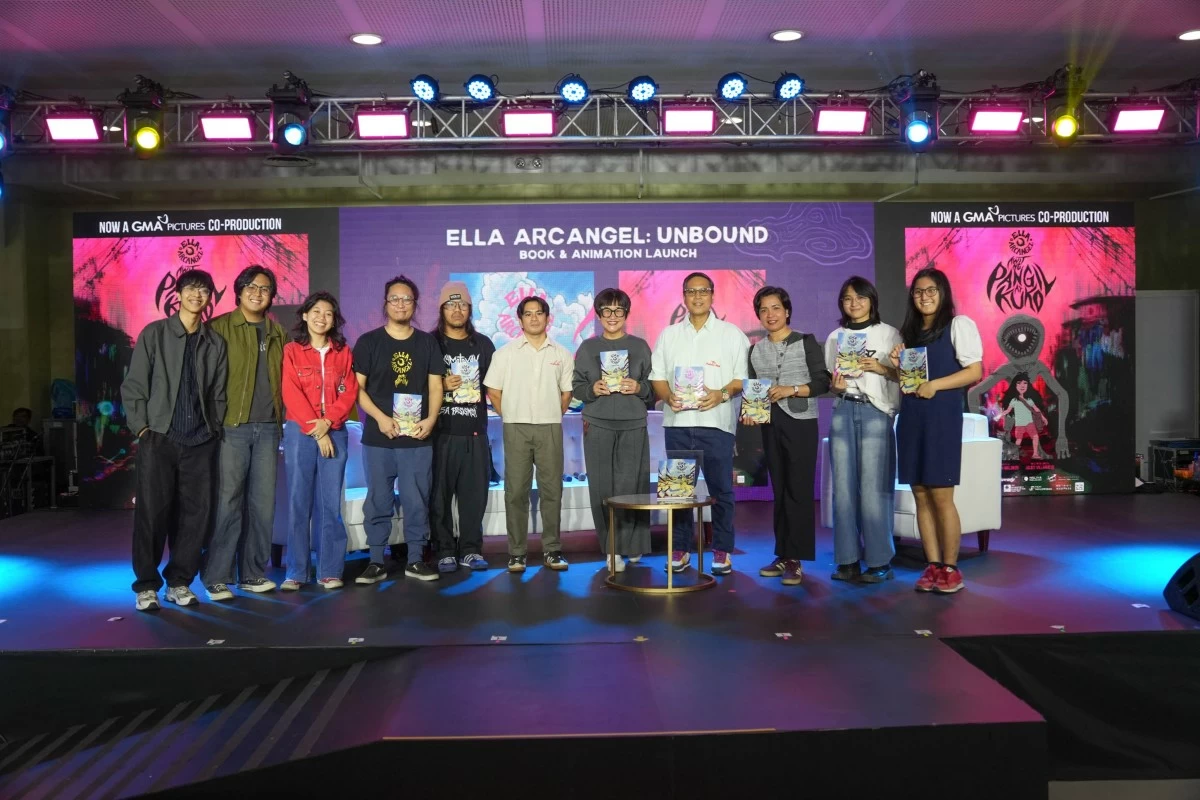
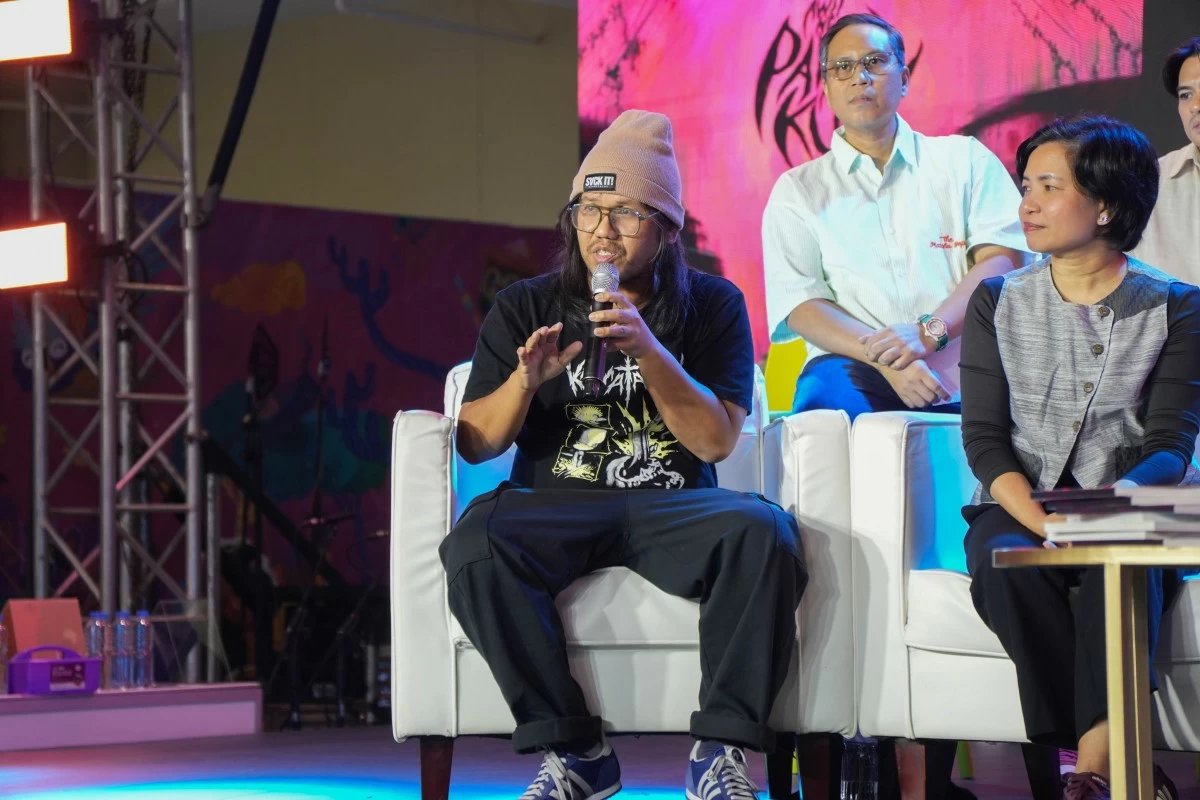
Philippine Book Festival 2026 shows what happens when Filipino books find their readers


Published Mar 24, 2026 10:58 pm
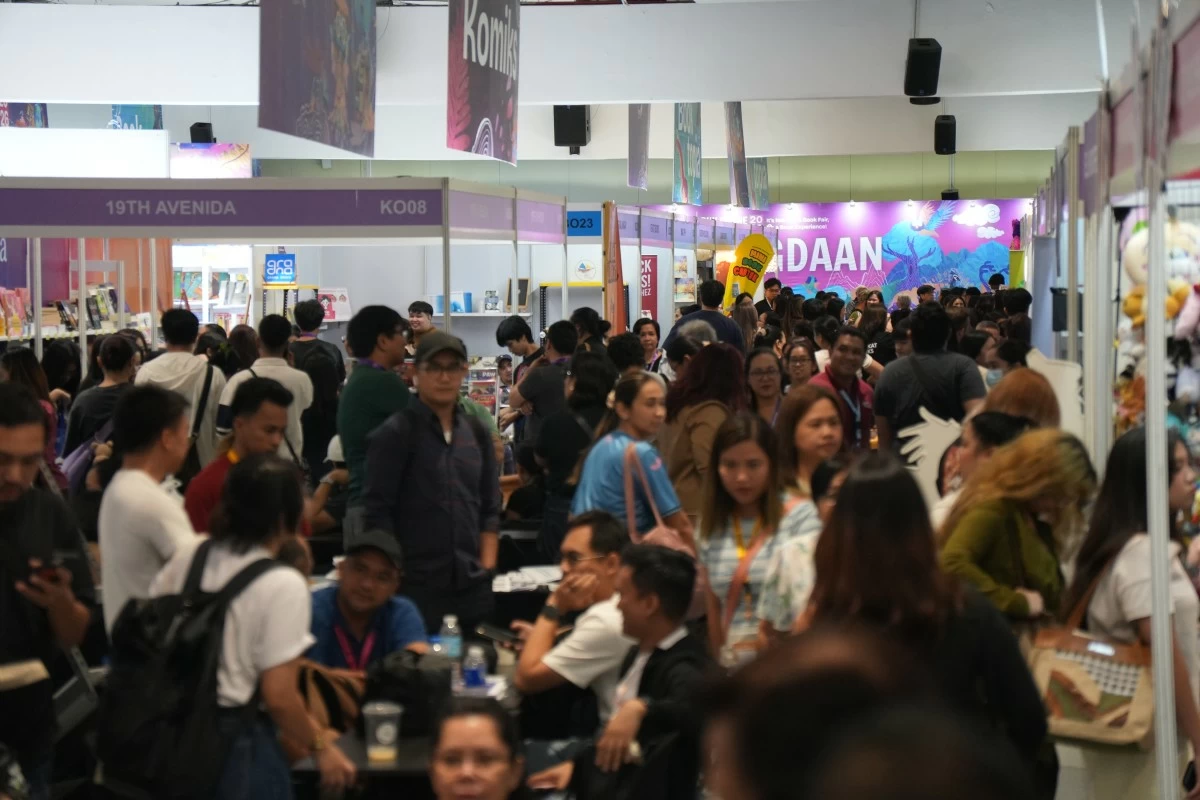
The National Book Development Board (NBDB) successfully concluded the 4th Philippine Book Festival (PBF), where more than 100 publishers and nearly 39,000 visitors gathered for the country’s largest and most spirited celebration of Filipino books, authors, illustrators, and readers, surpassing PBF 2025’s retail sales figures in the process.
The strong turnout affirmed what the NBDB has long believed: Filipino readers are eager not only for greater access to locally published books but also for meaningful opportunities to meet the writers, illustrators, and creators behind the stories they love.
The festival was formally opened by NBDB Executive Director Charisse Aquino-Tugade and Department of Education Secretary Edgardo “Sonny “ Angara, who stayed well beyond the opening program to walk the venue, speak with publishers, and engage with authors, illustrators, performers, and visitors—a gesture that left little doubt about the depth of his support for the festival and the industry it serves. National Commission for Culture and the Arts (NCCA) Chair Eric Zerrudo, along with Ilokano author Faye Flores
Melegrito and Mindanawon poet Gerald Galindez, added a moment of unexpected beauty to the proceedings by delivering a live reading of Galindez’s “Kung Ang Libro Ay Dagat” in Hiligaynon, Ilokano, and Maguindanao, respectively, a fitting invocation for a festival built on the conviction that every language of the archipelago has stories worth telling.
ED Charisse Aquino-Tugade with NBA awardees
John Jack Wigley & Charlson Ong
Atom Araullo
Atom Araullo
Where Readers and Creators Met
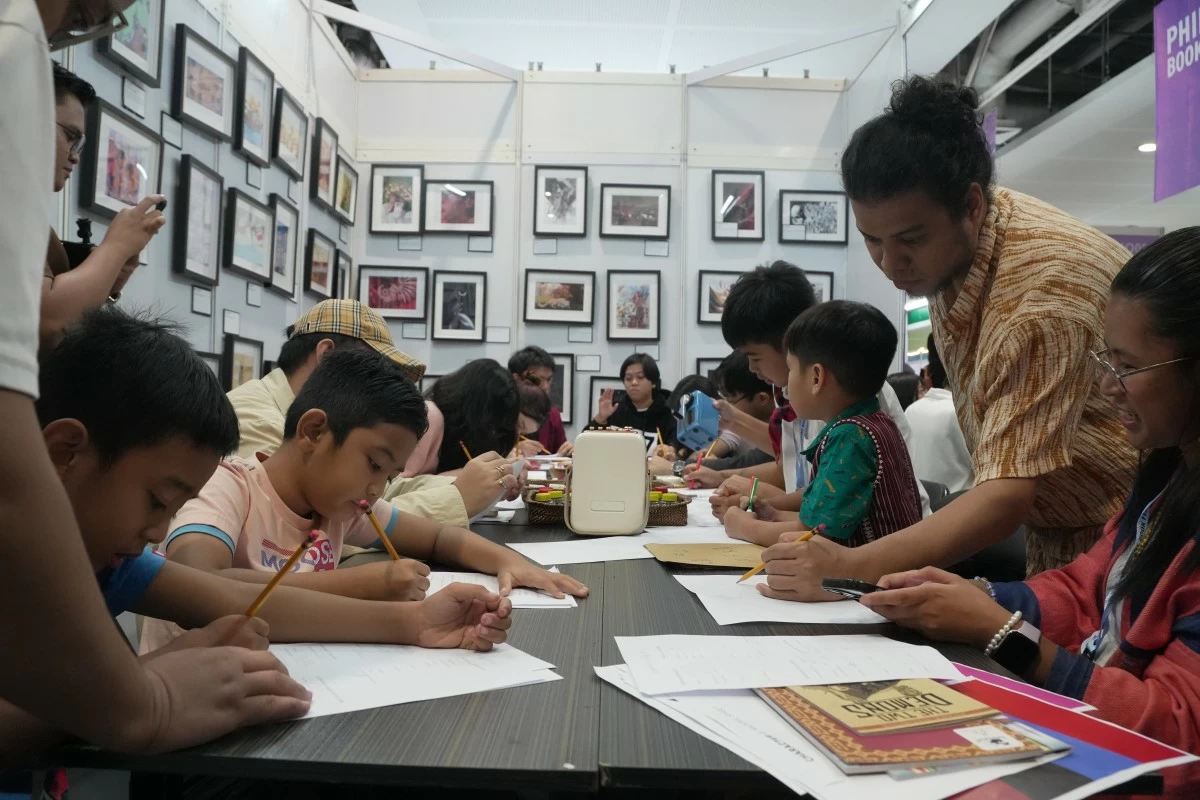
At Bahay Ilustrador, illustration and visual storytelling workshops gave aspiring artists and curious visitors a rare window into the creative process. Several artists, including Beth Parrocha, Danielle Florendo, Randy Valiente, and Jerome Suplemento, led sessions that drew participants who arrived simply to observe but left with creative outputs, new skills, and in many cases, a clearer sense of what they might one day create themselves.
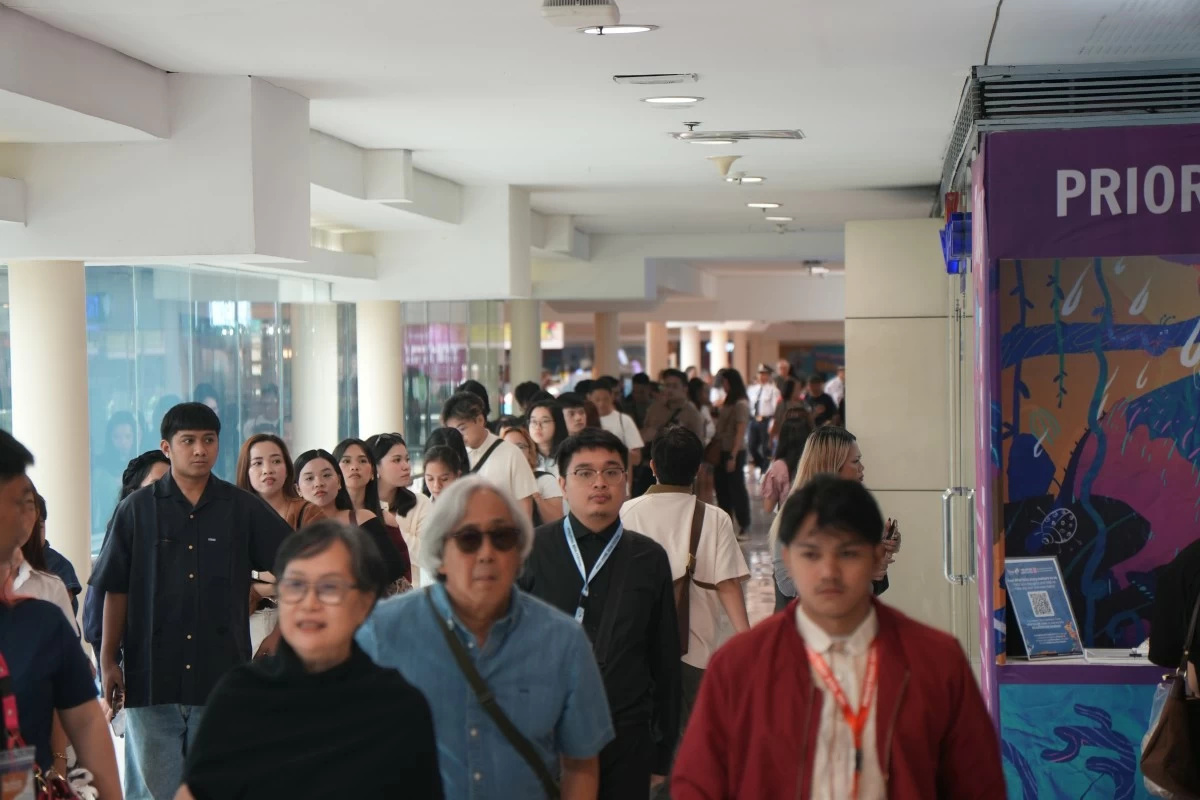
Meanwhile, the long queues at Lugar Lagdaan offered a telling snapshot of the connection between Filipino readers and authors they admire. Book lovers waited patiently for the chance to meet their favorite writers, have books signed, and share brief but heartfelt conversations about how certain stories had shaped their reading lives. Many went on to purchase additional titles and merchandise, a show of support that extended well beyond the page.
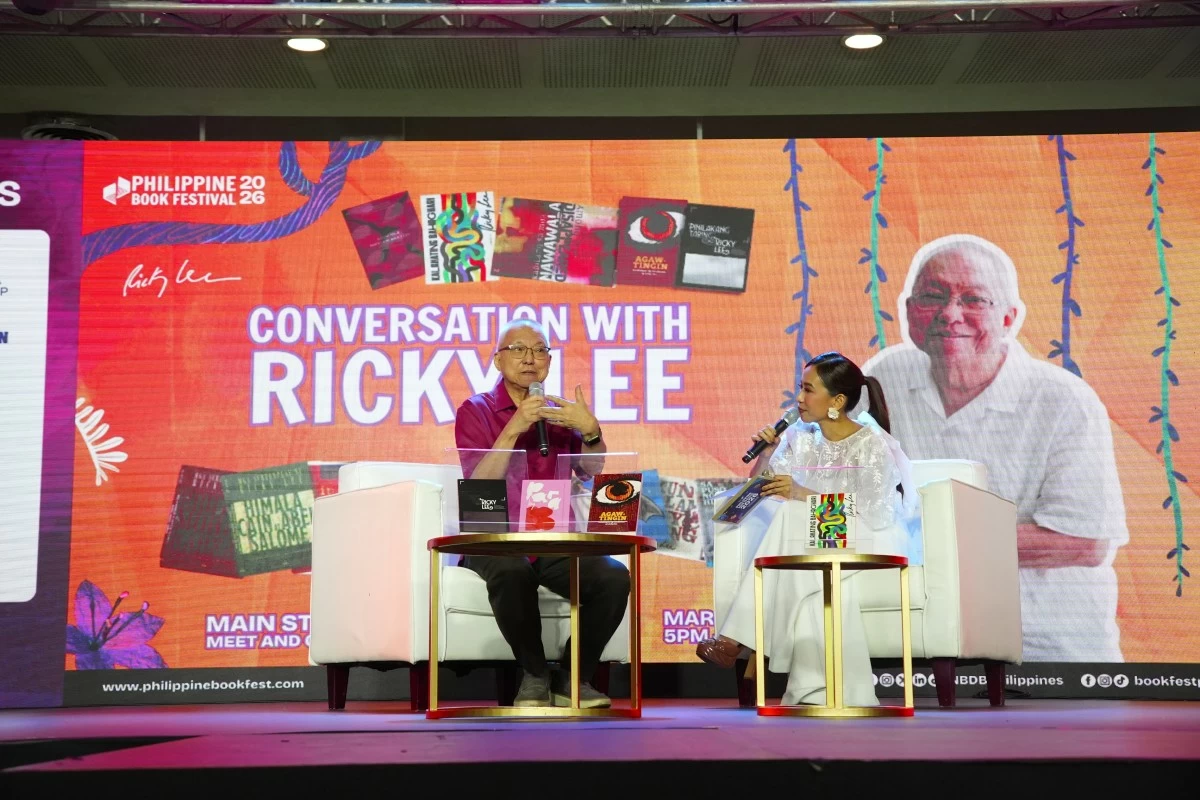
Among those who drew the longest lines were National Artist for Film and Broadcast Arts Ricky Lee, historian Ambeth Ocampo, and fictionist Jose “Butch” Dalisay, each of whom took time not only to sign books but to speak directly to readers, encouraging them to tell their own stories through writing. Popular Wattpad author Jonaxx drew her own devoted crowd, with readers—known as “Jonaxx Stories Lovers”— purchasing books and merchandise in a show of loyalty that needed no book signing to keep it going. Authors Rolando Vivo Jr. and Ron Canimo each marked the festival with the launch of their latest titles at the Umpukan area, followed by signing activities at their respective booths.
For publishers and creators, the festival provided an invaluable platform to connect with the broader reading community. Komiket President and Co-Founder Paolo Herras noted that bringing together publishers, authors, readers, book clubs, book evaluators, and librarians in one venue creates a uniquely meaningful experience for everyone involved. Several publishers echoed this sentiment and expressed hope that initiatives like the PBF will continue to expand opportunities for creators and their audiences to find each other.
Festival Co-Director Charmaine Capuchino reflected on what those four days meant: “When we created the PBF, we dreamed of a space where Filipino stories could truly live. Receiving messages of strong book sales, seeing readers meet their idols, and watching creators build new connections reminds me that the dream is real. Filipino stories are alive, wanted, and bringing people together—and we will keep building this dream, improving it, and taking it even further.”
National Book Awards
Jonaxx's Booth
Jonaxx's Booth
Kids at Bahay Illustrador
PBF crowd we love
PBF crowd we love
Kelvin Miranda, Bianca Umali, and Angel Guardian
PBF crowd we love
PBF crowd we love
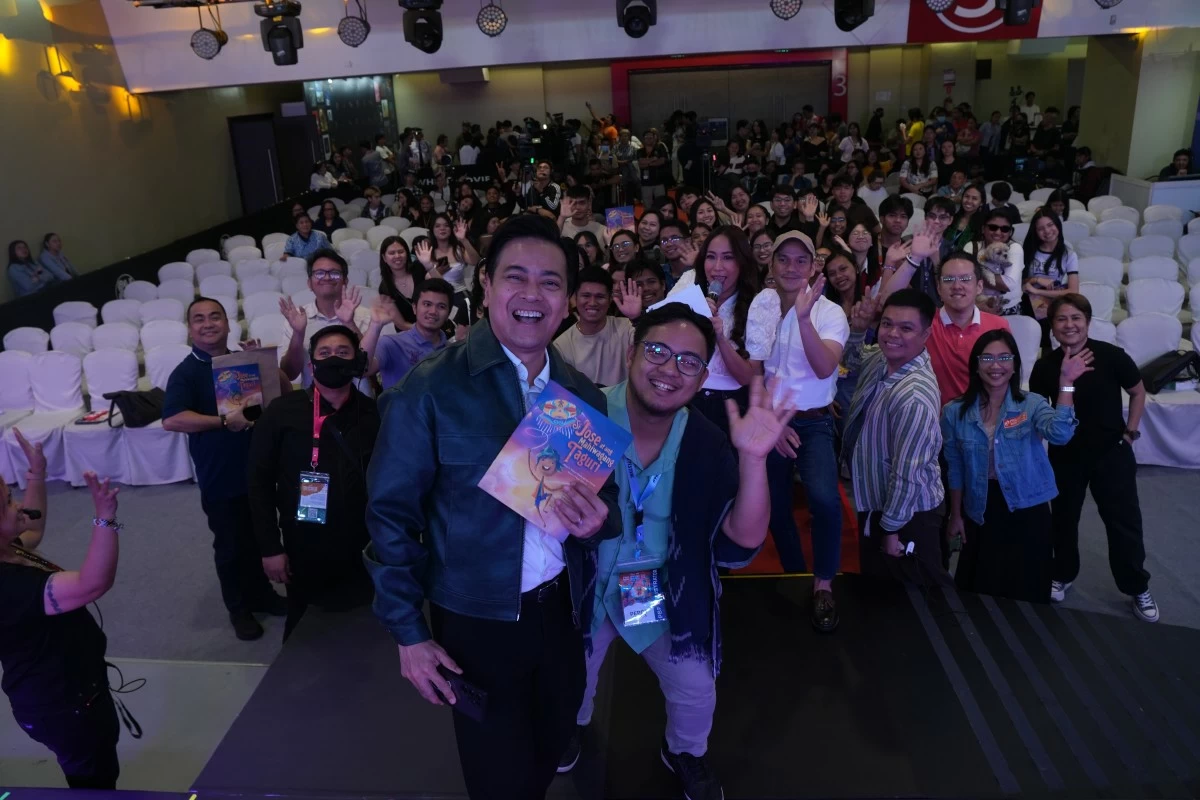
Nelson Canlas and Pepot Atienza
Stories on Stage
Beyond the bookshelves, the festival offered moments that lingered. Teatro Arellano staged an adaptation of “Malong: The Magic Cloth” by NBDB Governor Mary Ann Ordinario, with NBDB’s own Noesis Marquez and Mitch Balladares contributing to the production, a reminder that the stories the NBDB champions are not confined to the page. Rapper and poet Gloc-9 took the Fiesta Stage for a brief but memorable set shortly after launching his book “Makata sa Pilipinas,” turning a book launch into something closer to a concert. The same stage welcomed John Brixter Tino, a PWD poet and son of a fisherman from Quezon, who launched “Mulias: Mga Tula” and spoke about the life and circumstances that shaped it—one of the festival’s quieter but more affecting afternoons, and a reminder of exactly the kind of voice the PBF exists to amplify.
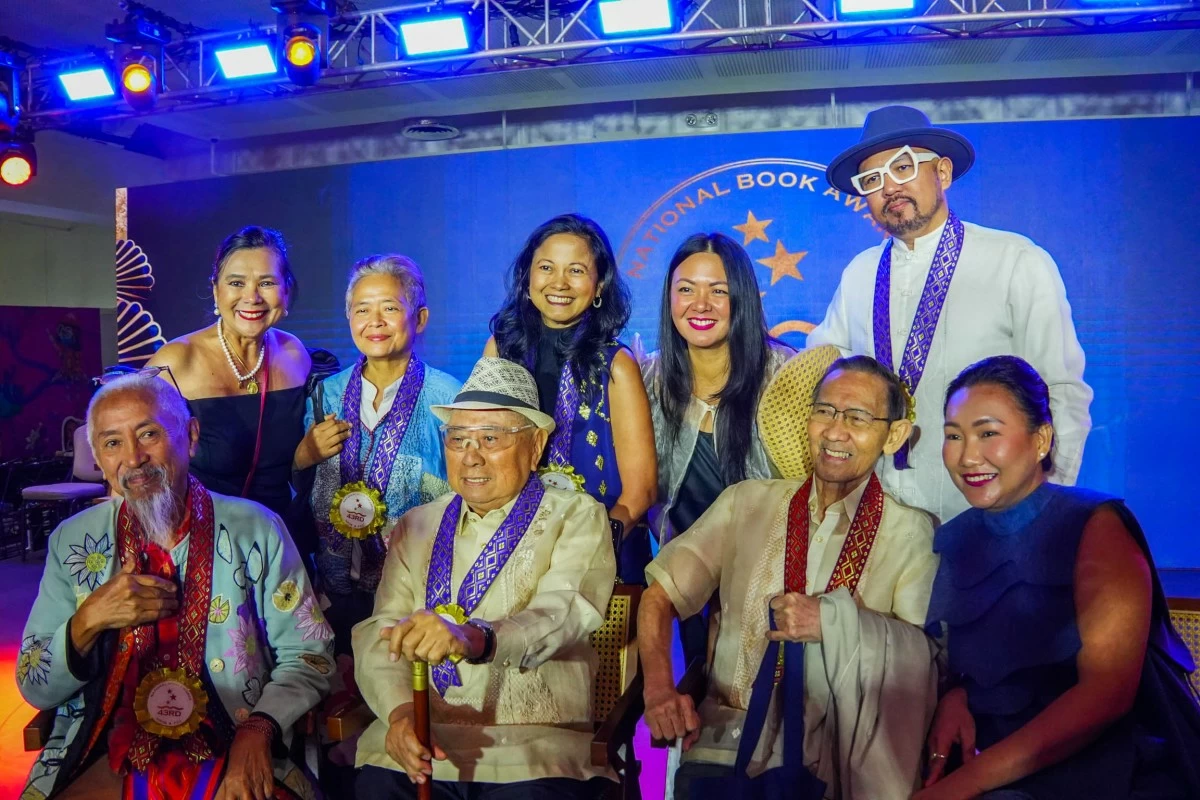
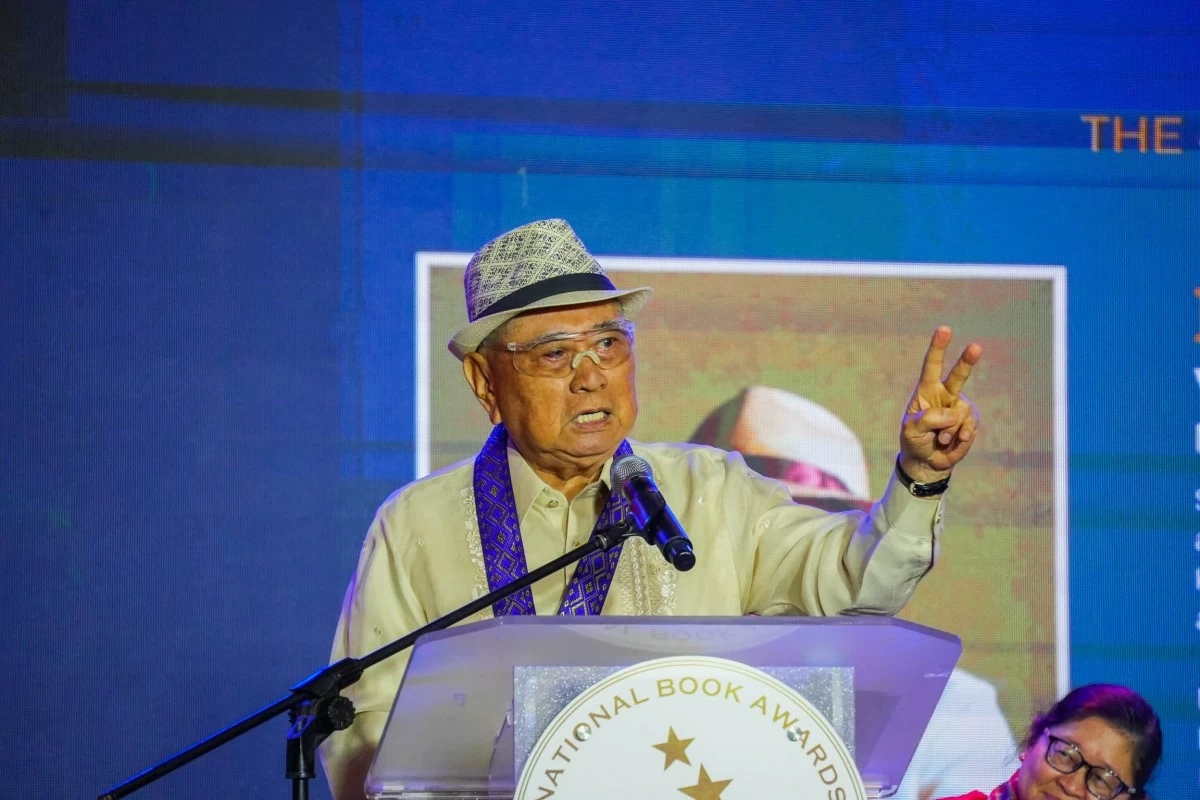
On the morning of March 14, the Fiesta Stage hosted the awarding ceremony of the 43rd National Book Awards. Officials of the Filipino Critics Circle (FCC) and NBDB Executive Director Charisse Aquino Tugade personally handed trophies to the authors of 30 winning titles. Among the honorees was Lucia Asul, whose debut graphic work,“Lucia Dreaming,” won Best Graphic Novel and Comics in English—a first-time winner stepping into the recognition that her work had long deserved. Jhoanna Lynn Cruz received the Elfren S. Cruz Prize for Best Book in Social Sciences for “More Mindanawon Than We Admit: History, Culture, and Identity in the Philippine South,” a timely recognition of a voice that has long given the Philippine South its due weight in the national literary conversation. The lifetime achievement award went to National Artist for Literature Virgilio Almario, with National Artists Kidlat Tahimik and Gemino Abad among those in attendance.
The Gubat ng Karunungan space also made room for the Philippine South. A talk on independent publishing in Mindanao, featuring NH Legaspi of Papel-Papel Publishing OPC, Gerald Galindez of Tridax Zines, and educator, translator, and illustrator Eric Gerard Nebran, moderated by Xi Zuq of Aklat Alamid, brought to the festival a conversation about regional publishing that is too rarely heard in Manila, and was all the more valuable for it.
Ricky Lee
Ricky Lee
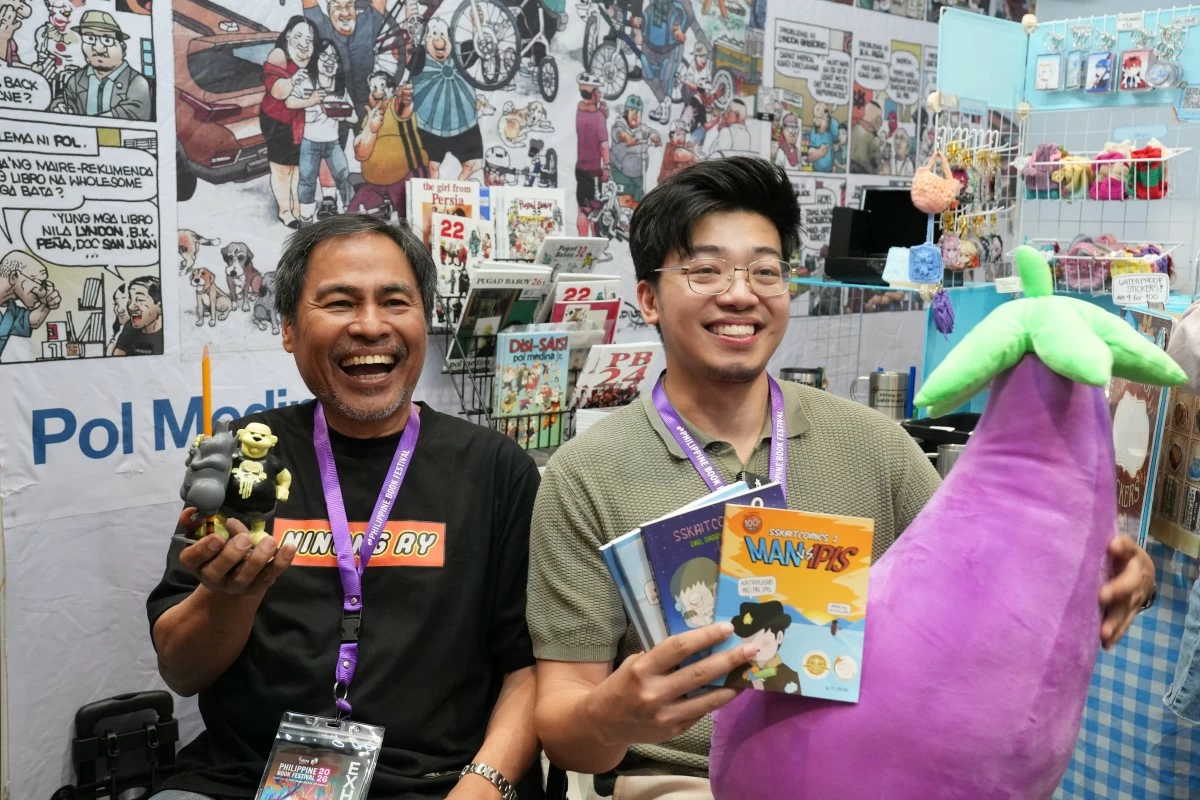
Pol Medina & AJ Bacar
Rio Alma
Rio Alma
Education at the Center
The festival also played a significant role in supporting the education sector. According to NBDB Director Carol Tapia, the agency provided free online and onsite training for 350 book evaluators and provided them a catalogue of all showcased titles ahead of the festival so they could arrive fully prepared for the book selection process. The setup of the Aral Aklat realm drew particular praise: ample tables and chairs positioned in front of every booth gave publishers the space to properly accommodate inquiries and book orders, making the evaluation process more efficient and productive.
The book evaluation and scoping process that the PBF has built into its model has become one of the festival’s consequential contributions to Philippine education. Many evaluators have since expressed interest in having the process extended to their respective regions, a sign that the demand for direct, hands-on access to quality Filipino-authored books extends well beyond the halls of Megatrade.
A Global Eye on Filipino Books
The festival also drew international notice. Claudia Kaiser, Vice-President for business development of the Frankfurt Buchmesse, was among this year’s visitors and offered a warm assessment of what she saw.“I’m very happy to be back here, and I hope to come back many more times to continue to see your culture and literature,” she said. Her visit reflects the sustained interest generated by the Philippines’ landmark Guest of Honour year at the 2025 Frankfurt Book Fair and signals that the PBF has earned a place in the broader conversation about where Philippine publishing is headed.
In a further affirmation of the festival’s growing institutional significance, the Philippine Postal Corporation (PhilPost) formalized a partnership with the NBDB at PBF 2026, committing to the production of a commemorative stamp in honor of the festival, set for release next year.
Secretary Sony Angara & Executive Director Charisse Aquino-Tugade
A Platform that Keeps Growing
For the NBDB, the festival’s success reflects the strength of the partnerships that make it possible. Executive Director Aquino-Tugade emphasized that the Philippine Book Festival will continue to serve as a premier platform for Filipino-published books and a space where the country’s literary and creative communities can thrive.“Based on what we saw over these four days, we are confident that retail sales have grown by at least seven percent compared to last year, and that is only the beginning of what this festival is capable of,” she said.
“To our authors, illustrators, and publishers, we remain grateful for your trust. To Secretary Edgardo Angara and the Department of Education, your partnership makes the scale and reach of this work possible,” Aquino-Tugade added.
As the fourth edition of the Philippine Book Festival comes to a close, the message from the halls of Megatrade is clear: the Filipino reading community is growing, the local publishing industry is gaining strength, and the stories of Filipino creators continue to find new readers eager to discover them.

Tuesday, March 24, 2026


An intoxicating love is a deeply euphoric, often overwhelming romantic experience that mirrors the sensations of addiction, characterized by intense highs, rapid heartbeats, and obsessive thoughts. It involves a surge of chemicals like dopamine and adrenaline in the brain, often described as a “natural high” or a “storm of electrified feelings”. 

US musician and author Ted Gioia argues in his excellent book Music: A Subversive History (2019): “At every stage in human history, music has been a catalyst for change, challenging conventions and conveying coded messages – or, not infrequently, delivering blunt, unambiguous ones. It has given voice to individuals and groups denied access to other platforms for expression. Pop music has often been dismissed as “lightweight” given its young audience, simple snappiness and mainstream status, but those elements are really where its strength is concealed. Pop songs don’t originate themes of mental wellbeing, equality, liberty, activism – but they do transmit them to the broadest platforms possible”.   Snap the radio on, zip to any station, and what are you likely to hear? Love songs. Songs of new love, songs of disappointed love, songs of grateful love, songs of crazy love. I still remember my time as a radio host in Davao City several years ago playing the Hits of the 60’s, 70’s and 80’s. Nothing has changed. Times change, but through history the flow of love songs is a constant.

Plenty of people are surprised or even shocked to find an explicit love song in the bible – complete with erotic lyrics. But “Song of Songs” is exactly that. It shows no embarrassment about lovers. Consequently, intermittent attempts have been made  to rule “Song of Songs” out of the bible. It’s like making it “for adults only”. Imagine, my dear reader, in 16th century Spain for instance, professor Fray Luis de Leon was dragged out of his classroom and taken to jail for four years. His crime? He translated “Song of Songs” into Spanish.

If you start reading “Song of Songs”, you will find out that this book conveys a very different atmosphere from most modern love songs and pop music. Since love songs are always popular, many people approach “Song of Songs” with great expectations. However, readers often find the book much different from what they had expected. One is the poetic imagery. Second: “Song of Songs” is hard to follow. One part  doesn’t seem connected to the next.

Try to explore the “Song of Songs”. One thing is for sure. You’ll learn a lot about the love between God and His people.

36 candidates vie for Binibining Pilipinas 2026


By Robert Requintina

Published Mar 23, 2026 10:38 pm

The 36 official candidates of the 2026 Binibining Pilipinas beauty pageant were announced during a special presentation at the New Frontier Theater in Araneta City on March 23.

This year's official candidates:

Miss International 2005 Precious Lara Quigaman Alcvaraz led this year's selection panel for the prestigious national beauty contest. She was joined by Binibinis Bb. Pilipinas International 2025 Katrina Anne Johnson, Bb. Pilipinas International 2024 Myrna Esguerra and BB. Pilipinas Globe 2025 Annabelle Mae McDonnell.   

Lara, who is currently based in Canada as a teacher, said she will fly back in April, but she hopes to return for the coronation night later this year.

"I am hoping to be back for the coronation, so I'm flying back to Canada. I'm here for an event until March, then I'll go back to Canada," she said during an interview.

Lara shared how the selection committee arrived at the 36 official candidates: "Everybody's beautiful. We all know that. I wanted to see and hear their whys. I wanted to know why they are joining Binibining Pilipinas. So we listened to their stories about why they're here and why they wanted to join Binibining Pilipinas. We wanted to know their stories."

Asked about the qualities she looks for in winners, Lara said, "I wanted a winner who embodies Binibining Pilipinas - a blend of beauty, intellect, and purpose - someone who is smart and full of integrity."   

She shared her advice to future Binibinis: "Have fun, be authentic, and give their best."

The 36 remarkable women will vie for the prestigious Binibining Pilipinas titles and the opportunity to represent the Philippines in international pageants abroad.  

PSEi plunges below 5,900 as Middle East tensions intensify


Published Mar 24, 2026 04:43 pm

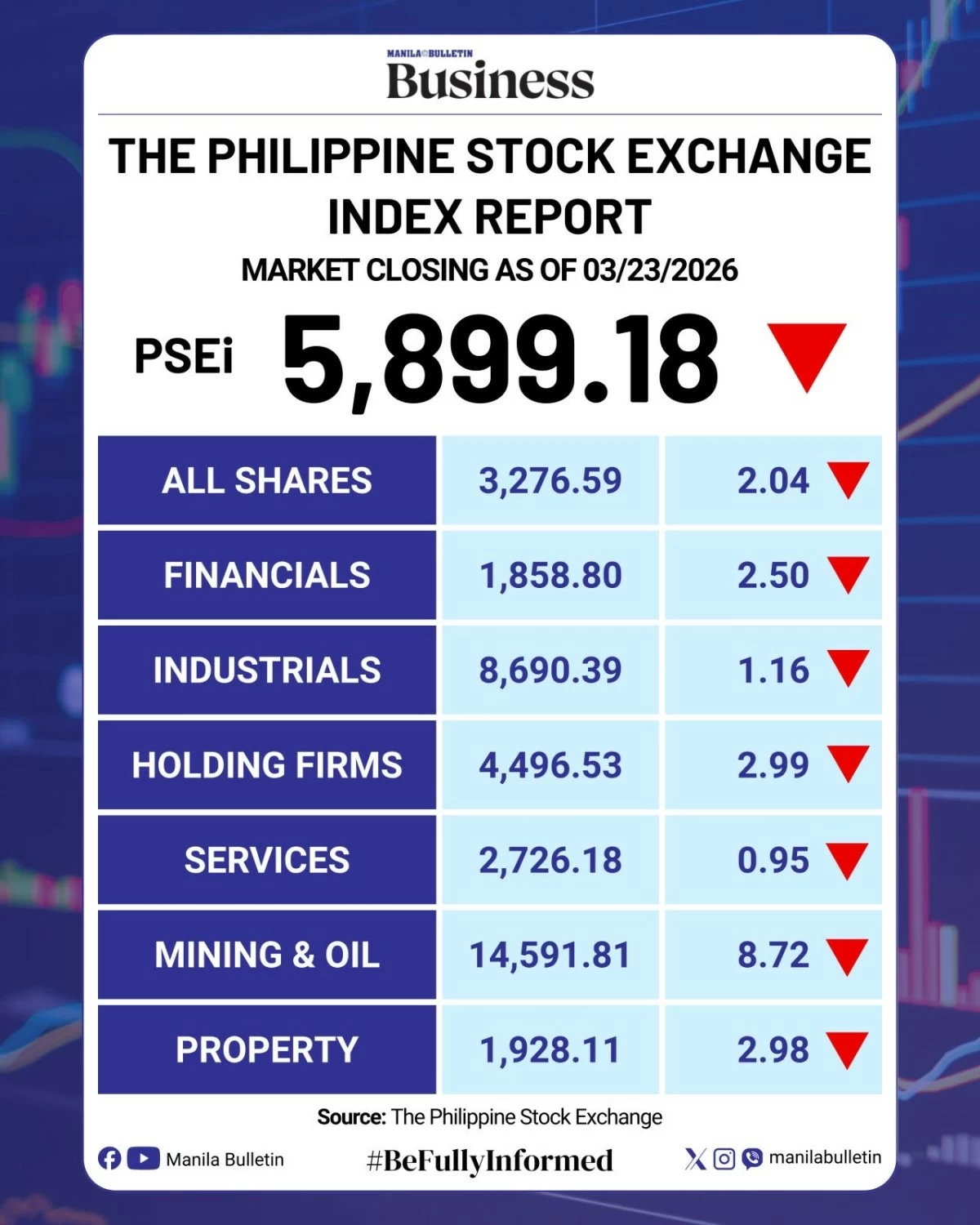
The Philippine Stock Exchange index (PSEi) plunged to just below the 5,900 level on Monday, March 23, as oil prices continued to rise amid worsening conflict in the Middle East, with Iran keeping the Strait of Hormuz shut despite threats from the United States (US).

The main index fell 119.44 points, or 1.98 percent, to close at 5,899.18. The mining sector plummeted to lead all counters down.
Volume rose to 1.36 billion shares worth ₱8.1 billion. Losers beat gainers—167 to 46, with 58 holding their ground.
“The Philippine market ended significantly lower as ongoing conflict in the Middle East showed no signs of de-escalation, dampening investor sentiment,” said Regina Capital Development Corp. managing director Luis Limlingan.
He added that rising oil prices further weighed on the market, heightening concerns over inflation and input costs. As a result, cautious trading prevailed amid expectations of sustained price pressures and potential policy tightening.
Philstocks Financial Inc. research manager Japhet Tantiangco said the local market plunged as the further escalation of tensions between the US and Iran weighed on investors’ sentiment.
This comes as the two countries exchanged threats amid the US’ demand for the complete reopening of the Strait of Hormuz, which is crucial for global energy supply, as roughly 20 percent of the world’s oil passes through it.