
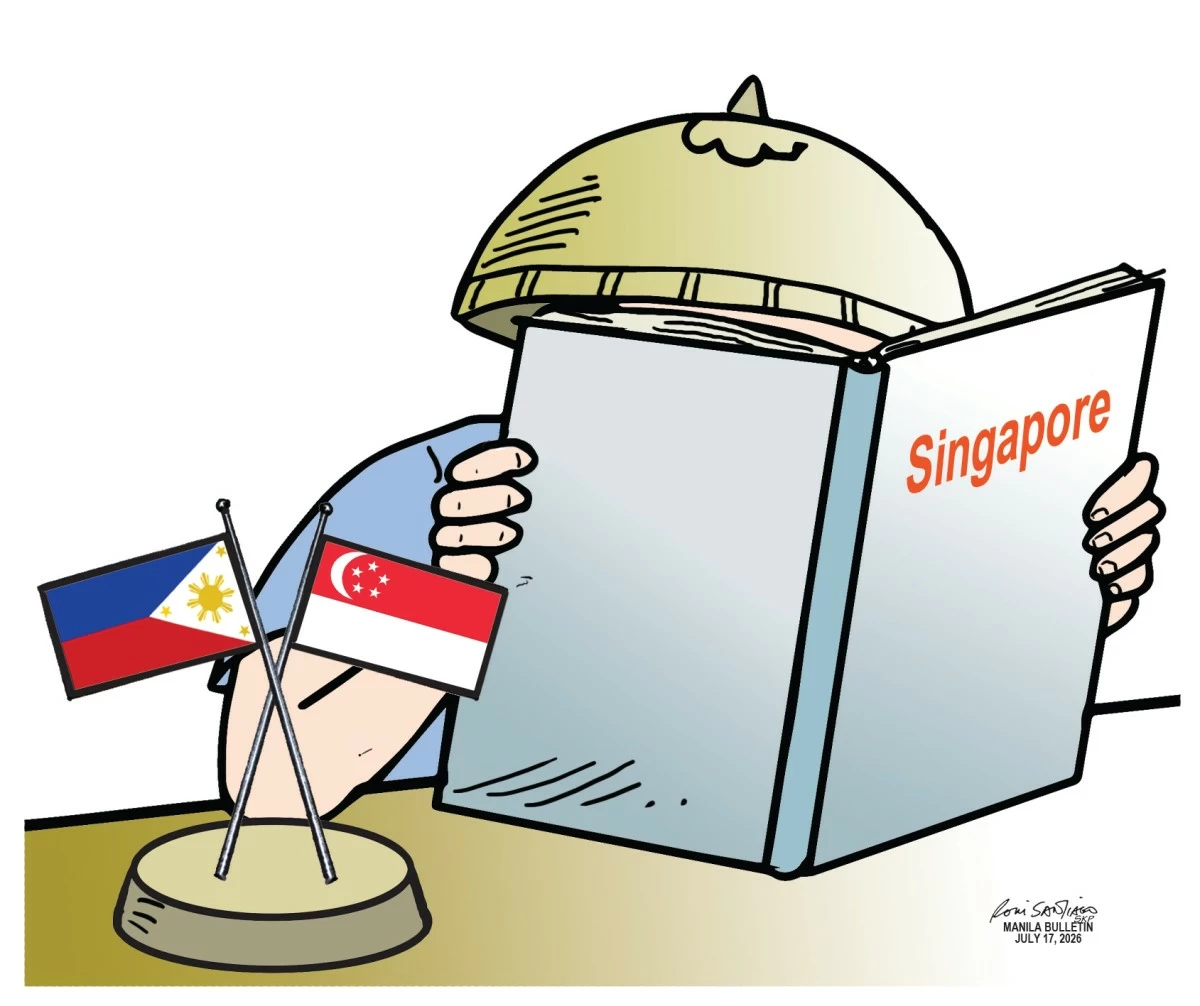
State visits and bilateral meetings are important, but they should never be judged by the warmth of diplomatic exchanges alone. Their true value lies in whether they improve the lives of ordinary people. President Ferdinand Marcos Jr.'s meeting with Singapore Prime Minister Lawrence Wong offers the Philippines more than another opportunity to strengthen diplomatic ties. It presents a timely reminder that meaningful partnerships must translate into meaningful progress.
Few countries offer lessons as compelling as Singapore. With a land area smaller than many Philippine provinces and virtually no significant natural resources, it transformed itself into one of the world's most prosperous, competitive, and well-governed nations. Its success did not happen overnight, nor was it a product of geography. It was built through visionary leadership, institutional integrity, policy continuity, meritocracy, and an unwavering commitment to efficiency and accountability.
The Philippines, by comparison, has no shortage of advantages. It is rich in natural resources, strategically located in the heart of Southeast Asia, and blessed with a young, talented, and resilient population. Yet these strengths have too often been undermined by inconsistent policies, bureaucratic inefficiency, political patronage, and missed opportunities. That reality makes closer cooperation with Singapore more than a diplomatic milestone. It makes it an opportunity to learn, adapt, and improve.
The two leaders’ commitment to deepen collaboration in trade, artificial intelligence, investments, healthcare, and social development reflects the priorities of a rapidly changing global economy. These are not simply fashionable topics. They are the foundations of future competitiveness. Singapore has demonstrated how digital transformation, efficient governance, and a predictable investment climate can attract global businesses while improving public services. The Philippines should study these successes with humility and apply them with determination.
Yet no memorandum of understanding, however promising, can substitute for political will. Stronger ties with Singapore will amount to little if agreements remain on paper or become casualties of bureaucratic inertia. The challenge before the Marcos administration is clear: convert diplomacy into measurable reforms. That means streamlining regulations, digitalizing government services, improving infrastructure, strengthening institutions, and ensuring that investments create quality jobs and inclusive growth.
The responsibility does not end in Malacañan. Every level of government has a stake in this national undertaking. Governors, mayors, city and municipal councils, and even barangay officials must foster a culture of transparency, professionalism, and service. Investors judge a country not only by its national policies but also by how efficiently permits are issued, how fairly regulations are enforced, and how responsive local governments are to the needs of businesses and communities.
The private sector must likewise rise to the occasion. Philippine companies should pursue innovation instead of complacency, invest in technology instead of shortcuts, and compete on quality instead of convenience. Partnerships with Singaporean enterprises should become avenues for knowledge transfer, workforce development, and higher standards of corporate governance.
Finally, every Filipino has a role beyond expecting the government to act. Progress requires citizens who value integrity, embrace continuous learning, support lawful and ethical practices, and demand accountability from those in power. National transformation is not achieved by leaders alone but by a society that shares responsibility for its future.
The Philippines has much to learn from Singapore, but admiration is not a development strategy. Action is. If this renewed partnership inspires reforms that strengthen governance, accelerate innovation, and expand opportunities for all, then this diplomatic engagement will be remembered not for the speeches delivered in Singapore, but for the progress realized in every Filipino community.
Are we up for the challenge? Yes, the Filipino can only if we are willing to adapt and embrace change.

No comments:
Post a Comment