You plan to move to the Philippines? Wollen Sie auf den Philippinen leben?

There are REALLY TONS of websites telling us how, why, maybe why not and when you'll be able to move to the Philippines. I only love to tell and explain some things "between the lines". Enjoy reading, be informed, have fun and be entertained too!

Ja, es gibt tonnenweise Webseiten, die Ihnen sagen wie, warum, vielleicht warum nicht und wann Sie am besten auf die Philippinen auswandern könnten. Ich möchte Ihnen in Zukunft "zwischen den Zeilen" einige zusätzlichen Dinge berichten und erzählen. Viel Spass beim Lesen und Gute Unterhaltung!


Visitors of germanexpatinthephilippines/Besucher dieser Webseite.Ich liebe meine Flaggensammlung!

free counters

Total Pageviews

Monday, August 17, 2026

Why is English grammar so different from other Germanic languages?


Old English originally had three grammatical genders and complex noun cases, just like modern German. It lost them because England was conquered—twice.

If you look at a manuscript from before these invasions, you will likely not recognize it as English at all.

The first folio of the Beowulf manuscript, written in the West Saxon dialect of Old English. Source: Wikimedia Commons.

The shift away from this complex Germanic structure started with the Vikings. In the 9th and 10th centuries, Norsemen settled across northern and eastern England in an area known as the Danelaw. Old Norse and Old English were closely related Germanic languages. Their core vocabularies were similar enough that a Norse settler and an Anglo-Saxon farmer could recognize the roots of each other's words, but their grammatical endings—the suffixes that indicated gender and case—were entirely different. To make trade and daily life possible, speakers of both languages began dropping these confusing endings. This contact smoothed away the complex inflectional system, leaving a simplified grammar that relied on word order rather than suffixes to convey meaning.

The second wave came in 1066 with the Norman Conquest. William the Conqueror replaced the English ruling class with French-speaking Norman nobles. For the next 300 years, French and Latin were the languages of government, law, and the church. English was relegated to the peasantry.

Because English was no longer the language of the educated elite, it stopped being formally taught and lost its standardized written form. Unmoored from the conservative influence of scribes and scholars, the spoken language evolved rapidly. The remaining grammatical genders vanished entirely. To compensate for the loss of noun cases, English locked into a strict Subject-Verb-Object word order and began relying heavily on prepositions like "to," "for," and "by."

By the time English reclaimed its status as the national language in the 14th century, it had transformed from a synthetic language that built meaning through word endings into an analytic one that built meaning through word order. It also absorbed about 10,000 French words in the process, leaving modern English with a Germanic foundation, a massive Romance vocabulary, and a grammar that operates like neither.

When was the last time you felt truly seen or genuinely acknowledged for the work you do?


Ivy Jane Guanzon

When I entered the workplace, I already understood that roles are not always fixed. Tasks can shift, responsibilities can expand, and flexibility is part of the system. I accepted early on that effort does not always translate directly into recognition, and that many things I do behind the scenes are often taken for granted when outcomes are presented.


Still, understanding this reality did not fully prepare me for how easily my meaningful contributions can be overlooked. There were instances when I invested time, effort, and careful attention into tasks, only to later find that the credit was attributed to someone else. These moments were not necessarily loud or confrontational, but they were quietly disappointing.


I am one of those employees who works primarily in the background, handling documents, refining details, organizing outputs, and ensuring that everything is properly completed before submission. I am comfortable working independently or as part of a team, and I take pride in producing work that is thorough, structured, and reliable.


However, I am not always the one who presents or verbally reports these outputs, which sometimes contributes to my work being less visible.


Over time, I began to understand a personal distinction: I do not necessarily seek recognition for its own sake. Instead, I value acknowledgment of effort, the simple recognition that my work has been done with care, discipline, and consistency.


I have come to recognize my ability to handle demanding workloads. At times, tasks require completion within very short deadlines, sometimes within hours or overnight. While these situations can be challenging, I manage them with composure and structure. I do not see this as something extraordinary, but rather as part of the expectations of the role and a reflection of developed endurance and focus.


I am grateful to my boss, whose trust in my capabilities has strengthened my confidence. Being given responsibility and being trusted with important tasks reinforces my sense of purpose and encourages me to maintain consistent performance, even under pressure.


At the same time, I find myself thinking about how opportunities for growth are distributed in the workplace. Training sessions, seminars, and similar development opportunities are important, but they are not always allocated in ways that fully reflect actual need or contribution. Ideally, these opportunities should be given not only based on visibility, titles, or formal presentations, but also on who will most benefit from them in terms of improving their work and strengthening their capacity.


There are often layers of work that are not immediately visible in formal reports or presentations. Some employees may appear quieter, less vocal, or less present in reporting spaces, but this does not necessarily reflect the extent of their actual contribution. In many cases, much of the work happens before a document is even finalized or presented.


This is why I believe employee performance should be assessed more holistically. Evaluations should not rely solely on written outputs, credentials, or presentation skills, but should also consider consistency, reliability, adaptability, and actual performance in day-to-day responsibilities. Real competence is often demonstrated in how tasks are handled over time, especially under pressure or limited time.


It also becomes more complex when comparisons arise in the workplace. Being compared to others without full understanding of the scope and depth of each person’s responsibilities can feel limiting.


Despite these experiences, I continue to approach my work with professionalism. Deadlines can be demanding, and workloads can sometimes feel compressed into very short timeframes. However, I consistently strive to deliver outputs that are organized, accurate, and thoughtfully completed. I focus on maintaining quality rather than being overwhelmed by pressure.


Even in instances where my contributions are not properly credited, I have learned not to turn every situation into a conflict. I choose restraint over confrontation because I value stability and professionalism in the workplace. Still, I cannot deny that it is difficult at times to see my work acknowledged elsewhere without proper attribution.


What I am ultimately asking for is not special treatment, but fairness; the kind of fairness that recognizes effort in a balanced and honest way. Recognition should not depend solely on visibility, credentials, or formal presentations, especially when there are equally important contributions happening behind the scenes.


Every workplace has individuals who consistently give their best without seeking attention. They work quietly, steadily, and reliably. These individuals deserve to be seen not only for what they present, but for what they sustain, support, and complete every day.


Did you know God rejoices over you with singing?


His love for you is beyond measure! The Bible says He delights in you and quiets you with His love. No matter where you are in life, God is with you!
📖 He calls you to be rooted in His love and filled with His presence, strengthened by His Spirit and overflowing with His fullness. (Ephesians 3:17-19)
🙌 Join us on this journey of faith! Christianity Engaged is here to inspire, encourage, and help you grow closer to God. Our videos and posts have touched millions worldwide, and we'd love for you to be part of this community. Follow us today and be encouraged in your faith!

Christianity Engaged

Conflicts – Part of Our Lives


WE are in conflict with ourselves many times during life. Our future gives cause for concern; the past is captured, therefore we miss the future.

The grief and sorrow asked the hope, “How are you?” The hope answered, ” I am a little bit low and sad today!” The sorrow replied sarcastically, “I hope so!”

Conflict is the result of opposing thoughts, actions or ideas disrupting the status quo. Conflict is seen in everyday life, and is a natural, often selfish, and sometimes productive phenomenon. Because it can lead to violence and war in certain situations, the word ‘conflict’ often appears with a negative connotation.

Conflicts are inherent to human life, stemming from differences in opinions, values, or competition for resources. These conflicts can manifest in various forms, from interpersonal disagreements to larger-scale societal or international disputes.

Conflict is in our very nature. Every day, large or small, human conflicts are all around us. But conflict is simply a result of problems being tangled up with the darkside of human nature emerging from innate protection and competition motivations that have evolved over millions of years to help us survive, and that come with difficult tradeoffs.

When conflict is mismanaged, it can cause great harm to a relationship, but when handled in a respectful, positive way, conflict provides an opportunity to strengthen the bond between two people. Whether you’re experiencing conflict at home, work, or school, learning these skills can help you resolve differences in a healthy way and build stronger, more rewarding relationships.

When people get angry with each other, they often say or do things without realizing the cause of their feelings. Understanding the dynamics behind a conflict can make it easier to resolve issues. This insight also can help you mediate a conflict between friends and relatives. Many experts break personal and professional conflicts down into basic types, based on the underlying causes of disagreements and the dynamics.

Nobody really knows what might happen after reaching the retirement age. Sure, if we can observe our neighbors and all other people in our surroundings, we really don’t like to know it. If we treat ourselves with care, our real age will not be shown. I won’t make any secret about celebrating my 72th birthday sometime this year.  I am proud to reach this age with God’s help.

It seems that the respectable treatment of our beloved seniors around us are disappearing into the past and are forgotten by the younger generation. Praising the elderly nowadays means to attest to their impudent and imperishable youthfulness.  I am sure, with His help many seniors are still strong, still indefatigable, still a phenomenon, still intellectual and still spiritual on top!

Let’s not forget our respect, when sometimes just being artificial or  affected by stammering, that “our old lady” or “our old gentleman” hasn’t become senile yet.

On our way to an honorable and respectful age we should try to fulfill some of our greatest longings in life.

During the last decades, I met many people around the whole globe. Unbelievable, I found out, no matter where in this world, the conflicting attitude is everywhere. “It’s an absolute certainty, those doubts are the main certainty!” stressed already the German author, philosopher and dramatist Bertolt Brecht (1898-1956).

Please allow me, once in a while, to be able to say NO. Please allow me to delete inferior and defeatist feelings. Please allow me to admit that I can’t do everything during a single day. Please allow me to no longer be afraid about other people and their spiteful comments about me. 

Please allow me to accept my silence. Please accept me being terribly tired from time to time. Please allow me to be excused even without having an intelligent reply. Please allow me to be carried by salvation and bliss.

Hopefully, we may have enough understanding people with us to accompany us during the voyage of our sometimes very conflicting life.

***

The BOHOL TIMES rolled off its first issue in June 11, 1991 in the City of Tagbilaran and the major towns of the province of Bohol. On its 8th year, the local newspaer was awarded by the Philippine Press Institute (PPI) as Best in Editorial Page among all community newspapers in the country becoming the first newspaper in the province to clinch such a coveted award from respected peers in the field of journalism. The same year, the paper also got final nomination as one of the Best Edited newspaper from among the community newspapers in the country. The paper today has evolved into one of Bohol’s leading voices in demanding transparency and accountability among government officials and employees. It continues to banner responsible dissent, and still adheres to the age-old adage of comforting the afflicted and afflicting the comfortable.

Sunday, August 16, 2026

The poor rich young man


By Fr. Roy Cimagala

Chaplain

Center for Industrial Technology and Enterprise (CITE)

Talamban, Cebu City

Email: roycimagala@gmail.com


YES, he may be rich, young, and faithful to the commandments, yet he remains poor in the deepest sense. Though he had accomplished many good things, he still lacked the one treasure that truly matters—to surrender himself entirely to God, letting go of everything so that he could follow Christ without reserve and with joyful freedom.


At first glance, such surrender appears like loss, even defeat, as though everything precious has slipped away. Yet this holy emptiness becomes the doorway through which God enters completely, filling the soul with his own life. There, and only there, do we discover the perfection for which we were created.


Keeping the Decalogue, the Ten Commandments, is truly necessary, for it forms the solid foundation of a good life. Yet it can bring us only to a certain perfection within the natural order. We are called beyond that, into the supernatural life where we become one with God himself.


The lesson is gentle yet demanding: authentic love for God is measured not by how much we offer but by how completely we let go. Only a heart freed from earthly attachments can belong wholly to him. A divided heart may seem possible, but before God it can never truly exist.


There is no middle path in our friendship with the Lord. We either belong to him completely or we remain partly turned toward ourselves. Even if we imagine giving him ninety-nine percent while quietly keeping one percent, the gift is still incomplete and our peace remains fragile.


God asks for everything, because he desires not merely our possessions but our very selves. He invites us to place our hearts, our minds, our souls, and our strength into his hands. As Christ reminds us, we must love the Lord “with all your heart and with all your soul and with all your mind.” (Mt 22,37)


May we one day echo the beautiful words of an old song: “I have no use for divided hearts. I give mine whole, and not in parts.” Let that become the quiet prayer of our lives. The journey is demanding, yet with grace and humble perseverance, it is always within reach.


Because of our human weakness, we grow only little by little, learning each lesson in its proper season. Every day becomes another invitation to loosen the grip of earthly attachments. Little by little, we offer ourselves more fully until nothing remains outside God's loving embrace.


The Lord never forces this surrender upon us. He patiently waits for our generous response, gently inviting us to trust that his plans are always greater than our own. Every act of detachment, however small, widens the space within our hearts for his love to dwell more deeply.


We must often remind ourselves that nothing given to God is ever truly lost. What seems like sacrifice becomes abundance beyond measure, for the Lord is never outdone in generosity. Let Christ’s promise remain alive within us: “Seek first the kingdom of God and his righteousness and all these things will be added unto you.” (Mt 6,33)


Our faith and trust in Christ’s words must grow ever stronger. The more generously we give ourselves to him, the lighter and freer our hearts become. It is a beautiful mystery understood only through faith, a reality that belongs to the supernatural life and fills the soul with lasting joy.


Little by little, we learn to release our possessions, our preferences, our opinions, our ambitions, and even our cherished plans. At last, we discover the freedom of giving our whole selves to God alone. In that total self-offering, our lives become one with his, and our deepest identity and lasting happiness are finally found.


Glaiza de Castro gets emotional remembering the late Ricky Davao at '58th' screening


Published Aug 15, 2026 02:00 pm

At A Glance

  • Glaiza de Castro gets emotional while remembering late actor Ricky Davao after the Philippine premiere of "58th" at Cinemalaya.

Glaiza de Castro was visibly holding back tears as she talked about Ricky Davao after the special screening of “58th” at Cinemalaya Thursday night.

The actress had just watched the film with us at Shangri-La Plaza in Mandaluyong City, and she was beaming as she shared how proud she was to be part of such a meaningful project.

But when the questions turned to Davao, the night became personal for her.  

Davao plays her father in the film, but their relationship went beyond what viewers will see on screen.

“Lagi kong naaalala sa kanya, he’s just so jolly sa set,” De Castro told us.

She smiled as she recalled how they worked together on “58th” while also doing “Encantadia Chronicles: Sang'gre” and “Sinagtala.”

At one point, she even teased him about taking on so much work.

“Direk, ang sipag mo naman, parang lahat na ginawa mo,” she recalled telling Davao.

Then there's the belt.

Davao had given her one while they were shooting “58th,” showing her how to use it to secure her lapel microphone. It was something he had picked up from his theater experience.

She eventually misplaced it.

But when she finally found it again, it was also when she learned that Davao had passed away.

Davao died on May 1, 2025 at 63 after battling cancer.

De Castro also shared what Davao's daughter, Rikkie Mae, told her.  

She said De Castro was one of her father's favorite actors to work with.

That was when the actress started getting emotional.

“Naiiyak ako kasi special sa akin si Direk Ricky,” she said, noting how Davao had been her director in "Grazilda," her first  titular lead role.

“Naging director ko rin siya sa ‘Sang'gre,’” she said.

“Hindi lang siya co-actor for me, siguro siya yung natuturing kong tatay sa showbiz.”

It was ironic, considering that Davao's final screen role was that of her character's father.

In “58th,” Davao plays Reynaldo “Bebot” Momay, a photojournalist who was among those killed in the 2009 Maguindanao massacre.

His remains were never found.

His daughter, Reynafe, played by De Castro, continues the fight to have him recognized as the 58th victim.

The film has already been screened abroad, including at the International Film Festival Rotterdam and Doc Edge in New Zealand.

But De Castro had been waiting for the film to finally be shown in the Philippines.

“It’s different when it’s shown here in the Philippines. The impact is different,” she said.

“58th” is not an easy story.

The Nov. 23, 2009 massacre claimed 58 lives, including 32 journalists. But because Momay's remains were never recovered, only 57 victims were included in the court's murder convictions.

That is where the film gets its title.

De Castro knows some people may find the subject difficult to watch, but she believes that is also why it needs to be seen.

“I know it’s not a light story, but it’s one of those stories that we shouldn’t forget,” she said.

She is particularly proud that the film can introduce the tragedy to a new generation.

“I’m proud to have been part of it and to be able to share with the new generation what happened.”

“I know na telling this story served its purpose at bilang isang aktor, isa yun sa mga goals ko na makapagsabi rin kung ano yung totoo,” she added.

That is what made the Cinemalaya screening different for De Castro.

She was there to celebrate “58th” finally being shown to Filipino audiences, but she was also watching the final screen performance of someone she considered more than a co-star.

Someone she called her “tatay sa showbiz.”

My Philippines by Mattes


No photo description available.
🌴 Das Koffer-Paradoxon: Warum manche Expats auch im Paradies nicht ankommen 🧠
Es ist eines der faszinierendsten und gleichzeitig nachdenklichsten Phänomene der Auswandererwelt: Menschen, die ihr Heimatland verlassen, weil sie dort sprichwörtlich überall angeeckt sind, nur um auf den Philippinen genau denselben Teufelskreis zu wiederholen. Psychologen nennen dieses Verhaltensmuster oft eine „geografische Flucht“. Die Hoffnung dahinter klingt zunächst verlockend: Ein neues Land, Palmen, ein angenehmes Klima und freundliche Menschen – da muss doch alles besser werden. Doch der entscheidende Haken liegt im Reisegepäck. Denn die eigene Persönlichkeit, tief sitzende Verhaltensmuster und ungelöste innere Konflikte reisen ausnahmslos mit.
Blickt man psychologisch hinter die Fassade, zeigt sich bei diesen Personen häufig ein ausgeprägtes narzisstisches Muster. Ihr Selbstwert speist sich nicht aus innerer Zufriedenheit oder echter Gelassenheit, sondern fast ausschließlich aus permanenter Aufmerksamkeit und dem Gefühl von Überlegenheit. Wenn das Leben im Heimatland nicht die erhoffte Bewunderung einbrachte, wurde die Schuld schnell beim „System“, den Nachbarn oder der Gesellschaft gesucht. Auf den Philippinen angekommen, hält die anfängliche Begeisterung meist nur so lange, wie der Neuheitswert trägt. Sobald der Alltag einkehrt und Flexibilität gefordert ist, bricht die alte Dynamik wieder durch.
Im Gefühlserleben einer solchen Persönlichkeit brodelt eine schmerzhafte Mischung aus tief verunsichertem Ego, Unzufriedenheit und ausgeprägtem Neid. Jeder Erfolg anderer – sei es ein gelungenes Projekt, ein beliebter Reisebericht oder ein harmonisches Auswandererleben – wirkt auf sie wie eine stumme Bedrohung. Weil ihr eigenes Selbstbild so fragil ist, gönnen sie anderen Menschen den Erfolg schlichtweg nicht. Was sich nach außen hin als ständige Besserwisserei oder als giftiger Hate-Kommentar unter Facebook-Beiträgen entlädt, ist in Wahrheit ein Schutzmechanismus. Das Abwerten anderer dient dazu, die eigene innere Leere kurzfristig zu überdecken und sich selbst gedanklich wieder aufzuwerten.
Die Konsequenzen für die Umwelt sind spürbar toxisch. Ein solches Auftreten vergiftet die Atmosphäre in Online-Gruppen, spaltet Communities und raubt denjenigen Energie, die sich ehrlich ein neues Leben aufbauen oder informative Inhalte teilen wollen. Auf den Philippinen, wo eine respektvolle, gesichtswahrende und ruhige Zwischenmenschlichkeit im Zentrum der Kultur steht, wirkt dieses laute, verbitterte Muster besonders deplatziert.
Erkennen lässt sich ein solches Verhaltensmuster an ganz typischen Signalen. Die betroffene Person sieht Fehler grundsätzlich nur bei anderen und zeigt eine ausgeprägte Unfähigkeit zur Selbstreflexion. Während einerseits maßlos über die alte Heimat geschimpft wird, wird im selben Atemzug die philippinische Lebensrealität herabgewürdigt, sobald etwas nicht nach den eigenen Vorstellungen läuft. Zudem fällt eine ständige Abwertungsstrategie auf: Hinter dem Erfolg anderer wird sofort Betrug, Naivität oder reine Selbstdarstellung vermutet.
Am Ende führt dieses Handeln in die logische Konsequenz der Isolation. Die einheimische Bevölkerung zieht sich höflich, aber bestimmt zurück, und auch die Auswanderer-Community distanziert sich von der ständigen Negativität. Die betroffene Person verbleibt in ihrer selbst geschaffenen Blase aus Groll und Unverständnis. Sie hat zwar den Kontinent gewechselt, steht emotional aber noch genau an demselben Punkt wie vor der Auswanderung.
Wie nehmt ihr diese Dynamik im Auswanderer-Alltag oder in den sozialen Medien wahr? Habt ihr solches Verhalten schon beobachtet und wie geht ihr am besten mit destruktiven Kommentaren um – konsequent ignorieren oder sachlich Grenzen setzen? Lasst uns dazu in den Kommentaren austauschen! 👇

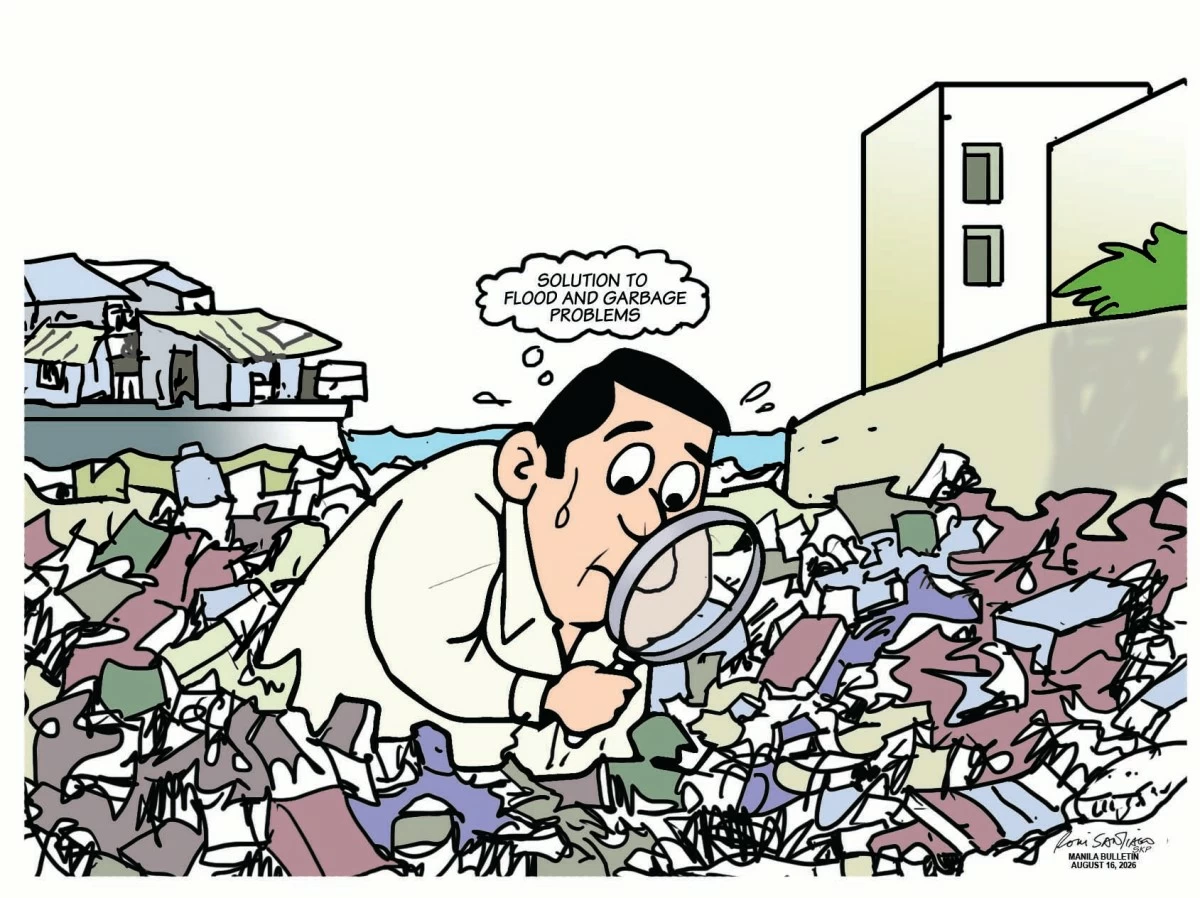
Revisit Manila Bay reclamation projects before floods worsen


Published Aug 16, 2026 12:05 am | Updated Aug 15, 2026 04:59 pm
The flooding that has battered Metro Manila and nearby provinces in recent days should prompt the government to look beyond the immediate causes of the disaster. Heavy rains from the enhanced southwest monsoon, compounded by other weather disturbances, undoubtedly overwhelmed communities. Garbage clogging waterways has also aggravated the problem.
The causes, while valid, should not become convenient excuses for avoiding a more fundamental question: Where is the floodwater supposed to go?
Metro Manila’s flood-management strategy cannot be reduced to clearing drains, widening waterways, building pumping stations and constructing flood-control structures. These measures address the movement of water inland. But they do not fully answer the equally important question of where that water will ultimately be discharged.
For decades, Manila Bay has functioned as the region’s natural drain for runoff from rivers, esteros, and drainage systems. Yet reclamation has progressively altered portions of the bay’s physical character, reducing open water and changing the coastline.
This does not mean every reclamation project can automatically be blamed for a particular flood. Nor does the Archimedes principle, by itself, establish a direct cause-and-effect relationship between reclamation and inland flooding. But its fundamental lesson is difficult to ignore: when physical space in water is occupied, displaced water must go somewhere.
In a shallow, semi-enclosed body such as Manila Bay, changing the bay’s geometry can affect water movement, circulation, tidal exchange and drainage. If reclamation reduces available water space or obstructs natural pathways, the displaced water and altered flows may increase pressure on already vulnerable shorelines, river mouths and drainage outlets. Those consequences deserve rigorous, cumulative scientific assessment—not assumptions made after disasters occur.
That is why the Department of Environment and Natural Resources must fast-track its cumulative impact assessment of Manila Bay reclamation projects.
The need is hardly theoretical. The DENR has previously acknowledged the necessity of examining reclamation projects collectively because their combined environmental effects cannot adequately be understood by assessing each undertaking in isolation. The Supreme Court, meanwhile, has required government agencies under its continuing writ of mandamus to clean up, rehabilitate, and preserve Manila Bay.
The Court has also specifically required government agencies to report on ongoing reclamation projects and their environmental impact assessments in connection with Manila Bay.
Government agencies charged with enforcing that continuing mandamus therefore cannot afford complacency. Rehabilitation and protection of Manila Bay must mean more than improving water quality and removing trash. It must also mean protecting the bay’s capacity to perform its broader environmental and hydrological functions.
The proposed garbage master plan and more efficient flood-control projects are necessary and welcome. But they represent only half of the solution.
The other half is the receiving end.
It is not enough to ask how quickly floodwater can be moved away from homes and roads. Policymakers must also answer where millions of cubic meters of water will go once they reach the drainage system.
If Manila Bay is the natural receiving basin, then the government must determine whether reclamation is diminishing that capacity—and, if so, by how much and with what consequences.
Development has its place. Reclamation may generate economic activity, create land, and support urban expansion. But no development should be allowed to externalize its environmental costs onto flood-prone communities.
The government should therefore revisit Manila Bay reclamation projects now, while there is still time to correct the course.
The question is no longer simply how to control the flood, but where to let the floodwater go.