You plan to move to the Philippines? Wollen Sie auf den Philippinen leben?

There are REALLY TONS of websites telling us how, why, maybe why not and when you'll be able to move to the Philippines. I only love to tell and explain some things "between the lines". Enjoy reading, be informed, have fun and be entertained too!

Ja, es gibt tonnenweise Webseiten, die Ihnen sagen wie, warum, vielleicht warum nicht und wann Sie am besten auf die Philippinen auswandern könnten. Ich möchte Ihnen in Zukunft "zwischen den Zeilen" einige zusätzlichen Dinge berichten und erzählen. Viel Spass beim Lesen und Gute Unterhaltung!


Visitors of germanexpatinthephilippines/Besucher dieser Webseite.Ich liebe meine Flaggensammlung!

free counters

Total Pageviews

Tuesday, August 18, 2026

Protecting the Filipino youth in the digital space


Published Aug 18, 2026 12:05 am | Updated Aug 17, 2026 04:53 pm
President Ferdinand Marcos Jr. has raised a concern that deserves far more than passing attention: the growing influence of social media and online personalities, including politicians, on children and young people.
Speaking before the Foreign Correspondents Association of the Philippines (FOCAP) in Malacañang, the President warned about children’s exposure to harmful online content and distorted realities.
His observation comes at a critical time. For Filipino children, the smartphone is no longer merely a communication device. It has multiple functions: classroom, playground, entertainment center and, increasingly, a source of news and political information. The line separating the conveyance of factual information from engaging in persuasion can be dangerously thin.
That young Filipinos have, in fact, become more politically aware is not being disputed. The concern is whether they are being equipped to distinguish fact from fiction and public service from self-promotion.
Unscrupulous politicians possess an unprecedented ability to communicate directly with young audiences, bypassing traditional media filters and reaching them through short videos, memes, influencers and algorithmically curated feeds. What attracts attention is not necessarily what is true or socially beneficial. Content that provokes anger, fear or amusement can travel faster than careful explanations of complex public issues.
Are our safeguards adequate? Clearly, they need strengthening.
The Philippines already has laws and institutions addressing cybercrime, child exploitation, data privacy and online harms. Congress is also considering stronger measures. A House proposal would prohibit children below the age of 13 from creating or maintaining social media accounts and require platforms to implement reliable age-verification systems and safeguards against evasion. A Senate measure has proposed raising the threshold to age 16.
These initiatives merit serious consideration, but legislation alone will not solve the problem. A prohibition that cannot be effectively enforced risks becoming another rule honored more in the breach than in practice.
There are useful lessons to be learned from other countries.
Australia now requires age-restricted social media platforms to take reasonable steps to prevent those below age 16 from holding accounts. Its approach is backed by an independent online safety regulator and consultation involving industry, educators, researchers, parents and young people themselves.
Britain, meanwhile, is examining minimum-age requirements alongside restrictions on risky design features such as infinite scrolling and autoplay, while considering how age-assurance technology can support implementation.
The lesson is not necessarily to copy Australia’s under-16 model wholesale. It is to build a comprehensive ecosystem of protection: enforceable platform responsibility, privacy-conscious age assurance, parental guidance, school-based digital and media literacy, accessible reporting mechanisms, and meaningful penalties for platforms that repeatedly fail to protect children.
Equally important is teaching young Filipinos how algorithms work and why their feeds are not neutral windows to reality. Critical thinking must become as essential a digital skill as reading and writing.
Government, platforms, schools, parents and the news media all have responsibilities. So do political leaders. Those who seek the attention and trust of young people must recognize that influence carries a corresponding obligation to uphold truth, civility and democratic values.
The President’s warning should, therefore, become a call to action for responsible digital citizenship.
The objective should be neither to keep young Filipinos away from the digital world nor to dictate what they should think. It is to ensure that when they enter that world, they are sufficiently informed, critical and discerning to decide for themselves.
In a democracy, protecting young minds is ultimately about protecting the quality of tomorrow’s electorate.

Gab Cabangon, NEW LORE, VVINK earn Best New Artist nods at 2026 Awit Awards


Published Aug 17, 2026 10:55 am | Updated Aug 17, 2026 01:42 pm

At A Glance

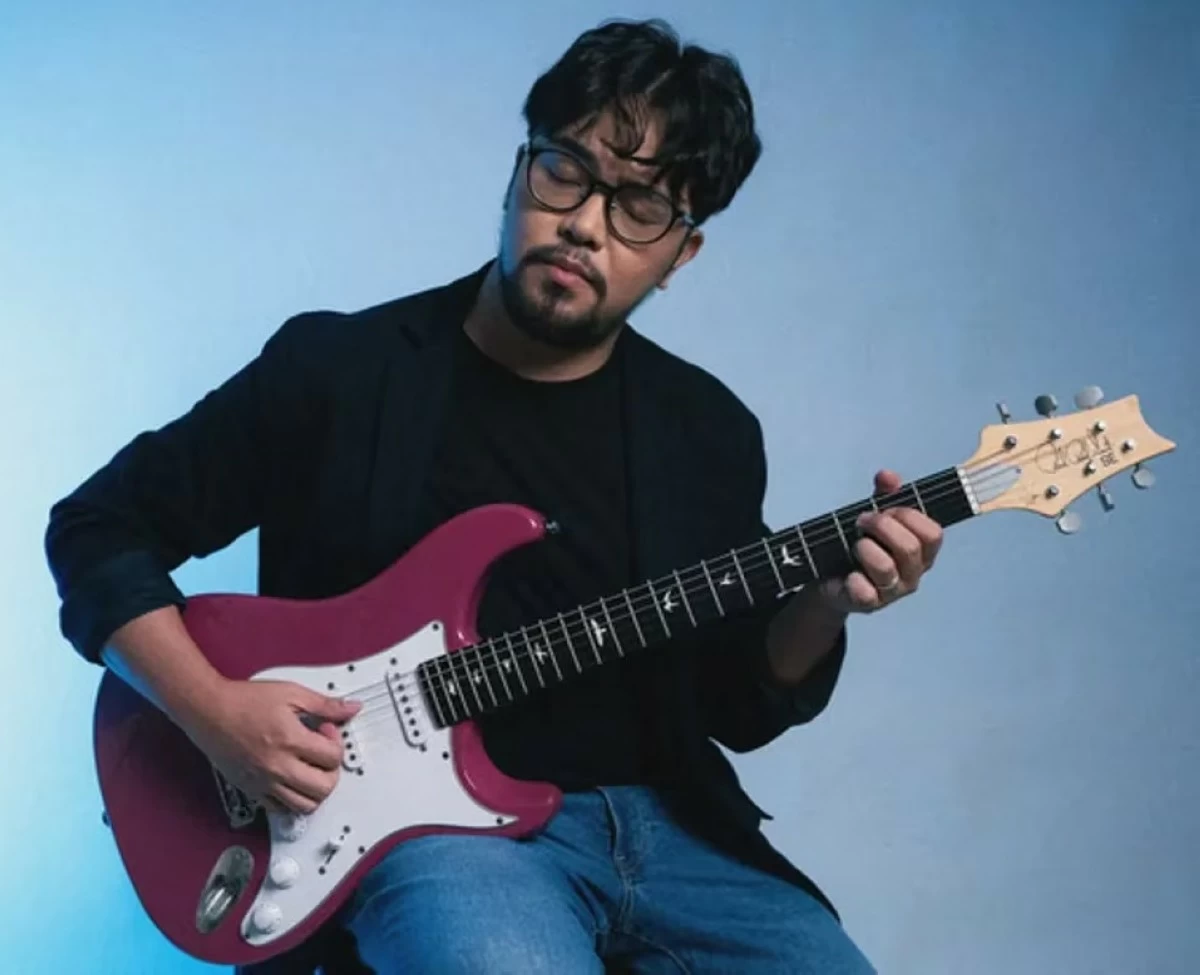
  • Gab Cabangon, NEW LORE, and VVINK shared with Manila Bulletin Entertainment what the their first major Awit Awards nomination means to them and how they hope to introduce their music to a wider audience.

The Philippine music scene’s rising acts are getting their moment in the spotlight as the 39th Awit Awards recognizes a new generation of artists making their mark on OPM.

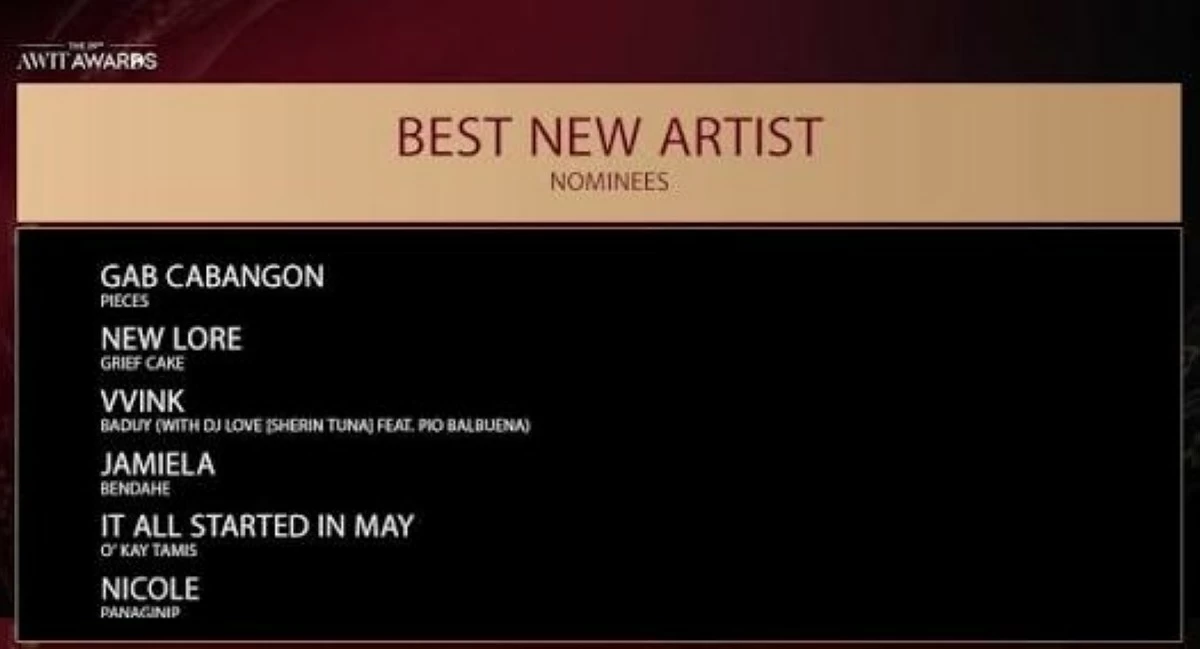
Among the nominees for Best New Artist are singer-songwriter Gab Cabangon, art-pop trio NEW LORE and P-Pop group VVINK, who are competing alongside Jamiela, Nicole and It All Started in May for one of the ceremony’s most anticipated honors.

The Awit Awards, organized by the Philippine Association of the Record Industry (PARI), celebrates outstanding achievements in Filipino recorded music, recognizing artists, songwriters, producers, and other music industry professionals across various categories.  

With their first major Awit Awards nomination, Cabangon, NEW LORE, and VVINK shared with this writer what the recognition means to them and how they hope to introduce their music to a wider audience.

Gab Cabangon: ‘It hasn’t really sunk in for me’

For Cabangon, the nomination came as an unexpected milestone, particularly because it arrived with his debut single.

“Honestly, it hasn’t really sunk in for me,” Cabangon said. “I never aspired to win an Awit Award, let alone be nominated.”

Despite the surprise, he said he is grateful to receive his first nomination and to be recognized alongside artists he respects and admires.  

“It feels extra special that my first ever nomination was with my debut single,” he said. “Regardless of whoever wins, just the fact that I was one of the artists recognized for the 39th Awit Awards is already a really cool moment.”

Cabangon jokingly describes his sound as “nonchalant sadboi,” but his music is rooted in the singer-songwriter tradition, drawing inspiration from artists such as John Mayer and Ebe Dancel. He combines chill guitar-driven arrangements with soulful and emotional vocals, using his songs to reflect on different stages of life.

“I like to think my songs are my personal reflections about going through different phases of life,” he said. “I do hope that my listeners are able to appreciate the story and message of my songs.”

NEW LORE: Turning grief into music

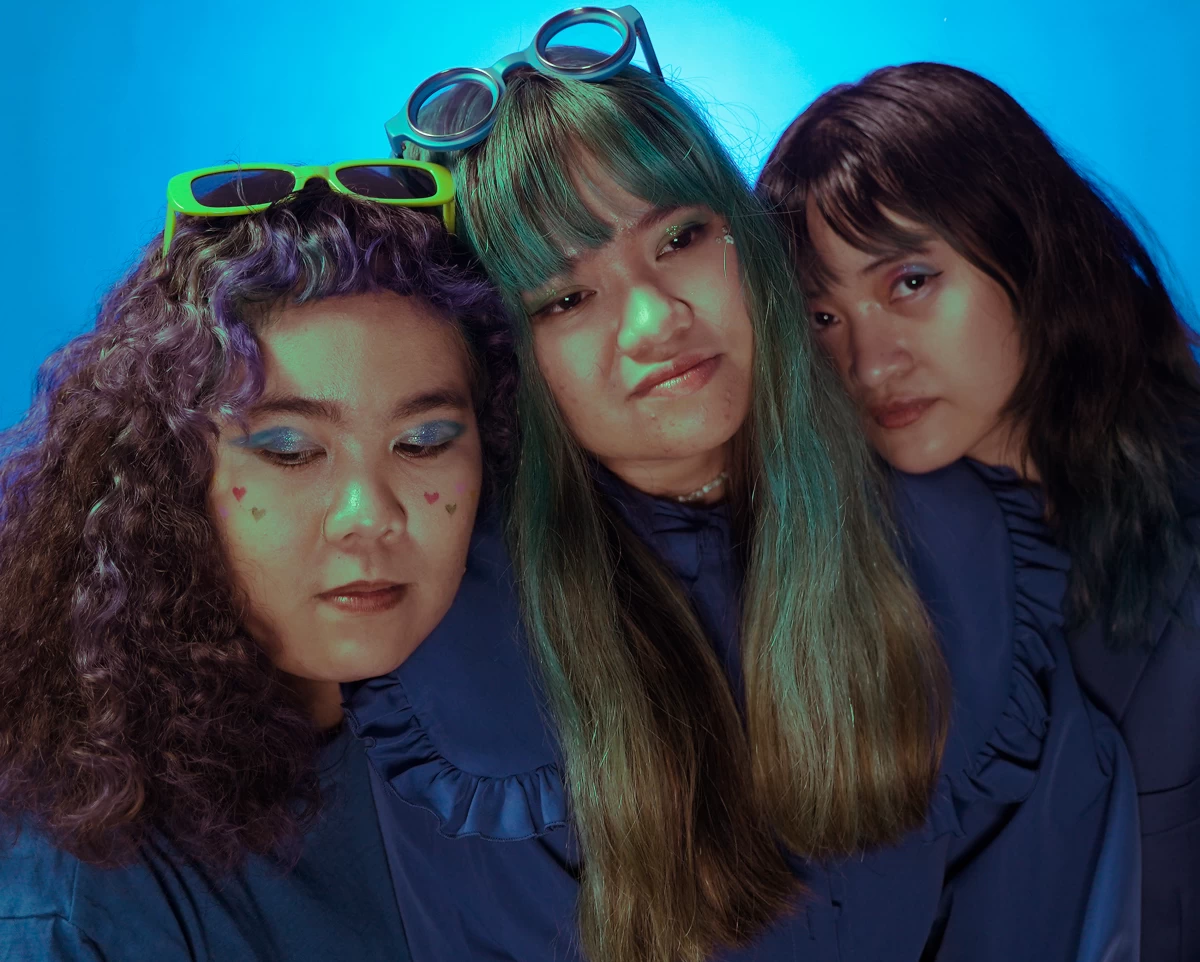
For NEW LORE, the Best New Artist nomination feels like an affirmation of the world the group has been building through music and visual art.

“It feels surreal and deeply affirming,” the group said. “NEW LORE began as three friends trying to turn grief, paintings, journal entries, and very honest conversations into music.”

The recognition is particularly meaningful because of how early it has come in the group’s journey.

“To be recognized by the Awit Awards this early in our story means so much to us,” NEW LORE said. “We are grateful to everyone who listened, shared our songs, came to our shows, and made space for the strange little world we are building.”

The group describes its music as art pop that moves between dream pop, indie rock, folk, and electronic music. Their songs can shift from intimate and delicate to expansive and cinematic.  

“For us, the songs, paintings, clothes, stories, and performances all belong to the same world,” they said.

VVINK: ‘We get to represent our genre’

P-Pop group VVINK was equally surprised by its nomination, particularly as the only P-Pop group in the Best New Artist category.

“We were honestly very surprised when we found out,” the group said. “It’s such an honor to be included in this category, especially alongside so many talented artists.”

The group also expressed pride in “Baduy” and what it has accomplished since their debut. Being recognized as Best New Artist carries an added significance for VVINK because of the opportunity to represent P-Pop on the Awit Awards stage.

“Being nominated as Best New Artist, and being the only P-Pop group in the category, makes us even prouder because we get to represent our genre and what we do,” they said. The group sees the nomination as recognition of the work that went into their training, debut, and album.

VVINK describes its sound as playful, energetic, and distinctly FlipMusic, with each member bringing different personalities and strengths to the group.

“We love experimenting with different styles while keeping our identity as a P-Pop group,” they said. “We want our music to feel fresh, fun, and very VVINK.”

For Cabangon, NEW LORE, and VVINK, the nomination is already a milestone regardless of who ultimately takes home the trophy; an indication that their respective sounds and stories are finding a place in the ever-evolving OPM landscape.

What are Filipinos a mix of?


 · 

Filipinos are surprisingly not that mixed… the vast majority of Filipinos are Austronesians, who are related to the southern Chinese and Taiwanese aboriginals. Others may have very small and insignificant European ancestry.

  • Those who have major European genetic influence are a very small minority, which only accounts for 3% of the population.

“Average Austronesian Filipinos”

Average Filipinos

When Inclusion Meets Reality: A Mainstream Teacher’s Perspective on Learners with Special Needs

By Ma. Kimberly I. Ylanan, Teacher VII, Special Needs Education
Inclusive education is an important step toward building a school environment where every child, regardless of ability or learning needs, is given the opportunity to learn, participate, and belong.
Today, mainstream classrooms are increasingly welcoming learners with special educational needs, including children with autism, developmental delays, learning disabilities, communication difficulties, behavioral needs, and other conditions that may require additional support.
As teachers, we recognize the value of inclusion. Every child deserves to be accepted and given the opportunity to reach his or her potential. However, while inclusion is a meaningful goal, its implementation can also present significant challenges for regular teachers handling mainstream classes.
One of the biggest concerns is class size.
When a teacher is responsible for a large number of learners, providing individualized attention becomes difficult. Learners with special needs may require additional time, differentiated instruction, closer supervision, or specific approaches to communication and classroom activities.
For a teacher handling an entire class, meeting these individual needs while also ensuring that the rest of the learners are properly taught and guided can be challenging.
The situation becomes even more difficult when there is no assistant teacher, classroom aide, or learning support personnel available.
The teacher is expected to manage the whole class, deliver lessons, monitor learner behavior, provide academic assistance, address individual needs, and maintain a safe and productive learning environment—all at the same time.
This does not mean that teachers are against inclusion.
Quite the opposite. Teachers want their classrooms to be places where every learner feels accepted, respected, and supported. But good intentions need to be accompanied by adequate resources and support.
Inclusion should not simply mean placing learners with special needs in a mainstream classroom. It should mean providing the necessary support for them to genuinely participate and learn.
Smaller class sizes can give teachers more opportunities to attend to individual learners. The presence of trained assistant teachers or learning support personnel can also make a significant difference. These additional hands can help address specific needs while allowing the classroom teacher to continue giving attention to the entire class.
Teachers also need continuous training and practical guidance on differentiated instruction, classroom management, communication strategies, and other approaches that can help them respond effectively to diverse learners.
At the same time, inclusion benefits everyone. Mainstream learners can develop empathy, patience, respect, and a deeper understanding that people learn and communicate in different ways. Learners with special needs, meanwhile, are given opportunities to develop social skills, confidence, independence, and a sense of belonging.
The challenge, therefore, is not whether we should include learners with special needs. The question is how we can make inclusion work better for everyone.
Schools, teachers, parents, education leaders, and the community must work together to create a supportive system. Inclusion becomes more meaningful when teachers are equipped, classrooms are manageable, and learners receive the assistance they need.
Every child deserves a place in the classroom.
But every teacher also deserves the support, resources, and assistance necessary to make that inclusion successful.
— Ma. Kimberly I. Ylanan, Teacher VII, Special Needs
May be an image of one or more people and people smiling

Foreign Exchange Rates | August 18, 2026