You plan to move to the Philippines? Wollen Sie auf den Philippinen leben?

There are REALLY TONS of websites telling us how, why, maybe why not and when you'll be able to move to the Philippines. I only love to tell and explain some things "between the lines". Enjoy reading, be informed, have fun and be entertained too!

Ja, es gibt tonnenweise Webseiten, die Ihnen sagen wie, warum, vielleicht warum nicht und wann Sie am besten auf die Philippinen auswandern könnten. Ich möchte Ihnen in Zukunft "zwischen den Zeilen" einige zusätzlichen Dinge berichten und erzählen. Viel Spass beim Lesen und Gute Unterhaltung!


Visitors of germanexpatinthephilippines/Besucher dieser Webseite.Ich liebe meine Flaggensammlung!

free counters

Total Pageviews

Saturday, September 19, 2026

3 students killed, 6 hurt in South Cotabato


3 students killed, 6 hurt in South Cotabato school shooting; House leaders dispute ‘isolated case’ claim

At least three students were killed and six others were reportedly wounded in a shooting incident inside Banga National High School in Banga, South Cotabato at around 1 p.m. on Friday, Sept. 18, Provincial Disaster Risk Reduction and Management Office (PDRRMO) Chief Rolly Aquino said. Read more

Ranking House of Representatives members have expressed sadness and continued shock over the latest fatal school shooting in the country. Deputy Minority Leader ACT Teachers Party-list Rep. Antonio Tinio agreed that the school shootings could no longer be described as "isolated." Read more

Unusual Instruments – Keyboards

 by Maureen Buja  September 14th, 2026

The piano as we know it today, an 88-key behemoth in black, is the result of innovation upon innovation since the first invention of the ‘fortepiano’ by Bartolomeo Cristofori in 1700.

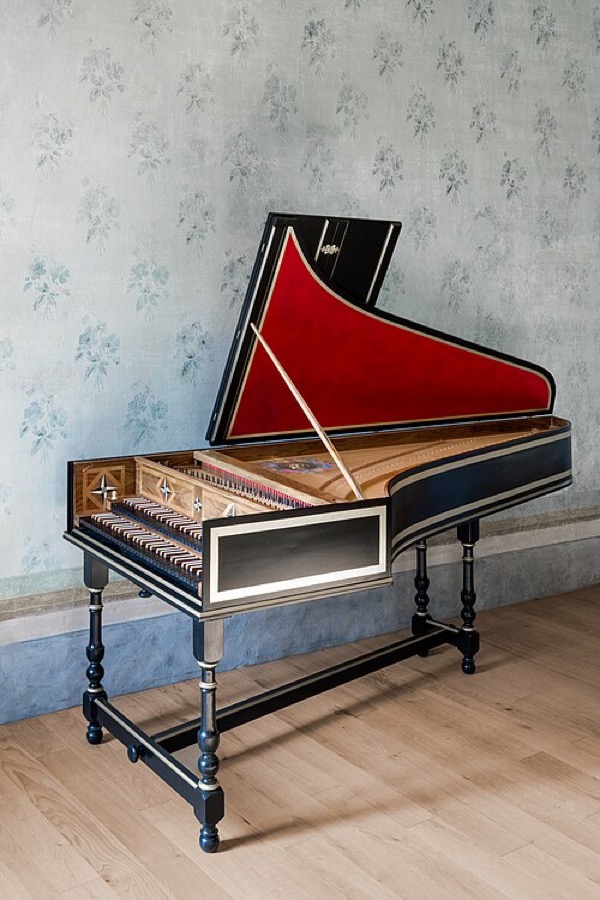
The fortepiano (meaning ‘loud soft’) was the next development after the harpsichord. Like a harp, the harpsichord was played by plucking strings; in this case, by touching a key, it released a goose quill to pass the string, plucking it as it went by. Harpsichords could not be dynamically altered – they produced the same sound no matter how hard or soft you played. In fact, because of its plucking motion, you had to use quite a bit of force on the key. You could muffle it by keeping the lid closed, but that was about all you could do for dynamics.

Colzani: Harpsichord, 2021 (photo by Andrea Bastoni)

Colzani: Harpsichord, 2021 (photo by Andrea Bastoni)

The sound was quite small and thin. Its great advantage over the instrument it replaced, the lute, was the ability to play multiple notes at once.  

Cristofori’s fortepiano advertised its great innovation in its name. By calling it ‘Loud-Soft’ (fortepiano), he told his customers what it could do.

Cristofori: Fortepiano, 1720 (Metropolitan Museum of Art) (photo by Shriram Rajagopalan)

Cristofori: Fortepiano, 1720 (Metropolitan Museum of Art) (photo by Shriram Rajagopalan)

The new hammer mechanism developed by Cristofori meant that a string could sound for longer. The fuller sound and the ability to play a note loudly or softly gave composers a greater range of sound possibilities.

Listen to the richer sound of this fortepiano, compared to the earlier harpsichord.  

It wasn’t until the 1760s that the fortepiano really found its market, with music specifically for the instrument being sold and concerts featuring it being advertised.

Every musical instrument maker tried to make their own innovations to the instrument, adding pedals for sustaining the sound, for cutting off the sound, for adding percussion effects, for changing the sound, and for changing the action to be as light as possible (a speciality of the Viennese makers).

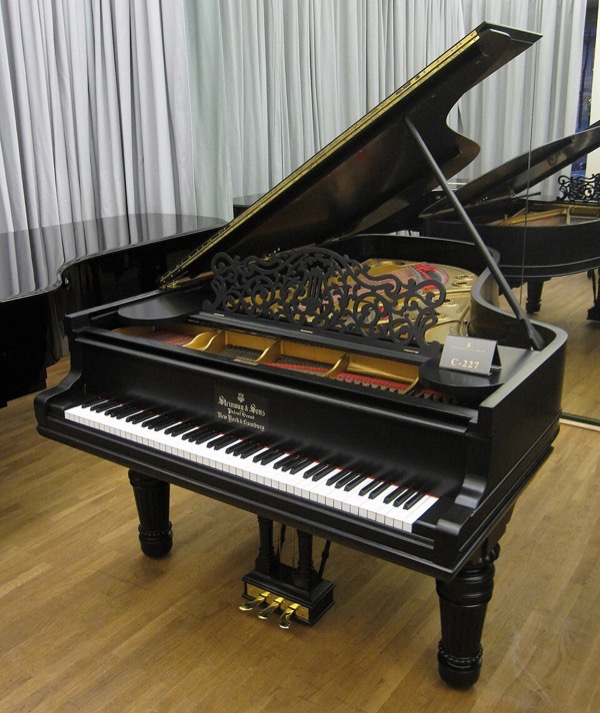
The modern piano comes in a variety of forms: upright (with the strings at a 90° angle to the keys) and grand (more like the fortepiano in general design, but much more robust).

The new pianos were built around an iron frame that could stand much greater tension than the earlier fortepianos. Where the range of the fortepiano had been about 4 octaves (48 keys), the range of the piano was established at 88 keys (7 1/3 octaves).

Steinway & Sons grand piano (photo by Gryffindor)

Steinway & Sons grand piano (photo by Gryffindor)

Some speciality pianos include the toy piano, made for children but used by grown-up composers for a different keyboard sound. Instead of strings, the notes are played by hammers hitting tuned rods. 

A pedal piano is like an organ in that there is an additional keyboard to be played by the feet (Mozart owned one, as did the French composer Alkan). There are two ways for the strings to be sounded: one involves a mechanism that runs connectors up to the piano case and the other, the Doppio Borgato, brings in a second piano case.

An upright pedal piano, 2007

An upright pedal piano, 2007


Doppio Borgato, 2011 (photo by Loretta Doro)

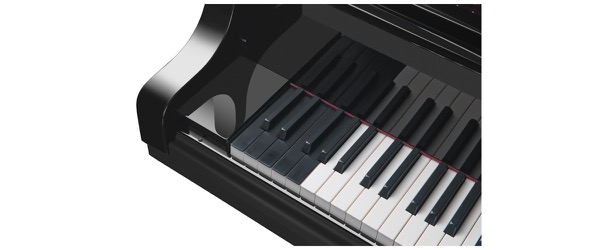
Doppio Borgato, 2011 (photo by Loretta Doro)  Other piano makers extended the keyboard. Bösendorfer added 9 extra bass keys, bringing the total from 88 to 97. To ensure players won’t get confused, all the keys are coloured black, and some versions even have a little cover, so you don’t hit them by accident. Busoni was the first to write for it, and BartókDebussy, and Ravel followed him. The Australian piano makers Stuart & Sons have created 108- and 112-key pianos.

Bösendorfer Concert Grand 290 Imperial extra keys

Bösendorfer Concert Grand 290 Imperial extra keys


What is the reason for the large variety of Sauerkraut available for purchase in Germany, the country of origin?

Germany didn't actually invent sauerkraut. But step into a German supermarket, and you'll find entire aisles of cabbage fermented in dry Riesling, hard apple cider, and even sparkling wine.

The technique actually originated in China over 2,000 years ago. It was brought to Eastern Europe by the Tartars, eventually making its way into Germanic regions. Because cabbage grew exceptionally well in the cold, temperate climates of Northern Europe, and because fermentation prevented scurvy during brutal winters, Germans enthusiastically adopted it.

While the core technique is ancient, the massive supermarket variety exists today because Germany is a fiercely regional food culture. The products on the shelf are not just competing brands, but completely different recipes.

Standard sauerkraut is just cabbage and salt. But those wine-infused varieties from the supermarket aisle originate in the Rhineland, where cabbage is fermented with white wine to create Weinkraut, giving it a lighter, fruity acidity. Sektkraut uses local sparkling wine, while around Frankfurt, the cabbage is prepared with Apfelwein (hard apple cider).

The spices vary by state. A Bavarian brand will almost always include Kümmel (caraway seeds) and is designed to be cooked down with pork fat. In Swabia, sauerkraut is often infused with apples, making it sweeter and milder to balance out hearty local dishes. Jars are often pre-mixed with juniper berries, bay leaves, or cloves, each calibrated to a specific traditional meal.

The variety also extends to biology and texture. In the refrigerated section, you can buy Frisches Sauerkraut in a plastic bag. This is raw, unpasteurized, and full of live lactic-acid bacteria. It is sour, crunchy, and requires an hour of braising. On the dry shelves, jars and cans are pasteurized and pre-cooked. Brands like Hengstenberg’s Mildessa are heavily cooked down to be soft and mild, requiring only three minutes in a microwave. Some traditionalists prefer a thick, hearty shred that holds its crunch when braised with a pork shoulder, while other brands offer an ultra-fine, almost hair-like shred that practically melts.

To a German cook, sauerkraut is a foundational ingredient rather than a simple condiment. The vast supermarket selection exists because a rich Bavarian pork roast requires a completely different cabbage profile than a delicate Thuringian sausage.

A Bavarian dish of braised pork ribs served with potato dumplings and regional sauerkraut. Photo by Benreis is licensed under CC BY-SA 4.0.

Friday, September 18, 2026

Filipinos like Fiestas


By Klaus Döring


The word "fiesta" will bring a smile to the face of almost any Filipino. To my face too, because I lived here for good for more than 28 years.

After all, a fiesta is a special time with friends, a time for fellowship, food, and lots of activities. Each year brings numerous fiestas. Sometimes people are busy for weeks preparing for them. It is surprising how even those facing many problems in their day-to-day life set them aside and participate in the festivities.

What actually are fiestas and why do these celebrations occur? The fiesta is of Spanish origin (the reason for the Spanish term). Spain, being a Roman Catholic country, set aside certain days to remember particular saints with processions and celebrations. When Spanish missionaries entered the Philippines during the mid-1500s, they found that the fiesta was a convenient tool to help teach Filipinos the Roman Catholic faith.

Did you know the culturally rich Philippines has over 100 Fiestas (Festivals) annually? Each city or province has a local fiesta. Being a very religious centered country, a fiesta is usually about the celebration of that city or province’s patron saint. While “fiesta season” spans throughout the year, it’s safe to say that there is at least one major festival happening throughout the country at any given week. With the majority of those festivals originating from pre-colonial traditions in local cities and communities or rooted in Christianity from the Spanish Colonial Era. 

The Philippine fiesta is a lot more than it seems on the service. It is the tie that binds Filipinos from a region or an area together, a time to reunite with your extended family and you kababayans (countrymen/women.) No matter where you are, you are expected to attend.

Sense of Identity: Festivals provide an opportunity for Filipinos to celebrate their cultural identity and heritage, contributing to a strong sense of pride in their cultural heritage. This sense of identity is an important factor in shaping the Filipino workforce and promoting a positive work culture.

Traditionally, the fiesta is a time of joyful celebration for Filipinos, who cook heaps of hearty food, throw open their doors to visitors, and parade in the streets. Some Filipino fiestas have evolved into elaborate, multi-day festivals, while others have kept their community roots.

In my own words, a Philippine festival is a vibrant celebration that brings communities together to showcase their cultural identity through colorful parades, music, dance, and food, highlighting the creativity and talents of Filipinos.


Negativity kills the soul


0
126

Negativity is the enemy of creativity.” — David Lynch. “Nothing counterfeit has any staying power.” — Cicero. “Don’t let yesterday take up too much of today.” — Will Rogers.

Negative energy is wasted energy, a powerful mindset popularized by Roger Federer on X during his speeches on resilience and overcoming setbacks.

Negative thinking refers to a pattern of thinking negatively about yourself and your surroundings.

Many of us unconsciously use negativity as a defence mechanism. It protects us from things not working out. Our minds use negative thoughts so we’re not blindsided when we’re disappointed. Unfortunately, this anticipated failure or bad luck also prevents us from putting our best foot forward.

It takes but one positive thought when given a chance to survive and thrive to overpower an entire army of negative thoughts. When the world pushes you to your knees, you’re in the perfect position to pray.Your attitude, not your aptitude, will determine your altitude.

Sometimes, we feel our life is turning miserably. Our negativity doesn’t allow us to keep our eyes, ears – and, most important! –  our minds, hearts and souls opened. We’re reaching our breaking point.

As I said several months ago here: this breaking point can be the prelude to our strongest moment. It is when we reach our breaking point, that we discover our real strength. Allow me to ask you, my dear readers, “What happens to you or with you when you reach your breaking point?” Do you face it or do you run away?

I’ll be giving you a very simple answer: If you face it – you break it. If you run away (and/or close your ears, eyes and mouth) – it surely breaks you!

Everyday – a dull reality! Many of us will answer this question with a big YES! Actually we do like to cover a newborn’s day already with a grey veil? Each day has a new face, but sometimes we don’t have the strength to watch its countenance. Of course, not every day has adventures and highlights.

But we enjoy quarreling and arguing. With other people and even with ourselves.

Contrary to what might be expected, I look back on experiences that, at the same time, seemed especially desolating and painful with a particular satisfaction. Indeed, everything I have learned, everything that has truly enhanced and enlightened my existence, has been through affliction and not through happiness.

If it ever were to be possible to eliminate affliction from your earthly existence, the result would not be make life delectable, but to make it too banal and trivial to be endurable.

By observation, we can feel that many of us need help to manage our everyday life. We need something that would keep us going as we journey through life. Many times we can also learn from other people and their experiences.

Blue eyed or very philosophical but so very true: If the world is to be brought to order, a nation must be first changed.

If the nation isn’t changed, my home town is to be reordered and must first set be right, my dear brothers and sisters. And, one step further: If my family is to be regenerated, I MYSELF MUST FIRST BE!

And here is one more thing: Affection is the humblest love – it gives itself no airs. It lives with humble and private things: soft slippers, old clothes, old jokes, and the thump of a sleepy dog’s tail on the kitchen floor. The glory of affection, the disposition of mind, the good will and tender attachment, is that it can unite those who are not “made for one and another”, people. Who, if not out down by fate in the same household or community, would have nothing to do with one and another.

For me life has been a thing of ups and downs in approximately equal measure. I don’t have something sensational to report every day about my progress. Often, I wonder if fulfillment in life is necessarily tied to change for the better.

Government eyes Zamboanga for 50-million-barrel strategic oil reserve


By Gabriell Christel Galang

Published Sep 18,  2026 


The Department of Energy (DOE) and the Philippine National Oil Company (PNOC) are evaluating a larger site in Zamboanga to host a massive strategic oil reserve, following land area and acquisition hurdles at the originally planned location.

During a Senate budget hearing on Thursday, Sept. 17, Energy Undersecretary Alessandro Sales said the DOE recently met with the Abu Dhabi National Oil Company (ADNOC) and Saudi Aramco regarding a commercial facility to store and distribute petroleum products across the region.

“It gives us flexibility in managing our national petroleum reserve. We could either build alongside them to save on storage tank costs, or enter into an agreement to access their supply so we don't have to spend on building tanks at all,” Sales said.

The DOE identified a location in Zamboanga capable of accommodating the required scale, likely ruling out Northern Mindanao. The agency, alongside PNOC, is set to conduct a joint site evaluation to assess the property.

The agency’s immediate focus is finding a suitable location for the fuel infrastructure, which requires 500 hectares of land to support a 50-million-barrel reserve. Sales explained that large-scale facilities require roughly 10 hectares per one million barrels to accommodate safety buffers, spacing, and drainage.

While a site in Bataan owned by PNOC was considered, the 150-hectare property is too small for the full 50-million-barrel scale—though PNOC is using it to build a separate facility capable of housing one million barrels of product.

Meanwhile, in the upstream sector, 14 petroleum service contracts recently signed by the President are expected to unlock $324 million in potential investments.

According to Energy Undersecretary Giovanni Bacordo, successful drilling at the Camago 3 and Malampaya East 1 wells under Service Contract 38 yielded an estimated 222 billion cubic feet of gas, extending field operations through 2034 and securing enough fuel to power 13.1 million homes for a year.

TodayInHistory

On this day in 1891, national hero Jose Rizal published his second novel “El Filibusterismo,” the sequel to “Noli Me Tangere,” in Belgium.
September 18 1891, national hero Jose Rizal published his second novel “El Filibusterismo,” the sequel to “Noli Me Tangere,” in Belgium.

Palace orders half-day work in government on Sept 28 for National Family Week


President Marcos Jr. (PCO)

Under Memorandum Circular No. 136, Malacañang has ordered a half-day suspension of work starting 1:00 p.m. on Sept. 28 in government offices to allow government employees and their families to observe the 34th National Family WeekRead more

Why is tilapia considered a garbage fish?


 ·

You may have heard tilapia referred to as “garbage fish”. However, most people who know fish, fish production and the value of captured and cultured fish consider tilapia “the miracle fish” or “the wonder fish”.

Egyptians have been culturing this freshwater fish for over 4,000 years. Clearly identifiable images of tilapias appear among ancient Egyptian hieroglyphs.

There are about 70 species of tilapia, of which 9 have been used for commercial production. There has been a great effort in identifying and systematizing the classification of these fishes which is highly complex mostly because they are ancient fish with a great affinity for hybridization. Tilapia has been introduced for culture to practically every continent with the exception of Antarctica. The best known and the most widely cultured species is the Nile Tilapia (Oreochromis niloticus). The Nile Tilapia is produced in about 85 countries around the world. About 98 per cent of all tilapias cultured in the world belongs to this species or to some of its hybrids with a closely related species, the Blue tilapia (O. aureus).

In 2017, the total production of tilapia (wild capture and cultured fish) was about 7,5 million metric tonnes. In 2018, the total value of tilapia sales worldwide was about US$12,000,000,000. Most of the output of cultured tilapia comes from China and Egypt with 42 and 14 per cent, respectively. Other important tilapia producers in Asia are Indonesia, the Philippines and Malaysia, while the major producers in Latin America are Mexico, Brazil and Colombia. The main market for cultured tilapias is the United States. Other important markets, especially for tilapia produced in China, are Mexico and Russia.

Tilapias are also produced in Canada. Farms for tilapia culture using heated water in indoor tanks exist in British Columbia and Alberta. Toronto is the largest market for live tilapia in North America. Other important markets for Canadian-produced live tilapia are Vancouver, Calgary and Edmonton.

In the United States tilapia is cultured in several states including Arizona, Texas and California, however, most tilapia growing operations are located in Idaho and use greenhouses, industrial waste heat or geothermal water resources in recirculating systems to produce live tilapia most of which supplies the demand of the large Asian population living in Vancouver.

Because of my work, I know about tilapias; I have studied their reproductive and survival requirements, their selective breeding and genetic improvement. I have eaten them in many preparations, and it is a delicious fish. Far from being a “garbage fish”, tilapia is an extremely valuable fish well deserving of its high reputation.

Furthermore, tilapias are beautiful fish!

EDITED 02–05–19

Thanks to all readers who have upvoted my answer to the question on tilapia as a “garbage fish”.

In response to several comments, I believe there are two aspects that deserve additional information and clarification:

1) On the subject of “tilapia feeding on fecal material”:

Wild tilapia are omnivorous, however, they prefer aquatic plants and consume most forms of algae. Tilapia farming operations (fish grown in ponds at a rate of 100 fish/meter^3) regularly allow the fish at various life stages to feed on algae, floating aquatic plants and submerged plants. Because of the higher stocking density than fish in the wild, nutrients that sustain the growth of vegetation in the pond must be supplemented or the fish may stop growing, starve or become stressed. To achieve increased plant production in the pond, animal manures (from water buffalo, horse, chicken or duck) are used as fertilizers. In some low-intensive operations, inorganic fertilizers such as urea and TSP ( tri-sodium phosphate) are applied to provide nutrients that stimulate the growth of protein-rich phytoplankton, which is consumed by filter-feeding tilapia.

At this point is worth recalling that intensive agriculture operations also enrich the soil by using inorganic fertilizers and manure to enhance the yield of vegetable crops. Additionally, the production of the common mushroom (Agaricus bisporus) relies on cow, chicken or horse manure as a substrate and nutrient to grow the mushrooms.

A well-run tilapia farming operation normally uses manure to provide nutrients for aquatic plants growth that feed the tilapias, and not as direct food for the fish.

2) On the subject of “muddy taste of tilapias”:

Several commercially important cultured freshwater fish (carp, catfish, tilapia, trout, etc.) may have a rather unpleasant “muddy taste”. This is caused by a compound called “Geosmin”. This compound, also known as Cyclododecanone [C12H22O] is produced by the gram-positive bacteria Streptomyces and various cyanobacteria naturally present in the water and it’s released when these micro-organisms die. In such occasions, Geosmin combines with 2-methylisoborneol [C11H20O], a compound also present in water produced by blue-green algae, such as Anabaena. The ensuing combined compound can concentrate in the fatty skin and dark muscle tissues of the fish resulting in the muddy taste. The good thing is that [Geosmin + 2-methylisoborneol] easily breaks down in acid conditions; soaking the fish filets in vinegar or other acidic ingredient (lemon juice) can reduce or eliminate the muddy flavor.

How do you describe the culture of the Philippines?


In the Philippines, there are no "quick" goodbyes, the standard greeting is "Have you eaten?", and traditionally, an entire village would literally carry a neighbor's house on their shoulders.

The culture is a vibrant, often chaotic blend of indigenous Austronesian roots, 300 years of Spanish Catholicism, and decades of American pop-culture influence.

At its core, this culture revolves around a concept called bayanihan. While the term historically referred to that physical act of moving a family's nipa hut, today the houses are mostly concrete, but the spirit remains. Bayanihan is the communal unity that drives neighbors to share resources during the typhoons that frequently batter the archipelago, or pool money to send a local kid to college.

This communal mindset is most visible in the Filipino approach to family. You do not just marry a person; you marry their entire extended clan. Grandparents, aunts, uncles, and second cousins often live in the same neighborhood or even the same compound. Respect for elders is absolute, symbolized by the mano po—a gesture where a younger person takes an elder's hand and gently presses it to their own forehead as a sign of reverence.

The ultimate expression of this community spirit, however, is food.

That ubiquitous "Have you eaten?" (kumain ka na ba?) greeting reflects a society where food is never meant to be consumed in isolation; it is a salo-salo (gathering). This reaches its peak in a kamayan or "boodle fight"—a feast where a long table is lined with banana leaves and piled high with a border of white rice surrounding grilled fish, meats, and dipping sauces. There are no plates or utensils; everyone stands shoulder-to-shoulder and eats with their bare hands, dismantling the physical barriers that usually separate diners.

A boodle fight features a spread of rice, meats, and vegetables served directly on banana leaves to be eaten by hand. Photo by Ej Afable is licensed under CC BY-SA 4.0.

This collective joy is also what fuels the country's famous fiesta culture. Every single town and barrio has a patron saint, and their feast days are celebrated for days. Festivals like Cebu's Sinulog involve millions of people taking to the streets in elaborate costumes, dancing for hours to rhythmic drums. Even in the face of systemic poverty and natural disasters, this festive instinct survives through a cultural trait known as bahala na—a mix of fatalism and faith that loosely translates to "leave it to God," allowing people to smile, share a meal, and push forward through the worst of storms.