
by Maureen Buja September 14th, 2026
The piano as we know it today, an 88-key behemoth in black, is the result of innovation upon innovation since the first invention of the ‘fortepiano’ by Bartolomeo Cristofori in 1700.
The fortepiano (meaning ‘loud soft’) was the next development after the harpsichord. Like a harp, the harpsichord was played by plucking strings; in this case, by touching a key, it released a goose quill to pass the string, plucking it as it went by. Harpsichords could not be dynamically altered – they produced the same sound no matter how hard or soft you played. In fact, because of its plucking motion, you had to use quite a bit of force on the key. You could muffle it by keeping the lid closed, but that was about all you could do for dynamics.
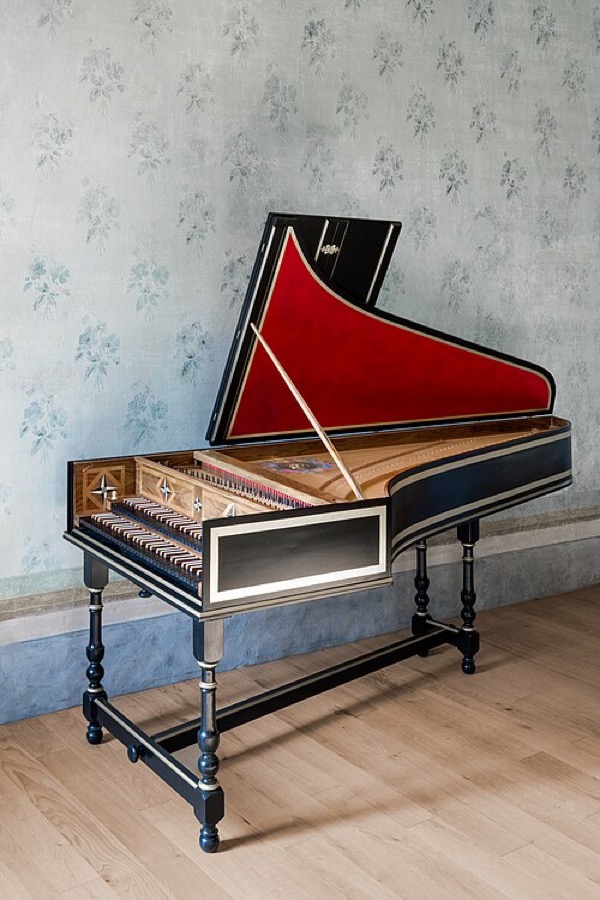
Colzani: Harpsichord, 2021 (photo by Andrea Bastoni)
The sound was quite small and thin. Its great advantage over the instrument it replaced, the lute, was the ability to play multiple notes at once.
Cristofori’s fortepiano advertised its great innovation in its name. By calling it ‘Loud-Soft’ (fortepiano), he told his customers what it could do.
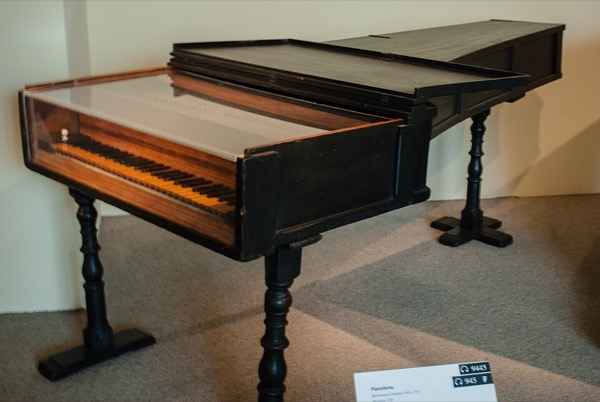
Cristofori: Fortepiano, 1720 (Metropolitan Museum of Art) (photo by Shriram Rajagopalan)
The new hammer mechanism developed by Cristofori meant that a string could sound for longer. The fuller sound and the ability to play a note loudly or softly gave composers a greater range of sound possibilities.
Listen to the richer sound of this fortepiano, compared to the earlier harpsichord.
It wasn’t until the 1760s that the fortepiano really found its market, with music specifically for the instrument being sold and concerts featuring it being advertised.
Every musical instrument maker tried to make their own innovations to the instrument, adding pedals for sustaining the sound, for cutting off the sound, for adding percussion effects, for changing the sound, and for changing the action to be as light as possible (a speciality of the Viennese makers).
The modern piano comes in a variety of forms: upright (with the strings at a 90° angle to the keys) and grand (more like the fortepiano in general design, but much more robust).
The new pianos were built around an iron frame that could stand much greater tension than the earlier fortepianos. Where the range of the fortepiano had been about 4 octaves (48 keys), the range of the piano was established at 88 keys (7 1/3 octaves).
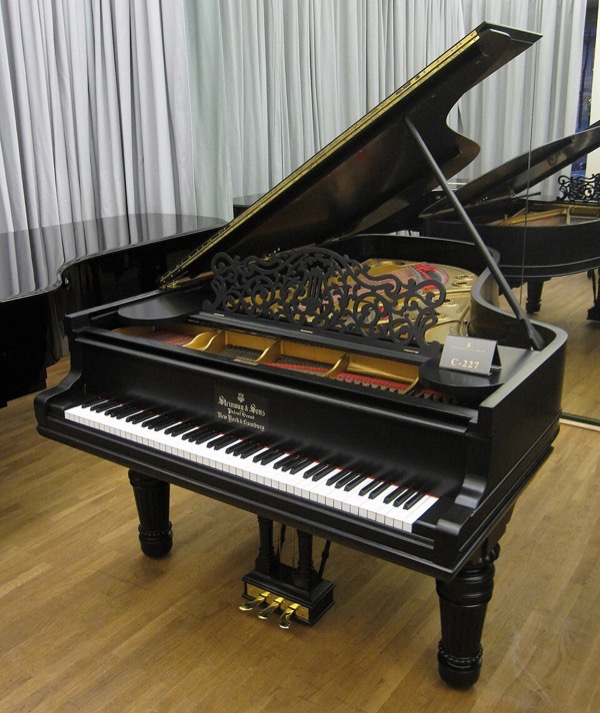
Steinway & Sons grand piano (photo by Gryffindor)
Some speciality pianos include the toy piano, made for children but used by grown-up composers for a different keyboard sound. Instead of strings, the notes are played by hammers hitting tuned rods.
A pedal piano is like an organ in that there is an additional keyboard to be played by the feet (Mozart owned one, as did the French composer Alkan). There are two ways for the strings to be sounded: one involves a mechanism that runs connectors up to the piano case and the other, the Doppio Borgato, brings in a second piano case.
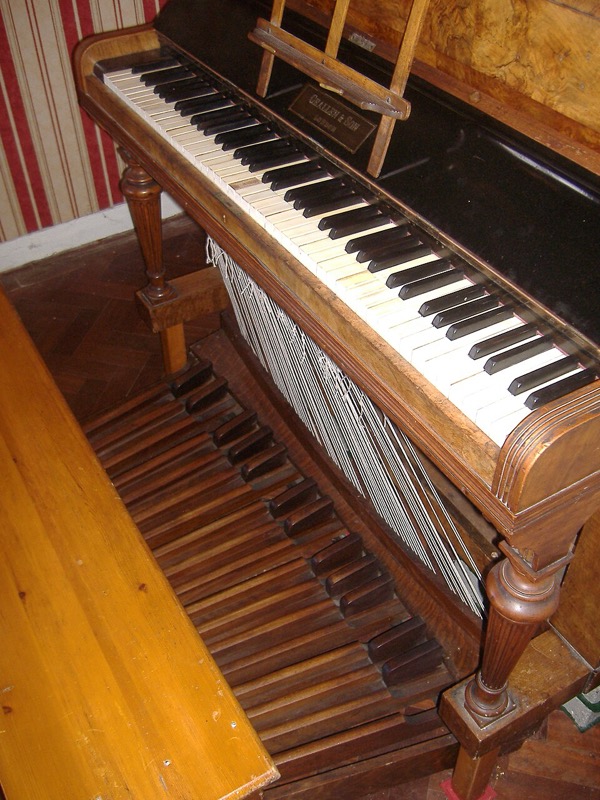
An upright pedal piano, 2007
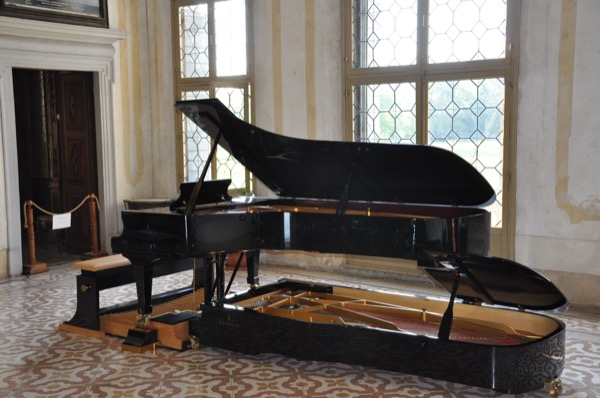
Doppio Borgato, 2011 (photo by Loretta Doro) Other piano makers extended the keyboard. Bösendorfer added 9 extra bass keys, bringing the total from 88 to 97. To ensure players won’t get confused, all the keys are coloured black, and some versions even have a little cover, so you don’t hit them by accident. Busoni was the first to write for it, and Bartók, Debussy, and Ravel followed him. The Australian piano makers Stuart & Sons have created 108- and 112-key pianos.
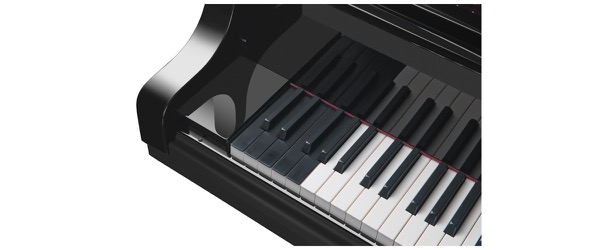
Bösendorfer Concert Grand 290 Imperial extra keys

No comments:
Post a Comment