
At A Glance
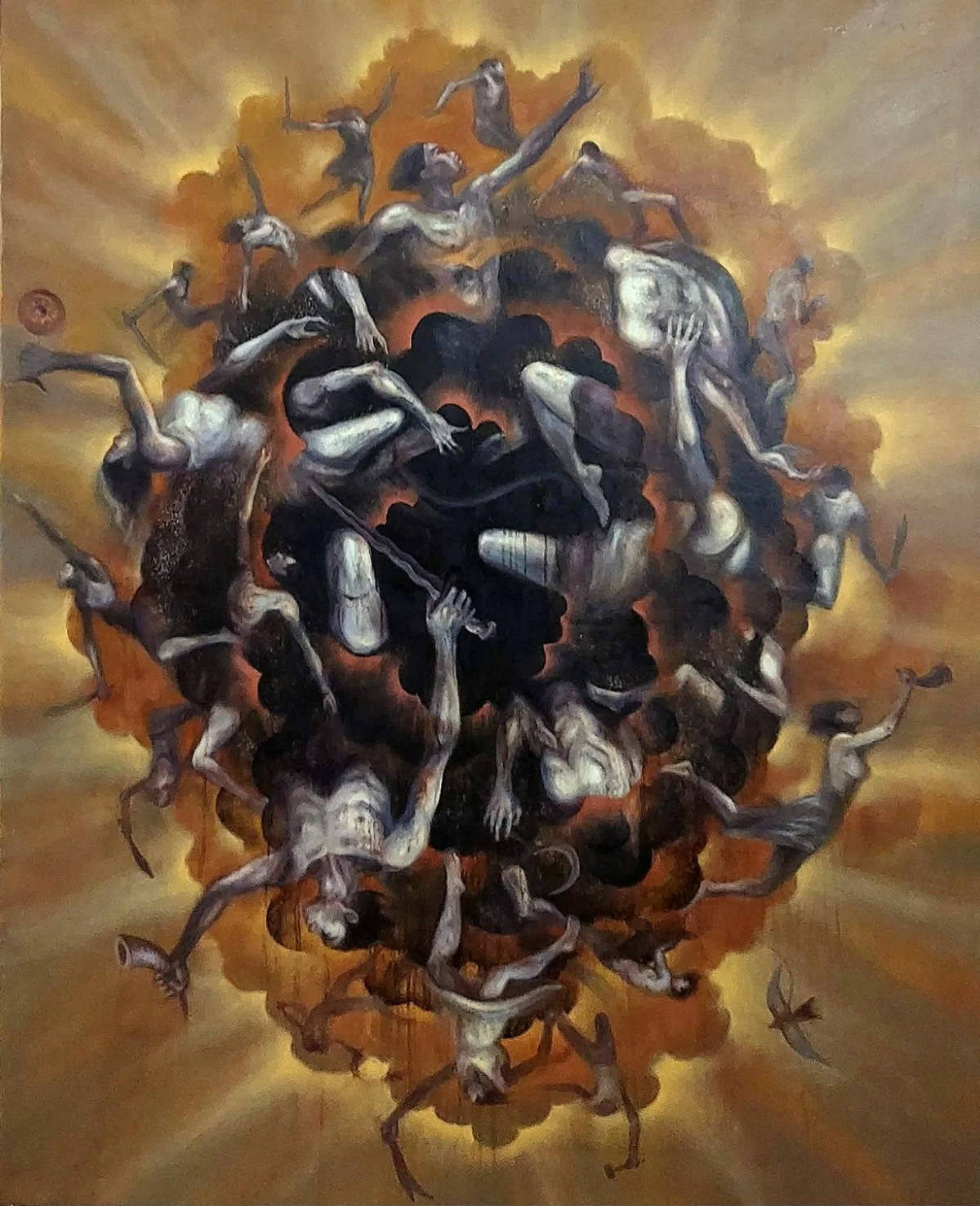
- The painting resembles an image that explodes, like a volcano or a bomb. Only this time, exploding particles are actually composed of human figures in various poses, contortions, and seeming acts of defiance. Behind the striking socio-political tableaus of Jeho Bitancor's latest exhibit, “Sa Pagitan ng Bangungot at Bahaghari” at Art Cube Gallery, lies a physical space of intense labor. Describing his workspace as “where all the magic happens,” Jeho views his studio as “the witness for countless hours of struggle and eventual victory.” This raw, tangible energy pulses through his current collection, where meticulously layered acrylic textures and luminous oil glazes give form to the heavy duality of human survival and political oppression.
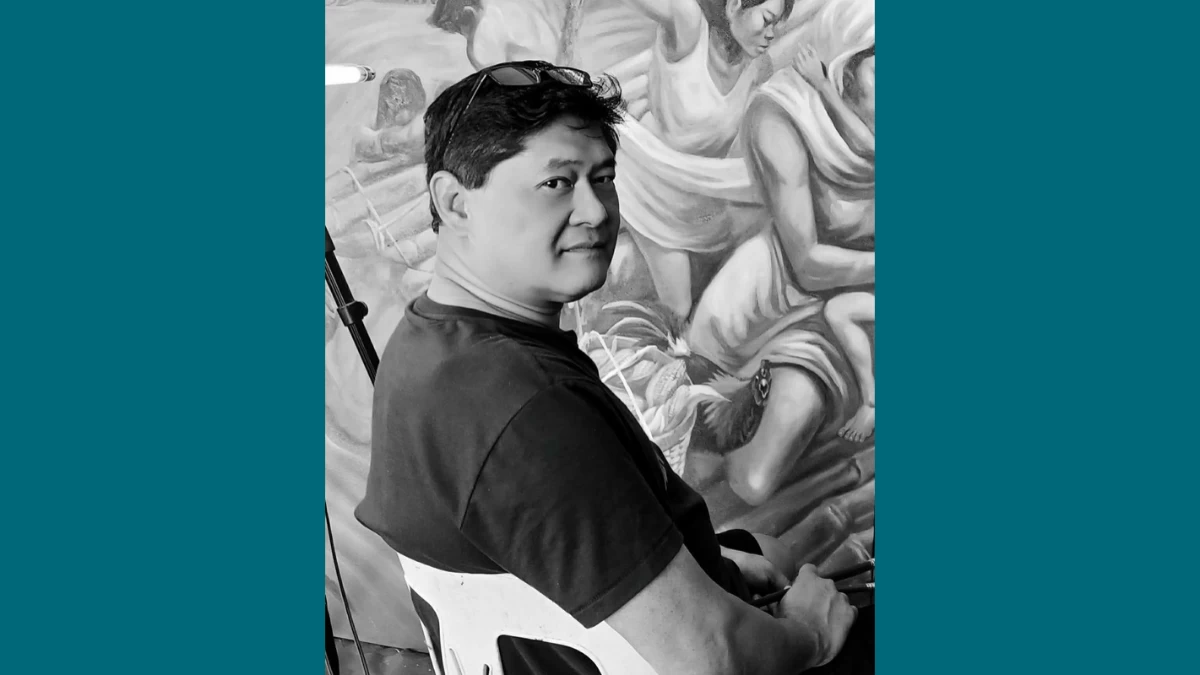
MEET THE ARTIST Jeho Bitancor
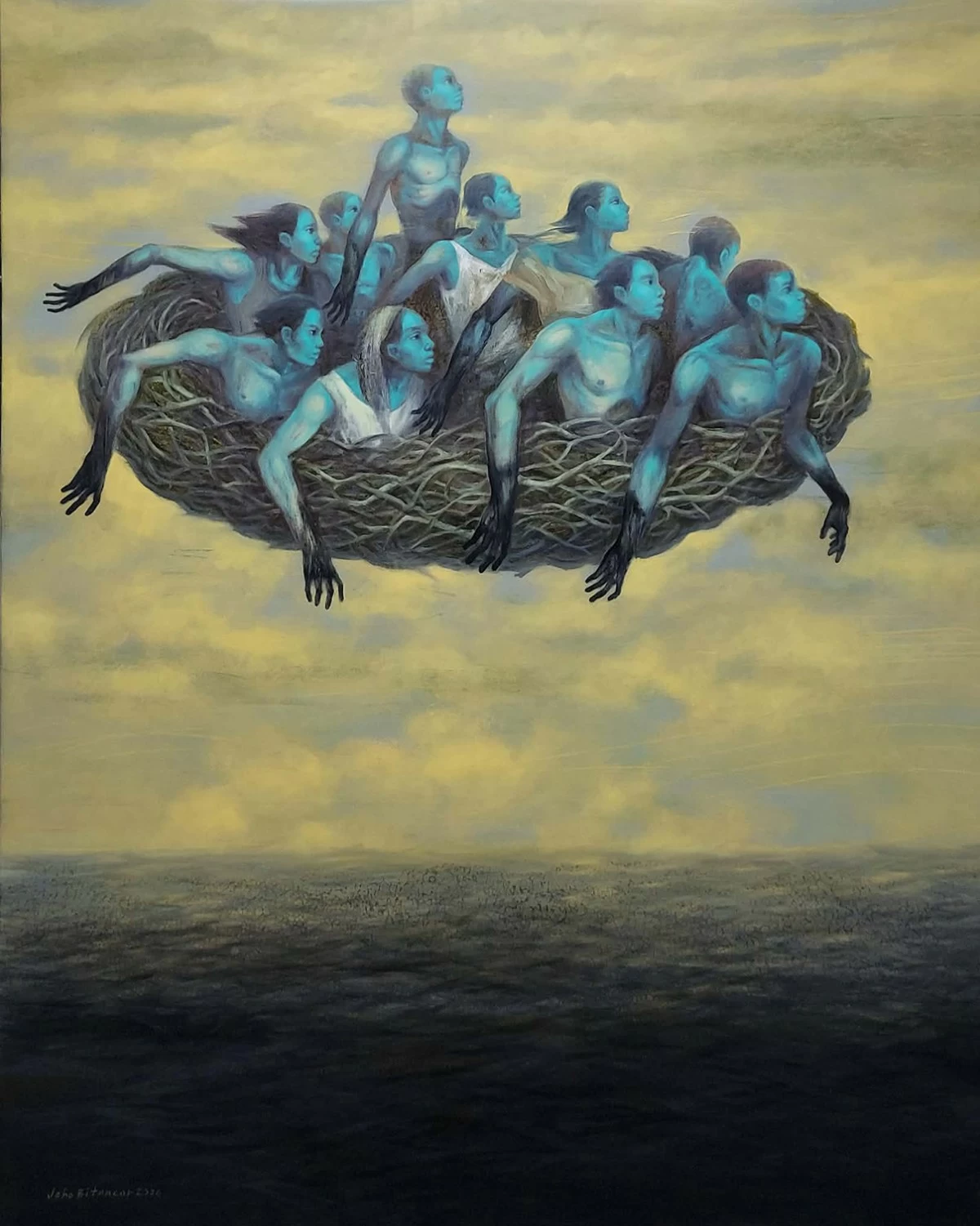
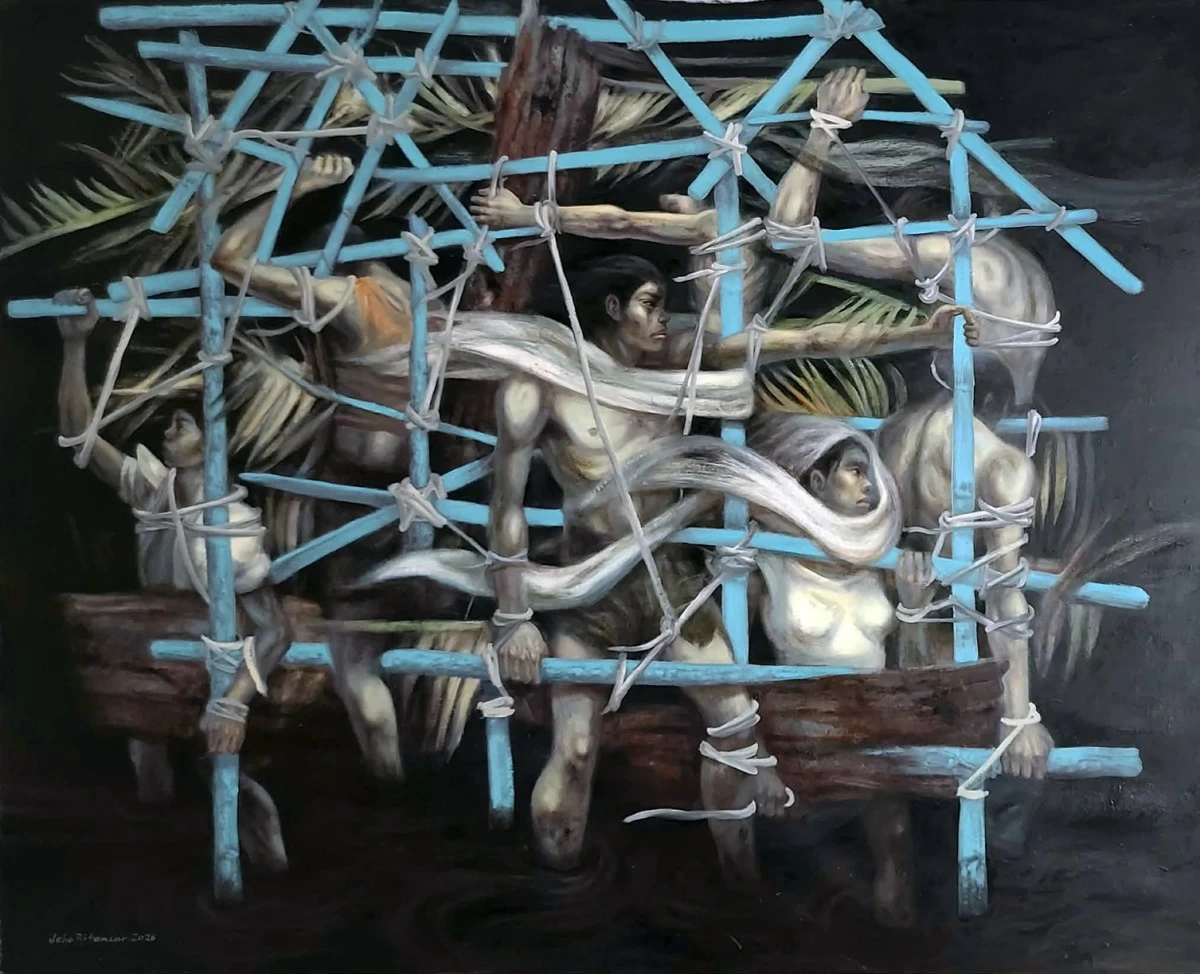
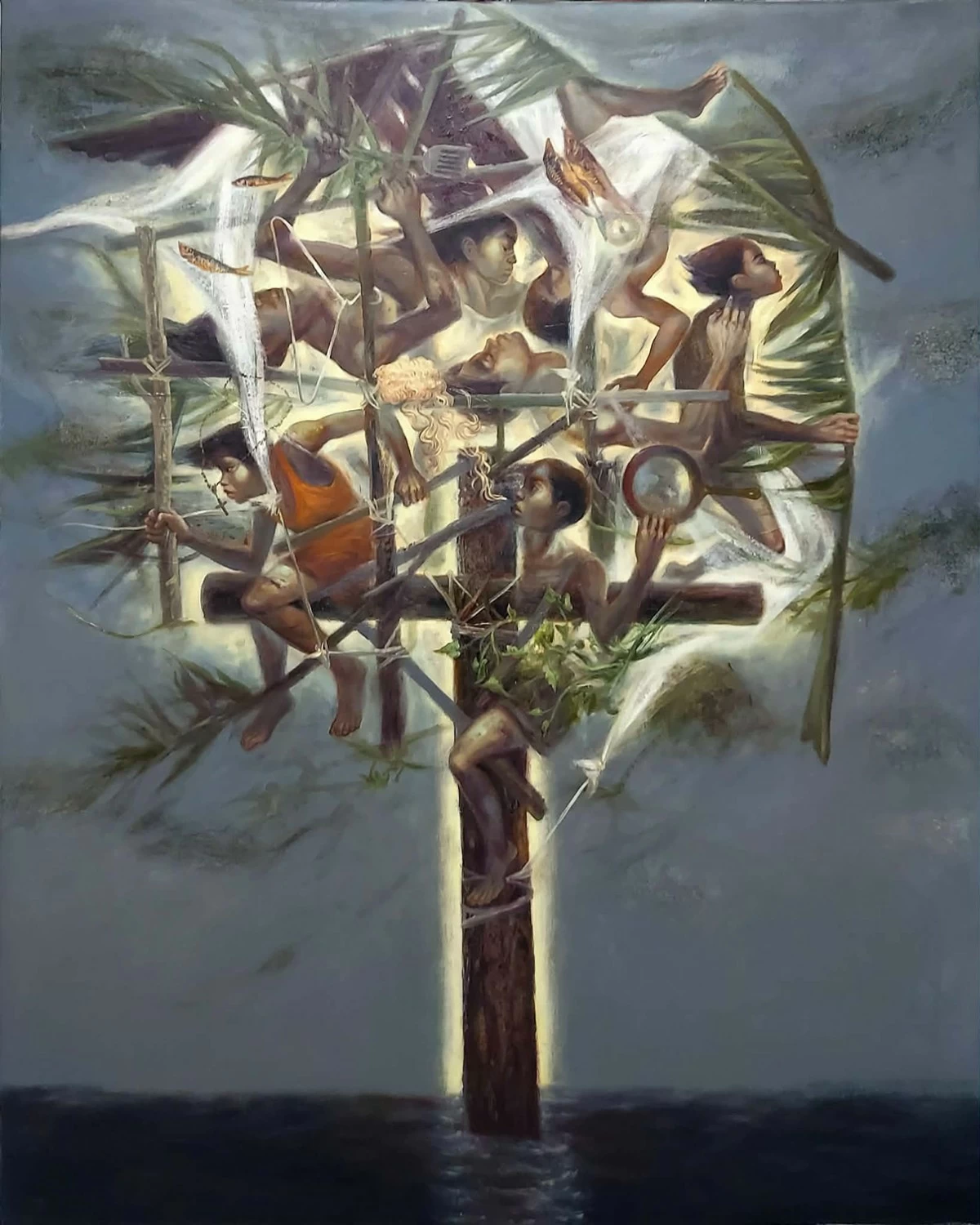
The exhibit’s thematic weight is deeply rooted in a duality of opposing forces—trapped between truth and fallacy, dominance and submission, and compassion and indifference. This tension is physically manifested in works like “Tatag ng Tindig and Sa Panahon ng Ligalig,” where precarious scaffolding, wooden structures, and makeshift nests serve as both shelters and traps. Figures are woven tightly into these architectural frames, using their bodies to prop up collapsing systems or construct fragile spaces of sanctuary amid systemic turmoil.
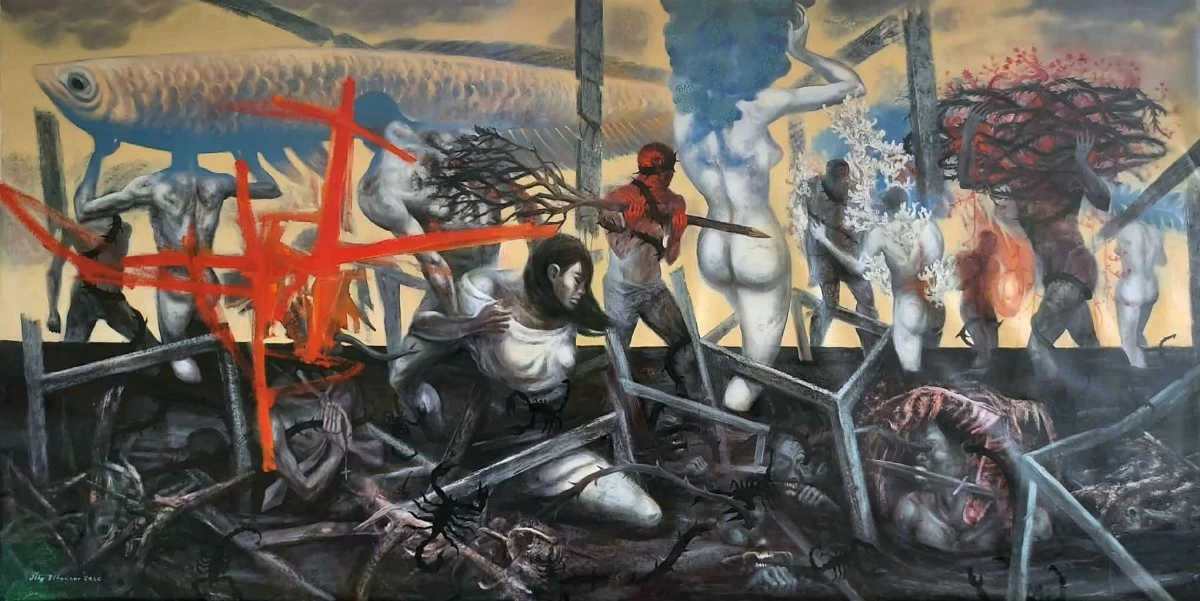
Jeho’s technical mastery drives this narrative forward, shaped by a deliberate evolution of mediums. Reflecting on his process, he shares: “Since my student days, the medium’s properties and behavior have allowed me to achieve the effects I needed to deliver the message with impact. The use of acrylics as a base also presented opportunities to explore texture, color, and other abstract qualities. The moment I discovered oils’ flexibility in terms of achieving transparency and opacity at the same time, it has been my medium of choice.”
This material approach anchors his creative workflow, which begins long before paint touches canvas: “I let the idea float over my head over time and wait until it’s ripe enough to be recorded on paper as a thumbnail study. It will undergo different stages of reworking until the final composition takes form.”
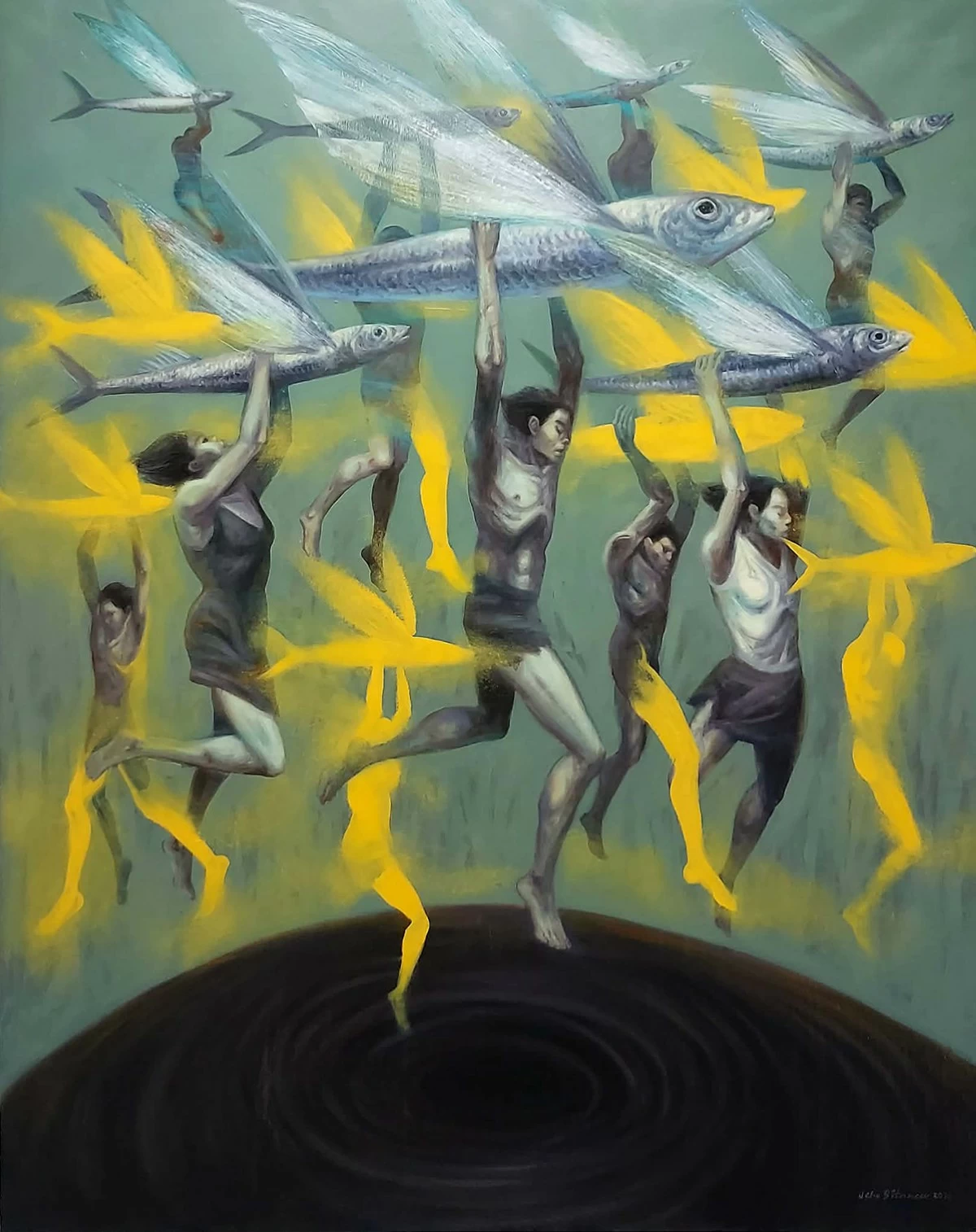
Once the structural foundation is set, Jeho builds his distinct surfaces: “I will start with textures and effects using acrylic. I will then add oil on top, from glazes to the final touch of opaque paint. I want to create noise in the surface by employing different techniques of handling the paint.”
This tactile chaos translates directly onto the gallery walls, perfectly embodied by “Balikuwas.” Describing the piece, Jeho notes: “The painting resembles an image that explodes, like a volcano or a bomb. Only this time, exploding particles are actually composed of human figures in various poses, contortions, and seeming acts of defiance.”
Similarly, works like “Kaligtasang Bagwis” and “Sandalang Kapanalig” introduce recurring motifs like wings, vines, and ladders, offering threads of redemption and spiritual resistance. The figures do not succumb to despair; instead, they organize, gather, and hold their ground, transforming pain into an active, collective stance against oppression.
By bridging the chaotic physicality of his studio with the soaring, desperate architecture of his compositions, Jeho ensures his exhibit resonates far beyond the gallery walls. His final words on the collection serve as both a warning and an enduring ethos for the viewer: “This is a wake-up call. Let us be more discerning and vigilant. Our plight is a result of our (in)action.”
“Sa Pagitan ng Bangungot at Bahaghari” runs until Sept. 26 at Art Cube Gallery, OPVI Centre, 2295 Chino Roces Ext., Makati City
