This might not be the typical expat blog, written by a German expat, living in the Philippines since 1999. It's different. In English and in German. Check it out! Enjoy reading!
Dies mag' nun wirklich nicht der typische Auswandererblog eines Deutschen auf den Philippinen sein. Er soll etwas anders sein. In Englisch und in Deutsch! Viel Spass beim Lesen!
You plan to move to the Philippines? Wollen Sie auf den Philippinen leben?
There are REALLY TONS of websites telling us how, why, maybe why not and when you'll be able to move to the Philippines. I only love to tell and explain some things "between the lines". Enjoy reading, be informed, have fun and be entertained too!
Ja, es gibt tonnenweise Webseiten, die Ihnen sagen wie, warum, vielleicht warum nicht und wann Sie am besten auf die Philippinen auswandern könnten. Ich möchte Ihnen in Zukunft "zwischen den Zeilen" einige zusätzlichen Dinge berichten und erzählen. Viel Spass beim Lesen und Gute Unterhaltung!
Visitors of germanexpatinthephilippines/Besucher dieser Webseite.Ich liebe meine Flaggensammlung!
Philippine stocks extended their decline on Thursday as lower economic growth forecasts and rising US Treasury yields kept investors on the sidelines.
The benchmark Philippine Stock Exchange Index (PSEi) fell 1.12 percent, or 65.12 points, to close at 5,730.02, its fifth straight session in negative territory.
This was the lowest finish of the index since Nov. 14, 2025, when it ended at 5,584.35, according to Philstocks Financial Inc.
Philstocks said investors turned cautious after S&P Global Ratings and the Asian Development Bank (ADB) had downgraded their 2026 growth forecasts for the Philippines.
S&P Global Ratings cut its projection to 2.9 percent from 4.1 percent. The ADB, meanwhile, lowered its forecast to 3.3 percent from 3.8 percent.
Luis Limlingan, head of sales at Regina Capital Development Corp., said the revisions — rooted from the weaker-than-expected first half and persistent economic headwinds — added to concerns over the pace of the local market recovery.
Negative spillovers from Wall Street also weighed on the local market as rising US Treasury yields weakened risk appetite.
Trading remained lethargic, with net value turnover reaching only P4.63 billion.
Foreign investors continued to pull funds out of the market, recording net outflows of P749.31 million.
Most sectoral indices closed lower. Conglomerates were the sole gainers after rising by 0.43 percent.
Sharing valuable information and public service from the No. 1 regional newspaper in Western Visayas. https://lnk.bio/panaynews
WHEN was the last time you made somebody smile, my dear reader?
Perhaps you think this is hardly the time to do so. That would be understandable, considering today’s troubling global and national situation.
Yet making somebody smile does not require much. Give a compliment. Notice something nice about a person’s outfit, effort, or smile, and say it aloud.
Share a laugh by sending a funny meme, video, or lighthearted joke to a friend. Show simple kindness: hold a door open, thank a service worker, or simply offer a warm, friendly smile to a stranger. Send someone a quick note out of the blue to say you appreciate them or are thinking of them.
Remember: simple acts of kindness have the power to brighten someone’s day.
Honestly, when we look around, it sometimes seems as though we have neither the time nor the reason to laugh. Perhaps laughter can wait until tomorrow — or, better yet, until the day after tomorrow. After all, anticipation can sometimes be better.
Our enemies may laugh up their sleeves, while we often fail to recognize the good fortune that is still smiling upon us. But hold on: he who laughs last laughs longest. Remember?
American neurologist Henri Rubenstein has said that laughter can lower high blood pressure while aiding digestion and promoting sleep. Well, give me even a simple smile and consider what experts have long suggested: good humor can help even the gravely or terminally ill cope with their ordeal.
Of course, when we look at the world around us these days, we may not exactly roar with laughter or split our sides laughing. And sometimes laughter can even go too far!
Have you heard the story of a spectator who reportedly died of a heart attack while watching the comedy “A Fish Called Wanda” starring John Cleese of Britain’s legendary Monty Python comedy troupe?
A heart attack, of course, is no laughing matter. Still, I continue to enjoy watching this movie.
Even when we think we have no reason to laugh, we should still try to express joy spontaneously and allow ourselves to be cheerful. We still have reasons to begin with the softest form of laughter — the simple smile.
This is something I have learned and experienced since I first traveled through Asia in 1978 and later settled permanently in the Philippines in 1999. Keep smiling, even when you are burdened by enormous problems.
Experts also say that good humor works because it helps put people at ease. French psychotherapist Sylvie Tenenbaum has observed that, among her patients, laughter often signals the beginning of a healthy awakening to reality. Gallows humor may seem questionable to others, but sometimes we need an emotional release. Sing out loud. Cry if you must. But do not forget to laugh.
As a devout Christian, I love reading the Bible. Ecclesiastes 3:1-4 reminds us: “There is a time for everything…a time to be born and a time to die…a time to tear down and a time to build, a time to weep and a time to laugh!”
And, very importantly, the Psalms always help. They are cries from the heart — songs of sorrow as well as joy. For almost every emotion and mood, one can find a psalm that speaks to it. They wrestle with the deepest sorrow, yet their voices remain refreshingly spontaneous and profoundly human.
***
Email: doringklaus@gmail.com or follow me on Facebook, X (formerly Twitter), or LinkedIn. You may also visit www.germanexpatinthephilippines.blogspot.com or www.klausdoringsclassicalmusic.blogspot.com./PN
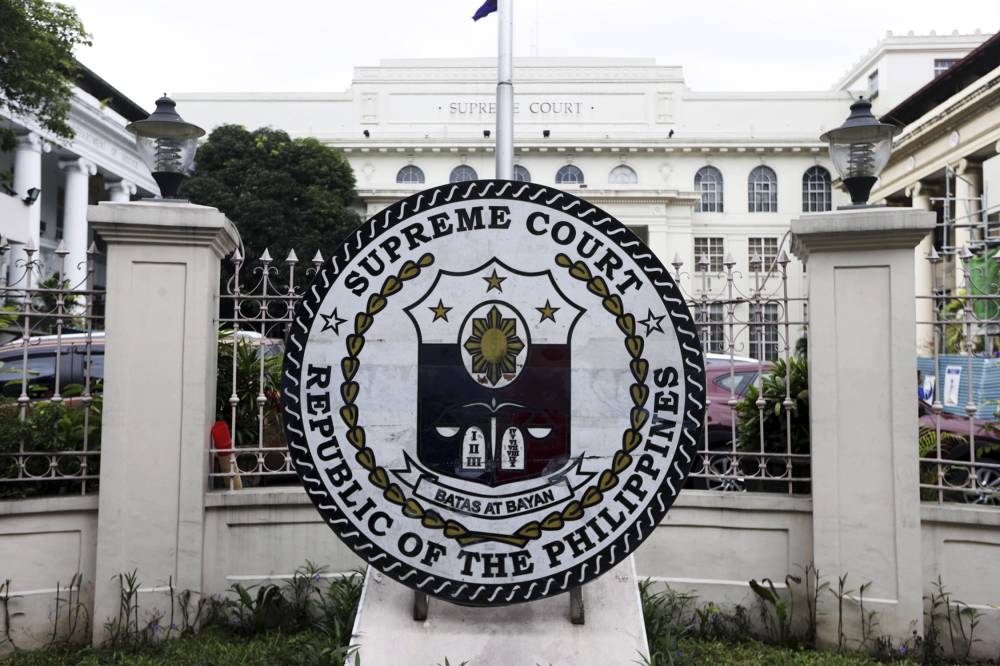
The order was clear and blunt. “Henceforth and with utmost urgency,” the Supreme Court said in its landmark ruling handed down Aug. 26 and released Sept. 16, the Congress of the Philippines must “enact the appropriate anti-political dynasty law at the earliest opportunity.”
In the 86-page decision penned by Associate Justice Ramon Paul Hernando, the SC granted the three consolidated petitions filed by the 1Sambayan Coalition led by retired Supreme Court Senior Associate Justice Antonio Carpio and retired Ombudsman Conchita Carpio Morales, along with the Kapatiran Party and other groups of legal scholars and civic leaders who had petitioned the tribunal to compel Congress to finally pass a law defining and prohibiting political dynasties.
The requirement for such a law is in the Constitution itself. Article 2, Section 26 provides that the “State shall guarantee equal access to opportunities for public service and prohibit political dynasties as may be defined by law.” At the time the framers of the 1987 Constitution were writing the Charter, the scourge of political dynasties was already all too evident that they had to explicitly mention the need to prohibit the practice.
Concentration of political power
The framers rightly recognized that the concentration of political power and public office within the same family or clan could only do immense harm to the country’s democracy and socioeconomic progress.
They made a fatal hedge, though, with that phrase “as may be defined by law.” The clause left it up to the enlightened instincts of the people’s representatives in Congress to do the actual work of enacting legislation that would flesh out the provision. As it turned out, the framers’ trust was wildly misplaced.
Lawmakers, most of them products of political dynasties themselves, were not about to vote against their narrow, short-term self-interests by advancing any measure that would meaningfully clip their hold on power and privilege.
But after 39 years of the fundamental directive being ignored, the SC said enough of the dillydallying. Every Congress through the years has been negligent in complying with “the mandatory constitutional duty to enact the law,” and what has happened since then? Political dynasties “have remained widespread and have extended even into the party-list system,” the court said, noting that the practice was “distorting democracy, weakening accountability, and fostering conditions conducive to corruption and political patronage.”
Ringing reprimand
“Despite changes in the composition of Congress over the years, no comprehensive anti-political dynasty law has been enacted, implying either a lack of interest, avoidance for convenience, or service of self-interest,” it lamented. Thus, “39 years is beyond a reasonable period to carry out the constitutional command,” the SC declared, and Congress’ failure to act “constitutes grave abuse of discretion.”
That ringing reprimand should land on the doorsteps of the legislative houses like a thunderclap. If generations of lawmakers had seen fit to ignore all this time the citizenry’s calls for a broad antidynasty law that would help democratize political power and public service, they cannot do so now, with the country’s highest judicial authority telling them they are guilty, at the very least, of constitutional disrespect and dereliction of duty.
The SC didn’t only confine itself to ordering Congress to get off its bum and get to work. It also said that, based on existing laws, “there is basis to extend the prohibition on political dynasties to relatives up to the fourth civil degree of consanguinity and/or affinity”.
The roadmap, then, for both the House and Senate is clear: Urgently pass a law that unambiguously bans political dynasties by prohibiting spouses and relatives up to the fourth degree of consanguinity and/or affinity from simultaneously holding elective posts.
Hair-raising numbers
House Bill No. 8389, which was passed on third and final reading on June 3 this year, simply would not do, because it limits the ban only to the second degree, practically providing cover for ever-creative politicians to circumvent the intent of the prohibition. The Senate’s pending counterpart bill is of a similar vein, though aside from barring the simultaneous holding of positions by family members, it also prohibits immediate succession after a relative steps down from a certain post.
These two measures don’t go far enough yet in addressing the menace that has held the country’s political system in an ever-tighter grip over the decades. Consider: In a country of some 113 million people, the 24-strong Senate is currently populated by four sibling pairs, while 76 percent of House members come from political dynasties.
Those are truly hair-raising numbers for any nation that imagines itself to be a democratic republic. Filipinos have long called for correcting that unjustly lopsided landscape, and now the SC has taken the cudgels for them. Congress must heed the court’s order forthwith.
"Alone Again (Naturally)" by Gilbert O'Sullivan is a fictional, melancholy ballad about a man contemplating suicide after being left at the altar, followed by the tragic deaths of his parents.
Studies show the ability to tolerate alone time has been linked to increased happiness, better life satisfaction, and improved stress management. People who enjoy alone time experience less depression.
Short-term tips to get you started to avoid comparing yourself to others are easy to be said:
Take a step back from social media. … Take a phone break. … Carve out time to let your mind wander. … Take yourself on a date. … Get physical. … Spend time with nature. … Lean into the perks of being alone.
I can be a reluctant socializer. I’m sometimes secretly pleased when social plans are called off. I get restless a few hours into a hangout. Maybe, I’ll not be invited any more. Or not so often… . I even once went on a free 10-day silent meditation retreat – not for the meditation, but for the silence.
So I can relate to author Anneli Rufus, who recounted in Party of One: The Loners’ Manifesto: “When parents on TV shows punished their kids by ordering them to go to their rooms, I was confused. I loved my room. Being there behind a locked door was a treat. To me a punishment was being ordered to play Yahtzee with my cousin Louis.” Several years ago in one of my write-ups, I wrote about loneliness or in other words splendid isolation.
Asocial tendencies like these are often far from ideal. Abundant research shows the harms of social isolation, considered a serious public health problem in countries that have rapidly ageing populations (though talk of a ‘loneliness epidemic’ may be overblown). In the UK, the Royal College of General Practitioners says that loneliness has the same risk level for premature death as diabetes. Strong social connections are important for cognitive functioning, motor function and a smoothly running immune system.
This is especially clear from cases of extreme social isolation. Examples of people kept in captivity, children kept isolated in abusive orphanages, and prisoners kept in solitary confinement all show how prolonged solitude can lead to hallucinations and other forms of mental instability.
But these are severe and involuntary cases of loneliness. For those of us who just prefer plenty of alone time, emerging research suggests some good news: there are upsides to being reclusive – for both our work lives and our emotional well-being.
Social anxiety is the single most common psychological problem according to innumerable survey results worldwide. The magnificent, gorgeous and excellent isolation, resulting from being nervous when meeting people is really the opposite. The state of being isolated reminds me of being in a hospital with an infectious disease.
Does the project of giving a speech or going to a social gathering give you the willies? Relax, there are always ways and solutions to help you but teaching you “never to be nervous again”.
I have always been the most silent pupil in elementary and high school. I was ashamed even to talk to or with my teachers. Several terrible school records have been the result. But, I wanted to become a journalist. I am still one.
During college times and while writing my first articles, I learned from my first boss, a daily news publisher, to avoid being nervous while meeting people. I was always prepared. Preparation for any communicating situation is a must. I have been invited to many parties and gatherings. I always asked for the guest list. I scanned all the newspapers and browsed the net.
One key benefit is improved creativity. Gregory Feist, who focuses on the psychology of creativity at California’s San Jose State University, has defined creativity as thinking or activity with two key elements: originality and usefulness. He has found that personality traits commonly associated with creativity are openness (receptiveness to new thoughts and experiences), self-efficacy (confidence), and autonomy (independence) – which may include “a lack of concern for social norms” and “a preference for being alone”. In fact, Feist’s research on both artists and scientists shows that one of the most prominent features of creative folks is their lesser interest in socializing.
One reason for this is that such people are likely to spend sustained time alone working on their craft. Plus, Feist says, many artists “are trying to make sense of their internal world and a lot of internal personal experiences that they’re trying to give expression to and meaning to through their art.” Solitude allows for the reflection and observation necessary for that creative process.
A recent vindication of these ideas came from University at Buffalo psychologist Julie Bowker, who researches social withdrawal. Social withdrawal usually is categorized into three types: shyness caused by fear or anxiety; avoidance, from a dislike of socializing; and insociability, from a preference for solitude.
There is gender and cultural variation, of course. For instance, some research suggests that unsociable children in China have more interpersonal and academic problems than unsociable kids in the West. Bowker says that these differences are narrowing as the world becomes more globalized.
Still, it turns out that solitude is important for more than creativity. Since ancient times, meanwhile, people have been aware of a link between isolation and mental focus. After all, cultures with traditions of religious hermits believe that solitude is important for enlightenment.
Recent research has given us a better understanding of why. One benefit of unsociability is the brain’s state of active mental rest, which goes hand-in-hand with the stillness of being alone. When another person is present, your brain can’t help but pay some attention. This can be a positive distraction. But it’s still a distraction. Daydreaming in the absence of such distractions activates the brain’s default-mode network. Among other functions, this network helps to consolidate memory and understand others’ emotions. Giving free rein to a wandering mind not only helps with focus in the long term but strengthens your sense of both yourself and others. Paradoxically, therefore, periods of solitude actually help when it comes time to socialize once more. And the occasional absence of focus ultimately helps concentration in the long run.
I learned, if your personality tends toward insociability, you shouldn’t feel the need to change. Of course, that comes with caveats. But as long as you have regular social contact, you are choosing solitude rather than being forced into it, you have at least a few good friends and your solitude is good for your well-being or productivity, there’s no point agonizing over how to fit a square personality into a round hole.
So feel free to de-clutter your social calendar. It’s psychologist-approved.
The phrase "Song of Songs" means the greatest, finest, or most supreme song of all.
The Song of Songs (or Canticle of Canticles) is an exquisite collection of love lyrics, arranged to tell a dramatic tale of mutual desire and courtship. It presents an inspired portrayal of ideal human love, a resounding affirmation of the goodness of human sexuality that is applicable to the sacredness and the depth of married union.
US musician and author Ted Gioia argues in his excellent book Music: A Subversive History (2019): "At every stage in human history, music has been a catalyst for change, challenging conventions and conveying coded messages – or, not infrequently, delivering blunt, unambiguous ones. It has given voice to individuals and groups denied access to other platforms for expression. Pop music has often been dismissed as "lightweight" given its young audience, simple snappiness and mainstream status, but those elements are really where its strength is concealed. Pop songs don't originate themes of mental wellbeing, equality, liberty, activism – but they do transmit them to the broadest platforms possible".
Snap the radio on, zip to any station, and what are you likely to hear? Love songs. Songs of new love, songs of disappointed love, songs of grateful love, songs of crazy love. I still remember my time as a radio host in Davao City several years ago playing the Hits of the 60's, 70's and 80's. Nothing has changed. Times change, but through history the flow of love songs is a constant.
Plenty of people are surprised or even shocked to find an explicit love song in the bible - complete with erotic lyrics. But "Song of Songs" is exactly that. It shows no embarrassment about lovers. Consequently, intermittent attempts have been made to rule "Song of Songs" out of the bible. It's like making it "for adults only". Imagine, my dear reader, in 16th century Spain for instance, professor Fray Luis de Leon was dragged out of his classroom and taken to jail for four years. His crime? He translated "Song of Songs" into Spanish.
If you start reading "Song of Songs", you will find out that this book conveys a very different atmosphere from most modern love songs and pop music. Since love songs are always popular, many people approach "Song of Songs" with great expectations. However, readers often find the book much different from what they had expected. One is the poetic imagery. Second: "Song of Songs" is hard to follow. One part doesn't seem connected to the next.
Try to explore the "Song of Songs". One thing is for sure. You'll learn a lot about the love between God and His people.
BEYOND BUDGET: ‘BARMM'S first elections: A new beginning for Mindanao’
After decades of conflict and a long peace process, the Bangsamoro people have chosen the members of their first regular Parliament… Eighty members will make up the first elected Parliament. More than two million people voted on Sept. 14, with an 84.34 percent turnout. Read more
The national shrine of Saint Padre Pio here was elevated as international shrine by the Holy See on Wednesday, Sept. 23. It is now officially the Padre Pio International Shrine of the Philippines. Read more









.png)

