
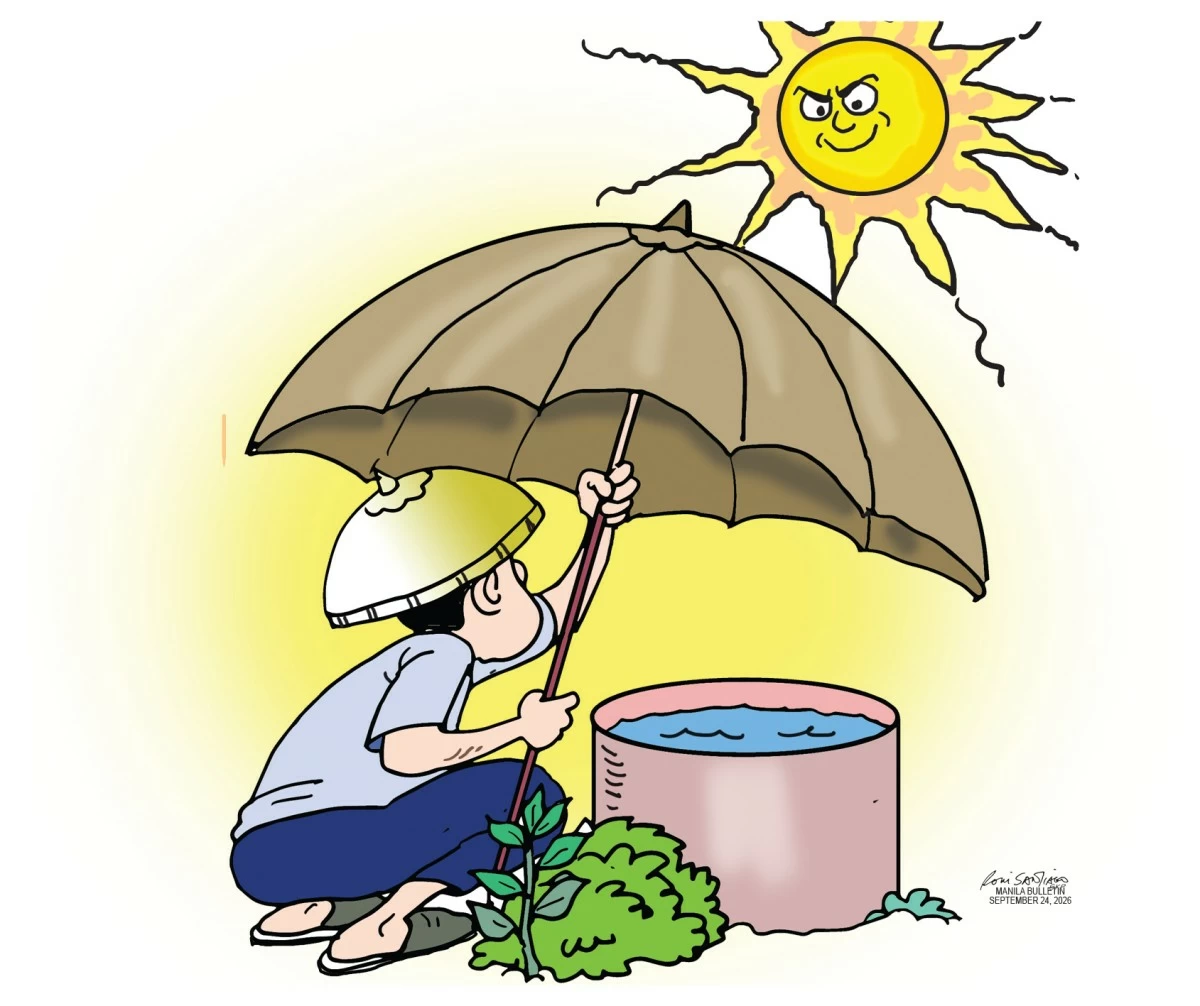
The government has to take action before food shelves become empty.
The warning is already here. The World Meteorological Organization (WMO) said early this month that El Niño is firmly established, is expected to intensify into a very strong event toward the end of 2026 and has a nearly 100 percent likelihood of persisting through February 2027. Its climate effects could extend well into 2027.
And experts say this may cause severe drought that is a threat to food security and therefore may trigger rising prices.
That should set off an urgent concerted national action—not only about heat, drought and water, but about food prices.
El Niño does not automatically dictate how severe its effects will be in every province. WMO itself cautions that local impacts vary by region, season, and other climate drivers. But the Philippine Atmospheric, Geophysical, and Astronomical Services Administration (PAGASA) said the phenomenon increases the likelihood of below-normal rainfall, dry spells, and drought in parts of the country, with potentially serious consequences for agriculture.
How would this impact the economic chain? Less water can mean lower harvests; lower harvests can mean tighter supplies; tighter supplies can mean higher prices. For poor families already stretching every peso, another increase in the cost of rice, vegetables, fish, or other staples is a threat to both nutrition and household survival.
The government therefore cannot afford a wait-and-see policy.
First, protect production now. Irrigation systems must be repaired and expanded where feasible. Farmers need timely access to drought-tolerant seeds, crop insurance, affordable credit, weather information and technical advice. Water harvesting and storage must move from isolated projects to a serious component of agricultural planning. Where traditional crops become impractical, farmers should receive support to shift intelligently rather than being left to absorb the losses alone.
Second, protect the food supply chain. The government should establish a real-time system connecting weather forecasts, farm conditions, inventories, transport costs, and retail prices. The purpose is not merely to monitor inflation after it happens, but to identify shortages before they become price shocks. Strategic imports, when necessary, should be timely and transparent—not rushed into action after prices have already surged.
But addressing this should not be left on the government alone.
Food companies, traders, supermarkets, logistics firms, and banks can help by investing in cold storage, efficient transport, water-saving technologies, climate-resilient production, and better supply forecasting. Businesses should also examine where waste and unnecessary costs can be removed before passing higher expenses to consumers. The private sector's role through resilient supply chains can help cushion the impact and are good business, as well.
There is also a role for every Filipino. Households can reduce food waste, conserve water, buy responsibly and support local producers. Communities can organize food-sharing, urban gardening, and assistance for vulnerable families. Small actions will not stop El Niño, but millions of responsible choices can reduce pressure on scarce resources and household budgets.
The World Food Programme estimates that the current El Niño could push at least 49 million additional people into acute food insecurity globally by the end of 2027, with South and Southeast Asia among regions expected to experience significant effects.
That number should change how we think about preparedness.
The Philippines has something priceless that a failed harvest cannot provide: advance warning.
With El Niño most likely to occur, it is now our choice whether we will act while there is still time—before drought reaches the farms, before supplies tighten, before food prices climb, and before Filipino families are forced to pay the highest price for government inaction.
We have to prepare now, or pay the hefty price later.
