You plan to move to the Philippines? Wollen Sie auf den Philippinen leben?

There are REALLY TONS of websites telling us how, why, maybe why not and when you'll be able to move to the Philippines. I only love to tell and explain some things "between the lines". Enjoy reading, be informed, have fun and be entertained too!

Ja, es gibt tonnenweise Webseiten, die Ihnen sagen wie, warum, vielleicht warum nicht und wann Sie am besten auf die Philippinen auswandern könnten. Ich möchte Ihnen in Zukunft "zwischen den Zeilen" einige zusätzlichen Dinge berichten und erzählen. Viel Spass beim Lesen und Gute Unterhaltung!


Visitors of germanexpatinthephilippines/Besucher dieser Webseite.Ich liebe meine Flaggensammlung!

free counters

Total Pageviews

Sunday, September 20, 2026

Moral and human values


By Klaus Döring


Human values are virtues — desirable character traits — that guide us to consider the human element when interacting with other people. Human values are those that enable people to live in harmony with the rest of the world. Without values, human life would be devoid of meaning, devolving into a bland, textureless existence without distinction. Human values are the deepest moral aspirations of humanity, and they are the foundation of our lives as individuals and societies. Human values are universal in nature because they are shared by all people, regardless of religion, nationality, or cultural background. Human values encourage consideration for one another.

Moral and human values are the fundamental beliefs and principles that guide our behavior, define our character, and help us distinguish right from wrong. While human values are universal and promote overall well-being and dignity, moral values are specific guidelines shaped by cultural and societal norms.

In these eventful times, with calls for peace all around the globe but also with “lust after war,” with corrupt politicians and terrorist attacks against innocents, and with cries for justice, it is very easy to forget moral and human values. People, don’t let this happen!

Allow me to ask you a question: “What makes a modern person?” Technology and knowledge, for sure? If not, we couldn’t operate our computers or other devices. Skills, of course, are part of it. But more important are attitudes and values, and our readiness for new ways of reacting, feeling, and looking at things.

I am afraid that we have to look first into ourselves. Many of us can notice our sense of group feeling alongside terrible egoism. We care so much for the good of our own families and ourselves by making great sacrifices, even for a long time. Charity starts and ends mostly at home. Why are we not able to develop fidelity that expands into a wider field of action so that we can go beyond the limits of our unsocial system and reach others around us?

We easily blame our government. This happens in almost every country worldwide. But don’t we only get the government that we deserve? Misuse, improper treatment, rude language and behavior, and corruption — these are all reflections of ourselves. Mistakes, injustice, the wrong sense of values, and the lack of priorities caused by arrogance and ignorance are with us daily and are simply our own.

A nation might have been rich with abundant blessings; it is only unfortunate that these blessings could not be made useful because of some flaws in the entire system. Why do we have collapsing economies or huge foreign and national debts? Because human values are not put in place. It’s easier to fill your own pockets than to care for a neighbor. Aren’t we paid for the service we render, so why do we resort to other unlawful and shameful activities? Are we really prioritizing material things over and above spiritual satisfaction?

We are becoming weaker and weaker when we lack punctuality, honesty, and responsibility. We have to improve as human persons with national pride, discipline, and consistency, because skills, knowledge, and technology are not enough. We have to avoid too many subjective comments, excessive sensitivity, and being fancy and conceited. If a nation like the Philippines is still rich in natural resources and intelligent, highly creative people, its people should guard against know-it-all criticism about insufficiency, imbalance, or inequality.

Moral and human values can only grow if we are willing to undergo renewal of will, mind, and heart. Let us give moral and human values a try. They could do great things to alleviate economic life, to save us all from imminent spiritual degradation, and to allow us to live in peace and harmony.



Why Filipinos still go to malls even when they can shop online


By Jane Kingsu-Cheng

Published Sep 20, 2026 06:22 am   
Shopping may still be one of the main reasons people go to the mall, but it is no longer the only reason to stay. A meal with friends, a concert, an anime event, pickleball, time with a pet, or simply somewhere to spend the afternoon are now part of the mall experience.


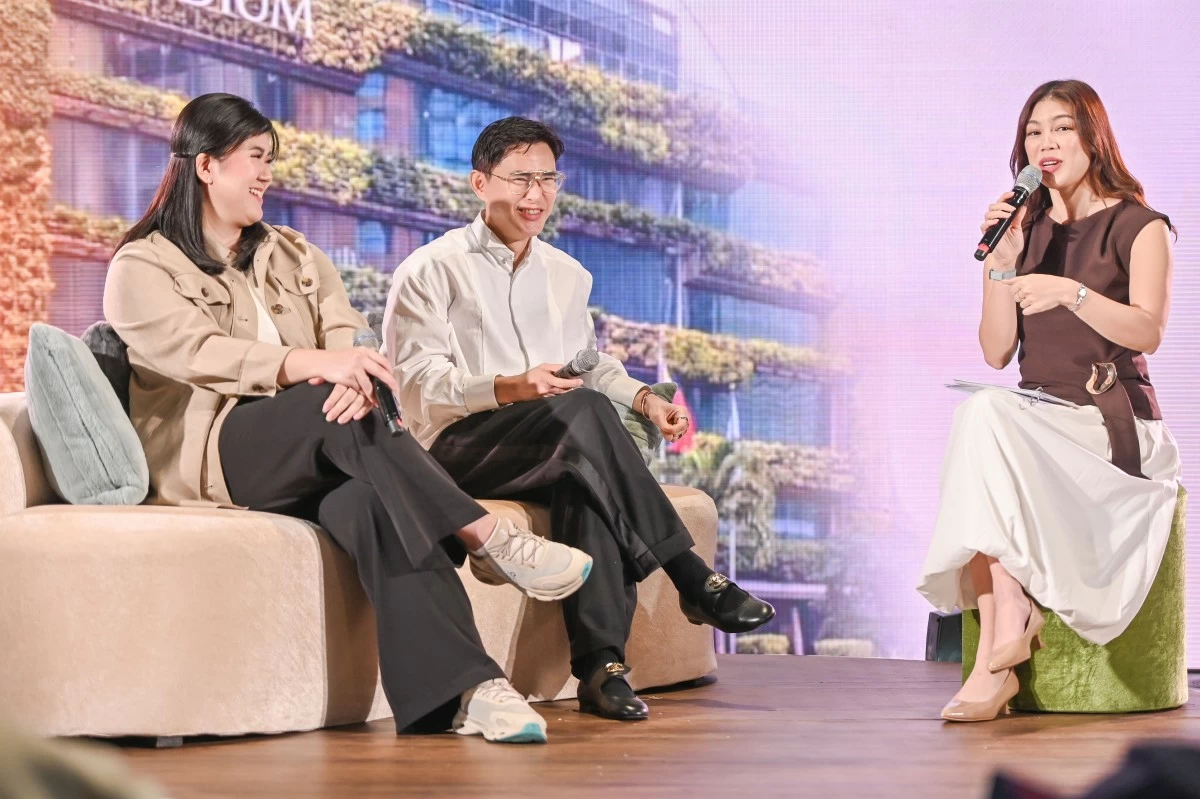
Hanna Carinna Sy and Steven Tan at the launch of 'My SM' campaign
That is the idea behind My SM, SM Supermalls’ newest campaign. Launched at The Podium on Sept. 10, it offered a teaser of what shoppers can expect next, from new destinations and more dining and leisure spaces to facilities for different communities and younger shoppers.
Some of these changes have been years in the making. When Steven T. Tan, president of SM Supermalls, joined the company in 2004, restaurants and food concepts accounted for less than five percent of its mall mix. Today, he says that figure is closer to 30 percent.
As e-commerce continues to grow, the question becomes more relevant: What can a mall offer that people cannot get online?
“It’s not just about creating retail spaces anymore. It’s about creating experiences, things that you cannot experience in e-commerce,” Steven says.
More reasons to stay
Food is one answer. “People go to the mall now to celebrate, to dine, and to experience,” he points out.
Spaces are also being designed for people to sit, meet, and spend time. Steven refers to “Gala to the Max,” built around the Filipino habit of going out. “We really created that space for people to gala, to hang out.”
This same thinking can be seen in larger projects. SM Nuvali, set to open in November, is being positioned as an eat-and-play destination with a new LED cinema screen experience. In Cebu, the recently opened 25,000-seat SM Seaside Cebu Arena gives the region a new venue for concerts and major entertainment events.
Animezing 2026 event at SM North EDSA
A place for your people
The changes are not always about building something large. They can also begin with a group of people who share an interest.
During the media gathering’s question and answer segement, I mentioned how my son will travel all the way to SM North EDSA for an anime event. For him, the trip is worth it because he knows he will find other people who enjoy the same things.
This idea of creating a “home for every tribe” is something Hanna Carinna T. Sy, senior assistant vice president for Marketing and Leasing at SM Supermalls, says the company is paying attention to.
“It’s really about listening to our customers. What do they want? What are people looking for?”
Anime and other fandoms have become part of that conversation, along with K-pop, P-pop, pets, sports, and active living. Pickleball now has 102 courts across 32 SM malls, while more than 40,000 runners participated in the Galaxy Manila Marathon and SM2SM Cebu events this year.
Hanna says SM is also looking at ways to make malls more convenient for people bringing their pets along. The Podium recently introduced a pet changing station, with plans to bring similar facilities to other malls. “Since the pandemic, there has been a boom in pet owners and people really treat their pets like family.”
The pet programs are especially close to her. “Personally, I think it would be the pets,” she says when asked which program she considers her favorite. “Maybe because that was the program I really started. It was my first program.”
Other long-running programs cater to younger mallgoers in different ways. SM Little Stars, which has been around for 17 years, gives children a platform to showcase their talents, while the SM Spelling Bee adds an educational component. “We really try to offer something that works for every age.”
Galaxy Manila Marathon
Gen Z gets a say
Another group helping SM think about what comes next is Gen Z itself. Steven says the company has formed a Gen Z council whose members share ideas on trends, interests, and what their generation is looking for.
The younger council brings in new ideas, while the older team contributes years of experience. “There will be a balance of new ideas, plus experiences that you have had before,” Steven says.
The same focus will be seen at the upcoming SM Harrison Plaza, where an entire floor will be dedicated to younger mallgoers, given its proximity to schools such as De La Salle University and St. Scholastica’s College.
Hanna also noted that Gen Z and Gen Alpha are not just today’s customers. They are the mallgoers SM will continue to serve in the coming years, which means paying attention not only to how they shop, but also to how they spend their time together.
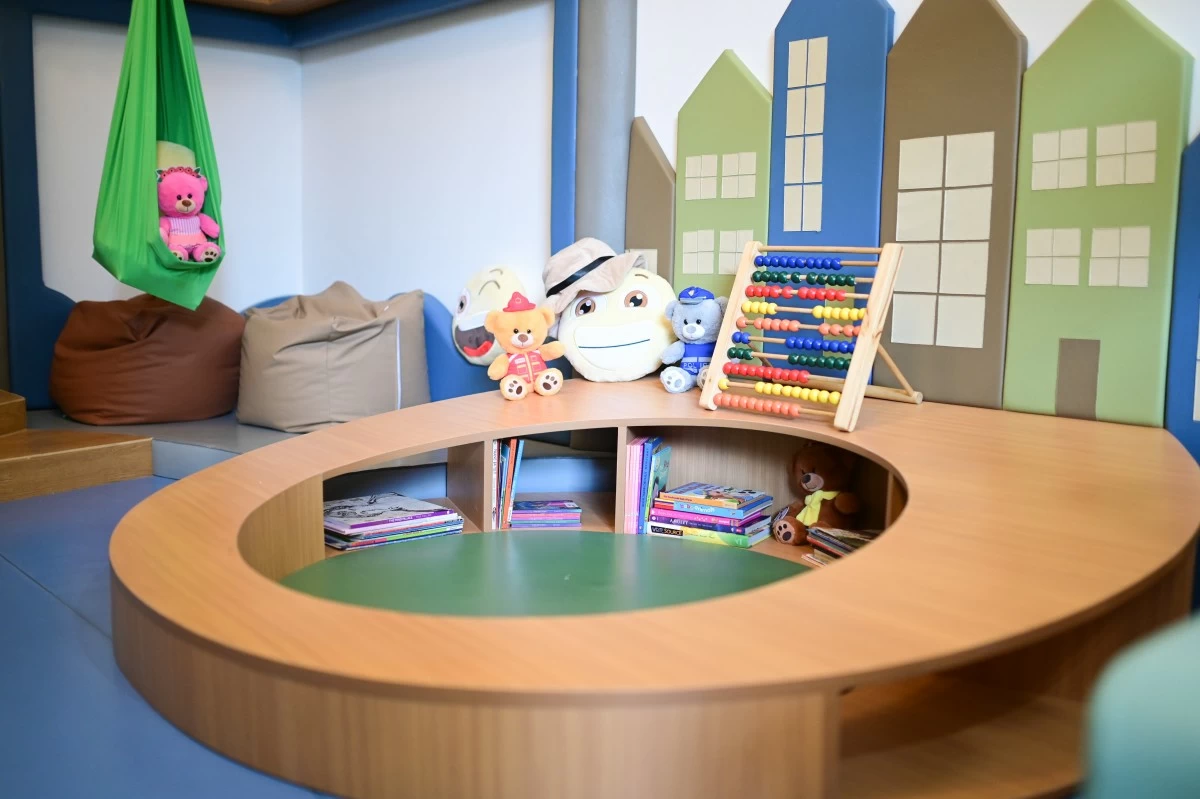
The mall's Sensory Lab for PWDs
Culture, creators, and weekends at the mall
SM has been adding art, heritage, and cultural activities through projects such as Museo del Galeon, Art for Everyone, and its AweSM festivals.
It has also introduced SM SuperMakers, a creator community built primarily on TikTok, giving content creators opportunities to participate in events and experiences across SM malls and share them with their own audiences.
Changes you may not notice
Steven also noted that solar energy currently supplies more than 10 percent of SM’s power, with that figure expected to increase as technology improves. Collected PET bottles are also sent to third-party partners that recycle them into usable products such as bags, containers, chairs, and other items.
At SM City Marikina, a water catchment basin beneath the property can hold the equivalent of more than 20 Olympic-sized swimming pools, according to Steven. Rainwater is held during heavy downpours and released after the rain subsides to help avoid adding to flooding in the area.
SM malls have also long allowed motorists to leave their vehicles overnight in elevated parking areas without charge during severe weather.
What comes next
When asked what he is most excited for people to experience, Steven does not point to one particular mall, restaurant, arena, or attraction. “It’s how we evolve. You would see a lot of them in the coming months or even years.”
Shopping will always be part of the mall. But what may keep bringing us back are the things we cannot add to an online cart: meeting people, trying something new, cheering at a concert, playing a game, eating together, or simply finding a place to spend a few hours.
For many Filipinos, the mall has become more than somewhere to shop. It is also a place to meet, spend time, and, in its own way, feel at home.

HOMILY | 25th Sunday in Ordinary Time

 HOMILY | 25th Sunday in Ordinary Time

Gospel: Matthew 20:1–16a
In this Sunday’s Gospel, the owner of the vineyard asks a question that should make us reflect. He says: “Are you envious because I am generous?”
The workers who came first and worked from the beginning were not cheated. They received the just wage they had agreed upon. But when they saw that those who came later received the same wage, they became angry.
Not because they received too little. They became angry because the others received just as much as they did.
And this is the point of the Gospel.
Sometimes we are already happy with our situation—but our feelings change when we begin looking at what others have.
We are content with our position—until someone else gets promoted.
We are happy with our blessings—until someone else receives more blessings.
We are happy to serve—until somebody else receives the praise and recognition.
Constantly comparing ourselves with others can slowly poison our hearts.
And this tendency toward envy is one of the attitudes among us Filipinos that we need to change through the I CHOOSE GOD Movement that we have begun.
When we say, “I Choose God,” we are not talking only about elections or politics. We are talking about forming our hearts and our consciences.
Because corruption does not begin with money. It begins in a heart that says: “I want more for myself.”
We become willing to accept vote-buying when our question is, “What can I get? What will I receive?” instead of, “What will be good for everyone?”
The abuse of power begins when public office becomes a means of enriching oneself, one’s family, or one’s own group, instead of becoming an opportunity to serve the common good.
The workers in the Gospel kept looking at the people beside them: What did he receive? Why did he get that? What about me? Why didn’t I get anything? I’m being shortchanged here! Why should they be the only ones receiving something during the elections while I get nothing?
But Jesus invites us to look upward—to look to God—and ask: “Lord, what do You want me to do?”
That is the heart of I Choose God. That is the heart of a person who chooses the Lord.
Before we make an important decision, perhaps there is only one question we need to ask: “Will I choose what benefits me, or will I choose what is right before God?”
If someone offers you money for your vote—may you choose God, not the money.
If friendship pressures you to vote for someone even though that person is unqualified and lacks the necessary competence—may you choose God, not your friend.
If you can benefit from lying or cheating—may you choose the Lord, not the benefit.
If signing an illegal transaction could make you rich—may you still choose God, not wealth.
——
There is a story about a father walking with his little son. They passed by a store, and the boy saw another child holding a beautiful toy.
The boy said, “Papa, I want that!”
The father replied, “But you already have so many toys at home.”
The boy answered, “Yes, Papa, but I don’t have that one!”
——
Sometimes, brothers and sisters, we adults are still very much like that little boy—we have simply grown older and bigger.
We have already received so much. But the moment we see that someone else has something we do not have, suddenly everything we have seems insufficient.
Brothers and sisters, a peaceful heart does not constantly ask: “What can I get?”
A Christian heart asks: “Lord, what is the right thing for me to do?”
And when this becomes the habit of our hearts—in our homes, our businesses, our communities, and in our lives as citizens—then I Choose God will no longer be merely a slogan.
It will become a way of life.
Shared post from Maymay sa Magbalantay
HOMILY | 25th Sunday in Ordinary Time
Gospel: Matthew 20:1–16a
In this Sunday’s Gospel, the owner of the vineyard asks a question that should make us reflect. He says: “Are you envious because I am generous?”
The workers who came first and worked from the beginning were not cheated. They received the just wage they had agreed upon. But when they saw that those who came later received the same wage, they became angry.
Not because they received too little. They became angry because the others received just as much as they did.
And this is the point of the Gospel.
Sometimes we are already happy with our situation—but our feelings change when we begin looking at what others have.
We are content with our position—until someone else gets promoted.
We are happy with our blessings—until someone else receives more blessings.
We are happy to serve—until somebody else receives the praise and recognition.
Constantly comparing ourselves with others can slowly poison our hearts.
And this tendency toward envy is one of the attitudes among us Filipinos that we need to change through the I CHOOSE GOD Movement that we have begun.
When we say, “I Choose God,” we are not talking only about elections or politics. We are talking about forming our hearts and our consciences.
Because corruption does not begin with money. It begins in a heart that says: “I want more for myself.”
We become willing to accept vote-buying when our question is, “What can I get? What will I receive?” instead of, “What will be good for everyone?”
The abuse of power begins when public office becomes a means of enriching oneself, one’s family, or one’s own group, instead of becoming an opportunity to serve the common good.
The workers in the Gospel kept looking at the people beside them: What did he receive? Why did he get that? What about me? Why didn’t I get anything? I’m being shortchanged here! Why should they be the only ones receiving something during the elections while I get nothing?
But Jesus invites us to look upward—to look to God—and ask: “Lord, what do You want me to do?”
That is the heart of I Choose God. That is the heart of a person who chooses the Lord.
Before we make an important decision, perhaps there is only one question we need to ask: “Will I choose what benefits me, or will I choose what is right before God?”
If someone offers you money for your vote—may you choose God, not the money.
If friendship pressures you to vote for someone even though that person is unqualified and lacks the necessary competence—may you choose God, not your friend.
If you can benefit from lying or cheating—may you choose the Lord, not the benefit.
If signing an illegal transaction could make you rich—may you still choose God, not wealth.
——
There is a story about a father walking with his little son. They passed by a store, and the boy saw another child holding a beautiful toy.
The boy said, “Papa, I want that!”
The father replied, “But you already have so many toys at home.”
The boy answered, “Yes, Papa, but I don’t have that one!”
——
Sometimes, brothers and sisters, we adults are still very much like that little boy—we have simply grown older and bigger.
We have already received so much. But the moment we see that someone else has something we do not have, suddenly everything we have seems insufficient.
Brothers and sisters, a peaceful heart does not constantly ask: “What can I get?”
A Christian heart asks: “Lord, what is the right thing for me to do?”
And when this becomes the habit of our hearts—in our homes, our businesses, our communities, and in our lives as citizens—then I Choose God will no longer be merely a slogan.
It will become a way of life.