You plan to move to the Philippines? Wollen Sie auf den Philippinen leben?

There are REALLY TONS of websites telling us how, why, maybe why not and when you'll be able to move to the Philippines. I only love to tell and explain some things "between the lines". Enjoy reading, be informed, have fun and be entertained too!

Ja, es gibt tonnenweise Webseiten, die Ihnen sagen wie, warum, vielleicht warum nicht und wann Sie am besten auf die Philippinen auswandern könnten. Ich möchte Ihnen in Zukunft "zwischen den Zeilen" einige zusätzlichen Dinge berichten und erzählen. Viel Spass beim Lesen und Gute Unterhaltung!


Visitors of germanexpatinthephilippines/Besucher dieser Webseite.Ich liebe meine Flaggensammlung!

free counters

Total Pageviews

Tuesday, June 9, 2026

Rentenlücke aufgedeckt: Das verdienen Sie wirklich im Alter


Wer mit 1.835 Euro Rente plant, baut sein Alter auf Sand: Was hinter der Standardrente steckt – und wen sie wirklich trifft.

München – So hoch ist die sogenannte Standardrente in Deutschland – und sie klingt nach einem soliden Polster für den Ruhestand. Das Problem: Diese Rente sieht fast niemand. Sie ist ein Rechenmodell, kein Kontoauszug. Wer das verwechselt, plant sein Alter mit Geld, das nie   kommt.

Content-Partnerschaft

Dieser Artikel entstand in Kooperation mit promipool.de .

Erst die Fakten, damit der Schock sitzt: Die Standardrente, im Amtsdeutschen „Eckrente“, liegt seit dem 1. Juli 2025 bundesweit einheitlich bei 1.835,55 Euro brutto. Diese Zahl beschreibt aber einen Phantom-Rentner. Sie unterstellt einen Menschen, der 45 Jahre lang gearbeitet und in jedem dieser Jahre genau den Durchschnittslohn   bekommt.

Rente
Das Thema Rente bewegt die Menschen. © IMAGO/Bihlmayerfotografie

Keine Lücken, keine Teilzeit, keine Auszeit für die Kinder, keine Phase mit Mindestlohn. Hand aufs Herz: Wer hat schon so einen Lebenslauf? Eben. Die 1.835 Euro sind keine Lüge – aber ein Idealbild, das mit dem echten Leben so viel zu tun hat wie der Hochglanzkatalog mit dem fertig aufgebauten Schrank.

Die echte Durchschnittsrente: rund 1.100 Euro brutto

Jetzt wird es unbequem. Die tatsächliche Durchschnittsrente liegt bei rund 1.100 Euro brutto im Monat – über alle Altersrentner gerechnet. Das sind über 700 Euro weniger als die schöne Modellzahl. Und „brutto“ heißt: Kranken- und Pflegeversicherung gehen noch ab, oft auch Steuer.  

Selbst wer ein langes, treues Arbeitsleben vorweisen kann, kommt nicht heran. Wer mindestens 35 Versicherungsjahre vorweist, erhält im Schnitt rund 1.623 Euro brutto – mehr als der Durchschnitt, aber immer noch unter der Vorzeige-Rente. Zwischen „Ich habe mein ganzes Leben gearbeitet“ und den 1.835 Euro klafft also eine spürbare Lücke.

Warum die Lücke vor allem Frauen trifft

Am deutlichsten wird es beim Blick auf Männer und Frauen getrennt. Männer kommen im Schnitt auf rund 1.346 Euro brutto, Frauen auf nur rund 903 Euro. Über 400 Euro Unterschied, Monat für Monat, ein Leben lang.

Der Grund ist kein Geheimnis: weniger Vollzeit, niedrigere Löhne, mehr Jahre für Kinder und Angehörige. Frauen weisen im Durchschnitt 33 Versicherungsjahre auf, Männer dagegen 42. Genau die Arbeit, die ganze Familien zusammenhält, taucht im Rentenkonto schlicht nicht auf. Was die wenigsten ahnen: Diese Schere – Fachleute nennen sie Gender Pension Gap – ist über die Jahre kleiner geworden, aber sie ist immer noch da.

Ab Juli 2026 steigt die Rente – und die Lücke bleibt

Es gibt eine gute Nachricht, und sie kommt bald. Zum 1. Juli 2026 steigen die Renten um 4,24 Prozent, der Rentenwert klettert von 40,79 auf 42,52 Euro. Für die Standardrente heißt das: Wer 45 Entgeltpunkte gesammelt hat, erhält dann 1.913,40 Euro brutto. Klingt nach noch mehr Polster.   

Doch genau hier liegt der Haken: Die Modellzahl wächst – die echten Renten der meisten steigen zwar mit, bleiben aber im selben Abstand zurück. Durchschnittsrentnerinnen und -rentner bekommen ab Juli zwischen 37 und 62 Euro mehr pro Monat. Schön. Aber die Differenz zwischen Vorzeige-Rente und echtem Kontostand schließt sich dadurch nicht.

Der Rente-Newsletter: Wege in die Frührente
Wichtige Entwicklungen rund um Ihre Rente erhalten Sie wöchentlich am Mittwoch. Eine kurze Registrierung genügt.

Wer mit der großen Zahl im Kopf plant und bei 1.100 oder 900 Euro landet, hat sich um Hunderte Euro verrechnet – die berühmte Rentenlücke.

Fazit

Die Standardrente ist das Renten-Äquivalent zum „bis zu“-Versprechen in der Werbung: rechnerisch korrekt, im echten Leben fast unerreichbar. Die ehrliche Planungsgröße ist nicht die Eckrente, sondern die eigene, persönliche Rentenauskunft – und ein nüchterner Blick darauf, was am Ende netto übrig bleibt.   

Warum Alltagsmusik gegen Depressionen nicht hilft – Studie zeigt Überraschendes


Steht Musikhören in Zusammenhang mit der psychischen Gesundheit? Dieser Frage sind Forschende nachgegangen und haben die Hörgewohnheiten von 20.000 Menschen verglichen. Das Ergebnis: bedrückend.

Frankfurt (KNA) – Traurige Menschen hören oft Musik, um ihre Stimmung in den Griff zu bekommen. Allerdings bleibt das in der Regel ohne Effekt, wie aus einer Studie hervorgeht, die das Max-Planck-Institut für empirische Ästhetik in Frankfurt am Main veröffentlichte.  

Artikel der KNA

Dieser Beitrag stammt von der Katholischen Nachrichten-Agentur (KNA).

Wie die Auswertung der Daten von 20.000 Menschen ergab, hören Männer und Frauen mit Depressionen, Angstzuständen, Gefühlen der Einsamkeit oder einer stärkeren Neigung zu Angst, Wut und Traurigkeit eher Musik, um ihre Stimmung zu regulieren. Das Forschungsteam fand aber keine Hinweise darauf, dass das Hören von mehr Musik im Alltag die psychische Gesundheit tatsächlich verbessert oder verschlechtert.  

Eine Frau mit Kopfhörern liegt auf einem ihrem Bett und hält sich die Augen zu, vor ihr ein Smartphone.
Bei Depressionen ist die Wirkung von Musik im Alltag nicht mit der einer Musiktherapie zu vergleichen. © Natalia Ximich/IMAGO

Die Wissenschaftler hatten den Effekt alltäglicher Hörgewohnheiten auf das Wohlbefinden untersucht. Das Team analysierte die Daten von rund 10.500 Menschen aus dem Jahr 2012 sowie weiteren 9.500 Hörerinnen und Hörern aus dem Jahr 2022. Alle Daten stammen aus dem schwedischen Zwillingsregister, wie das Institut erläuterte.

Hilft nicht, schadet aber auch nicht

Um die Ursachen und Zusammenhänge besser zu verstehen, nutzte das Forschungsteam genetisch fundierte Zwillingsanalysen sowie statistische Vorhersagewerte, die die genetische Anfälligkeit für psychische Erkrankungen abbilden.   

„Beim Vergleich genetisch identischer Zwillinge mit unterschiedlichen Hörgewohnheiten zeigte sich, dass das Hören von Musik zur Stimmungsregulierung nicht mit einer erhöhten Wahrscheinlichkeit für psychische Probleme verbunden war“, ordnete Studienautorin Laura Wesseldijk ein. „Das bedeutet, dass vermutlich nicht das Musikhören selbst, sondern gemeinsame familiäre Faktoren die Beziehung zwischen Musikhören und psychischer Gesundheit erklären.“

Was die Ergebnisse für die Musiktherapie bedeuten

Zudem scheine Musikhören die Auswirkungen einer genetischen Veranlagung für psychische Erkrankungen nicht abzuschwächen, so Wesseldijk. Mitautorin Miriam Mosing ergänzte: „Unsere Ergebnisse deuten darauf hin, dass das bloße Hören von Musik im Alltag nicht zwangsläufig zu einer besseren psychischen Gesundheit führt. Frühere Studien haben hingegen gezeigt, dass strukturierte Musiktherapien, die zur Verbesserung der psychischen Gesundheit konzipiert sind, durchaus therapeutische Vorteile haben können.“   

Depression ist mehr als nur traurig sein – welche Symptome auf die psychische Erkrankung hindeuten

Diese Erkenntnisse machten deutlich, dass klar zu unterscheiden sei zwischen gezielten, therapeutisch begleiteten Musikinterventionen und alltäglichen Hörgewohnheiten. Denn während strukturierte Musiktherapien positive Effekte zeigen können, lasse sich dieser Nutzen nicht ohne Weiteres auf den Alltag übertragen.

Monday, June 8, 2026


Before the next storm


Days of continuous rain can quickly change daily life in the cities.

Roads that were clear the other day have become difficult to pass. Classes are suspended, and small businesses close early. Deliveries are delayed. Families start moving appliances, documents, and valuables to higher shelves. In some communities, people watch nearby rivers more closely than the evening news.

Teachers can’t do it all


Eleanor Pinugu

The Academic Recovery and Accessible Learning Program, or Aral, of the Department of Education (DepEd) is a worthwhile and much-needed initiative. It aims to provide remediation lessons to public school students struggling with the fundamentals of reading, science, and math.

Last January, DepEd reported encouraging gains from Aral’s early implementation. Reading readiness scores increased by approximately five points in Grades 3 to 6, while the scores of students in Grades 7 to 10 improved by six to nine points, bringing millions of students closer to grade-level proficiency.

Under DepEd guidelines, Aral summer classes should have a 1:10 teacher-to-learner ratio. To implement the program properly, schools may hire external tutors or tap volunteer teachers, with the 2026 national budget allocating P1.96 billion for their salaries and allowances.


28 YEARS IN THE PHILIPPINES AS GERMAN EXPATRIATE


IMG20211113104441.jpg

When we arrived in Davao, we were amazed. Our house looked almost finished from the outside. But there was still a lot to do inside. The greeting was exuberant. We lay in each other's arms and cried for joy. 


IMG20210626100341.jpg

Rossana's brothers Archie and Ricardo had taken over the building supervision last year. They had already lived on the property with their families and had also laid out the small garden. A small swimming pool was there and my greatest wish had come true: dogs.

IMG20210626100434.jpg

Everything seemed perfect down to the last. We lived wall to wall with our American Ninong Maurice and his Filipina wife, our Ninang Alicia. They had bought the property right next to us already in 1959.

In the next few days and weeks there was a lot for us to do. Unpacking suitcases, arranging the interior fittings and doing paperwork after paperwork. Rossana, my mother and I hardly got time to think about Germany. Homesickness did not arise. Not yet.

IMG20210626100251.jpg

Rossana was especially busy sorting out the dance group costumes from Berlin. Maybe there will be another chance to perform in Davao City as a New Manisan Cultural  Dance Troupe? Well, that should become reality faster than we thought. I thought about my music library and several thousand books. 

And then events rolled over! One telephone call from the Davao City Port Customs Office in particular kept us in suspense. Our knees shook.

At the end: no problems with our containers.

A big hello sounded. GMA-TV director Bam Salavani recognized Rossana immediately. Then schoolmate and host Onnie Alfaro. "What are you doing here in Davao? Are you on vacation?" Questions about questions from all sides stormed us. "After the short commercial break, you are part of the show", called Bam Salvani. And so we were German guests on this TV show for the first time. During the following years we became an integral part of the show.

 "Testigo" and "Singgit Davao" were re-launched and were taken under the wing of GMA News & Public Affairs and GMA Entertainment TV Group respectively. In August of the same year, "Singgit Davao" was relaunched as "Kuyaw!" in time for the Kadayawan Festival.  Just to mention some: other hosts were Eureka, Emily Urgino and Al Ryan Alejandre - later City Councilor of Davao City.

I felt very much at home with the radio, newspapers and television. Mindanao Times Lifestyle writer Josie San Pedro had mentioned my mother, Rossana and me in her column "passages" during the great event "Singgit Davao at two"  - the stepping stone for our future. I must confess, not all expats in the Philippines went the same or similar path as me.   


For the first years I liked to take a jeepney. I found it interesting to get to know a lot of people while driving. And, step by step, I learned Bisaya. Nevertheless, one day a VW-beetle from the Archdiocese parked in our garden. A little old but he drove. We called him affectionalle "Knatterton". But it really never cracked.

IMG_20210710_104136.jpg

I started writing lifestyle columns. The International Harvardian University (IHU) Grand Alumni Homecoming was a special event. It was at the same time the rebirth of the IHU - Manisan Dancegroup. The dream of the old and new lead dancer Rossana had come true. It was at the event that I met Rodrigo Duterte for the first time - then Vice Mayor of Davao City.

But then, suddenly out of the blue, the culture shock awoke. Being on vacation in the Philippines is different from everyday life. I couldn't adjust myself especially to "Philippine Time". And many other things followed. 

Subtle warning from Washington


Published Jun 8, 2026 08:00 am | Updated Jun 6, 2026 03:38 pm
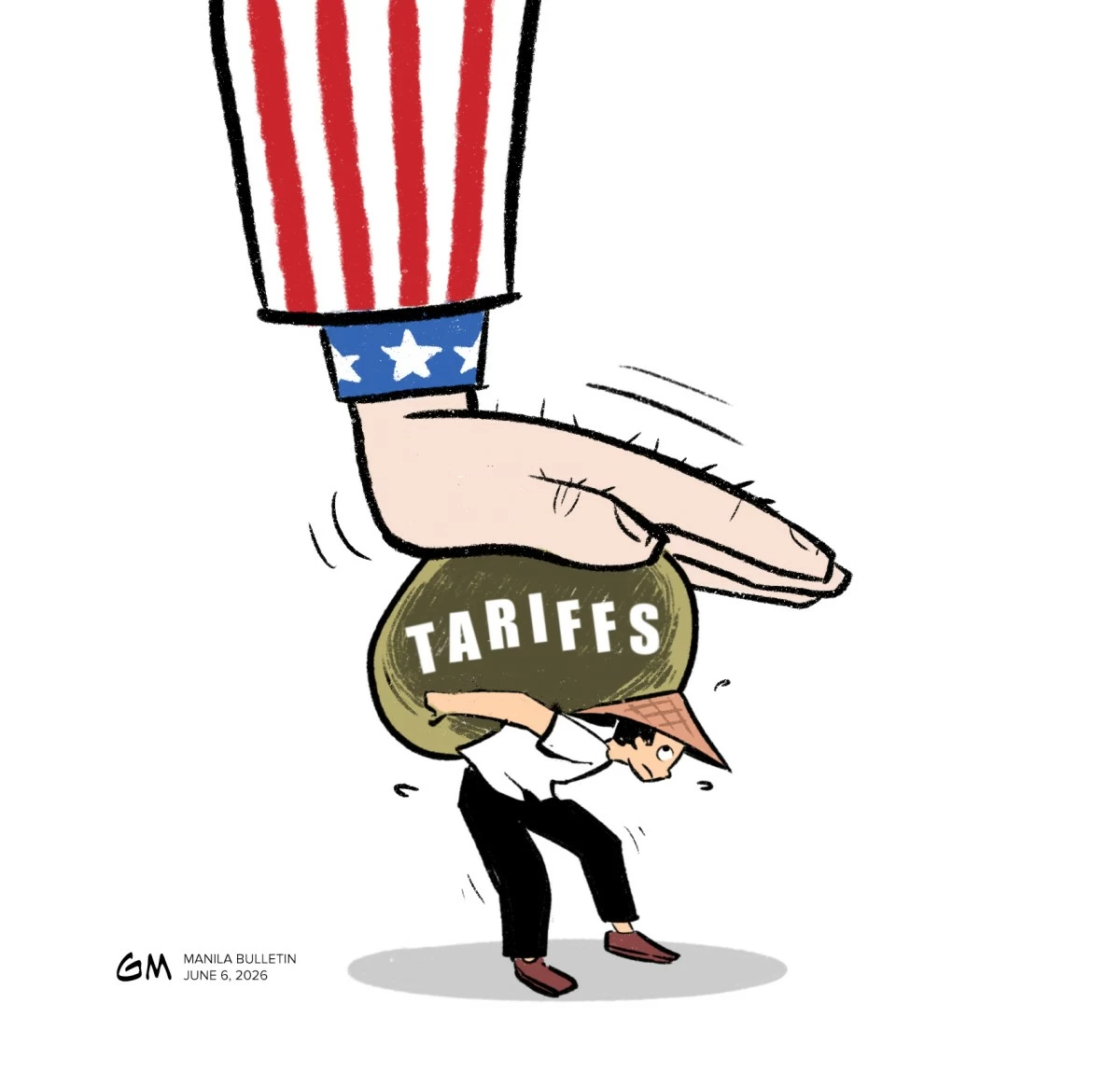
The relationship between Washington and Manila has found a steady rhythm lately, anchored by shared security concerns in the Pacific and the mutual desire to keep supply chains running smoothly. But we all know that trade diplomacy rarely follows a straight line. A new issue is emerging, not from territory or defense agreements, but from the fine print of global labor standards.
The Office of the United States (US) Trade Representative recently wrapped up an investigation into dozens of trading partners, concluding that 54 economies—including the Philippines—are failing to properly block imports made with forced labor.
Under Section 301 of the US Trade Act, Washington is now proposing an additional 12.5 percent tariff on several of Philippine exports.
The explanation from a US trade representative is that when countries do not enforce these import bans, it creates an uneven playing field, giving an artificial cost advantage to companies using exploitative practices.
To its credit, the Philippine government is not taking the accusation sitting down. The Department of Trade and Industry (DTI) quickly pointed out that Manila possesses a robust domestic legal framework against forced labor, grounded in constitutional protections and international commitments.
The lack of an explicit statutory ban on importing these goods, the DTI argued, should not be misread as tolerance for the practice. Meanwhile, local industry groups, led by the Philippine Exporters Confederation Inc. (Philexport), maintain that domestic exporters strictly adhere to global labor standards. They are asking a fair question: if there are specific violations, where exactly are they coming from?
The good news is that the sky is not falling just yet. The proposed duties are not final, and a comment period runs until early July. More importantly, Washington was careful to exempt the crown jewels of the bilateral trade relationship.
Top export commodities like semiconductor devices, nickel ores, and agricultural staples—including coconuts, bananas, and pineapples—are shielded from the potential tariffs. By leaving these vital sectors untouched, the US has signaled that this is a regulatory warning rather than an economic sledgehammer.
Yet, treating this as a minor bureaucratic hurdle would be a mistake. The global trade landscape is shifting. Western consumers and regulators are increasingly looking past the final product to examine how raw materials are sourced and how supply chains are managed.
For a developing economy like the Philippines, maintaining a reputation as a clean, compliant, and reliable manufacturing hub is essential to attracting longterm foreign investment.
Manila’s current defense—that its internal laws are strong even if its import restrictions are technically incomplete—is a reasonable legal argument, but it may not hold up forever in a changing global market.
If the problem is simply a missing piece of regulatory architecture, the path forward is clear. Rather than arguing over the fairness of the US report, Philippine lawmakers and trade officials should focus on closing the statutory gaps.
There is a window of opportunity before the July deadlines for constructive dialogue. The US should provide the specific data Manila is asking for, allowing local authorities to investigate and address any blind spots.
In return, the Philippines should show a concrete commitment to aligning its customs regulations with international expectations.
Trade disputes between close allies do not have to end in penalties. If handled with pragmatic diplomacy, this episode can serve as a helpful push to modernize the country’s trade rules, ensuring that Philippine goods remain competitive and welcome in the world’s largest market.