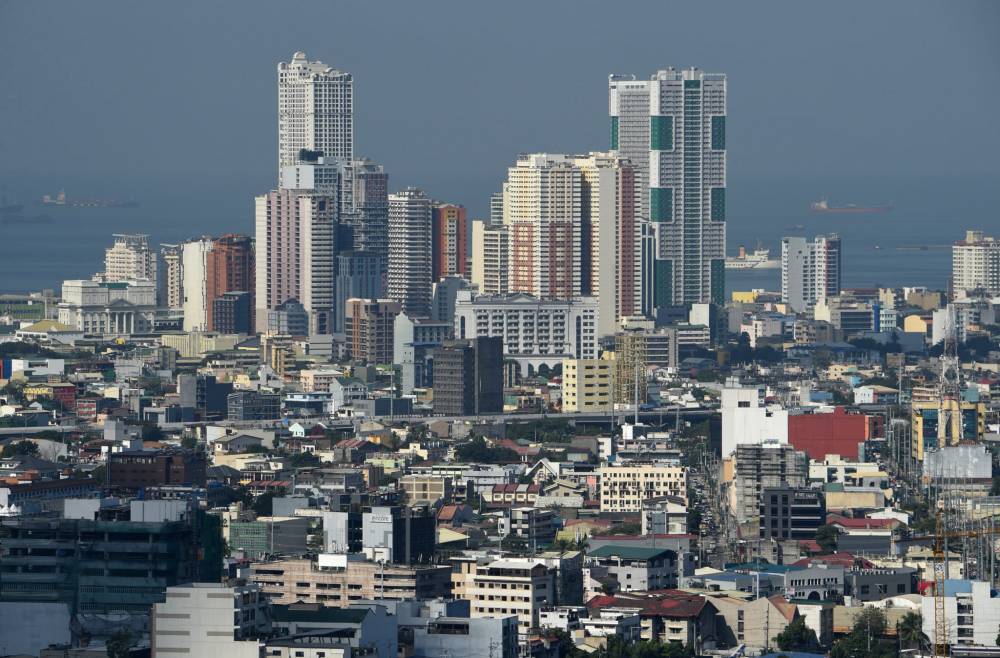
You plan to move to the Philippines? Wollen Sie auf den Philippinen leben?

There are REALLY TONS of websites telling us how, why, maybe why not and when you'll be able to move to the Philippines. I only love to tell and explain some things "between the lines". Enjoy reading, be informed, have fun and be entertained too!

Ja, es gibt tonnenweise Webseiten, die Ihnen sagen wie, warum, vielleicht warum nicht und wann Sie am besten auf die Philippinen auswandern könnten. Ich möchte Ihnen in Zukunft "zwischen den Zeilen" einige zusätzlichen Dinge berichten und erzählen. Viel Spass beim Lesen und Gute Unterhaltung!


Visitors of germanexpatinthephilippines/Besucher dieser Webseite.Ich liebe meine Flaggensammlung!

free counters

Total Pageviews

Thursday, July 16, 2026

How difficult is the German language?


 · 

No, it is not. WHAAT? Mostly this is a myth perpetuated by native speakers for several reasons (sometimes it’s just a sugar-coated way to acknowledge you are trying hard to speak German, sometimes is, as I said, a myth which is quite beneficial for them)… and by Mark Twain, as someone here already said :-)

The problem with German is that the first 10 to 20 lessons will be very hard: many peculiar things you will have to either memorise or understand, and then get used to them. Also, most people will find it difficult to just try and speak immediately. The bright side of it is that you can cover all the necessary grammar in 20 lessons (you will only need to learn a few more things along the road, but nothing scary at all) and be done with it…which is definitely NOT the case for English or Italian (the latter being a steady challenge). Patience, getting used to it (=practising), and finding the right method for you: these are the keys to learning German! I googled and I found the right learning curve for German:

I also gave some good pieces of advice here: Felicita Ratti's answer to How do fluent German speakers learn German? (I hadn’t thought of googling “German learning curve” while writing that answer… :-) )

Feel free to ask for some more advice! Das schaffst du schon! (you are gonna make it!)

PH remittance growth stayed at 4-year low in May


Ian Nicolas P. Cigaral

Money sent home by overseas Filipinos continued to post modest growth in May, underscoring the vulnerability of remittance flows as tensions from the prolonged conflict in the Middle East threaten to disrupt the livelihoods of migrant workers.

Cash remittances sent through banks rose 2 percent from a year earlier to $2.7 billion, according to data released by the Bangko Sentral ng Pilipinas (BSP). The pace matched April’s increase, leaving remittance growth at its slowest in four years.

In the first five months of the year, cash remittances totaled $14.1 billion, up 2.5 percent from a year earlier. That, however, remained below the BSP’s downwardly revised forecast of 2.7-percent growth for full-year 2026.

YOU HAVE THREE WISHES

By

 Klaus Döring

 -

THE “THREE wishes” is a classic storytelling motif where a magical being (like a genie or a fairy) grants a character three desires. It symbolizes the human desire for limitless power, while the limit of three emphasizes a moral lesson about greed, consequences, and the dangers of poorly thought-out desires.

The Folktale Warning: In traditional stories (such as “The Fisherman and the Jinni” or the Grimm Brothers’ “The Three Wishes”), the three wishes serve as a fable about human folly. Characters often squander their first wishes on foolish, impulsive desires. This usually leads to a negative consequence, requiring them to use their final wish to undo the mess they created.

On a literary level, three wishes align with the traditional three-act structure. The first wish introduces the goal, the second escalates the conflict, and the third provides a resolution or lesson.

Be careful what you wish for — it could reveal who you are, says Laura King of Southern Methodist University.

In a study published in the “Journal of Personality”, King administered a personality test to 405 college students, then asked them a simple question: “If you could have three wishes, what would you ask for?”

Responses ran the gamut, from the obvious (“to be healthy and happy”) to the impossible (“to have sex with Marilyn Monroe”) to the peculiar (“to eat Chinese food at every meal every day for the rest of my life”).

When examining these wishes and the people who made them, King discovered some interesting connections:

The most common wishes were for friends, happiness, health, marriage, money, success, self-improvement, and to help other people.

Although men’s and women’s wishes were generally similar, men were more likely to wish for sex and power, while women were more likely to wish for happiness, a better appearance, and better health.

Extroverted people often wished for happiness and positive feelings, and frequently included other people in their wishes.

Neurotic people wished to be more sociable and more emotionally stable — in other words, to be less neurotic.

“The chances of that wish coming true are practically zero,” says King, noting that personality traits are notoriously hard to change.

Those who were already satisfied with their lives were the most likely to believe that their wishes would come true.

When I was still a young boy, I was taught that there might be fairy creatures offering us those three free wishes. We should always be wise enough to think it over very well and select the best wishes for our very own.

Sure, there will always be classic stupidities regarding fairy-wishes. We are all human beings and don’t belong to the fairy category.

Your wish is my command! And, there is someone who wishes at first a strong health, and – sure, he or she receives it, because good fairies never hesitate. And now and then? Here he is, for example, the healthy man is like a boulder in the surf, but surrounded by a world of war, flames and so-called military conflicts. But this man is still alive and as fit as a fiddler. Why should he wish for a strong health?

Well, maybe we have to formulate our wishes for something more improved. But what? Discretion is the better part of valor. Let’s try it like a fairy-tale and ask for wealth, riches and abundance. These are the one and only things on earth, right?

With money we can travel around the globe, find friends, even in faraway distances, and we can do charities.

Well, and if we might become sick, maybe seriously sick, we must not worry. We can afford and finance the most affordable doctors and most updated hospitals to give us back our good health. And if not?

In many fairy tales, we can also find the one with unassuming manners, inconspicuous, poorly dressed-up, a little bit silly, mostly disregarded and easily to be overlooked. This guy has only one wish, such as eternal salvation and bliss with a little stool in heaven besides God. And guys, be sure, that he will get it, and, he is happy and very thankful. So far so good, it seems the simpleton has been the brightest.

It’s all right: three wishes and no one more. A different thing, isn’t it?

If all human beings on this entire globe could be all around happy – which means to say nobody must go hungry any more, nobody must be despairing, nobody must be worried about wars and catastrophes, and everybody could be able to enjoy health and happiness without bearing trials…yes, if…—then we wouldn’t need fairy-wishes.

Real life looks different. Real life is not a fairy tale. We need prayers and should be more respectful and friendly to each other.

Each one of us has his or her own three wishes. Me, too.

***

Comments, suggestions or questions? Email me: doringklaus@gmail.com or follow me on Facebook, LinkedIn or X – Twitter or visit www.germanexpatinthephilippines.blogspot.com or www.klausdoringsclassicalmusic.blogspot.com./PN

Humans make plans, but God guides their steps


Humans make plans, but God directs their steps. You can trust this divine GPS. You set your goals in your mind. However, the Creator lines up the path for you. To find the right way, start with prayer, seek wise counsel, and follow the peaceful nudge in your heart.

I am happy! Yes, I am! I found joy, freedom, and peace of mind when I discovered what I believe is the secret to a happy life after living in the Philippines as an expatriate for 28 years.

Think of a maze. You cannot see the exit from the start. You might guess which way to turn and hit a dead end. But God sees the whole maze from above. When you ask Him for help, He gently guides you around the walls to the exit. Proverbs 16:9 reminds you that a man plans his course, but the Lord directs his steps. Read more about this truth on Bible Hub. When you surrender your daily choices to God, you take the stress off your own shoulders. Trust that His plan is always better than yours.

I was brought up in a religious family and lived in a parish house until my 10th birthday. Our Christian life was rooted in a strong religious tradition. Though I was used to it, my attitudes were often very ungodly. Many times, I was prone to anger and did all kinds of unpleasant things to others. I gave more attention to worldly things until I became deeply immersed in what we call “worldly trends.” I did those things simply to enjoy life without caring about the people around me.

But then, suddenly, “someone” — let’s call Him GOD — intervened. He directed my path. I received many different challenges and tasks — especially when I decided to stay in the Philippines for good.

Sure, I have always been able to travel around the globe. But believe me, not every trip — or even every single day — was satisfying or successful.

Today, I am no longer surprised by the painful trials I suffered in the past. Instead of being surprised, I try to rejoice because I have learned that trials are meant to test your faith — perhaps even during the COVID-19 pandemic.

When I got the idea to write this piece, I rummaged through some very old books belonging to my late “Lola” — born in 1899! — and found a faded document that had more or less crumbled to dust. It was handwritten by an unknown Dutch soldier, apparently in mortal agony during his final battle in World War II; the document was dated November 1944. I would like to share it with you, my dear reader, because it also reflects my past — and perhaps yours, too:

“When I stopped my ungodly behavior, I learned to pray. But when I prayed, I asked for power to become popular, and He made me weak and taught me how to be obedient. When I prayed, I asked for health so I could do great things, and He gave me afflictions so I could do better things. When I prayed, I asked for riches and abundance, and He gave me poverty so I could become wise instead. When I prayed, I asked for strength to receive people’s glory and fame, and He gave me weakness to make me feel how much I need Him. When I prayed, I asked for everything needed for a wonderful life without problems and trials, living like a king, and He gave me LIFE!”

I didn’t receive anything I prayed for while living in the Philippines as an expatriate. But I received everything in time, when I no longer expected it. More or less against my own free will, all my unspoken and unutterable prayers have been answered. I am truly blessed.

That is also how I feel right now. I am what I am today, NOT BECAUSE I PRAYED FOR IT, but because all my unspoken prayers have been answered.

Humans think — God guides!

***

Email me at doringklaus@gmail.com; follow me on Facebook, LinkedIn, or X; or visit www.germanexpatinthephilippines.blogspot.com or www.klausdoringsclassicalmusic.blogspot.com.

Wednesday, July 15, 2026

Non-violence: A modeled behavior


By Dr. Jun Ynares
Published Jul 15, 2026 12:05 am | Updated Jul 14, 2026 06:12 pm
THE VIEW FROM RIZAL
We will take a break from the ongoing conflict in the local and international political arena in this week’s column. Instead, we will look at another violent hotspot that should concern us all and prompt us to pause and reflect.
We refer to the recent spate of violence involving young students which has shaken our nation to its core. In just days this June, we witnessed a 14-year-old in General Trias stabbing seven Grade 5 classmates, a stabbing at Cavite National High School, and most tragically, the school shooting in Tacloban where two Grade 9 students, aged 14 and 15, killed three fellow students and injured many more.
We believe these are not isolated anomalies but part of a disturbing pattern that demands our immediate, collective attention. Rather than mere crimes, these incidents are symptoms of deeper societal ailments.
This surge in youth violence does not appear to be unique to the Philippines; it is a worldwide phenomenon. Across the United States, school shootings have become a grim recurring tragedy, claiming young lives in places meant to be sanctuaries of learning. In Europe, Latin America, and parts of Asia, reports of bullying escalating into physical assaults, stabbings, and gang-related violence among adolescents fill news cycles.
According to UNICEF and UNESCO data, almost one in three students globally – a whopping 32 percent - has been bullied by peers at school at least once in the past month. Over 36 percent of learners experience a physical fight with peers, and nearly one in three has been physically attacked in the past year.
The World Health Organization, meanwhile, reports that around 193,000 homicides occur among youth aged 15 to 29 each year, accounting for 40 percent of total global homicides. In the Philippines, over 40 percent of learners aged 13 to 17 report experiencing bullying at school in a year.
More than ever, we are aware today that social media amplifies conflicts, violent video games and content desensitize young minds, and post-pandemic mental health crises have left many young people without adequate coping mechanisms. Economic pressures, family breakdowns, and exposure to real-world conflicts also contribute to a toxic brew.
The sad truth is this: when our children turn weapons on one another, it reflects an alarming erosion of empathy, patience, and constructive dialogue.
So, we ask: why are our young people resorting to violence?
Psychology and mental health experts say it often stems from unresolved grievances like bullying—as reportedly in the Tacloban case—or from feelings of powerlessness, alienation, and untreated trauma. Without skills to manage anger, frustration, or disputes, minor conflicts spiral into tragedy. Easy access to information on weapons via the internet, combined with portrayals of violence as a quick fix in entertainment, normalizes aggression.
There are observations that mental health support remains insufficient in many schools and communities. As a doctor, I know that unaddressed emotional wounds fester. We must remember that prevention must begin early, not after the blood of the young has been shed.
At the heart of the solution lies a fundamental truth: peace and non-violence are modeled behaviors. Children do not learn these values in a vacuum; they absorb them from the adults around them. Parents who shout, argue aggressively, or resort to corporal punishment teach that force resolves conflict. Teachers who humiliate students or use punitive discipline model the same.
Those who exercise leadership in various sectors are not to be spared from the blame. Let us admit it: public figures, politicians, media personalities, and community leaders who engage in divisive rhetoric or glorify toughness over dialogue reinforce the message that aggression wins. Even in our homes and barangays, how we handle disagreements—whether it's road rage, family feuds, or online spats—sets the example.
Our view is that we must consciously model the behavior we want our children to emulate.
The task is not an easy one. This calls on us to demonstrate patience, to practice active listening, empathy, and de-escalation in daily life. When we, adults, show that disputes can be resolved through calm conversation, compromise, and mutual respect, young people internalize these as viable paths.
Equally crucial is teaching the young peaceful modes of resolving disputes. Our education system must go beyond academics to instill emotional intelligence, conflict resolution skills, and a culture of peace. Peace education—already present in some curricula and initiatives—should be strengthened and made universal. We understand that some schools now implement peer mediation programs, in which trained students help resolve conflicts before they escalate.
We believe that our youth are not inherently violent; they are mirrors reflecting the society we have built—and the one we can still shape. That is why the responsibility to model peace cannot be delayed.
By modeling peace and deliberately teaching non-violent dispute resolution, we break the cycle of aggression. Let us choose, each day, to be the example our children can follow.
We owe our children safe schools and communities, hopeful futures, and the skills to navigate life’s challenges without harming others. Let us make that promise real by showing them peace in practice.
(The author is a Doctor of Medicine, an entrepreneur and the current mayor of Antipolo City, former Rizal governor, and DENR assistant secretary, LLDA general manager.Email: antipolocitygov@gmail.com)

Finding their voice far from home: Two Filipina artists making music in Toronto


Published Jul 14, 2026 04:15 pm

Whether in healthcare, hospitality, sports, business, or the arts, Filipinos continue to leave their mark around the world while carrying with them a deep sense of home.

In Canada, where one of the largest Filipino communities outside the Philippines has flourished, a new generation of artists is beginning to tell stories shaped by two worlds.

Among them are two young Filipina musicians from Cagayan now based in Toronto: NIYA and Shayne Carmel.   

Though still at the beginning of their careers, both artists are carving out distinct musical identities while proudly embracing their Filipino roots. Their latest releases may tackle different themes, but together they reflect the perspectives of young women navigating life, identity, and creativity far from the country where their stories began.

For NIYA, songwriting has always been deeply personal.

The emerging singer-songwriter describes herself as an artist guided more by feeling than certainty, creating songs from emotions, fleeting thoughts, and melodies before they take full form. Drawing inspiration from contemporary R&B, alternative pop, and atmospheric sounds, she has developed a style rooted in introspection rather than convention.

Her newest single, "Siya Na," grew out of experiences during her freshman year in university while taking Gender and Women's Studies.  

Confronted with discussions about patriarchy and sexism, NIYA began reflecting on her own experiences and those of the women closest to her. Those realizations eventually became the foundation of the song.

Instead of dwelling on frustration, "Siya Na" channels that emotion into empowerment.

The track encourages women to reject limitations imposed by society and embrace their strength, individuality, and voice. More than a personal statement, it becomes a reminder that resilience can emerge from difficult conversations.

While NIYA turns inward for inspiration, fellow Cagayana artist Shayne Carmel finds beauty in life's quieter contradictions.

Also based in Toronto, Shayne blends bedroom pop, indie pop, city pop, R&B, and hip-hop into a sound that reflects her wide-ranging musical influences. Once shy, she has steadily grown into a confident performer, bringing warmth and authenticity to every performance.

Her latest single, "Rain," captures an emotion familiar to many.  

Built around contemporary R&B with lo-fi textures and soulful pop influences, the song explores the curious feeling of finding comfort in something often associated with sadness. Through smooth vocals and reflective lyrics, Shayne transforms rainy weather into a metaphor for the emotional contradictions people experience every day.

Rather than portraying sadness as something to escape, "Rain" suggests that even life's gray moments can offer peace, nostalgia, and healing.

For both artists, music has become a way of making sense of their experiences while living thousands of kilometers from the Philippines.

Community preparedness


From our Opinion section

Community preparedness: Everyone's responsibility in disaster resilience

Every Filipino should know the hazards specific to his or her community, understand evacuation routes, prepare emergency supplies, and participate actively in drills and preparedness programs. Families should have emergency communication plans, while neighborhood organizations can organize volunteer response teams that complement the work of local authorities. Read more

Foreign Exchange Rates | July 15, 2026

 Foreign Exchange Rates | July 15, 2026