You plan to move to the Philippines? Wollen Sie auf den Philippinen leben?

There are REALLY TONS of websites telling us how, why, maybe why not and when you'll be able to move to the Philippines. I only love to tell and explain some things "between the lines". Enjoy reading, be informed, have fun and be entertained too!

Ja, es gibt tonnenweise Webseiten, die Ihnen sagen wie, warum, vielleicht warum nicht und wann Sie am besten auf die Philippinen auswandern könnten. Ich möchte Ihnen in Zukunft "zwischen den Zeilen" einige zusätzlichen Dinge berichten und erzählen. Viel Spass beim Lesen und Gute Unterhaltung!


Visitors of germanexpatinthephilippines/Besucher dieser Webseite.Ich liebe meine Flaggensammlung!

free counters

Total Pageviews

Monday, June 29, 2026

Are you impossibly talented?


SOME people are. I don’t belong to them. For sure.

Polymaths excel in multiple fields. But what makes a polymath – and can their cross-discipline expertise help tackle some of society’s most pressing challenges?

I came across an article by David Robson, author of The Intelligence Trap, which examines the common thinking errors of smart people, and the ways we can avoid them.

“In the late 1930s and early 40s, Hedy Lamarr was already the toast of Hollywood, famed for her portrayals of femme fatales. Few of her contemporaries knew that her other great passion was inventing. (She had previously designed more streamlined aeroplanes for a lover, the aviation tycoon Howard Hughes.)

Lamarr met a kindred spirit in George Antheil, however – an avant-garde pianist, composer and novelist who also had an interest in engineering. And when the pair realized that enemy forces were jamming the Allied radio signals, they set about looking for a solution. The result was a method of signal transmission called ‘frequency-hopping spread spectrum’ (patented under Lamarr’s married name, Markey) that is still used in much of today’s wireless technology.

It may seem a surprising origin for ground-breaking technology, but the story of Lamarr and Antheil fits perfectly with a growing understanding of the polymathic mind.

The research suggests we could all gain from spending a bit more time outside our chosen specialism.

Besides helping to outline the specific traits that allow some people to juggle different fields of expertise so successfully, new research shows that there are many benefits of pursuing multiple interests, including increased life satisfaction, work productivity and creativity.

Most of us may never reach the kind of success of people like Lamarr or Antheil, of course – but the research suggests we could all gain from spending a bit more time outside our chosen specialism.” 

Politics(Right)

In addition to starring on the silver screen, Hedy Lamarr, a famous polymath, also co-developed a transmission method that has carried into today’s technologies.

Let’s try to answer the question: What’s a polymath?

Even the definition of “polymath” is the subject of debate. The term has its roots in Ancient Greek and was first used in the early 17th Century to mean a person with “many learnings”, but there is no easy way to decide how advanced those learnings must be and in how many disciplines. Most researchers argue that to be a true polymath you need some kind of formal acclaim in at least two apparently unrelated domains.

One of the most detailed examinations of the subject comes from Waqas Ahmed in his book The Polymath, published earlier this year.

The inspiration was partly personal: Ahmed has spanned multiple fields in his career to date. With an undergraduate degree in economics and post-graduate degrees in international relations and neuroscience, Ahmed has worked as a diplomatic journalist and personal trainer (which he learnt through the British Armed Forces). Today, he is pursuing his love of visual art as the artistic director of one of the world’s largest private art collections, while also working as a professional artist himself.
Despite these achievements, Ahmed does not identify as a polymath. “It is too esteemed an accolade for me to refer to myself as one,” he says. When examining the lives of historical polymaths, he only considered those who had made significant contributions to at least three fields, such as Leonardo da Vinci (the artist, inventor and anatomist), as German language professor my idol Johann Wolfgang von Goethe (the great writer who also studied botany, physics and mineralogy) and Florence Nightingale (who, besides founding modern nursing, was also an accomplished statistician and theologian).

Maybe, right now, you think you’re a polymath? Not so fast. Waqas Ahmed argues that polymaths can only be those who made major contributions to at least three different fields.

From these biographies, and a review of the psychological literature, Ahmed was then able to identify the qualities that allow polymaths to achieve their greatness.
As you might expect, higher-than-average intelligence certainly helps. “To a large degree that facilitates or catalyses learning,” says Ahmed. But open-mindedness and curiosity were also essential. “So you’re interested in a phenomenon but you don’t care where your investigation leads you,” Ahmed explains, even if that pushes you to delve into unfamiliar territory. The polymaths were also often self-reliant – happy to teach themselves – and individualist; they were driven by a great desire for personal fulfillment.

Many children are fascinated by many different areas – but our schools, universities and then employment tend to push us towards ever greater specialization. Like any personality traits, these qualities will all have a certain genetic basis, but they will also be shaped by our environment. Ahmed points out that many children are fascinated by many different areas – but our schools, universities and then employment tend to push us towards ever greater specialization. So many more people may have the capacity to be polymaths, if only they are encouraged in the right way. 

Politics(Right)

Allow me to go back to my idol Goethe. While polymaths like Johann Wolfgang von Goethe indeed have higher-than-average intelligence, curiosity is essential for anybody looking to broaden their specialisations.

Nobel Prize-winning scientists are about 25 times more likely to sing, dance or act than the average scientist.

As David Epstein has also reported in his recent book Range, influential scientists are much more likely to have diverse interests outside their primary area of research than the average scientist, for instance. Studies have found that Nobel Prize-winning scientists are about 25 times more likely to sing, dance or act than the average scientist. They are also 17 times more likely to create visual art, 12 times more likely to write poetry and four times more likely to be a musician.

It is telling, for instance, that Antheil had previously worked on scores involving synchronized self-playing pianos, and together he and Lamarr drew on the mechanism of those instruments to come up with their anti-jamming device.
Allow me and David Robson to ask you if you feel tempted to live a more polymathic life. Ahmed suggests that you can use your time more efficiently to make space for multiple interests.

There is now a growing recognition that, when concentrating on any complex endeavour, the brain often reaches a kind of saturation point, after which your attention may fade and any extra effort may fail to pay off. But if you turn to another, unrelated activity, you may find that you are better able to apply yourself. Shifting between different kinds of tasks can therefore boost your overall productivity.
Switching between different tasks, such as Albert Einstein using music for scientific inspiration, can boost overall productivity and creativity.

Wannabe polymaths can use this to their advantage by alternating between their interests – ensuring that they are using their brains at maximum efficiency in each domain, while avoiding wasted effort after they have reached that cognitive saturation point.

Albert Einstein, who was an accomplished violinist and pianist as well as a physicist, apparently used this approach. According to his son and daughter, he would play music whenever he faced an intractable problem, and would often finish the performance by saying, “There now, I’ve got it”. It was a much better use of his time than continuing to fruitlessly agonize over maths or physics.

Yes, think it over, we have many advantages compared to the polymaths of the past. The internet, after all, is now full of free online courses in many different disciplines, and it is easier than ever to hook up with an expert teacher through apps like Skype even if they are based hundreds of miles away – as David Robson correctly said.

###

I AM THE LIGHT


When you say "I am the light," you echo one of the most famous statements in the Bible. Jesus Christ declared, "I am the light of the world". He promised that anyone who follows Him will not walk in darkness, but will have the light of life.

You are echoing a powerful and historic declaration. Whether you are invoking the iconic biblical statement made by Jesus in Bible Gateway, expressing a sense of personal awakening, Got Questions, or exploring a spiritual philosophy of enlightenment, embracing that energy is all about bringing warmth, clarity, and guidance to your surroundings.

We can't see our future, direction, or destination, but Jesus can. Like the lighthouse guided the ship, Jesus directs us toward God's light. The light of Christ guides us through the darkness of sin, life, and struggle both spiritually and literally.

The validity of Jesus' testimony has been explained in John 8:12-30: "I am the light of the world; whoever follows me will never walk in darkness, but will have the light of life."

To be the light means in times of darkness you offer hope, encouragement, kindness and compassion. In times where others are struggling you offer a way to help them to regain their glow and to shine. To see the good and the beautiful - it is in this that truth is re-established.

Light is the symbol of joy and of life-giving power, as darkness is of death and destruction. Therefore, in religion, light is often associated with immortality and a higher power.

As I look around, I find many of our so-called leaders, who demand us to follow them, and I hope we open our eyes and minds before we blindly follow them blind.

"I am the light of the world!" Admittedly, this sounds for many people a reconditioned exuberance while trembling to what might happen if they are not able to pay the next electric bill. 

I am also pretty sure that this year Christmas lights are not glowing as the previous years: I am not so much talking about the illuminated advertisements all over the city. I am referring to the private lights that usually brighten our homes during the Yuletide season. It's the deep sadness and depression feelings of the people around us. Maybe this Christmas celebration is not a celebration anymore in times of a new abnormality.

If we manage to overcome the "Follow-me-I'm-the light"-phonies, and after we manage to find solutions in paying our electric bills, we then sit still in our houses and plan to light a candle for our prayers.

The other side of the season should make us remember that we should never hesitate to show our good hearts even amid a crisis by rendering services to others with passion and enthusiasm. There is nothing really stronger than from the heart of a volunteer - as several UP interns voiced out many years ago.

I am the light of the world. Let's try putting this concept into our minds, hearts and souls. I am pretty sure we'll not walk in darkness especially during this enlightening season and the dramatic cuts in our daily life because of this pandemic.

Across cultures, light is an ancient symbol of understanding and intellectual thought: it is the opposite of ignorance, or darkness. Almost universally, the dark is considered to be frightening and sinister, associated with things we cannot understand. Light is said to conquer darkness and to bring order out of chaos.

"Made His light shine in our hearts." (2 Co 4:6).


Arresting social media


Fatima Gimenez

How can I help you? A mother of four complained that her 16-year-old son was having trouble sleeping.

To create a more relaxed interchange, I started by asking what her typical day was like. She shared that, as a single parent and with children to provide for, she always has to leave early for work. Her son has chosen to live with a sibling and attends school from 1 p.m. to 7 p.m., but reportedly only gets to sleep by 12:30 a.m. He then volunteered the reason himself: he has become so attached to his cell phone. This eventually led into a discussion on his school performance. His grade in Math was in the line of eight, but he struggles with his English comprehension because he felt he was “mahina” and forgets things easily. When asked where this forgetfulness was coming from, he quickly replied that it was probably from watching too much TikTok. While I was dismayed, at least there was some degree of self-awareness.

From his story, one doesn’t have to do an in-depth analysis to connect the dots. From constant and prolonged social media use, there is sleep disruption, translating into a decrease in concentration and lack of focus, leading to a decline in academic performance.


ONG LIVE, LORD SAN PEDRO APOSTLE


🎉
Davao Archbishop Most Rev. Romulo Valles presided the pontifical mass or holy mass for the 178th anniversary of the feast of San Pedro Cathedral today at 9:30 am, June 29.
via | John Ryan Calonia, GMA Super Radyo Davao


All reactions:
47

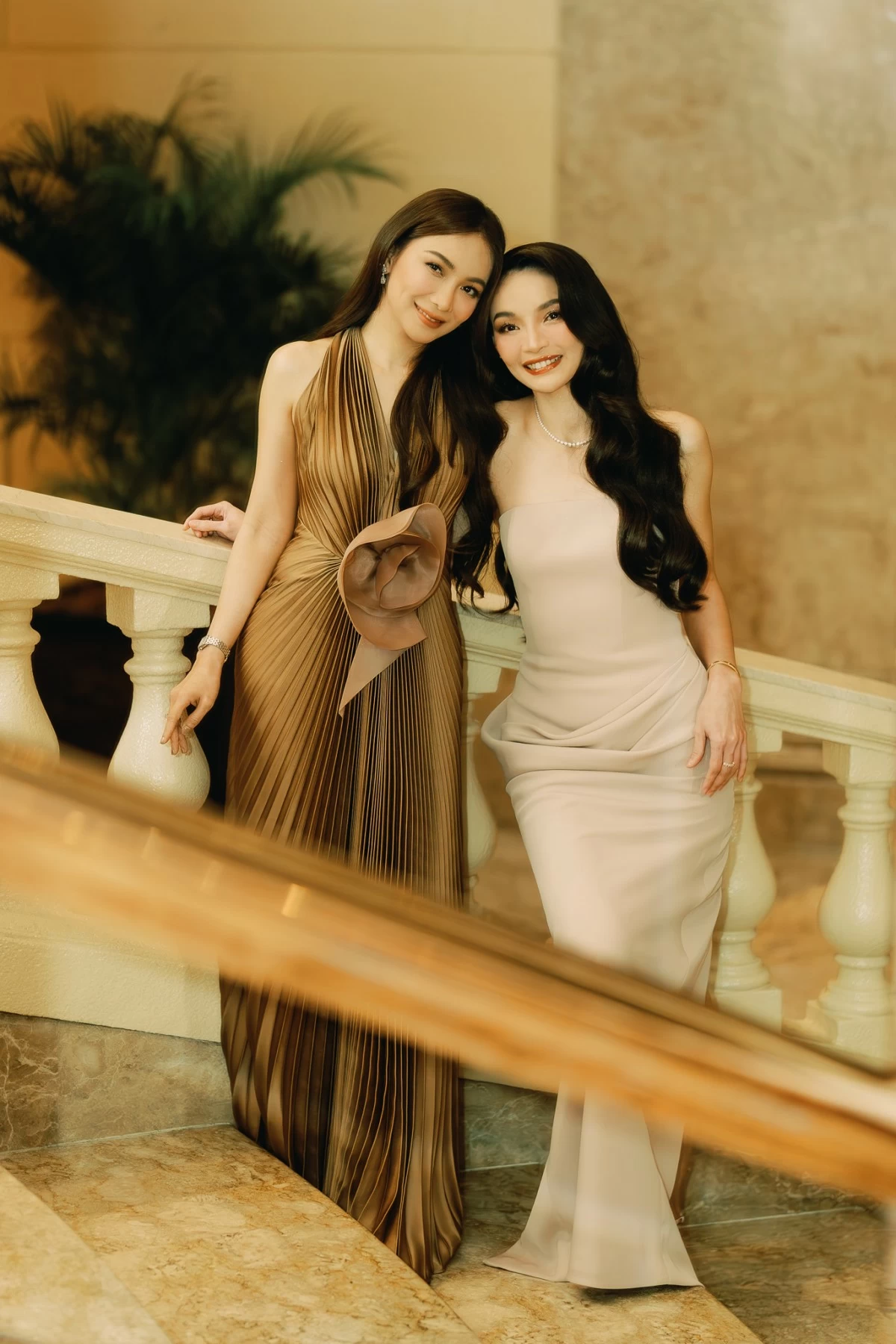
Dr. Anne Caoile and Dr. Marj Salazar of Elyse Aesthetics on beauty, confidence, and self-love


Love looks good on you

By Manila Bulletin Newsroom  
The story of Elyse Aesthetics is a story of love, from the relationship of Dr. Anne Caoile and Dr. Marj Salazar, all the way to the care that they extend to their clientele, and the self-love that they promote through their work. In an interview with the two, we were able to get a deeper understanding of the emotional core that drives Elyse Aesthetics.
Before Dr. Anne and Dr. Marj became the founders of Elyse Aesthetics, they were acquaintances who met once before drifting apart. Dr. Anne recalls that they crossed paths again years later, coincidentally practicing in the same field of medicine.
"Something sparked during that reunion that hadn't been there before. Or maybe it had always been there, and we finally had the space to recognize it. Everything just felt right. The more we talked, the more we realized how deeply aligned we were, in our values, our standards, and the way we thought about medicine and beauty," Dr. Anne reminisced.
Dr. Marj recounted, “And our skills were almost poetically complementary. Anne wanted to operate; I was drawn to skin and injectables. She would sculpt structure, I would refine and restore. Both of us were driven by the same thing: a desire to give our patients the very best of what we had, our training, our artistry, our genuine care.”
With that, they started Elyse Aesthetics together. As a young WLW (women-loving-women) couple in the beautician industry, they’ve faced many challenges just by simply existing, and the influence of that experience bleeds through to their motivations and what they do.
(L-R) Dr. Marj Salazar, CEO Co-Founder  Elyse Aesthetics Medical Inc. and Dr. Anne Caoile COO, Co-Founder Elyse Aesthetics Medical Inc. (Photos: Elyse Aesthetics)
(L-R) Dr. Marj Salazar, CEO Co-Founder Elyse Aesthetics Medical Inc. and Dr. Anne Caoile COO, Co-Founder Elyse Aesthetics Medical Inc. (Photos: Elyse Aesthetics)
The two agreed, “When you’ve had to fight for the right to simply exist as you are, to love who you love without apology, beauty takes on a completely different meaning. “Beauty Set Free” isn’t a tagline, it’s what we lived. Every patient who walks through our doors deserves to feel that we see them, that we’re not here to reshape them into someone else’s idea of beauty. We’re here to help them feel more like themselves.”
Their philosophy is simple: aesthetic treatments should help people feel more at home in their own bodies rather than transform them into someone else. It is a shift they have increasingly noticed among their clients. Instead of arriving with photos of celebrities as references, many now bring old photos of themselves, hoping to rediscover the version of themselves they once recognized and loved.
“That shift is everything to us. Our entire approach is built around enhancement that honors the individual. We won’t chase a trend that doesn’t serve a patient’s unique anatomy and character. The best result is one where no one can tell you had anything done, they just think you look well-rested, confident, and alive.”
Their commitment to this philosophy is evident in the way they encourage clients, and anyone considering aesthetic enhancements, to pause for thoughtful self-reflection before pursuing any treatment.
“My advice: before you pursue any treatment, ask yourself, “Am I doing this because I genuinely want to feel more like myself, or am I trying to look like someone else?” One of those is self-care. The other is self-erasure. And no treatment in the world will fix the latter.”
When asked about what messages they would like to share with the LGBTQ+ youth regarding confidence and beauty enhancements, they had this to say: “We’ll be honest with you, for a long time, we were terrified of being seen. Not just as a doctor, not just as a business owner, but as a woman who loves women. And what we know now, having finally chosen to live openly and honestly, is that nothing, no treatment, no achievement, no amount of external polish, compares to the freedom of being truly known and truly yourself.”
It all comes down to the beauty that’s present within the eye of the beholder, and the beholder is you, looking in the mirror. “So when we say “Beauty Set Free” at Elyse, we mean it in the deepest possible way. We’re not just talking about your face. We’re talking about your whole self. To every LGBTQ+ young person who is still hiding, still waiting for permission to exist fully, I see you, because I was you. Whether you ever walk into a clinic or not, that liberation is available to you. Choose enhancements, or don’t, but whatever you do, do it from a place of love for yourself, never from fear of who you are. You are already more than enough. Everything else is optional.”
Beauty comes down to love and care. It is found in the relationships we nurture, in the kindness we show ourselves, and in the intention behind how we choose to present ourselves to the world. It may sound paradoxical, but both can be true: there is always room to grow, while recognizing that you have always been enough. (Nathan Marcos)
The author, Nathan Marcos, is a student at Ateneo de Manila University and is currently an intern at the Manila Bulletin.