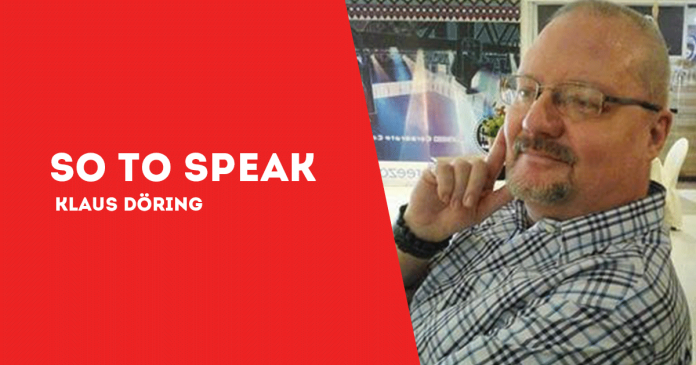
You plan to move to the Philippines? Wollen Sie auf den Philippinen leben?

There are REALLY TONS of websites telling us how, why, maybe why not and when you'll be able to move to the Philippines. I only love to tell and explain some things "between the lines". Enjoy reading, be informed, have fun and be entertained too!

Ja, es gibt tonnenweise Webseiten, die Ihnen sagen wie, warum, vielleicht warum nicht und wann Sie am besten auf die Philippinen auswandern könnten. Ich möchte Ihnen in Zukunft "zwischen den Zeilen" einige zusätzlichen Dinge berichten und erzählen. Viel Spass beim Lesen und Gute Unterhaltung!


Visitors of germanexpatinthephilippines/Besucher dieser Webseite.Ich liebe meine Flaggensammlung!

free counters

Total Pageviews

Tuesday, June 30, 2026

BPI to waive InstaPay, PESONet fees permanently starting July 1


BPI to waive InstaPay, PESONet fees permanently starting July 1

BPI President Jose Teodoro K. Limcaoco

Ayala-led Bank of the Philippine Islands (BPI) will permanently eliminate transaction fees for digital fund transfers via InstaPay and PESONet starting July 1, following the central bank's lifting of its cap on electronic payment pricing. Read more

Why do people in the Philippines rarely have a dishwasher at home?


In the Philippines, an automatic dishwasher isn't a time-saving luxury. It's a high-wattage paperweight that is completely useless against the cement-like grip of day-old rice.

The most immediate factor behind its absence is the deeply ingrained chore distribution. Many middle-class and upper-class families employ a kasambahay (domestic helper) whose duties include cooking, cleaning, and washing dishes. In households without hired help, dishwashing is the default chore universally assigned to children. Buying an expensive machine to automate a task already handled efficiently by a helper or a family member makes little economic sense.

Compounding the cost is the price of power. The Philippines has some of the highest electricity rates in Asia. Dishwashers rely on internal water heaters and drying coils that draw significant wattage. Because many families are highly conscious of their electric bills—often opting for electric fans over air conditioning to save money—running a high-wattage appliance just to clean plates is widely viewed as an unnecessary luxury.

Kitchen design also plays a major role. Many Filipino homes utilize a two-kitchen setup. The indoor kitchen is a showpiece used for light prep and serving. The actual heavy-duty frying, boiling, and butchering happens in a "dirty kitchen," which is often located outside or in a separate, heavily ventilated area. Installing a high-end appliance requiring dedicated plumbing and electrical lines in a semi-outdoor, heavily trafficked cooking space is highly impractical, and the indoor kitchen rarely sees the messy pots that would warrant a machine.

Finally, the dietary habits of the Philippines render dishwashers ineffective. Filipino cuisine relies heavily on rich stews and thick, sticky sauces like soy sauce, vinegar, and oil. Once a meal is over, deep woks used for frying build up stubborn layers of grease, while any leftover rice aggressively adheres to plates. Modern dishwashers excel at sanitizing and rinsing, but they consistently struggle with the abrasive scrubbing required to dislodge these heavy residues. Hand-washing remains the only reliable way to get the dishes clean.


Music’s Impact: Emotions, Brain, and Culture


By Klaus Döring

Why is Mozart’s music good for the brain?

A study found that subjects who listened to Mozart showed significantly increased spatial reasoning skills for at least 10 to 15 minutes. This finding led crèches in the United States to start playing classical music to children.

During my high school years, I discovered that listening to Mozart was indeed helpful.

The Mozart effect is the theory that listening to Mozart’s music can induce a short-term improvement in the performance of certain cognitive tasks. Researchers found that listening to Mozart’s music enhanced word memory across positive, negative, and neutral words.

One of the most persistent myths in parenting is the so-called Mozart effect, which claims that listening to music by Wolfgang Amadeus Mozart can increase a child’s intelligence.

Claudia Hammond wrote about it in 2013: “It is said that classical music could make children more intelligent, but when you look at the scientific evidence, the picture is more mixed.”

You have probably heard of the Mozart effect. It’s the idea that if children or even babies listen to music composed by Mozart, they will become more intelligent. A quick internet search reveals plenty of products to assist you in this task. Regardless of your age, there are CDs and books to help harness the power of Mozart’s music, but when it comes to scientific evidence that it can make you more intelligent, the picture is more mixed.

After a short period, I sought more and suddenly “Master” Ludwig van Beethoven stepped into my musical life: “Dadadadaan…”

I strongly agree with François Mai, who wrote: “Beethoven was the first of the Romantic period composers who dominated classical music during the 19th century. He himself was a passionate man who wore his feelings on his sleeve. He had episodes of depression accompanied by suicidal ideas and rarer episodes of elation with flights of ideas. The latter are reflected in some of his letters. He had a low frustration tolerance and at times would become so angry that he would come to blows with others such as his brother Carl, or he would throw objects at his servants. Although he never married, he had several affairs, including one with a married woman who has come to be known to posterity as ‘the Unknown Beloved.’ To her, he wrote three love letters filled with affection and feeling. He much enjoyed wine, which resulted in hepatic cirrhosis that caused his premature death at the age of 56.”

This moodiness is reflected in his music. The “Marches Funébres” of his Third Symphony (Eroica) and the Piano Sonata, op. 26, no. 12, are poignant and powerful portrayals of grief and bereavement. The final movement of the String Quartet, no. 6, op. 18 (La Malinconia), has sudden and alternating changes of tempo and rhythm that depict, in musical terms, the mood changes that occur in bipolar disorder. The pace and fortissimo dynamics of both his Rondo a Capriccio for piano, op. 129, and the storm movement of his Sixth Symphony (Pastoral Symphony) beautifully (or perhaps one should also say fearfully) display anger and agitation.

Beethoven’s and my moodiness remain the same to this day.

Over the last 50 years, I have met most of my classical masters. This could be a never-ending story. My passion for music is a part of my life—maybe the main part.


The Daily Guardian is a renascent Iloilo-based publishing firm and media outfit with bureaus across Western Visayas and beyond. Led by Iloilo's most respected journalists, we pledge to tell the Ilonggo story as seen through the various lenses of society so that every side may be told.

BUREAUS:KaliboBoracayRoxasBacolodAntiqueGuimarasManila

Der Albtraum aller Reisenden: Millionen Gepäckstücke verschwinden Jahr für Jahr für immer spurlos


Der neue Bericht von Sita: Im vergangenen Jahr gingen 24 Millionen aufgegebene Koffer verloren, wurden beschädigt oder zu spät ausgeliefert. Veraltete Flughäfen spielen bei den Problemen eine Rolle.

Im vergangenen Jahr sind an Flughäfen weltweit täglich 2.500 Gepäckstücke spurlos verschwunden und nie wieder aufgetaucht. Verloren irgendwo (oder von irgendwem mitgenommen), nachdem sie von den Passagieren am Check-in-Schalter aufgegeben und für den Frachtraum bestimmt worden waren.  

Content-Partnerschaft

Dieser Artikel von Leonard Berberi entstand in Kooperation mit Corriere della Sera.

Hinzu kommen jene, die verspätet ausgeliefert oder beschädigt wurden, mehr als 63.000 pro Tag. Das sind einige der interessantesten Daten aus der neuen Ausgabe des Sita-Berichts „Baggage IT Insights“, erstellt von der technologischen Organisation des Luftverkehrs.   

Roter Koffer mit einem „Lost“-Aufkleber am Flughafen
Ein verloren gegangener Koffer sorgt für viel Stress und Ärger. © IMAGO/Maksym Yemelyanov

Die gute Nachricht im globalen Maßstab ist, dass die Quote fehlgeleiteten Gepäcks im Jahr 2025 gegenüber dem Vorjahr um fast ein Viertel gesunken ist und nun bei 4,9 pro tausend beförderter Passagiere liegt. Das gesamte Volumen der „fehlgeleiteten“ Trolleys sank um 19 Prozent, von 30 auf 24 Millionen. Das sind die niedrigsten jemals verzeichneten Werte außerhalb der Pandemiezeit, als der Einbruch des Verkehrs die Flughäfen schlichtweg geleert hatte.

Die schlechte Nachricht für die Europäer ist, dass der Kontinent als problematischste Region herausragt, mit fast 12 Millionen „fehlgeleiteten“ Koffern. Die Hälfte der persönlichen Gegenstände wird also hierzulande verloren oder verspätet ausgeliefert, mit einer Quote von 10,5 je tausend Reisenden. Wo? Vor allem auf internationalen Flügen. Es sei daran erinnert, dass es sich um Trolleys handelt, die für den Frachtraum bestimmt sind, nicht um Handgepäck in der Kabine.   

Historische Entwicklung der Gepäckprobleme und finanzielle Dimension

Zurück zum weltweiten Bild: Der Rückgang ist noch signifikanter, wenn man ihn in historischer Perspektive betrachtet: 2007 lag die Quote bei 18,9 fehlgeleiteten Gepäckstücken pro tausend Passagiere. In fast zwanzig Jahren hat die Branche diese Zahl nahezu auf ein Viertel reduziert, obwohl sie doppelt so viele Passagiere befördert. Die Gesamtkosten sind entsprechend um 17 Prozent gesunken, von 7,7 auf 6,3 Milliarden Dollar. Ein positives Ergebnis, das dennoch eine Summe in industriellen Dimensionen auf dem Tisch lässt.

Staying calm amid life’s storms


By Fr. Roy Cimagala

Chaplain

Center for Industrial Technology and Enterprise (CITE)

Talamban, Cebu City

Email: roycimagala@gmail.com


THAT’S what we can learn from that gospel episode about Christ’s disciples caught in a storm while in the middle of the sea. (cfr. Mt 8,23-27) They, at first, were gripped with fear, a very understandable reaction. 


And when they noticed Christ simply sleeping in the boat, they woke him up, expressing their fear. That’s when Christ simply stood up and calmed the turbulent sea, leaving them greatly astonished. But Christ faulted them for their lack of faith.


Yes, we too can easily be frozen in fear when we encounter the different forms of life’s storms. But like Our Lord’s disciples, we should just go immediately to him and ask for his help. And to be sure, he will always be there to help, but maybe in ways that may escape our understanding. In this, we should not be surprised and start to loosen our faith in God’s powerful and wise ways.


There’s really no reason to be too worried and anxious when we encounter some difficulty in our life. In fact, we have every reason to be confident and at peace, focused on what we are supposed to do. And that’s because we are always in God’s hands.


Whatever situation we may be in, we can be sure that God will always provide for what is truly needed by us, and it may not be what we want. We just have to trust him completely for he knows better than we do, and what we want may not be what we need. It may not even be what is good for us.


God always knows what to do in any situation we may find ourselves in. He may allow some evil to come to us, an evil that can do us no harm unless we let it, but God knows how to draw good from evil.


Ours is simply to trust God completely, and out of that trust, we should always feel confident and courageous to do what we are supposed to do. We should not waste our time lamenting and feeling like a victim, or wallowing in doubts, passivity and self-pity. 


We have to remove ourselves from that state mentioned by St. Paul in his Letter to the Ephesians: “children tossed to and fro and carried about with every wind of doctrine, by the cunning of men, by their craftiness in deceitful wiles.” (4,14) We have to keep going. There are a lot of things to do.


Yes, there will always be challenges, problems, difficulties that humanly speaking may be impossible for us to tackle. But as long as we have trust in God, we can sincerely echo St. Paul’s words: “I can do all things in him who strengthens me.” (Phil 4,13) These words have been verified to be true in the lives of all the saints, especially the martyrs.


It’s important that we be confident and at peace always, because that would put us in the proper condition to do the things we are supposed to do. It will make us bold and courageous, fruitful and productive.


It is a confidence that is not presumptuous. It goes together with prudence, discretion and tact. It is meek and humble, not pompous, arrogant and vain. It reassures and inspires people. It would make us credible in our witnessing to Christ’s saving message. 


It is a confidence that is both in heaven and on earth. It happily blends eternity and time. It is not simply theoretical. It is also realistic and practical.


THE WORRIER TAKES IT ALL

“THE WARRIOR takes it all” reflects a mindset of total commitment, where a warrior (or a “Warrior of Light”) embraces every challenge as an opportunity to learn, grow, and act, rather than acting as a victim of fate. This perspective emphasizes living with absolute discipline, turning obstacles into stepping stones, and accepting one’s life — challenges and all — with humility and purpose.

“The warrior takes it all” is a clever twist on the famous song title of ABBA – The Winner Takes It All. It perfectly captures how worry “takes over” your mind and steals your peace. Everyone worries, but letting a specific concern or anxiety rule your day does not help you win or feel better.

Worries, doubts, and anxieties are a normal part of life. It’s natural to worry about an unpaid bill, an upcoming job interview, or a first date. But “normal” worry becomes excessive when it’s persistent and uncontrollable. You worry every day about “what ifs” and worst-case scenarios, you can’t get anxious thoughts out of your head, and it interferes with your daily life.

Constant worrying, negative thinking, and always expecting the worst can take a toll on your emotional and physical health. It can sap your emotional strength, leave you feeling restless and jumpy, cause insomnia, headaches, stomach problems, and muscle tension, and make it difficult to concentrate at work or school.

You may take your negative feelings out on the people closest to you, self-medicate with alcohol or drugs, or try to distract yourself by zoning out in front of screens.

Chronic worrying can also be a major symptom of Generalized Anxiety Disorder (GAD), a common anxiety disorder that involves tension, nervousness, and a general feeling of unease that colors your whole life.

If you’re plagued by exaggerated worry and tension, there are steps you can take to turn off anxious thoughts. Chronic worrying is a mental habit that can be broken. You can train your brain to stay calm and look at life from a more balanced, less fearful perspective.

Really? Do you let the worrier take over your life and your present situation? A pessimist, a worrier, an alarmist, a license dodger, name it whomever you like. Call some, they are all between us. Maybe her or she or even you?

We hardly count our blessings. We enjoy counting our crosses. Instead of gains, we count our losses. We don’t have to do all that counting – computers do it for us. Information is easily had. Especially during these terrible times of pandemic.

Just remember this: Opportunity doesn’t just knock – it jiggles the doorknob. And “your friend” – the worrier, is with you day and night, at every corner, following your every step. Complaining and grumbling are good excuses, right?

We have time and opportunities to do almost anything. So why haven’t we done it? We have the freedom of bondage or restraint, every one of us in his or her very special unique way – but we’re still our old inferior selves.

The job is boring. Even at the present home office. I don’t get a good job. The house is an unpleasant mixture of tidy and dirty things. It’s a mess. I’m not in the mood to arrange my garden. I can’t afford a gardener. That’s life. How sad. No, it’s not my fault; or course not.

The whole world is an awful place filled with dreadful and horrible negativism. Right now because of the pandemic. Yes, I confess, I’m also surrounded by many worriers who put their fears into me. Politicians, i.e., many times love to search for some grave alarm that will cause individuals to abandon their separate concerns and act in concert, so that politicians can wield the baton. Calls to fatal struggles and fights are forever being sounded.

The overbearing person who tyrannizes the weak, who wants to dominate and to bluster, is simply nothing else than a worrier who claims to be a friend. But he or she isn’t. Really not! The bullying of fellow citizens by means of dread and fright has been going on since Paleolithic times. The night wolf is eating the moon. Give me silver and I’ll make him spit out.

Well, when will we start counting our courage and not our fears, or enjoy instead of our woe?

Worrying itself is pointless. Of course, no society has achieved perfect rules of law, never-ending education or unique responsible governments. Let’s seek out the worries but avoid the worriers because they try to avoid liberty.

If you are still worrying right now about something, try to read Jeremiah 29:10-14 or Revelation 21:1-8, just to mention these two. It works. And in my opinion: Let Jesus take over.

It is important to note that while this phrase can describe an intense, focused, and disciplined life, it is sometimes confused with the lyric “the winner takes it all” from the ABBA song.

No, I don’t give up. And you shouldn’t give up too!

***

Email me: doringklaus@gmail.com or follow me on Linkedin Facebook or X – Twitter or visit www.germanexpatinthephilippines.blogspot.com or www.klausdoringsclassicalmusic.blogspot.com./PN