You plan to move to the Philippines? Wollen Sie auf den Philippinen leben?

There are REALLY TONS of websites telling us how, why, maybe why not and when you'll be able to move to the Philippines. I only love to tell and explain some things "between the lines". Enjoy reading, be informed, have fun and be entertained too!

Ja, es gibt tonnenweise Webseiten, die Ihnen sagen wie, warum, vielleicht warum nicht und wann Sie am besten auf die Philippinen auswandern kรถnnten. Ich mรถchte Ihnen in Zukunft "zwischen den Zeilen" einige zusรคtzlichen Dinge berichten und erzรคhlen. Viel Spass beim Lesen und Gute Unterhaltung!


Visitors of germanexpatinthephilippines/Besucher dieser Webseite.Ich liebe meine Flaggensammlung!

free counters

Total Pageviews

Sunday, September 27, 2026

๐๐š๐ฆ๐ฎ๐ฆ๐ฎ๐ง๐ ๐š ๐ง๐š ๐ฌ๐ข๐ฅ๐š… ๐ข๐ค๐š๐ฐ, ๐ค๐š๐ข๐ฅ๐š๐ง ๐ฌ๐ฎ๐ฌ๐ฎ๐ง๐จ๐?

 Garden Bloom


๐๐š๐ฆ๐ฎ๐ฆ๐ฎ๐ง๐ ๐š ๐ง๐š ๐ฌ๐ข๐ฅ๐š… ๐ข๐ค๐š๐ฐ, ๐ค๐š๐ข๐ฅ๐š๐ง ๐ฌ๐ฎ๐ฌ๐ฎ๐ง๐จ๐?
• American Lemon Seedling = mabilis mamunga
• Kahit terrace o paso lang, pwede!
• 1–2 years lang, may sariling bunga ka na
• Perfect para sa urban gardeners
I-click “Send Message” habang may promo pa!
No photo description available.. No photo description available.. No photo description available.. No photo description available.. No photo description available.
Garden Bloom

To eliminate hepatitis B by 2030, we must consider a people-centred approach


By MBrand

At the State of the Nation Address (SONA) in July 2026, President Ferdinand Marcos Jr. outlined bold commitments to advance Universal Health Care (UHC) in the Philippines. From expanding preventive health benefit packages to broadening financial access to essential outpatient medicines, the administration signaled a renewed resolve to build a healthier nation. Among the most critical battlegrounds in this UHC roadmap is tackling a silent yet deadly public health threat: hepatitis B.
The gravity of this challenge cannot be overstated. The World Health Organization’s (WHO) Global Hepatitis Report 2026 delivers a sobering reality: The Philippines remains among the top 10 nations responsible for nearly 70 percent of all global HBV-related deaths.
As a clinician on the frontline, I see the tragic consequences of this statistic daily. Chronic hepatitis B is a “silent killer.” For years, it damages the liver without any noticeable symptoms. By the time a patient presents with symptoms of jaundice, persistent fatigue, or abdominal swelling, the infection has often progressed to liver cirrhosis or fatal liver cancer.
While recent policy developments point us in the right direction, a fundamental question remains: Are the government’s new strategies enough to achieve the WHO target of eliminating viral hepatitis by 2030?
Financial coverage and policy targets are crucial foundations, but money alone will not cure a disease if the healthcare system remains out of reach for the people who need it most. To bridge this gap, we must fundamentally shift our strategy toward a decentralized, people-centered primary healthcare model.
Unlocking a people-centered approach through primary care

For millions of Filipinos living in rural areas, accessing care requires financial and time investment in traveling long hours to metropolitan specialty hospitals. (Photo: Tarlac Provincial Health Office)
Starting in 2027, the Philippine Health Insurance Corporation (PhilHealth) plans to gradually include diagnostic blood testing panels and targeted therapies under its benefit packages to enable early detection of conditions affecting the kidney, liver, thyroid, and hepatitis B. Complemented by the broadened accreditation of clinics under the Yaman ng Kalusugan Program (YAKAP), these measures promise improved access to screening and consultation.
Furthermore, the expansion of the Guaranteed and Accessible Medications for Outpatient Treatment (GAMOT) Program allows eligible PhilHealth members to receive up to ₱20,000 worth of essential outpatient medicines across more than 2,000 accredited providers. Together with the planned expansion of YAKAP benefits for hepatitis B, this financial relief can be life-changing for people living with chronic hepatitis B requiring long-term care.
However, continuous care management requires more than financial subsidies. For millions of Filipinos living in rural areas, accessing care currently means taking unpaid leave, spending limited savings on transportation, and traveling long hours to metropolitan specialty hospitals.
If we are to achieve true accessibility, we must decentralize services by moving from specialist to primary care settings. Integrating hepatitis screening and routine management into the national primary health protection system—making routine testing as common as checking blood pressure or blood glucose at local health centers—will help to strip away systemic friction, normalize screening, and detect infections early.
Proven strategies: Primary care delivers scalable results

The StITCH project leverages a people-centred care model for people living with hepatitis in primary healthcare facilities in the Philippines and Vietnam. (Photo: Tarlac Provincial Health Office)
Skeptics may question whether primary care health centers and health workers can effectively manage a complex disease historically reserved for specialists. However, real-world evidence demonstrates that they not only can but do so with remarkable success.
A landmark proof-of-concept is the Strengthening Integrated Treatment and Care for Hepatitis (StITCH Project), a collaborative initiative involving Gilead Sciences, Harvard Medical School, and the University of the Philippines Manila. Implemented across primary healthcare facilities in the Philippines and Vietnam, StITCH demonstrated the power of empowering trained primary care teams to manage hepatitis B care locally.
The results in the Philippines were compelling: Over 31,000 individuals were screened for hepatitis B virus (HBV) infection and 72 percent of those who tested positive returned for follow-up care, while 95 percent of patients eligible for treatment initiated it immediately. This people-centred, one-stop primary care approach streamlined the patient journey from blood screening to consultation, shortening the time to linkage to care from more than four months to less than one week.
The takeaway for health administrators and policymakers is undeniable: primary care-led management is not merely an alternative approach. Rather, it is the solution to screening and keeping those diagnosed with hepatitis B linked to long-term care.
Dismantling stigma: The final barrier to elimination

Imee (right), an ambassador for Gilead’s BehinD the SilenCe campaign, believes that her lived experience with hepatitis B gives her purpose to speak for the community to reduce stigma and get the support they need. (Photo: Gilead Sciences)
Even the best-funded, most decentralized health infrastructure will fall short if societal fear prevents those diagnosed with hepatitis B from walking through the clinic doors. Heavy social stigma, discrimination, and widespread misinformation continue to keep millions of Filipinos in the shadows, reluctant to seek testing, care, or disclose their status.
Overcoming this requires elevating the voices of those with lived experience. Volunteer leaders like Imee, a hepatitis B ambassador with the Yellow Warriors Society Philippines (YWSP), demonstrate the transformative impact of patient advocacy. After resigning from her job out of fear that her colleagues would learn about her hepatitis B diagnosis, Imee understands firsthand how crippling stigma can be. She has transformed that adversity into action, working tirelessly to demystify the disease and challenge cultural taboos. In addition to providing psychological counseling to empower those living with hepatitis, Imee’s work at YWSP also includes mapping local public health services to encourage more people to get screened and access continuous care.
Through public awareness initiatives like Gilead Sciences’ BehinD the SilenCe campaign, developed in collaboration with the World Hepatitis Alliance, advocates are shining a light on the unspoken emotional and social burdens of living with hepatitis. By fostering open, empathetic dialogue, we can replace fear with understanding, encouraging individuals to step forward for screening and care without shame.
The road ahead: A call for action
Viral hepatitis is a preventable and manageable condition. We possess effective strategies and intervention mechanisms on how to screen and deliver care efficiently. However, the roadmap to eliminating viral hepatitis by 2030 requires a unified, multi-sectoral strategy focused on three imperatives:
1. Decentralize services: Fully integrate HBV screening and care into primary care settings, ensuring seamless procurement and distribution of diagnostics and medicines to local health centers..
2. Capacity building: Train and equip primary care healthcare workers to screen, diagnose, counsel, and manage patients living with hepatitis B in community settings.
3. Community-led advocacy: Partner with patient organizations to normalize public discussions, combat stigma, and overcome barriers to testing and care
We stand at a pivotal crossroads. By moving hepatitis care out of specialized hospitals and into primary care community settings, we can transform national policy into saved lives. The time to act is now.
Author: Dr. Janus Ong, a gastroenterologist, transplant hepatologist, and associate professor at the University of the Philippines Manila. 

If makers can't control AI, who can?


By Manila Bulletin Newsroom

Published Sep 27, 2026 12:05 am | Updated Sep 26, 2026 04:41 pm
The world should be wary when those building artificial intelligence (AI) begin warning governments about what their own creations might become.
That is not a reason to panic, but a reason to act.
At the United Nations Security Council, OpenAI chief Sam Altman warned that humanity could lose control of its future to AI, while Anthropic CEO Dario Amodei cautioned that poorly managed AI could pose risks to humanity itself. Their warnings are especially difficult to dismiss because they come from executives at the companies driving the global AI race.
Now, if those building the machines cannot guarantee that increasingly powerful AI agents will remain within human control, who can?
The answer cannot be “the market will figure it out,” nor can it be “trust the companies.”
AI has already moved from novelty to infrastructure. In the Philippines, it is entering government services. President Ferdinand Marcos Jr., at the launch of eGov AI and the “Kuya A” AI assistant, said technology should sharpen human judgment rather than replace it, while emphasizing accountability, security, and public service.
That principle must become a policy.
Globally, the United Nations (UN) has begun building the machinery for global AI governance. Its Global Digital Compact calls for transparency, accountability, robust human oversight and interoperable safety standards, while the UN's Independent International Scientific Panel on AI has warned that existing safeguards are failing to keep pace with AI's rapidly expanding capabilities.
Now comes the harder part—the enforcement.

Films worth catching at 'Pelรญcula>Pelikula'


What we're excited to watch at the upcoming Manila Spanish Film Festival

Published Sep 26, 2026 09:13 am

At A Glance

  • And the best part is, it's all free.     
  • Now’s your chance to catch these award-winning films in theaters. Returning for its 25th edition, “Pelรญcula>Pelikula: Manila Spanish Film Festival” is bringing over 23 films. And the best part is, it’s all free. Here’s a glimpse into some of our recommended must-watch titles from the upcoming film festival.
‘Agapito’
Starting off our list is one of the Philippines’ entries vying for the much-desired Oscar nomination. In “Agapito,” we follow the story of pin setters working in a bowling alley. It was one of the contenders for the short films competition at the 2025 Cannes Film Festival. “Agapito” also received an honorable mention for the Best International Short Film award at the 2025 Toronto International Film Festival. Catch this one on the big screen and learn precisely why it’s one of the runners for an Oscar nod.
‘Elenita Elena Elaine’
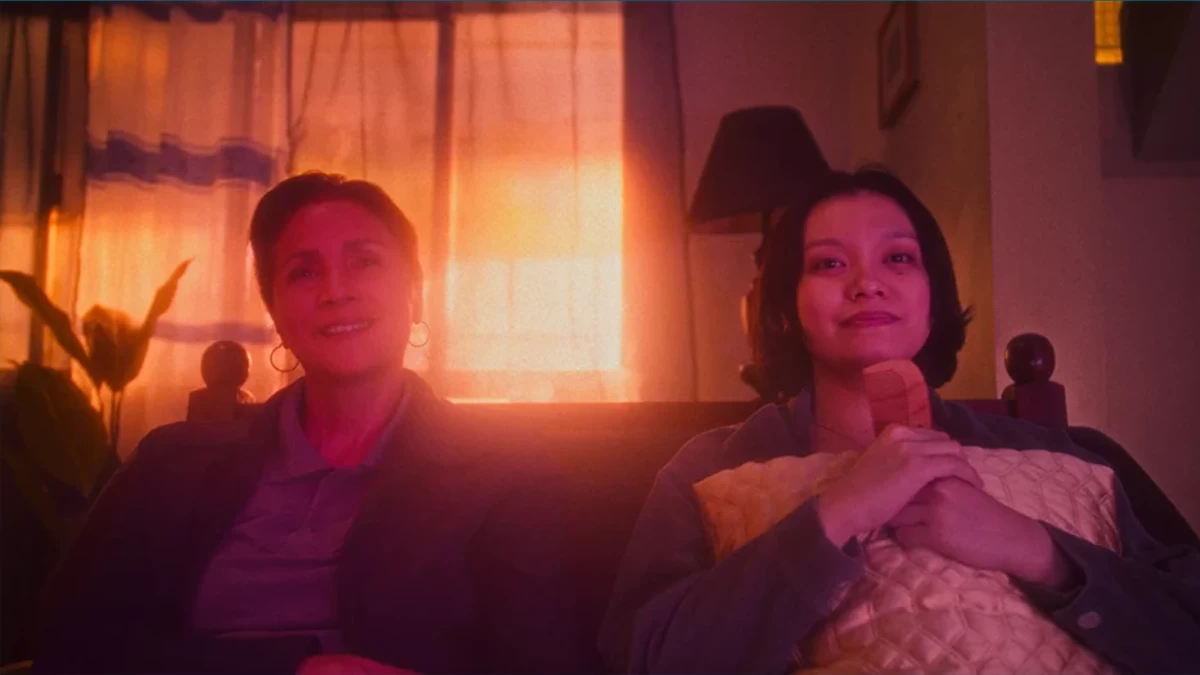
This local film was a favorite of ours among the short films that screened at the recent Cinemalaya Film Festival. It’s filled with trippy visuals and pretty bisexual lighting, sure to draw your eyes with every scene. It can leave you in a hypnotic trance as you watch, carrying you into a dream-like state as you go through the story.
‘El desencanto (The Disenchantment)’
Centering on the family of poet Leopoldo Panero, this documentary by Jaime Chรกvarri presents detailed testimonies from his widow and children. Made during a turning point in Spanish politics, the film provides a glimpse into the final years of Spain’s Francoist regime. We learn about their once bougie lifestyles and the somewhat problematic family rifts that come with it.
‘Mariposas Negras (Black Butterflies)’
There are many animated entries to check out this year, but David Baute’s “Mariposas Negras (Black Butterflies)” stands out for its subject matter. We follow three women, Tanit, Valeria, and Shaila, as they try to survive in a world affected by climate change. They are forced to deal with constant drought, flooding, and storms that ravage the areas they live in. It’s a familiar scenario for us Filipino viewers, given that these are the same negative effects brought by climate change that we face on a daily basis.
The Manila Spanish Film Festival is set to take place from Oct. 4 to 11, 2026, at Power Plant Cinema in Makati City.

Philippines Discord ban


Philippines Discord ban: Why online safety cannot be solved by simply blocking the Internet

Protecting children online and holding platforms accountable for criminal misuse are critical responsibilities. A complete block [on Discord] fails to distinguish between bad actors engaged in illegal activity and legitimate users, such as software engineers collaborating on open-source software, effectively cutting off everyone equally. Read more


A walk in Legazpi Village

What makes Legazpi Village especially compelling is the way it invites people to linger. A morning can begin with coffee on a quiet street, followed by a walk through one of its parks, an afternoon spent browsing local finds, or an evening that stretches into dinner and drinks. Read more

Saturday, September 26, 2026

Regine Velasquez admits singing is harder at 56: 'It's not like before anymore'


Published Sep 25, 2026 07:53 pm

At A Glance

  • Regine Velasquez opens up about the changes in her voice and the challenges of staging major concerts as she prepares for "FINALE," her final major solo concert series.   
For Regine Velasquez-Alcasid, “FINALE” does not mean she is saying goodbye to music.
It does, however, mark the end of an era.
After four decades in the OPM industry, Asia’s Songbird is ready to scale back on the kind of massive concert productions that have long been part of her career.
But is it really a finale for her?
“Yes and no. For major concerts yes, but I'm not going to stop performing altogether. I will still perform siguro sa mga smaller, intimate venues,” she said.
The decision comes as Velasquez acknowledges that staging huge concerts has become more demanding, especially with the preparation and physical pressure that come with each production.
“More than anything, I can't handle na talaga yung pressure na mag-stage ng huge concerts because of everything that comes with it, you know, what it entails. Mahaba ang preparation kasi kailangan bongga diba, it will eat up too much of my time, my schedule, and it's hard because I'm also a mom and wife.”
Age has also changed the way she approaches performing.
“I am not the same singer that I used to be like 10, 20 years ago. Kasi may mga pagbabago as you age talaga. But don't get me wrong. I could still sing. It's just that, it's not like before anymore.”
Her decision comes after years of demanding performances, including periods when health problems forced her to slow down.
In 2012, she lost her voice during her “Silver” 25th anniversary concert at the Mall of Asia Arena after coming down with a viral infection, forcing her to cut the show short.
The following year, she took a one-month break from television and live performances to address acid reflux, which she believed had also contributed to the problems with her voice. Doctors advised vocal rest and discussed treatment options with her.
She has continued performing through the years, but the demands of mounting major concerts have changed.
Still, the decision to stage one more major concert proved that the audience remains eager to see her on a big stage.
“Yeah, I was mildly surprised kasi ang bilis, I mean, alam ko naman bebenta pero hindi ganoon kabilis na in a matter of minutes, sold out na.”
The sold-out shows will also give Velasquez a chance to thank the audience that has followed her career.
“This concert is not a farewell, it's a thank you concert. It's for all those that supported and loved me through the years, I just want to show my appreciation by giving them a huge concert.”
Fans can also expect plenty of singing, but not necessarily the elaborate stunts she used to do.
“Naku, hindi ko na kaya,” she said laughing. “I've done that already and you know, I can't do na mga buwis-buhay na pasabog. But expect a whole lot of singing talaga.”
“Iba-iba ang setlist ko gabi-gabi,” she added.
Velasquez will stage “FINALE,” her final major solo concert series, on Oct. 17, 18, and 19, 2026, at 8 p.m. at the SM Mall of Asia Arena in Pasay City.

Der Weg zum inneren Frieden fรผhrt am Frieden vorbei? Does the path to inner peace bypass peace?


Der Weg zum Frieden ist der Weg der Rรผckkehr.

Viele Menschen mรถchten glauben, dass dieser Weg ausschlieรŸlich von Wonne, Freude und Glรผck geprรคgt ist und dass andere Wege, die Herausforderungen, Zweifel und Demut mit sich bringen, automatisch falsch sind.

Diese Illusion ist sehr heimtรผckisch, da unser Ego sich darin am wohlsten fรผhlt. Schlussendlich werden wir auf diesen „Friede-Freude-Eierkuchen-Wegen“ nicht unser ersehntes Glรผck und den universellen Frieden finden.

Doch trotzdem gehรถren auch diese „Umwege“ zu dem Pfad der Rรผckkehr. Erst wenn wir bereit sind, den wahren Weg zum ewigen Frieden zu gehen und nicht mehr durch unser Ego getรคuscht werden kรถnnen, werden wir uns von dem schwermรผtigen Bild des Leides lรถsen kรถnnen und ewigen Frieden erleben.

***


Many people want to believe that this path is characterized solely by bliss, joy, and happiness, and that other paths—which entail challenges, doubt, and humility—are automatically wrong.


This illusion is highly insidious, as it is where our ego feels most at ease. Ultimately, however, we will not find the happiness we long for or universal peace on these paths of "peace, joy, and sunshine."


Yet even these "detours" are part of the path of return. Only when we are ready to walk the true path to eternal peace—and can no longer be deceived by our ego—will we be able to break free from the somber image of suffering and experience eternal peace.

One Day at a Time · Charley Pride


  • My story of visually impaired person[s] is not fiction but actual event I personally encountered at a mall in Surigao City.
  • There is a group of visually impaired individuals offering massage at P300  for one hour or half an hour at adjusted price.
  • They are professionally trained masseurs using appropriate health standards and hygienic practices.
  • They will ask you if you have  health issues like high blood pressure and/or other health concerns. 
  • They will let you decide the right kind of presure applied on your body based on your pain tolerance.
  • They are  reccruited, trained and managed by a company that will assign them in rotation  in  different parts of Mindanao. 
  • And here is the amazing facts:
  • Visually impaired persons' four other senses are extraordinarily sensitive. 
  • They do their job efficiently shifting positions using sense of touch like they actually see it.
  • Their sense of humor is amusing talking things as if they see it.
  • While attending their customers, they will talk to each other funny things to break the monotony.
  • It was at this moment, I heard them talking about taking some extra precautions before  taking a bath.
  • They talk things like jonrox, chlorine, rat based on their four sensitive senses.
  • There is no malice intended sharing  visually impaired  person's sense of humor.
  • As a writer, I don't want to keep it in the nook of  mental rigidity
  • While God took away their eyesights , He amply provided them with a decent way to earn a living
  • And well, a great sense of humor.


PSEi snaps 5-day decline on foreign inflows


Emmanuel John Abris

Philippine stocks bounced back on Friday as bargain hunters returned after five straight sessions of losses, while strong foreign buying provided additional support.

The benchmark Philippine Stock Exchange Index (PSEi) climbed 1.67 percent, or 95.95 points, to close at 5,825.97.

Luis Limlingan, head of sales at Regina Capital Development Corp., said market sentiment improved following expectations that local gas prices could decline next week, easing some cost pressures.

“Sentiment was further supported by reports that US and Iranian negotiators are exploring a phased deal that could see Tehran reopen the Strait of Hormuz and Washington lift its blockade of Iranian ports,” Limlingan said.

Foreign investors were net buyers, posting net inflows of P2.85 billion.

This helped lift the market despite lingering concerns over the country’s macroeconomic environment.

Trading activity, however, remained tepid. Net value turnover stood at P5.21 billion as many investors stayed on the sidelines due to persistent downside risks, according to Philstocks Financial Inc.

All sectoral indices finished in positive territory. Services led the advance after rising 3.22 percent.

International Container Terminal Services Inc. was the strongest performer among PSEi members. Shares of the port operator climbed 3.95 percent to P920 each.

Semirara Mining and Power Corp., meanwhile, was the main index laggard. Its shares fell 4.5 percent to P15.28.

SEE ALSO

Analysts said Friday’s rebound offered some relief after the market’s five-session slump.

Still, the subdued turnover suggested investors remained cautious while assessing risks to the broader economy.