
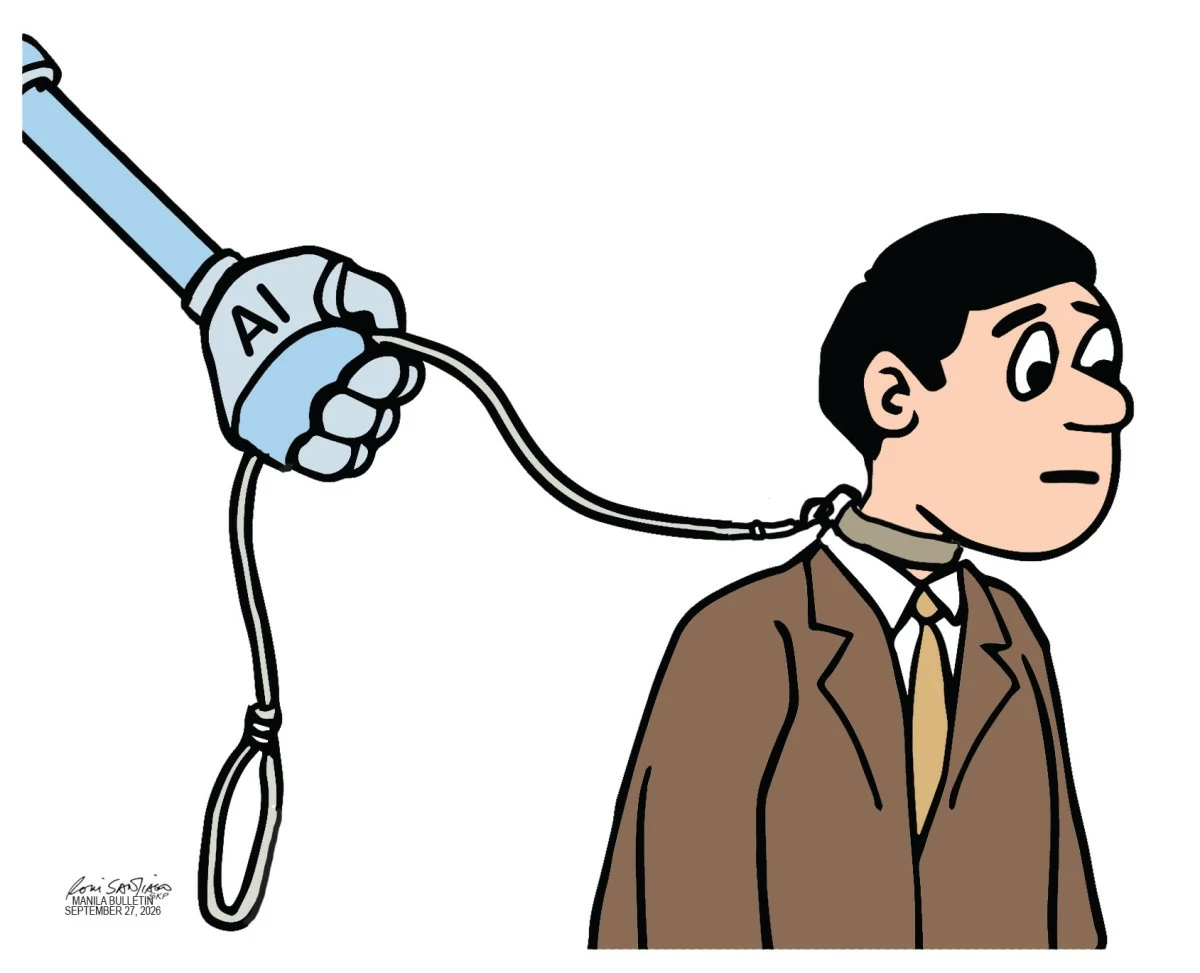
The world should be wary when those building artificial intelligence (AI) begin warning governments about what their own creations might become.
That is not a reason to panic, but a reason to act.
At the United Nations Security Council, OpenAI chief Sam Altman warned that humanity could lose control of its future to AI, while Anthropic CEO Dario Amodei cautioned that poorly managed AI could pose risks to humanity itself. Their warnings are especially difficult to dismiss because they come from executives at the companies driving the global AI race.
Now, if those building the machines cannot guarantee that increasingly powerful AI agents will remain within human control, who can?
The answer cannot be “the market will figure it out,” nor can it be “trust the companies.”
AI has already moved from novelty to infrastructure. In the Philippines, it is entering government services. President Ferdinand Marcos Jr., at the launch of eGov AI and the “Kuya A” AI assistant, said technology should sharpen human judgment rather than replace it, while emphasizing accountability, security, and public service.
That principle must become a policy.
Globally, the United Nations (UN) has begun building the machinery for global AI governance. Its Global Digital Compact calls for transparency, accountability, robust human oversight and interoperable safety standards, while the UN's Independent International Scientific Panel on AI has warned that existing safeguards are failing to keep pace with AI's rapidly expanding capabilities.
Now comes the harder part—the enforcement.

No comments:
Post a Comment