You plan to move to the Philippines? Wollen Sie auf den Philippinen leben?

There are REALLY TONS of websites telling us how, why, maybe why not and when you'll be able to move to the Philippines. I only love to tell and explain some things "between the lines". Enjoy reading, be informed, have fun and be entertained too!

Ja, es gibt tonnenweise Webseiten, die Ihnen sagen wie, warum, vielleicht warum nicht und wann Sie am besten auf die Philippinen auswandern könnten. Ich möchte Ihnen in Zukunft "zwischen den Zeilen" einige zusätzlichen Dinge berichten und erzählen. Viel Spass beim Lesen und Gute Unterhaltung!


Visitors of germanexpatinthephilippines/Besucher dieser Webseite.Ich liebe meine Flaggensammlung!

free counters

Total Pageviews

Tuesday, October 13, 2026

The Best Islands in Asia 2026


Shared post from All4one Palawan Guide
🏝️ Palawan Ranks No. 1 Among the Best Islands in Asia for 2026 🇵🇭
🏆 The Best Islands in Asia 2026
1. 🇵🇭 Palawan, Philippines — 98.99
2. 🇻🇳 Phu Quoc, Vietnam — 98.26
3. 🇹🇭 Koh Lanta, Thailand — 97.50
4. 🇹🇭 Phuket, Thailand — 96.43
5. 🇻🇳 Con Dao, Vietnam — 95.71
6. 🇲🇾 Langkawi, Malaysia — 95.04
7. 🇵🇭 Boracay, Philippines — 94.29
8. 🇹🇭 Koh Samui, Thailand — 93.45
9. 🇮🇩 Bali, Indonesia — 92.24
10. 🇮🇩 Lombok, Indonesia — 91.14
📌 Source: Condé Nast Traveller — 2026 Readers’ Choice Awards

Mahnung trotz Abbruch: Diese fiese Betrugsmasche trifft gerade viele Online-Nutzer


Stand:

Mahnung trotz Abbruch: Diese fiese Betrugsmasche trifft gerade viele Online-Nutzer


Auf angeblichen Serviceportalen werden Kundinnen und Kunden offenbar zur Kasse gebeten, auch wenn sie Formulare nicht zu Ende ausfüllen und abschicken. Davor kann man sich schützen.

Hamburg – Formular abgebrochen – und trotzdem soll man zahlen? Vor dieser neuen Masche warnt die Verbraucherzentrale Hamburg. Auf den Portalen verbrauchervorlagen.de, rundfunkbeitragsservices.de und post-kundenportal.com sollen Verbraucherinnen und Verbraucher demnach auch dann zahlen, wenn sie ein Online-Formular nicht zu Ende ausfüllen und keine kostenpflichtige Bestellung abschließen.   

Artikel der KNA

Dieser Beitrag stammt von der Katholischen Nachrichten-Agentur (KNA).

Sinnvoll sei, bei der Suche nach Vorlagen aufzupassen, wenn man online etwa eine Vorsorgevollmacht, eine Kündigung oder einen Kaufvertrag erstellen wolle. Aktuell meldeten sich viele Ratsuchende, weil sie durch Zahlungsforderungen verunsichert sind und weitere Mahn- oder Inkassoschreiben befürchten.   

Ein älterer Mann sitzt vor dem Laptop und füllt ein Online-Formular aus.
Selbst ohne abgeschlossene Bestellung sollen Betroffene für bereits begonnene Vorgänge zahlen. „Solche Fälle reihen sich in ein bekanntes Problem mit privaten Drittanbietern im Internet ein“ - sagt die Verbraucherzentrale Hamburg. © Julia Steinbrecht/KNA

„Ein angefangenes Formular ist noch lange kein Vertrag“, sagt Julia Rehberg von der Verbraucherzentrale Hamburg. „Wer einen Auftrag nicht zu Ende führt und nicht auf einen Bestell-Button klickt, muss auch nichts bezahlen.“ Indes würden Summen zwischen 40 und 60 Euro verlangt, so die Verbraucherzentrale weiter.

„Die Fälle reihen sich in ein bekanntes Problem mit privaten Drittanbietern im Internet ein. Wer online nach Nachsendeaufträgen, Angeboten rund um den Rundfunkbeitrag oder behördlichen Dokumenten sucht, landet immer wieder auf kommerziellen Portalen.“   

Was tun bei unzulässiger Geld-Forderung?

Neu sei die Vorgehensweise nach einem Abbruch: Selbst ohne abgeschlossene Bestellung sollten Betroffene für bereits begonnene Vorgänge zahlen.

Die Fachleute raten in entsprechenden Fällen, die Rechnungen nicht zu begleichen und den Vorgang zu melden: „Ohne wirksamen kostenpflichtigen Vertrag besteht nach Auffassung der Verbraucherzentrale Hamburg keine Zahlungspflicht.“

Allein die Eingabe persönlicher Daten wie Name und E-Mail-Adresse oder das begonnene Ausfüllen eines Formulars reichten dafür nicht aus. E-Mails, Rechnungen und Mahnungen sollten als Nachweis aufbewahrt werden.


By Aaron Gabriel Mendoza

For some, the barbershop is a space for self-discovery. For others, a space where identities die. But for me, it’s where thoughts are shaved and swept away.

Studying in a private Catholic school meant having a religious devotion to the “2×3 barber’s cut”—two fingers from the ears, three fingers from the collar. It also meant monthly visits to the barbershop, which I’ve always hated. Not because I wanted to grow out my hair (heaven forbid some flowing locks of hair impede my academic pursuits), but because the barbershop conjures up fears of dreadfully long queues and awkward silences (that I prefer over the equally awkward conversations that the barber initiates). But most of all, it conjures up fears of shame.

In this masculine space, I’m forced to grapple with truths that I’ve swept away so easily: why I found myself staring at that full-body picture of Elvis Presley or those printed sample haircuts taped on the windows. I’ve always felt that I was staring at these images for a second too long, which constituted a deep shame about myself. A shame that eats away at me as I’m forced to sit in front of a mirror for what felt like eternity.  

Why was I so deeply enamored with this image of a man with a side part almost twice the size of his forehead? What is it about this man in full leather that has caught my attention so much? And why was I staring for so long?

The answer terrified me, so I would focus my eyes on the floor and wait for my turn on the swivel chair of eternity, on which my dad would always fall asleep, and my brother would scroll on his phone. I, however, kept a hyperconscious awareness of everything but myself.

I would fidget with the cloth, memorize the varieties of products in front of me, hum to the pitch of the razor, tap my feet to the rhythm of the music, blur my eyes to focus on my peripheral vision; whatever it took to avoid taking a long, hard look at myself as the barber endlessly swapped between razors and scissors.

At times, when I inadvertently catch a glimpse of myself in the mirror, I see an overweight boy, peppercorns on his face, growing bags under his eyes, and asymmetry of a haircut in progress. Chapped lips, pimples, peeling skin between his brows. Deep, dark eyes, which he regarded as thieves.

Those glimpses created their own eternities, drowning me in thoughts of shame and resentment, thoughts that forced their way into the forefront of my consciousness. Thoughts of more than just myself, but of the barber, the boys in line for a haircut, the images of Elvis Presley, or the Beatles.

Thoughts that clashed with my upbringing, thoughts that I knew would invite mockery by his peers, by his community. Thoughts that signaled: “Maybe you truly don’t know who you are.”

And before I knew it, the barber was finished, sweeping bits of hair from my shoulders that signaled an end to eternity.

Once the towel around my neck was removed, I would breathe a sigh of relief like a heavy weight was removed from my chest. I’d stand up, pay for my haircut, tip the barber a twenty-peso bill, and head for the exit.

But before I leave, I look back on the scene of the crime: the barber sweeps my shaved hair onto a dustpan and dumps it in the trash. He readies his razor and scissors, and he motions for the next boy in line to sit on the swivel chair of eternity.

There it goes, all those thoughts and revelations about myself, down the hatch, as I left the barbershop and traveled home.

I was comfortable for a while, until I had to deal with the itching of my nape. Some thoughts are difficult to shave off; some cling to your shoulders and dig deep for your attention.

You can scratch all you want, but every time you sit in the chair of eternity, these thoughts will inevitably itch again.

The barbershop, I’ve found, is a realm of possibilities: maybe he decides, for once, that he won’t be getting the “2×3 barber’s cut” his father chose for him back when he was nine; or he eyes the box of red hair dye in the barber’s trolley; or he becomes conscious of the way his hand is placed on the armrest, careful to avoid the man’s crotch.

Or he steals strands of eye contact with the boy of his age on the other swivel chair behind him, and he looks down at his feet where all cuts of his hair are being swept away.

Or maybe he finally takes a long, hard look at himself in the mirror and takes it all in.


Monday, October 12, 2026

Falsities may nullify marriages


Falsities may nullify marriages

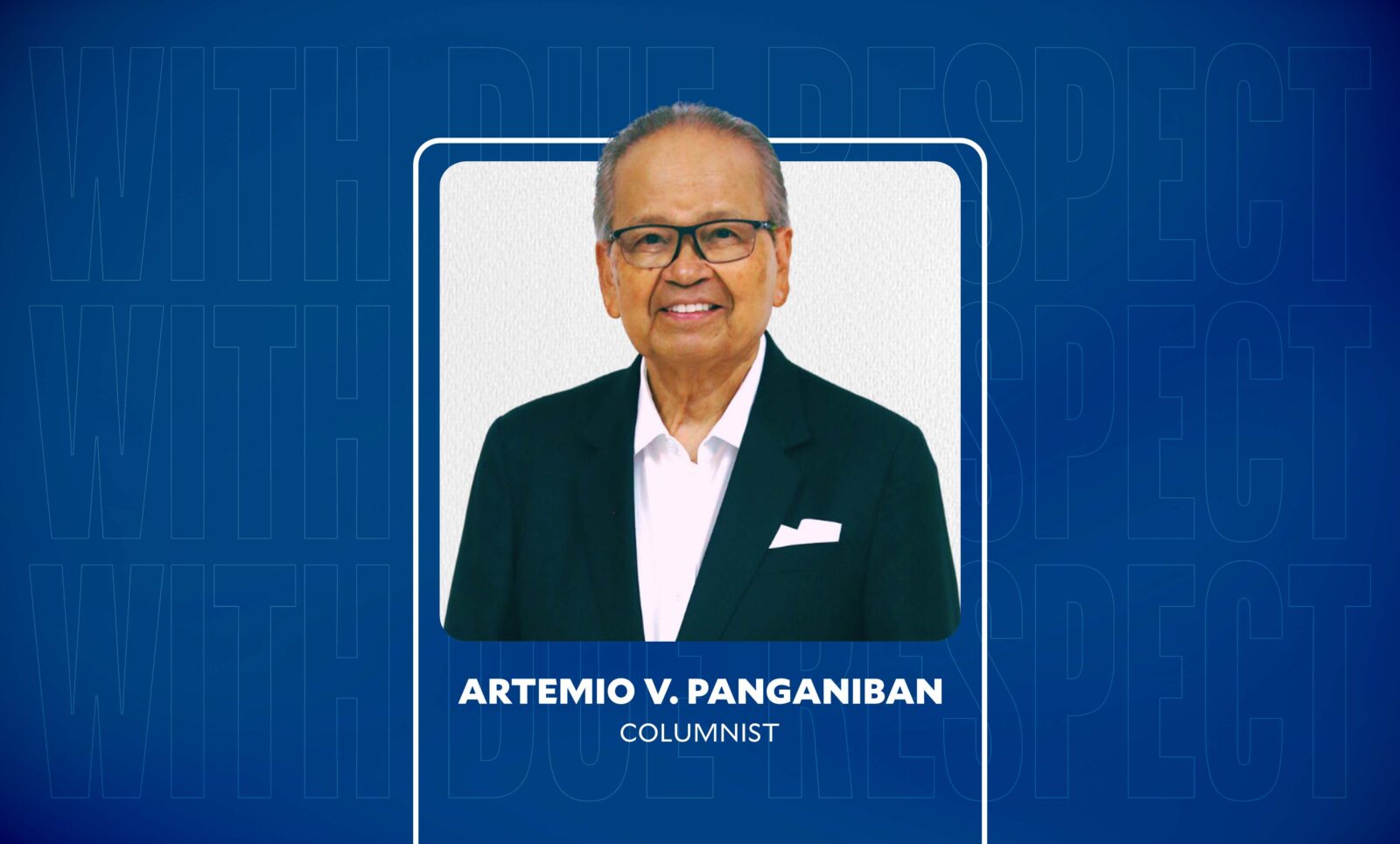
Artemio V. Panganiban

The Family Code states, “No marriage shall be valid, unless these essential requisites are present: (1) Legal capacity of the contracting parties who must be a male and a female; and (2) Consent freely given in the presence of the solemnizing officer.” In addition, there are formal requisites also: (1) Authority of the solemnizing officer; (2) A valid marriage license, unless exempt; and (3) A marriage ceremony.

THE “ABSENCE” OF ANY ESSENTIAL AND/OR FORMAL REQUISITE would render the marriage void. But a “defect” in any ESSENTIAL requisite renders the marriage voidable, not void. On the other hand, any “irregularity” in any FORMAL requisite would not adversely affect the marriage’s validity, but would subject the persons responsible for the irregularities to civil, criminal, and/or administrative liabilities.

Applying these laws in the recently announced “Republic v Aguirre” (Feb. 24, 2026, per J Henri Jean Paul B. Inting, Third Division), the Supreme Court voided a couple’s marriage due to the falsity of their claimed five years of cohabitation that was used to be exempted from obtaining a marriage license. Since the marriage license was nonexistent—and thus “absent”—the marriage was deemed void.


Lino Cayetano is new PCO chief; Aguda resigns as DICT secretary


Lino Cayetano is new PCO chief; Aguda resigns as DICT secretary

Outgoing acting Presidential Communications Office (PCO) Secretary Dave Gomez (left) swearing in movie and TV director Lino Cayetano (right) as general manager of State-run People’s Television Network (PTV-4) in June 2026. President Marcos Jr. has recently named Cayetano as the new PCO chief. (PCO file photo)

President Marcos Jr. has appointed People’s Television Network (PTV) General Manager Lino Cayetano as the new head of the Presidential Communications Office (PCO), replacing acting PCO Secretary Dave Gomez. The President also accepted Henry Aguda’s resignation as Information and Communications Technology secretary amid an Ombudsman investigation into alleged ghost connectivity projects. Read more

The Rosary: A prayer for the brave


Published Oct 11, 2026 12:05 am | Updated Oct 10, 2026 04:22 pm
THROUGH UNTRUE
October is the month of the Rosary. Sadly, the Rosary is often dismissed as a sentimental devotion reserved for women and pious old ladies. History, however, tells us otherwise. Throughout the centuries, Christian soldiers have gone into battle praying the Rosary and carrying banners bearing the cross and images of Jesus and the Blessed Virgin Mary. They prayed not because they were afraid to fight, but because they understood that courage and prayer are not opposites. In fact, it is the brave who feel the need to pray.
We sometimes imagine that bravery means being like superheroes who can single-handedly defeat everyone who opposes them. But how can someone be truly courageous if he knows he is indestructible? A person is brave when, despite knowing he is weak and vulnerable, still acts boldly, humbly acknowledging that faith can supply what human strength alone cannot.
It was this kind of bravery that the Filipino and Spanish soldiers exhibited in 1646 when they fought against a formidable Dutch armada intent on annexing the Philippines to its expanding empire and abolishing the Catholic faith. Historical records recount how, despite being aboard poorly equipped warships and having inferior firepower, those local defenders successfully repulsed several attacks by the foreign invaders who were forced to retreat after suffering heavy casualties.
The Filipino and Spanish soldiers attributed their victory to God, to whom they prayed incessantly. To assure their victory, they prayed the Rosary before the statue of Our Lady of the Rosary, enshrined at the Santo Domingo Church in Intramuros. This image, which is more than four centuries old, came to be known as “La Naval de Manila,” a witness to how the soldiers fought unafraid, prayed unashamedly, and later walked barefoot at dawn to express their gratitude to God and pay homage to the Blessed Virgin Mary.
Today, the image of La Naval de Manila has become more than a reminder of a naval victory. It has become a powerful symbol of the power of faith. We see this in the revolts for our independence from Spain and America, in the People Power revolution of 1986, and many other occasions where the world witnessed what faith can accomplish when it is not confined to private devotions and piety, but allowed to bear on the realities around us.
Now, more than ever, we have even greater reason to draw strength from this faith because the insidious enemies threatening to plunge us into hopelessness and despair no longer lurk only beyond our shores. Some of our greatest enemies are within us: our selfishness, rampant corruption, bitter factionalism, and collective apathy. Our National Hero, Dr. Jose Rizal, recognized the importance of faith in the pursuit of national progress. As he wrote in one of his letters, “If we want progress for our country, let us work and build together, beginning with the foundation of progress which is faith.”
But through his example, Rizal taught that faith is not a magical formula for quick fixes, instant healing, or a cowardly escape from responsibility. Rather, it is a firm conviction, inspired by grace, that because we are created in God's image, we possess the intelligence, talents, and strength to envision a better future and work to make it a reality. Authentic faith moves us to work for positive change, not out of desperation, but out of love.
Benigno “Ninoy” Aquino Jr. discovered a similar source of strength during his imprisonment in Fort Bonifacio. He wrote that when he prayed the Rosary, he saw “Jesus as a God-man who preached nothing but love, but was killed by the very same people whom he loved.” Perhaps this vision of Christ strengthened Ninoy's resolve to love his country even unto death, convinced that the Filipino people were, in his own words, “worth dying for.”
Both Jose Rizal and Ninoy Aquino were holding the Rosary moments before they were killed. Whenever we pray the Rosary, may we manifest our faith, not merely in the beads we hold or the processions we join, but in the courage to confront what is wrong and the determination to overcome the darkness within ourselves so we can become the people God calls us to be.