You plan to move to the Philippines? Wollen Sie auf den Philippinen leben?

There are REALLY TONS of websites telling us how, why, maybe why not and when you'll be able to move to the Philippines. I only love to tell and explain some things "between the lines". Enjoy reading, be informed, have fun and be entertained too!

Ja, es gibt tonnenweise Webseiten, die Ihnen sagen wie, warum, vielleicht warum nicht und wann Sie am besten auf die Philippinen auswandern könnten. Ich möchte Ihnen in Zukunft "zwischen den Zeilen" einige zusätzlichen Dinge berichten und erzählen. Viel Spass beim Lesen und Gute Unterhaltung!


Visitors of germanexpatinthephilippines/Besucher dieser Webseite.Ich liebe meine Flaggensammlung!

free counters

Total Pageviews

Thursday, September 17, 2026

Bundesagentur für Arbeit tief in den roten Zahlen – wird jetzt bei älteren Arbeitslosen gespart?


Stand:

Nürnberg – Die finanzielle Krise der Bundesagentur für Arbeit (BA) treibt die Debatte über drastische Reformen im deutschen Sozialsystem voran. Angesichts eines prognostizierten Defizits von rund zehn Milliarden Euro allein für das laufende Jahr rückt eine neue Studie des hauseigenen Instituts für Arbeitsmarkt- und Berufsforschung (IAB) das Arbeitslosengeld für ältere Menschen in den Fokus, wie das Handelsblatt berichtete.  

Das Logo vom Jobcenter der Bundesagentur für Arbeit ist an einem Gebäude zu sehen.
Kippt die längere Bezugsdauer von Arbeitslosengeld für Ältere? (Symbolbild) © Jens Kalaene/ picture alliance/ dpa

Das wissenschaftliche Papier mit dem Titel „Wer wie lange Arbeitslosengeld bekommt – und was es kostet“ rechnet vor, dass eine Verkürzung der Bezugsdauer für über 50-Jährige Milliarden-Einsparungen ermöglichen könnte.  

Das aktuelle Bezugssystem beim Arbeitslosengeld und der Reformvorschlag

Bislang ist die maximale Bezugsdauer von Arbeitslosengeld I nach dem Lebensalter gestaffelt, wobei Arbeitnehmer unter 50 Jahren höchstens zwölf Monate Unterstützung erhalten. Für ältere Beschäftigte steigt der Anspruch hingegen schrittweise an, sodass Personen im Alter von 50 bis 54 Jahren bis zu 15 Monate, von 55 bis 57 Jahren bis zu 18 Monate und ab einem Alter von 58 Jahren maximal 24 Monate lang Leistungen beziehen können.

Die Modellrechnung des IAB zeigt nun auf, wie sich eine Vereinheitlichung auswirken würde. Würde die Bezugsdauer für alle Altersgruppen konsequent auf maximal 12 Monate gedeckelt, läge das rechnerische Sparpotenzial bei 2,4 Milliarden Euro pro Jahr. Eine weniger radikale Absenkung auf eine Obergrenze von 15 Monaten brächte immerhin noch 1,4 Milliarden Euro ein.  

Die Studienergebnisse gießen zusätzliches Öl in eine ohnehin hitzige politische Diskussion. Unterstützt wird eine solche Obergrenze vor allem von wirtschaftsnahen Kreisen. So fordert die Bundesvereinigung der Deutschen Arbeitgeberverbände (BDA) schon länger eine einheitliche Höchstgrenze von 12 Monaten, um stärkere Anreize für eine schnellere Arbeitsaufnahme zu setzen. Befürworter argumentieren zudem mit sogenannten Verhaltenseffekten. Statistisch gesehen steigen die Chancen auf eine neue Beschäftigung sprunghaft an, kurz bevor der Leistungsanspruch erlischt. Das IAB schätzt, dass dieser zusätzliche Motivationseffekt die reinen Einsparsummen theoretisch noch um weitere 50 Prozent erhöhen könnte.  

BE STILL AND KNOW


By
 Klaus Döring
 -

WHAT DOES “Be still and know that I am God” mean in Psalm 46:10?

Psalm 46 is a beloved passage in which the psalmist declares that, no matter what is happening around him, God is his refuge and strength. Safe in the assurance that He is God, we can wait on Him even amid chaos. He is still on His throne.

Like many Bible verses, however, this one is often taken out of context and used to convey something that may not have been intended in the passage itself. Well-meaning Christians may use it as consolation in times of worry and frustration — as if God were simply saying, “Relax, I’ve got this.”

In other words: Be still. Stop running to and fro. Slow down. Slow down long enough to listen.

The phrase “Be still and know that I am God” calls us to pause and reflect. It reminds us that God remains in control, no matter what happens in our lives. By being still and reconnecting with our faith, we can find peace even amid the chaos of life.

Why is it important to be still?

Being still is like replenishing our reserves. It gives us the time and space to reflect, gather our thoughts, and actually listen to what is going on within us.

Yes, we are living in a noisy and hectic world. And many times, we ourselves become noisy and hectic. We hardly find time to rewind, slow down, and shut out the daily din and racket. We can become noisy people and even troublemakers ourselves. Have you noticed it?

Making time for moments of stillness can have powerful benefits for our mental and emotional well-being.

Today, however, stillness can be difficult to find. There is simply so much going on — so much noise both inside and outside our minds, so many tasks on our to-do lists, and usually several screens within reach.

According to the Oxford Dictionary, stillness is “the quality of being quiet and not moving.”

Yet moments of stillness are possible even on the busiest of days. They are within our reach whenever we need them. We only have to make room for them.

So many times, our relationships with our partners, friends, relatives, workmates, and neighbors become strained because we are too busy, too distracted, or too overwhelmed to stop, listen, and understand.

Be still and know. Slow down long enough to hear God’s voice, too. There is indeed so much of God to discover if only we would slow down long enough to hear His voice. Yet we can become so overwhelmed by our earthly desires that all we think about is ourselves: “Yes, God, I want You to do this for me — and I want it now!”

What a fatal attraction that impatience can become! Learn instead to wait quietly on Him. When you begin to grasp something of our Lord’s true greatness, you will be truly amazed.

Be still and know.

***

Email: doringklaus@gmail.com, or follow me on Facebook, LinkedIn, or X (Twitter), or visit www.germanexpatinthephilippines.blogspot.com or www.klausdoringsclassicalmusic.blogspot.com./PN

Sharing valuable information and public service from the No. 1 regional newspaper in Western Visayas. https://lnk.bio/panaynews

How thinking about the future makes life more meaningful


By Klaus Döring


During these awful and negative-minded times all over the world, thinking about the future does not always keep me positive.

Well, mindfulness is all the rage these days, and for good reason. Focusing on the moment can improve our well-being, foster compassion, and help our relationships. What about going beyond the present moment? Yes, thinking about the future can trigger anxiety — but a growing body of research suggests that it can also make our lives more meaningful.

Humans aren’t alone in having some ability to consider the future, a process that scientists call “prospection.” After all, your dog gets excited when they see you holding a leash because they anticipate that a walk is imminent; your cat may show similar excitement at the sound of a can being opened. There’s even evidence that some animals — like bonobos and ravens — can choose and save tools that they plan to use in the future.

But prospection’s unique benefits to humans extend beyond those of other animals. Not only do we fantasize about our next vacation or decide whether it would be better to take the stairs or the elevator, but our perspective can extend far into the future: We might save for our children’s education or plan for our retirement decades from now. We can make predictions about our own futures based on what we’ve learned about other people’s experiences and even from characters in books and movies. And we can consider multiple directions our futures might take.

It is this remarkable ability to simulate our possible futures that makes prospection special. Just like gold prospecting may literally make you rich, studies suggest that prospecting about your future can enrich your life in at least four ways.

Perhaps one of the most fundamental and important functions of prospection is that it helps us decide how to act: Thinking about what the future likely holds helps us decide what course to take in the here and now. Several studies have examined how thinking about the future shapes our decision-making.

Researchers have been particularly interested in the psychology that drives our process of deciding between receiving something now and receiving something of greater value later. In general, people tend to choose smaller but more immediate rewards over larger rewards that they have to wait for, a phenomenon known as “delay discounting.”

But they don’t always choose short-term rewards over long-run gains. For instance, studies have shown that a present-day connection to a possible future event can counteract delay discounting.

Another study showed that participants who felt closer to their future selves were more willing to wait for a larger reward than those who anticipated changing; the same was true when they were asked to make decisions on behalf of a fictional character who they knew would go through a life-changing event, such as a religious conversion or returning home from war.

While interesting in its own right, this research could have important personal ramifications. If people could be made to feel a more immediate connection to their eventual retirement and consequent drop in income, they may be more motivated to make prudent decisions.

In fact, one experiment found that manipulating how people think about the time until their retirement — in days rather than years — caused them to plan to start saving for retirement sooner because the shift in time perspective made the participants feel more connected to their future selves. A 2014 study found that viewing realistic computer-generated images of what they may look like in the future decreased their discounting of future rewards and led them to contribute more to a hypothetical retirement account.

Prospection has another important application: It motivates us to achieve our goals. But the relationship here is not a simple one. Work by psychologist Gabriele Oettingen and colleagues shows that whether thinking about the future helps us actually reach our goals depends on how we think about the future.

In fact, research has found that positive thinking about our future can backfire. The more people positively fantasize about successfully reaching their goals, the less effort they actually put into realizing them. For example, in one study, the people who fantasized more about successfully losing weight actually lost less weight. Another study found that students who fantasized about their transition into a professional career were less successful in their job search, and students who dreamed more about their crush were less likely to start a relationship with their crush.

Importantly, both of these studies found the opposite effect for having positive expectations (“judging a desired future as likely”). People who expected to lose weight were more likely to actually lose weight; students who expected they would find a job were more likely to actually land one; and students who expected to enter a relationship with their crush were more likely to actually do so.

It makes sense that having positive expectations — optimism, essentially — could increase our ability to achieve our goals, but why might fantasizing about the future actually decrease the chance of achieving what we want? Because, write Oettingen and Klaus Michel Reininger, positive fantasies “lead people to mentally enjoy the desired future in the here and now, and thus curb investment and future success.”

But often our goals come from our fantasies. We want to excel at work, find Mr. or Mrs. Right, or run a marathon. How do we turn these fantasies into behaviors that can help us reach our goals? Research suggests that while optimism is important, it is also helpful to draw a contrast between our fantasies and our current reality, which allows us to see barriers that must be overcome.

For example, one study asked students to mentally contrast their positive fantasies about benefiting from a vocational training program with aspects of the program that could impede their progress. This reflection caused students who expected to do well in the program to commit themselves more, and those who expected to do poorly to commit themselves less — again pointing to the importance of optimistic expectations for success. But the mental contrast was also key: Positive expectations did not increase commitment in participants who were not assigned to compare their present situation with their future desires.

Results from a later study suggest that the effectiveness of mental contrasting is due to “energization” — meaning that when people have high expectations of succeeding at something, considering what might impede their goals gives them energy to try to overcome those barriers. In other words, it helps to stress yourself out a little bit.

Mental contrasting, particularly when used in conjunction with “implementation intentions” — making plans to help move past potential barriers — has been shown to help people reach their goals. To describe this process, Oettingen and colleagues use the acronym WOOP: Wish, Outcome, Obstacle, Plan. In studies, WOOP-type interventions have helped people break a bad snacking habit, get more exercise, and improve academic performance.

Thus, research suggests that thinking about the future can motivate us to take the steps necessary to reach our goals — but only if we take obstacles into account.

Discover the four stages of change. Find out how to set up the right environment for changing your habits.

How to choose goals that make you come alive.

Besides helping us make decisions and reach our goals, there is evidence that prospection may improve psychological health more generally. It might even help people who are struggling with depression and those recovering from trauma.

Indeed, some researchers posit a link between poor prospection and certain psychological disorders, such as depression.

“We see faulty prospection as a core underlying process that drives depression,” write psychologists Martin Seligman and Anne Marie Roepke in the book Homo Prospectus. In particular, they note that people with depression imagine possible futures that are more negative than people without depression. Moreover, people with depression tend to overestimate risk and to have more pessimistic beliefs about the future.

One way to engage in anticipatory savoring, suggested by Roepke and Seligman in a recent review article, is to modify the “three good things” gratitude exercise. Instead of writing three good things that happened today, you can write three good things you anticipate happening tomorrow and what you can do to make it more likely that those things actually happen. For people who are struggling, they suggest also writing down three methods that could be used to mitigate disappointment if the good things do not actually happen. These could include coping strategies, such as exercise or reaching out to a friend, or alternative strategies for making the good thing happen, such as suggesting lunch next week if a friend cancels.

While there’s a lot left for researchers to discover about prospection, you don’t need to wait for their published studies. You can try your own experiments right now to see if prospection helps you live a more generous, happier, and more meaningful life.


***


Email: doringklaus@gmail.com, or follow me on Facebook, X, or LinkedIn, or visit www.germanexpatinthephilippines.blogspot.com or www.klausdoringsclassicalmusic.blogspot.com.


The Daily Guardian is a renascent Iloilo-based publishing firm and media outfit with bureaus across Western Visayas and beyond. Led by Iloilo's most respected journalists, we pledge to tell the Ilonggo story as seen through the various lenses of society so that every side may be told.

BUREAUS: Kalibo Boracay Roxas Bacolod Antiqu eGuimaras Manila

Wednesday, September 16, 2026

IAM Worldwide names pickleball superstar Anna Leigh Waters as global sports ambassador


Published Sep 15, 2026 12:02 pm

At A Glance

  • Pickleball superstar and world No. 1 player Anna Leigh Waters was named as the newest Global Sports Ambassador of IAM Worldwide, marking a partnership that aligns the multi-titled champion with one of the fastest-growing health and wellness brands in the industry.
Anna Leigh Waters is the newest IAM Worldwide ambassador
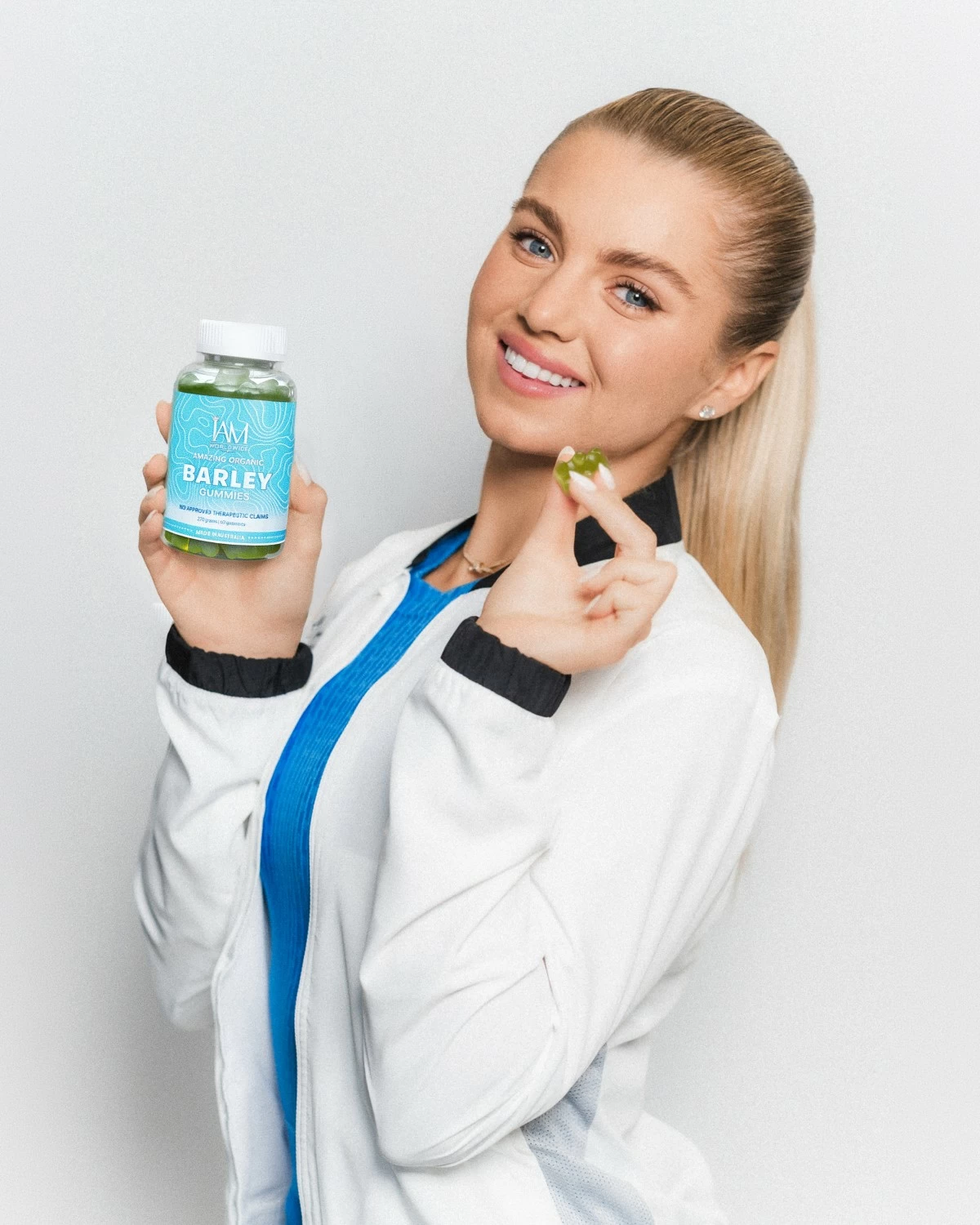
Pickleball superstar and world No. 1 player Anna Leigh Waters was named as the newest Global Sports Ambassador of IAM Worldwide, marking a partnership that aligns the multi-titled champion with one of the fastest-growing health and wellness brands in the industry.
As pickleball surges in popularity among youth, elite athletes, and celebrities worldwide, the fever has officially hit Philippine shores—captivating players of all backgrounds as the world’s fastest-growing sport.
Across Metro Manila, new pickleball courts are popping up rapidly, with existing spaces being repurposed to meet the overwhelming demand from local enthusiasts.
Purpose-Driven Commitment
IAM Worldwide believes Waters embodies the company’s core values of excellence and purpose-driven commitment. Known for her skill and relentless drive, she exemplifies true discipline, focus, and consistency. These are the same ideals that define IAM Worldwide and their mission to transform lives.
Anna Leigh Waters
Anna Leigh Waters
"Partnering with IAM Worldwide felt entirely natural for me," said Waters. "Everything I do on and off the court comes down to focus, discipline, and performing at my best. I truly believe in what IAM Worldwide stands for—performance powered by purpose and wellness. You cannot achieve true success without taking care of your health first."
Waters, as the brand’s first global sports ambassador, champions the IAM Amazing Organic Barley Gummies. Formulated to deliver natural vitality and optimal physical support in a convenient, daily format, the product is perfect for high-performing athletes and everyday fitness enthusiasts alike.
The partnership sees Waters as an inspiration for sports dreamers to become the champions of the future, be it defined by success in life or in big arenas.
Together, IAM Worldwide and Waters are advocating a vital message: a truly "wealthy" life is one where wealth is determined by health.

Pinoys shine at 2026 Emmys


By Neil Ramos

Published Sep 15, 2026 07:50 pm


Filipino talents Isa Briones and Lena Hall were among the stars at the 2026 Emmys, highlighting the growing Filipino presence in Hollywood.

Filipino talent had a notable presence at the 2026 Emmy Awards, with several Filipino and Filipino-American stars among the guests at television’s biggest night Monday (U.S. time).

For Isa Briones, the celebration came with a major win. “The Pitt,” the medical drama in which she stars, took home best drama series for the second consecutive year.

The Emmy win also gave Briones a platform to talk about the real-world issue at the heart of the series: healthcare.

In remarks to ABS-CBN News, the Filipino-American actress called access to healthcare “a human issue,” urging audiences to look beyond the politics surrounding it.

“The Pitt” follows the people working inside a Pittsburgh emergency department and the patients who come through its doors.

Lena Hall, meanwhile, brought a more personal Filipino connection to the Emmy night.

The “Your Friends & Neighbors” actress, whose real name is Celina Consuela Gabriella Carvajal, gave a shoutout to her family in the Philippines.

“I want to meet you one day, the Carvajals,” she said, according to ABS-CBN News.

Briones and Hall are just two of the Filipino talents making their mark in Hollywood, where Filipino representation has become increasingly visible in recent years.

Calm in the Storm


One of the most well-known stories in Jesus' life is the calming of the storm (Matthew 8:23–27, Mark 4:35–41, and Luke 8:22–25).

Think about the disciples hanging out on a boat with Jesus when a life-threatening storm erupts on the water. They’re unprepared to face it. Panicking, they realize they might die. The entire time this is happening, Jesus is sleeping peacefully.

Instead of looking at Jesus’ reaction to their situation, the disciples allowed their situation to dictate their reactions.

After begging Jesus to do something, He calms the storm … but not before asking them, “Why are you afraid?”

His gentle rebuke wasn’t because they didn’t believe Jesus could save them from the storm, but because they struggled to believe He would see them through it. 

They knew Jesus was in their boat, they just didn’t understand what He was fully capable of doing. 

Jesus was their strength through the storm and over the storm. 

Jesus was their provider, protector, healer, and leader.  

Jesus was their source of peace and power. 

And the same God who was with the disciples in the boat is with us. No matter what your current storm looks like—Jesus is near. There is not a situation you have gone through that Jesus hasn’t endured beside you.  

Jesus was, and is, and is to come. He was there at the beginning of time, and He will be there at the end of it. He has seen every event in human history, and He has not forsaken anyone who cries out for Him and trusts in Him. 

Nothing is impossible for God, and His character never changes. He is for you, and not against you—that’s why you have nothing to fear. And that is why today, you can make Isaiah 41:13 your own personal promise: 

“For I am the LORD your God who takes hold of your right hand and says to you, Do not fear; I will help you.”

https://www.bible.com/verse-of-the-day/ISA.41.13/99026 

Siquijor + Camiguin + Moalboal – Best August Family Adventure WITHOUT Crowds – by Emzetwelt Travel & Tours by SATT


🌴 Looking for an authentic Philippines experience in August without mass tourism?


At Emzetwelt Travel & Tours by SATT – Elite Franchise, we created this special route for families with teenagers who love beach, adventure, snorkeling, and cozy beach bars.
Your Route:
South Cebu Moalboal → Siquijor → Camiguin
What’s inside:
🐟 Moalboal, South Cebu – Sardine Run snorkeling right from the beach & Kawasan Falls canyoneering (teen-favorite!)
💦 Siquijor – Hidden waterfalls (Cambugahay, Lagaan), quiet beaches, sunset beach bars in San Juan, Apo Island snorkeling
🌋 Camiguin – The Island Born of Fire:
White Island sandbar, Mt. Hibok-Hibok hike, hot springs, sunken cemetery
Why this route is perfect in August:
✅ Visayas region = short afternoon showers, then sun – much better than Palawan/Boracay in August
✅ Low season = fewer tourists, more authentic island life
✅ All connected by short ferries – no need for multiple domestic flights
✅ Family-friendly, safe & not overcrowded

Emzetwelt Service:
We organize everything from one hand – private drivers, ferry tickets, hand-picked boutique hotels with pool, private boats for dolphin watching & snorkeling, and local English-speaking guides (German-speaking on request).
You have one contact: us.
Price: On Request – depends on travel dates, number of persons & hotel category.
We create your personal quotation in USD/EUR – no hidden fees.
📩 Ready for your August escape? Send us a message via Facebook or WhatsApp and we’ll send you a free example itinerary with realistic driving times!
Emzetwelt Travel & Tours by SATT
Elite Franchise – Your local experts in Bohol