You plan to move to the Philippines? Wollen Sie auf den Philippinen leben?

There are REALLY TONS of websites telling us how, why, maybe why not and when you'll be able to move to the Philippines. I only love to tell and explain some things "between the lines". Enjoy reading, be informed, have fun and be entertained too!

Ja, es gibt tonnenweise Webseiten, die Ihnen sagen wie, warum, vielleicht warum nicht und wann Sie am besten auf die Philippinen auswandern könnten. Ich möchte Ihnen in Zukunft "zwischen den Zeilen" einige zusätzlichen Dinge berichten und erzählen. Viel Spass beim Lesen und Gute Unterhaltung!


Visitors of germanexpatinthephilippines/Besucher dieser Webseite.Ich liebe meine Flaggensammlung!

free counters

Total Pageviews

Wednesday, October 14, 2026

LIFE IMPROVEMENT THINGS


1. Read

Trust me, Reading books is like having the best advice from mentors throughout history on demand.

2. Listen to podcasts

Fill in the gaps of your life with educational audio. Podcasts are like gaining personal advices.

3. Take new courses

A quality course brings all the info together and saves you time. You will learn many tips from experienced ones.

4. Practice old passions

Take a break or revisit your old hobbies that you enjoy but don't normally do.

5. Get feedbacks and critiques

Skip the compliments and seek feedbacks from trusted people and try to improve the negativities.

6. Work towards a goal

Commit to daily practice. Do one small thing everyday that gets you one step closer to your goal.

7. Be open to change

Remember, change is the only constant. To improve yourself, you must change. If you aren't willing to change, it's hard to move forward.

Why do all people find Asian women attractive?


Not all people find Asian women attractive. That’s just the truth.

I know that because I’m an Asian woman who grew up with a lot of insecurities. Don’t get me wrong, I’m happy now and I know I’m beautiful (mostly because my husband always tells me) but I also can’t deny the reality that most Asian women like me have a complicated relationship with things like attractiveness and beauty.

First of all, attraction is subjective.

What is attractive to one man might not be the same to another. If one guy prefers dating Chinese or Indian or Filipino women, then there are other guys who like perky Americans or tall Europeans more. And that’s okay.

But when it comes global beauty standards, you don’t usually immediately think of Asian women.

Even among us Asians, there are different types of beauty. But what we’re not (at least not usually) is fair, blonde, or blue-eyed. And that’s often the “ideal” woman for a lot of people.

But we are attractive! Common Asian characteristics like long black hair, cute eyes, and brown complexion are also appealing to certain people. I just know it’s not for everybody, and that’s also okay.

(My husband will usually say it’s my charismatic personality that he finds most attractive about me, but that’s not really exclusively Asian, is it? Haha!)

18 Harsh truths that will make you a strong person


  1. There is no perfect moment. Holding yourself to unrealistic standards creates frustration. Just do it now.
  2. We can't control the past. Wasting time to worry about it is lost time.
  3. Our words have the power to hurt. Cruel remarks wound others for life. Use your words to inspire and to liberate instead.
  4. Failure quickly gets to our hearts, but success goes to our heads. Our character is revealed at our highest and lows. Be humble at the top. Be faithful in the valleys.
  5. Our assumptions about what happiness should be are what makes us unhappy. Let go of your expectations about what would make you happy and treasure your life for what it is.
  6. Our devices often get in the way of our social interaction. Meet people. Don't hide behind your gadgets. Listen to others stories face to face.
  7. We judge ourselves by our ideas and others by their actions. Be a person who others want to meet and be around.
  8. Sadly, we don't get what we give. Don't expect people to always give back. Not everyone has as giving a heart as you.
  9. No one owes you anything. Stop blaming others, take your power back. Own your journey.
  10. We all will die. No one will live forever. Start living a purposeful life and try to mend broken relationships, because you never know when life will end.
  11. To experience the benefits of something in life, we all have to accept the cost. Rewards and risks go hand in hand. Ask yourself, “what am I willing to give up to achieve what I want?”
  12. You are responsible for the problems you encounter, regardless of who caused them. Instead of worrying about who caused them, think about how you can get yourself out of the situation.
  13. The worst addiction in the world is comfort. Take the road less traveled-one which is sometimes filled with barriers, detours, bumps and undiscovered territory.
  14. Justice is a human invention. In reality, it is unachievable and many destroy lives in demanding it.
  15. Hating oneself starts with breaking one's promises. Once done, it feels terrible. When it becomes a habit, you hate yourself more.
  16. Sometimes we have to ditch toxic friends from our lives and surroundings.
  17. Good things usually don't come easily. And if you think about it, great accomplishments take time too. Don't expect rewards instantly.
  18. Not everyone will support your dream. Haters, doubters, and pessimists will sabotage every move you make. To overcome this, follow your gut and forget them.

Tuesday, October 13, 2026


What do you think of Filipino beauty?


My thoughts on Filipino beauty are slightly complicated. I’ll explain.

Growing up in the Philippines, it was obvious that our country follows Western beauty standards. I see it in newspapers and television shows and even in billboard advertisements. Beautiful for most Filipinos is light skin and a sharp nose. Sometimes, “chinita” or Chinese-looking eyes and delicate features are also beautiful.

(I’ll share photos here of me and some of the women I work with. This is with 100% consent, by the way.)

The one on the left is Emely and the one on the right is Labnes, both from Cebu.

They’re fellow Bisayas, and I think they’re both very beautiful.

But their most prominent features aren’t exactly what you would call traditionally “Filipino” features. I don’t have those features.

So it took a very long time for me to accept that my Filipino nose and Filipino skin can also be beautiful. It took years of work for me to not be influenced by skin-whitening products that are sold all over the country. Or to stop dreaming about having blonde hair like a Barbie doll.

But now that I am older and wiser, and I want to be a good example to my daughter, I have a different view of Filipino beauty.

Even if our Filipino features don’t look like the beauty standards being advertised in movies or fashion magazines, I am proud to look like and be a Filipino.

Because I think Filipinos are beautiful.

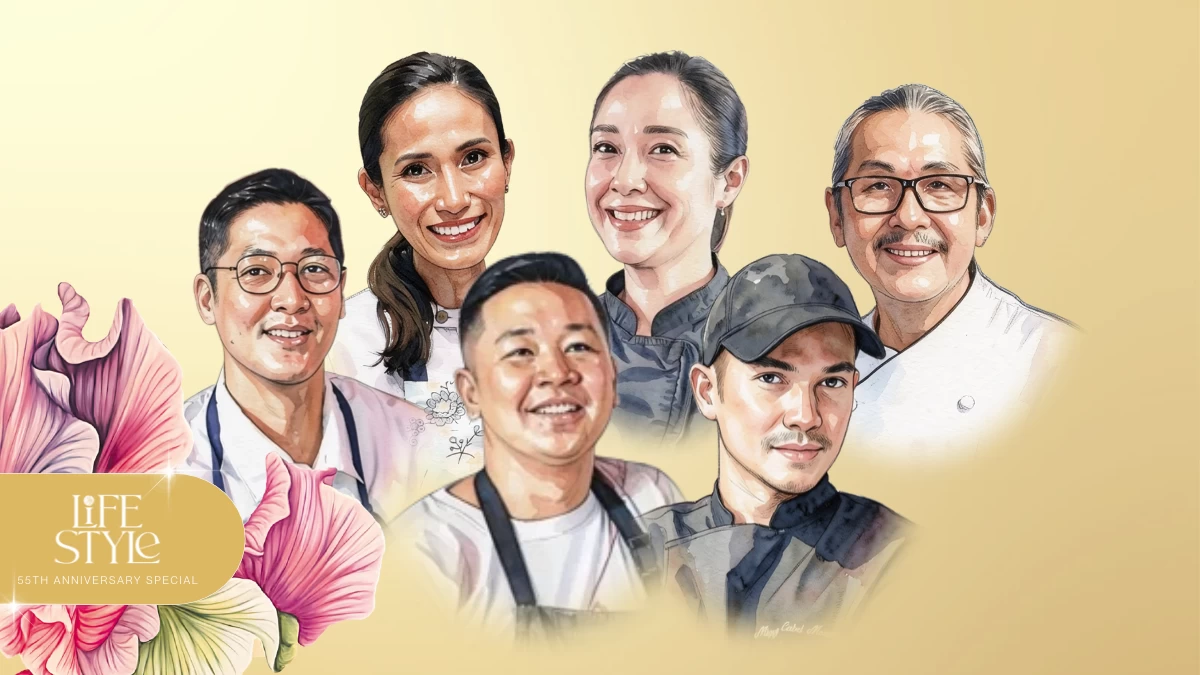
The next generation of Philippine dining


We offer a glimpse of where the country's food scene is headed


Valery Anthony of Lusso is beginning to attract positive attention through her leadership and her graceful ability to express her unique style while honoring the restaurant’s identity. I truly believe she has a special quality about her.
Two people immediately come to mind. Technically, Don is no longer ‘up and coming,’ but he’s still so young, and I’m such a big fan of how his mind works. If he’s already this brilliant now, I can’t wait to see what else he comes up with in the years ahead.
Don Baldosano seeks out historical, soulful, and long-forgotten ways of cooking, deeply rooted in his culinary heritage for global preservation and elevation of regional cuisine. Don Colmenares is another young rising kusinero who hails from Hinigaran, Negros Occidental, where he operates his farm-to-table dining concept, Sauma Farm.
I believe that my good buddy Don Baldosano is a young chef who, despite all the recognition and acclaim he has achieved to date, still has a lot to show. In fact, he’s just starting. Things are escalating for the boy wonder, and now that the country has witnessed his genius and talent, I can’t wait for the rest of the world to experience the same.
It is inspiring to see someone (Don Baldosano) think out of the box. And his ideas are so different from what I would do. And I think all of us more established, older chefs, watching him were so amazed by. Dapat ganun (That’s how it should be). Even us, we should still be open to creating new things.
Chef Francis Lacson possesses the qualities of a chef who is bound for greatness. He is talented, passionate, and, above all, grounded as a person. He understands the value of promoting regional Filipino cuisine while remaining innovative in his approach.
The dining industry in the Philippines is on a roll. With the introduction of the Michelin Guide to the Philippines last year, and now the second list of Michelin awards set to be announced just a few weeks from now on Oct. 29, I am confident to say that the dining industry, and the chefs and people behind it, are the modern rock stars now.
I still remember the Michelin awards last year. As the awardees were announced at the Marriott Grand Ballroom, the room erupted. There were chefs hugging, shaking hands, congratulating one another, and bantering with friends and colleagues. Everyone was excited, everyone was watching, and everyone seemed to have something to say.
I remember thinking: This is how alive the dining scene is in the Philippines.
So, for our 55th anniversary issue, I asked some friends in the dining world their thoughts on our theme, the next generation. Who are the chefs we should be watching? Who are the people who will help shape what Philippine dining becomes in the coming years? This is by no means a definitive list. It is a glimpse, a sampling of the names that came up when I asked around.
Overwhelmingly, Don Baldosano was mentioned. And who can blame them? Don has already made a considerable mark with Linamnam, his intimate 10-seat restaurant in Parañaque. His cooking is rooted in Filipino ingredients, culinary history, foraging, and the traditions that can easily disappear if nobody makes the effort to preserve them.
His Michelin star in 2025, along with the Young Chef Award, simply gave international recognition to what he had already been doing. Long before the star, Don was writing and thinking about the need to reconnect with forgotten Filipino culinary knowledge. His restaurant became the place where those ideas could land on a plate.
I find Don particularly interesting because there is no sense that he is trying to make Filipino food fashionable. He is simply deeply interested in it. The ingredients, the stories behind them, the way people used to cook, and the possibilities that emerge when those things are examined with a contemporary eye.
In fact, Don and another name on this list, Kevin Uy, have known each other for some time. In 2024, the two young chefs collaborated on “Crossing Waters,” an 11-course dinner exploring connections between Filipino and Latin American cuisine. Even then, Kevin described Don’s cooking as embodying the best of the Philippine food scene.
Valery Anthony of Lusso is another name worth watching. Valery represents a different facet of the next generation. She is working within one of the brands created by the late Margarita Forés, an icon whose influence on Philippine dining is difficult to overstate.
Lusso has now become part of AF Hospitality, the group founded by Margarita’s son, Amado Fores, alongside other brands that Margarita built. The move was part of a larger effort by the Araneta-Fores family to preserve what Margarita created while giving the businesses room to move forward.
Valery’s role at Lusso places her at that interesting intersection between heritage and innovation. Her background in culinary training, her time studying and working in Italy, and her involvement in research, development, and culinary innovation point to a young chef who understands that maintaining a legacy does not mean standing still.
And then there is Kevin Uy of Flow. Kevin spent five years in Peru, including four and a half years at Central in Lima under Virgilio Martínez and Pía León, as well as time at Mil, Central’s high-altitude research center in Cusco. He returned to Manila with those experiences and built Flow around the meeting point of Peruvian and Filipino sensibilities.
What I find compelling about Flow is that Kevin is not simply recreating what he learned abroad. The restaurant’s tasting menu moves through what he calls “culinary biomes,” with landscapes, ingredients, and ideas connecting Peru and the Philippines.
“The whole experience was an eye-opener. Peruvian and Filipino cultures aren’t too far apart,” Kevin told Manila Bulletin. “It’s interesting to see where and how different worlds intersect.”
He works with his childhood friend and co-executive chef Gabriel Ong, who provides the classical grounding and operational structure alongside Kevin’s more experimental approach. Even the restaurant’s dinnerware was developed with local potters, reflecting Kevin’s belief that food can become a meeting point for different creative disciplines.
And, if the humble opinion of this author is to be entertained, chef Lee Jan Anicas is someone to watch out for as well. I say this partly because I have already experienced what Lee is trying to do at Bakuran Tasting Club in Project 8, Quezon City.
When I first received his invitation, I was intrigued by two things: the idea of building an entire tasting menu around “asim,” my favorite flavor, and the fact that the restaurant was in Project 8, an area where my family once had a home.
What I found was a dining room that felt deeply personal. Lee drew inspiration from his homes in Mindoro and Vigan, incorporating Capiz shell windows, wooden shelves, ferments, and other details that made the space feel more like a Filipino home than a conventional tasting room.
More importantly, Lee tells his team to be hosts first and chefs after. That philosophy is immediately apparent.
His first menu, “Asim: A Study on Balance,” looks at sourness not simply as a flavor but as part of the Filipino way of eating. Calamansi, biasong, tamarind, vinegar, and fermentation appear throughout the meal, each used to bring balance rather than simply acidity.
“I want to cut through the noise of the dining world,” Lee told me. And perhaps that is why his cooking stayed with me. There was no need to shout. The food was thoughtful, Filipino, and personal, while the setting made you feel welcome rather than intimidated by the tasting-menu format.
Another young rising kusinero is Don Colmenares, who hails from Hinigaran, Negros Occidental, where he operates his farm-to-table dining concept, Sauma Farm. His approach is deeply rooted in hyper-local sustainability, using roughly 95% local ingredients and allowing micro-seasons and what is available in provincial markets to shape his menus.
Chef Francis Lacson is another name to watch. Chef Miggy Moreno describes him as talented, passionate, and grounded, with a strong understanding of the importance of promoting regional Filipino cuisine while remaining innovative in his approach. Lacson’s recent restaurant concept, Digâmo, already reflects that direction, giving regional Filipino food a contemporary platform while staying rooted in its identity.
So, six names. Six very different approaches. Don looks to our culinary past to imagine its future. Don Colmenares embraces hyper-local cooking and lets the seasons and provincial markets shape his menus. Valery stands within a major legacy and represents the young talent helping carry it forward. Kevin brings international experience home and creates something new from the intersection of cultures. Lee takes the intimacy of Filipino homes and hospitality and places it inside a contemporary tasting-menu format. Francis brings regional Filipino cuisine to the table with a contemporary approach, as seen in his restaurant concept, Digâmo.
They are not the only ones, of course. The Philippine dining scene is now too broad, too energetic, and too interesting for any list to claim that.
But that, really, is the point. For Manila Bulletin Lifestyle’s 55th anniversary, the theme of the next generation is not about identifying a single successor or predicting who will become the next big name. It is about looking around and recognizing that the next chapter is already being written.
The chefs are experimenting. The restaurants are moving into new neighborhoods. Filipino ingredients are being reconsidered. International techniques are being brought home, adapted, challenged, and made our own.
The rock stars are already onstage. And judging by the energy in our dining rooms, the next generation has plenty more music to play.

Cotabato farmers plant rice amid El Niño threat


AN aerial shot of a rain-fed rice farm in Barangay Tigbawan, Pigcayawan, Cotabato. (Keith Bacongco) 


By Keith Bacongco

Published Oct 12, 2026 06:07 pm


PIGCAWAYAN, Cotabato Province – Amid the threat of the El Niño, many farmers in Cotabato took a risk and opted to plant rice for the next cropping season as many areas still have enough water supply for irrigation.  

But some farmers are still contemplating if they will plant or not, depending on the availability of the water for irrigation.  

One of them is Joseph Ragonton of Barangay Tigbawan here who is still waiting for more rains to come before preparing his farm for the next planting cycle.

While he is aware of the possible impact of El Niño in the coming weeks, Ragonton emphasized that, as a farmer, he has to take a gamble to survive. 

“We are worried about the possible impact of El Niño. Because as you can see now, water levels in our rivers have drastically dropped. But you are not a real farmer if you will not take a gamble,” Ragonton said.

Tigbawan is one of the villages in this rice-producing town that rely on rain for irrigation. Some areas depend on irrigation systems under the National Irrigation Administration. 

Ragonton said that if they cannot plant this season, they might wait until the dry spell is over by the end of the first quarter next year.   For now, they might plant heat-resistant crops to survive, according to him.  

Board Member Rosalie Hallado-Cabaya, chairwoman of the provincial council’s committee on agriculture, said that based on monitoring of the provincial government, many of the farmers in the irrigated areas have taken a gamble to plant amid the very strong El Niño forecast. 

Cabaya relayed that the NIA in the province has assured the farmers that there is still enough water supply to irrigate the rice farms. 

“But they were also told to plant heat-resistant varieties as well as varieties that can be harvested in 90 days so that they will not be affected by the dry spell,” she added. 

The Department of Science and Technology-Philippine Atmospheric, Geophysical, and Astronomical Services Administration (DOST-PAGASA) has issued an advisory that El Nino is expected to intensify into very strong between September and December and could persist through the first half of 2027.

Aside from this town, Cabaya noted that many farmers in most irrigated areas of  Carmen, M’lang, Matalam, Midsayap, Libungan, Pikit, and Tulunan have already planted rice right after the harvest period last September. 

“In upland areas, we advised the farmers to plant heat-resistant crops instead of upland rice varieties and proper management of water source,” she added.  

Amid the possible impact of El Niño, Cabaya said that many farmers still availed of the Cotabato Rice Revolution Program (CRRP), which provides fertilizer under a "2-2-2 scheme" involving the provincial government and 15 participating local government units (LGUs).

Under the provincial government program, farmers received six sacks of fertilizer for every hectare of rice farm – two each from the provincial government, the municipal government, and the Department of Agriculture.

However, Cabaya clarified that only those areas with enough water supply were prioritized in the program. 

The provincial legislator disclosed that ongoing dredging operations in marshy areas and waterways could also help in sustaining the water supply for the farmers.  

With the dredging operations, Cabaya said, water is impounded into these deep waterways and can be a source of water to irrigate  nearby rice farms. 

Carmen Agricultural Resources and Development Multi-Purpose Cooperative chairman Nasser Ali said that many of his members here and neighboring areas in the Special Geographic Area of the Bangsamoro Autonomous Region in Muslim Mindanao (SGA-BARMM) have also planted rice since September. 

Ali, who is based in Carmen, said that his fellow cooperative members have a total of 150 hectares of ricefields and rely on the irrigation system from the Malitubog-Maridagao River Irrigation. 

“We are hoping that by the time our rice will reach flowering and productive stages, there’s still enough water. Otherwise, it will be a disaster. But we are farmers, we are used to taking this kind of risk,” he said.

Energy panel OKs system loss, household power generation bills


Published Oct 12, 2026 11:19 pm
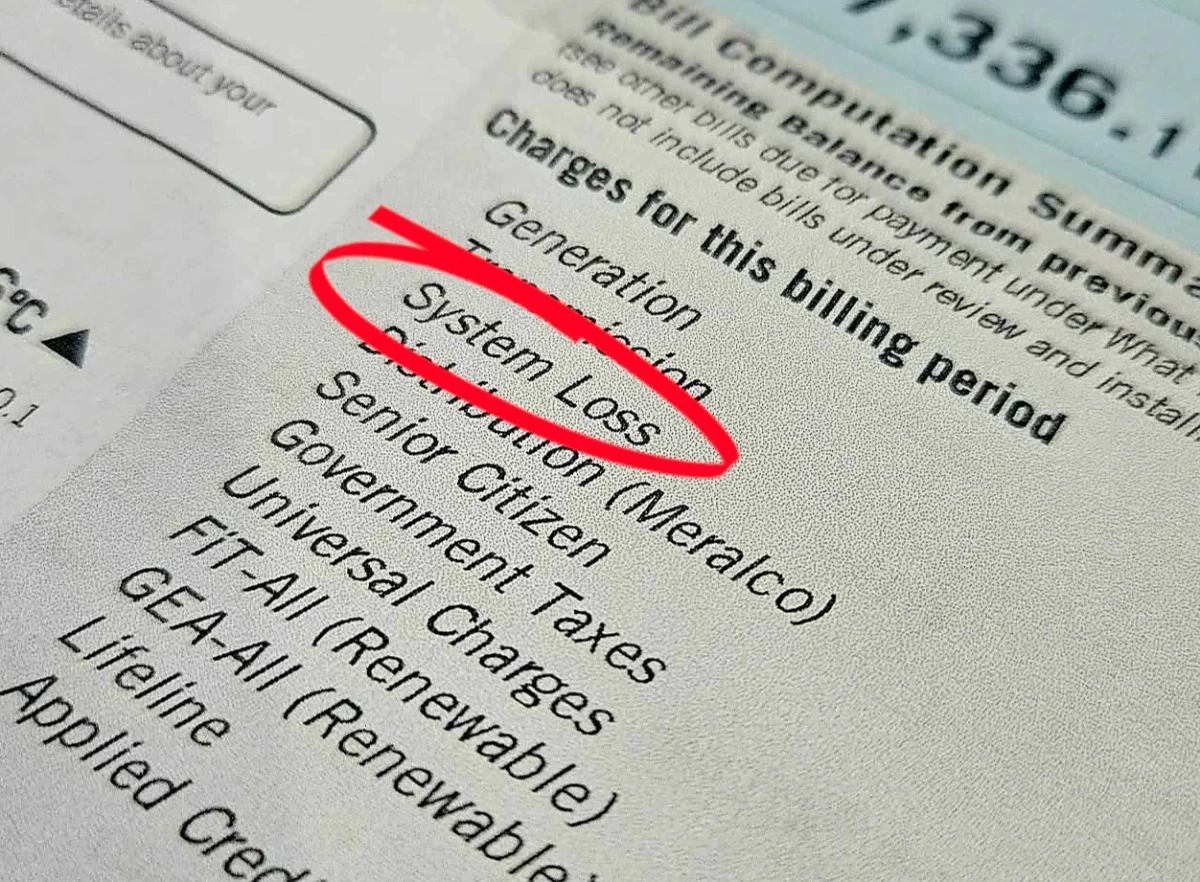
System loss charge on an electricity bill (Ellson Quismorio/ MANILA BULLETIN)


The House Committee on Energy has approved on Monday, Oct. 12 the substitute bills and the corresponding committee reports of measures seeking to free consumers from paying for system loss, and to liberalize power generation down to the consumer level.
A total of 43 House bills (HBs) and two House resolutions were filed seeking to end the practice of passing on to Filipino consumers the costs of inefficiencies arising from non-technical energy losses.
President Marcos identified the issue as a matter for legislative priority in his last State of the Nation Address (SONA) in July 2026. This caused the House of Representatives to spring into action.
Speaker Isabela 6th district Rep. Faustino “Bojie” Dy III and Majority Leader Ilocos Norte 1st district Rep. Sandro Marcos authored HB No. 10430, one of the measures filed as a response to the matter. The committee began to tackle tje measure in early August.
The bill, if and when enacted into law, would “provide meaningful relief to Filipino consumers by eliminating a charge that should properly be borne by the entities responsible for managing and operating the (electricity) distribution network".
Cagayan de Oro 1st district Rep. Lordan Suan, who filed a similar bill in HB No.10299, described the practice of passing on the system loss burden to a captive market as "unfair".
“It is unjust to pay for electricity you do not consume,” he said, echoing Marcos' words on the issue. He adding that this ran contrary to the principles of business efficiency and accountability.
The energy panel chaired by Palawan 2nd district Rep. Jose Alvarez also approved a substitute bill promoting the use of power generation and storage systems in households. It is seen to take advantage of advances in solar and energy storage technologies.
The proposed “Sariling Kuryente Act” seeks to reduce household electricity expenses, lessen dependence on the electric grid, and improve the country’s overall power supply.
Under the measure, regulatory requirements for the safe installation and operation of power generation and storage systems for non-commercial purposes would be simplified to promote wider public access to and use of existing and emerging energy technologies.
Proponents of the measure said “unnecessary procedures and restrictions” hinder nationwide adoption, discouraging “investments that could otherwise benefit households, enterprises and the country as a whole".
Both bills seek to amend Republic Act (RA) No. 9136, otherwise known as the Electric Power Industry Reform Act (EPIRA) of 2001.


House approves P7.2-T national budget for 2027


House approves P7.2-T national budget for 2027

Top: Philippine P1,000 bills Bottom: House of Representatives (MANILA BULLETIN, Facebook)

The House of Representatives approved on third and final reading the P7.2-trillion 2027 national budget, the largest in Philippine history, with 282 votes in favor, 13 against, and one abstention. The budget bill now goes to the Senate after 56 days of committee hearings and plenary debates in the House. Read more