You plan to move to the Philippines? Wollen Sie auf den Philippinen leben?

There are REALLY TONS of websites telling us how, why, maybe why not and when you'll be able to move to the Philippines. I only love to tell and explain some things "between the lines". Enjoy reading, be informed, have fun and be entertained too!

Ja, es gibt tonnenweise Webseiten, die Ihnen sagen wie, warum, vielleicht warum nicht und wann Sie am besten auf die Philippinen auswandern könnten. Ich möchte Ihnen in Zukunft "zwischen den Zeilen" einige zusätzlichen Dinge berichten und erzählen. Viel Spass beim Lesen und Gute Unterhaltung!


Visitors of germanexpatinthephilippines/Besucher dieser Webseite.Ich liebe meine Flaggensammlung!

free counters

Total Pageviews

Monday, January 12, 2026

Diese Krankenkassen sind jetzt richtig teuer

 Die große Liste

:Diese Krankenkassen sind jetzt richtig teuer

Beitragssätze steigen so stark wie lange nicht

Foto: Fotostand

Zum Jahreswechsel haben 42 von 96 Krankenkassen ihren Zusatzbeitrag erhöht. Damit ist fast jeder zweite Versicherte betroffen – insgesamt mehr als 30 Millionen Menschen. Der durchschnittliche Zusatzbeitrag liegt inzwischen bei rund 2,9 Prozent, Tendenz weiter steigend. Weitere Erhöhungen sind nicht ausgeschlossen.

Den stärksten Anstieg verzeichnete die Betriebskrankenkasse EWE: Der Zusatzbeitrag sprang von 1,98 auf 3,19 Prozent. Das ist ein Plus von 1,21 Prozentpunkten – der höchste Wert im gesamten Vergleich. Ebenfalls kräftig fiel die Erhöhung bei der BKK exklusiv aus, die ihren Zusatzbeitrag von 2,39 auf 3,49 Prozent anhob (+1,10 Prozentpunkte). Auf Platz drei folgt die energie-Betriebskrankenkasse, bei der der Zusatzbeitrag von 2,98 auf 3,98 Prozent stieg – ein Zuwachs von glatt einem Prozentpunkt.

Mit dem Kassen-Kompass können Sie Ihre gesetzliche Krankenversicherung optimieren und unter anderem den günstigsten Anbieter finden. Klicken Sie dazu hier

Mit dem Kassen-Kompass können Sie Ihre gesetzliche Krankenversicherung optimieren und unter anderem den günstigsten Anbieter finden. Klicken Sie dazu hier

Foto: BILD/epi

Diese Krankenversicherungen heben den Zusatzbeitrag an

KRANKENKASSEZUSATZBEITRAG 2025ZUSATZBEITRAG 2026STEIGT UM ...
AOK Baden-Württemberg2,60 %2,99 %+0,39 Prozentpunkte
AOK Bremen / Bremerhaven2,49 %3,29 %+0,80 Prozentpunkte
AOK – Die Gesundheitskasse für Niedersachsen2,70 %2,98 %+0,28 Prozentpunkte
AOK – Die Gesundheitskasse in Hessen2,49 %2,98 %+0,49 Prozentpunkte
AOK NordWest2,79 %2,99 %+0,20 Prozentpunkte
AOK Rheinland/Hamburg2,99 %3,29 %+0,30 Prozentpunkte
AOK Sachsen-Anhalt2,50 %2,89 %+0,39 Prozentpunkte
Audi BKK2,40 %2,60 %+0,20 Prozentpunkte
Bahn-BKK3,40 %3,65 %+0,25 Prozentpunkte
Bergische Krankenkasse2,95 %3,79 %+0,84 Prozentpunkte
Betriebskrankenkasse EWE1,98 %3,19 %+1,21 Prozentpunkte
Betriebskrankenkasse Miele2,80 %3,20 %+0,40 Prozentpunkte
Betriebskrankenkasse PricewaterhouseCoopers (PWC)2,40 %2,80 %+0,40 Prozentpunkte
BIG direkt gesund3,39 %3,69 %+0,30 Prozentpunkte
BKK exklusiv2,39 %3,49 %+1,10 Prozentpunkte
BKK Faber-Castell & Partner2,18 %2,48 %+0,30 Prozentpunkte
BKK Freudenberg2,49 %2,99 %+0,50 Prozentpunkte
BKK Groz-Beckert2,50 %3,40 %+0,90 Prozentpunkte
bkk melitta hmr3,50 %3,90 %+0,40 Prozentpunkte
BKK ProVita2,89 %3,79 %+0,90 Prozentpunkte
BKK Public2,30 %2,50 %+0,20 Prozentpunkte
BKK Rieker.RICOSTA.Weisser3,80 %4,20 %+0,40 Prozentpunkte
BKK Scheufelen3,40 %3,99 %+0,59 Prozentpunkte
BKK Schwarzwald-Baar-Heuberg2,44 %2,79 %+0,35 Prozentpunkte
BKK WERRA-MEISSNER3,39 %4,35 %+0,96 Prozentpunkte
DAK-Gesundheit2,80 %3,20 %+0,40 Prozentpunkte
energie-Betriebskrankenkasse2,98 %3,98 %+1,00 Prozentpunkte
EY Betriebskrankenkasse2,29 %2,75 %+0,46 Prozentpunkte
Handelskrankenkasse (hkk)2,19 %2,59 %+0,40 Prozentpunkte
Heimat Krankenkasse3,10 %3,90 %+0,80 Prozentpunkte
Knappschaft4,40 %4,30 %-0,10 Prozentpunkte
mhplus Betriebskrankenkasse3,29 %3,86 %+0,57 Prozentpunkte
Novitas BKK2,98 %3,60 %+0,62 Prozentpunkte
Pronova BKK3,20 %3,70 %+0,50 Prozentpunkte
R+V Betriebskrankenkasse2,96 %3,49 %+0,53 Prozentpunkte
Salus BKK2,99 %3,29 %+0,30 Prozentpunkte
SKD BKK2,48 %2,98 %+0,50 Prozentpunkte
Techniker Krankenkasse2,45 %2,69 %+0,24 Prozentpunkte
VIACTIV Krankenkasse3,27 %4,19 %+0,92 Prozentpunkte
WMF BKK2,45 %2,85 %+0,40 Prozentpunkte

Quelle: Angaben des Spitzenverbands Bund der Krankenkassen (GKV)

Das müssen Sie jetzt wissen

Wenn Ihr Einkommen beispielsweise bei 3000 Euro brutto im Monat liegt, können schon kleine Unterschiede beim Zusatzbeitrag viel Geld aufs Jahr gerechnet ausmachen.

Beispiel: Der Zusatzbeitrag bei der AOK Bremen/Bremerhaven steigt von 2,49 Prozent auf 3,29 Prozent. Bei einem Arbeitnehmer mit 3000 Euro Bruttolohn macht das insgesamt 24 Euro mehr im Monat. Da sich Arbeitgeber und Arbeitnehmer den Zusatzbeitrag teilen, bleiben für den Beschäftigten 12 Euro weniger netto pro Monat. Aufs Jahr gerechnet ergibt sich eine Mehrbelastung von 144 Euro.

Steigt der Zusatzbeitrag Ihrer Krankenkasse, haben Sie in der Regel ein Sonderkündigungsrecht. Das bedeutet, Sie können innerhalb eines Monats nach Bekanntgabe der Erhöhung kündigen.

Deshalb lohnt es sich, vergleichbare Versicherungsanbieter zu prüfen, die niedrigere Beiträge verlangen – ohne dass Sie auf Gesundheitsleistungen verzichten müssen.

Friday, January 9, 2026

Phivolcs: Mayon Volcano unrest intensifies with lava effusion, rockfalls, and ashfall


Mayon Volcano’s lava dome continues to effuse and collapse, triggering rockfalls and ashfall as Phivolcs maintains Alert Level 3. (Manila Bulletin / file photo)


Dome effusion and collapse persist as seismic activity logs 2 volcanic quakes, 72 rockfalls, 100 PDC events


By Merlina Hernando-Malipot

Published Jan 9, 2026 09:33 am


Mayon Volcano continues to exhibit heightened magmatic activity, characterized by persistent lava dome effusion and collapse, according to the Philippine Institute of Volcanology and Seismology (Phivolcs).

In the past 24 hours, Phivolcs recorded two volcanic earthquakes, 72 rockfalls, and 100 pyroclastic density current (PDC) events, keeping Alert Level 3 in effect.

Based on observations from 12 a.m. on January 8 to 12 a.m. on January 9, Phivolcs reported ongoing lava dome effusion and collapse at the summit crater, accompanied by incipient lava flows.

A fair crater glow, visible to the naked eye, was observed, indicating persistent high-temperature volcanic activity. Sulfur dioxide (SO₂) emissions were measured at 195 tonnes per day as of January 8, reflecting continued degassing from the volcano.

Phivolcs said Mayon emitted a moderate volcanic plume rising up to 1,000 meters, drifting west-southwest, while ground deformation data showed that the volcano’s edifice remains inflated, signaling ongoing magma intrusion.

As of 5:56 p.m. on January 8, Phivolcs confirmed traces of ashfall in Barangay Busay, Daraga, while light ash deposits were reported in Barangay San Francisco and Barangay Travesia in Guinobatan. Other affected areas are still undergoing verification.

With Alert Level 3 still in effect, Phivolcs reiterated that entry into the 6-kilometer Permanent Danger Zone (PDZ) is strictly prohibited and warned against unguarded entry into the Extended Danger Zone (EDZ).

The agency also advised that aircraft should avoid flying near the volcano due to ash and ballistic hazards.

Residents and local government units were reminded of the potential dangers associated with Mayon’s current activity, including rockfalls, landslides, and avalanches; ballistic fragments; lava flows and lava fountaining; pyroclastic density currents; moderate volcanic explosions; and lahars during heavy or prolonged rainfall.

Mayon Volcano, located in Albay province, is historically vulnerable to volcanic hazards. Authorities urged communities to remain vigilant, follow evacuation protocols when necessary, and rely solely on official advisories from Phivolcs and local disaster offices. 

Mangrove planting: Small acts, big climate impact


Published Jan 8, 2026 12:06 pm
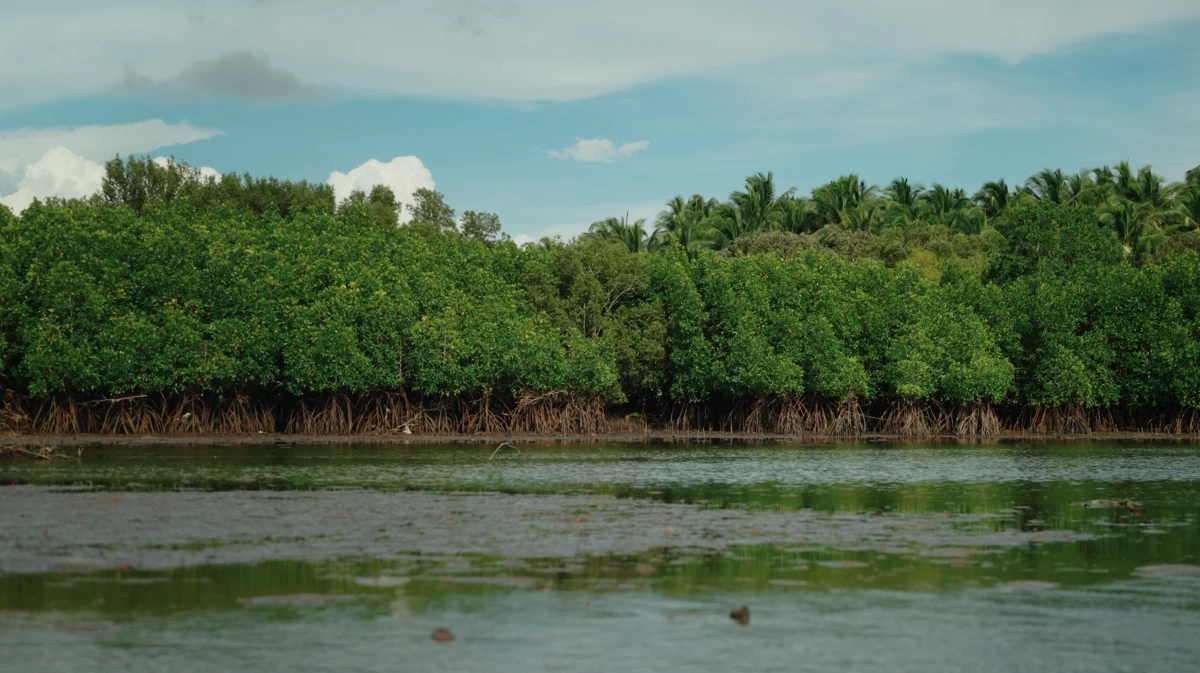
Along the country’s coastlines grows a plant that quietly helps address climate change. Experts continue to stress the importance of planting and conserving mangroves—a call that has only grown louder in recent years.
Mangroves protect shorelines, support biodiversity, and help communities withstand climate-related disasters. Yet they remain among the country’s most threatened ecosystems.
Role of mangrove conservation
The Philippines is among the countries most affected by mangrove loss. Studies estimate that only about 62 percent of the country’s mangrove cover is left compared to levels recorded in the early 1900s.
A study published in the Journal of Sea Research noted that mangroves play a vital role in reducing greenhouse gas emissions caused by human activities such as deforestation, agriculture, and industrial operations. As climate change intensifies, removing carbon dioxide from the atmosphere has become critical.
The paper found that mangroves are major carbon sinks that store vast amounts of carbon in their biomass and soils. When these are destroyed, the carbon storage is disrupted causing large volumes released back into the atmosphere. This accelerates climate change. The study emphasized that protecting and restoring mangrove habitats can play a significant role in mitigating its impacts.
The study added that carbon sequestration—the long-term capture and storage of carbon—is “the most crucial ecosystem function” provided by tropical coastal ecosystems, with mangroves particularly well suited for this role.
Another study found in the same journal underscored the importance of local community participation, including that of Indigenous Peoples, in mangrove conservation efforts. Working alongside ecologists and scientists, communities play an important role in ensuring long-term protection.
“The role of mangrove forests in reducing disaster risk and adapting to climate change is critical not only for biodiversity conservation but for socioeconomic wellbeing as well,” the study said, noting that healthy and dense mangrove forests significantly strengthen the resilience of coastal communities. These efforts also contribute to the United Nations’ Sustainable Development Goals.
Rising temperatures continue to drive flooding, food insecurity, health risks, and biodiversity loss. While the idea of a single plant “saving” humanity may sound exaggerated, mangroves offer a natural defense against many of climate change’s most destructive impacts.
A bill aimed to protect
The proposed National Coastal Greenbelt Bill seeks to rehabilitate and protect mangrove forests and coastal areas. Years after its introduction, it is still awaiting passage despite repeated appeals from experts and local communities.
The bill also aims to establish coastal greenbelt zones, including mangroves, seagrasses, and beach forests, to provide protection, food sources, and habitat. Coastal greenbelts are defined as at least 100-meter-wide strips of natural or planted coastal vegetation designed to prevent erosion and reduce the impact of coastal hazards on lives and property.
Under the bill, rehabilitation, reforestation, or afforestation efforts would be community-based, long-term, and implemented through city or municipal government.
“The program must cover a minimum target area of 20 percent of the designated priority areas in the first five years for maximum protection of the most vulnerable communities,” the bill stated. “The remaining priority areas must be completed within 10 years of designation.”
In July, scientists, civil society groups, fisherfolk organizations, youth groups, environmental advocates, and local government officials sent letters to President Ferdinand Marcos Jr. in Malacañang, urging him to certify the bill as urgent.
“The passage of the National Coastal Greenbelt Bill will stop arbitrary cutting of mangroves along coastal areas to pave the way for infrastructure and so-called coastal development that will lead to more disasters than benefits,” said Oceana acting vice president Atty. Rose-Liza Eisma-Osorio.
While proper drainage and flood control systems remain important, mangrove greenbelts are essential for a country that experiences an average of 20 typhoons each year, said Dr. Jurgenne Primavera, chief mangrove scientific adviser at the Zoological Society of London and one of the bill’s authors, in an earlier interview with the Manila Bullen.
Driving toward a greener future
Private sector participation is shaping mangrove conservation efforts as companies fulfill and strengthen their environmental commitments.
Mangrove planting has become popular in the Philippines following the introduction of Environmental, Social, and Governance (ESG) compliance requirements in 2019. When done correctly, experts say such efforts can create lasting benefits.
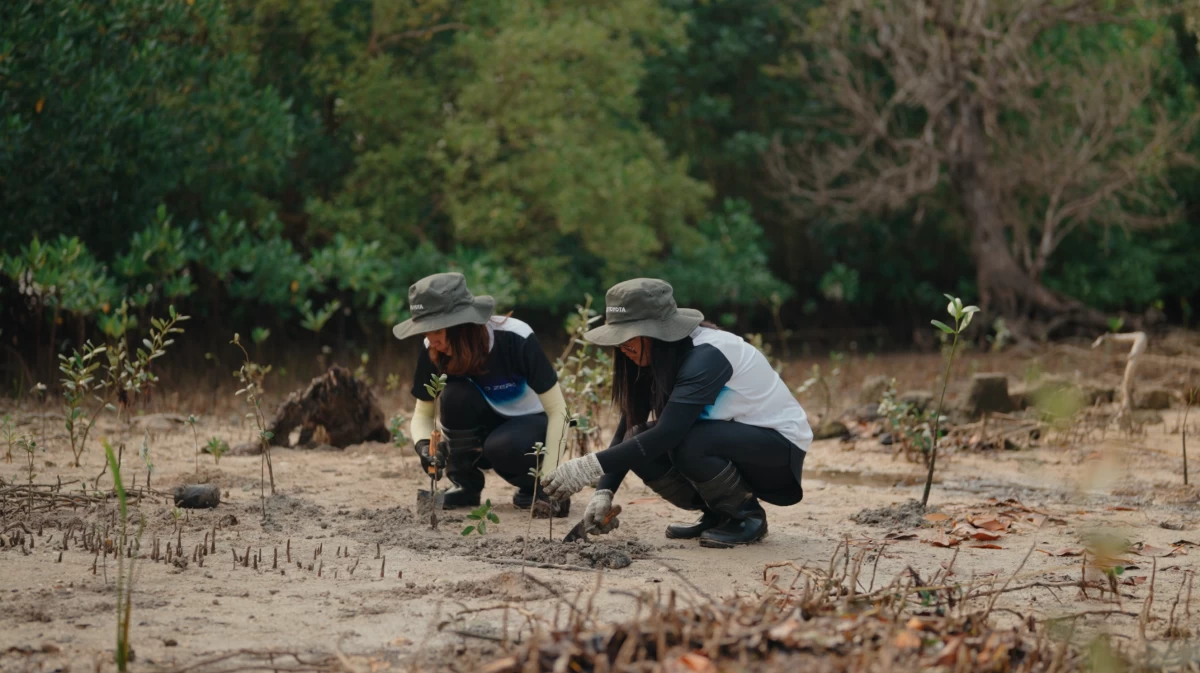
Toyota Motor Philippines has planted the appropriate mangrove species—Avicennia marina, locally known as piapi—in parts of Quezon Province, following guidance from the Community Environment and Natural Resources Office in Tayabas City. The project avoided unsuitable areas such as seagrass beds and lower intertidal zones.
Local communities take part in conserving and maintaining the site, with the company’s support providing livelihood opportunities. Working with the DENR, they planted 13,000 mangrove seedlings as part of the company’s pledge to plant 1 million trees by 2030.
“If we don’t involve the local community, anything you plant today will most likely not survive by next year,” said Mark Anthony Marcelo, assistant vice president for environment management at Toyota Motor Philippines. “Even if the trees survive, without community involvement, they could still be cut down or burned later on.”
The company also conducts capacity-building activities, inviting experts from a learning facility to teach community members on nursery development and mangrove maintenance.
"Usually, maintenance includes coastal cleanups and validation by the Department of Environment and Natural Resources,” Marcelo said. “If some plants die, we replant."
Marcelo admits that mangrove rehabilitation is a learning process, particularly in areas exposed to strong typhoons.
"When severe storms hit, mortality rates [of mangroves] can be extremely high. We just replant,” he said. “Despite these challenges, mangrove planting remains one of the most effective, sustainable, and practical flood control solutions.”
Apart from tree planting projects, Toyota Motor Philippines has also established a 1.46-megawatt rooftop solar power system in Sta. Rosa, Laguna, a wastewater treatment facility, and programs promoting responsible vehicle disposal.
Small but mighty, mangroves can help shield us from climate threats. But they, too, need saving—and that begins with us. Invite your peers to join a mangrove-planting activity. Share the latest research at family meals to spark awareness. Support organizations that protect these vital trees. These actions may not feel as instantly gratifying as a shopping spree or a movie marathon, but their reward proves far more meaningful: a healthy home that shelters and sustains us.


Gwyn Dorado, 5 others sign exclusive contracts with Music Farm


Published Jan 7, 2026 09:48 am
Filipino singer Gwyn Dorado (Screenshots from JTBC videos on YouTube)

The top six contestants on the Korean TV singing competition “Sing Again 4” have signed exclusive contracts with entertainment agency Music Farm. 

During the finale of the TV show on Jan. 6, Lee Oh-wook was declared the winner while Filipino singer Gwyn Dorado placed second, followed by Kim Jae-min and Slowly. 

Music Farm is home to artists Lee Juck, Kim Dong-ryul and John Park.    


The agency announced on Jan. 7 that it has signed two-year exclusive contracts with Lee Oh-wook, Dorado, Kim Jae-min, Slowly, Seodo and Gyuri. 

"We have signed a two-year exclusive management contract with the top 6 of 'Sing Again 4' (Lee Oh-wook, Dorado, Kim Jae-min, Slowly, Seodo, and Gyuri). We will support their albums, performances, and broadcast activities,” Music Farm announced. 

They will begin their activities with the “Sing Again 4” nationwide tour concert in South Korea in February. 

The final top 10 will be participating in the concert tour starting in Busan on Feb. 7 followed by Seoul from Feb. 12 to 15, Incheon on Feb. 21 and Daegu on Feb. 28.   

The participants will perform the songs they sang on the show. 

The top six contestants who signed exclusive contracts with Music Farm. They are (clockwise from top left) Lee Oh-wook, Gwyn Dorado, Kim Jae-min, Slowly, Seodo and Gyuri.
The top six contestants who signed exclusive contracts with Music Farm. They are (clockwise from top left) Lee Oh-wook, Gwyn Dorado, Kim Jae-min, Slowly, Seodo and Gyuri.   

The poster for the "Sing Again 4" nationwide concert tour (JTBC)

Ende Juli erste Auszahlung: Das müssen Millionen deutsche Rentner über die Erhöhung 2026 wissen


Im Juli 2026 dürfen sich Millionen Rentner auf eine Rentenerhöhung freuen. Wann und wie viel mehr es gibt, erfahren Sie hier.

Im Sommer 2026 steht für viele Rentner in Deutschland ein wichtiger Termin an: Die nächste Rentenerhöhung wird erwartet. Nach aktuellen Modellrechnungen könnten die Bezüge um rund 3,73 Prozent steigen. Doch wie genau läuft die Anpassung ab, wann kommt der Rentenbescheid und wann landet das zusätzliche Geld auf dem Konto?   

Rentnerin Haende Geld Euro Rentnerin Haende Geld Euro
Viele Rentner warten gespannt auf die nächste Rentenerhöhung im Sommer 2026. © Schöning/IMAGO

Die Rentenanpassung betrifft Millionen Menschen und sorgt jedes Jahr für viele Fragen. Die endgültige Höhe der Erhöhung wird erst im Frühjahr 2026 bekannt gegeben, da sie sich an den Lohnentwicklungen des Vorjahres orientiert. Bis dahin bleibt für viele Rentner die Unsicherheit, aber auch die Hoffnung auf spürbar mehr Geld im Portemonnaie.   

Rentenbescheid und Auszahlungstermin: Wann Rentner 2026 mit der Erhöhung rechnen können

Die Rentenanpassung erfolgt wie gewohnt zum 1. Juli. Die Deutsche Rentenversicherung verschickt dazu ab Mitte Juni 2026 die sogenannten Rentenanpassungsmitteilungen. Der Versand zieht sich erfahrungsgemäß bis Mitte Juli. Erst mit diesem Schreiben werden die Rentner offiziell über die neue Rentenhöhe informiert.

Die genaue Höhe der Erhöhung steht erst im Frühjahr 2026 fest. Experten rechnen derzeit mit einer Steigerung von etwa 3,73 Prozent. Die gesetzliche Grundlage regelt, dass die Anpassung stets auf Basis der Lohnentwicklung berechnet wird. Wer ab April 2004 oder später in Rente ging, erhält die erhöhte Zahlung erstmals Ende Juli. Für frühere Renteneintritte erfolgt die Anpassung ebenfalls zum Monatsende.

Viele Rentner würden sich eine frühere Auszahlung wünschen, doch der Anpassungszeitpunkt ist gesetzlich festgelegt. Grund dafür ist, dass die Rentenanpassung auf den endgültigen Lohn- und Gehaltsdaten des Vorjahres basiert. Diese Zahlen werden erst im Frühjahr vollständig ausgewertet. Deshalb erfolgt die Umsetzung der Erhöhung immer erst zum 1. Juli, mit der ersten Auszahlung am Monatsende. Vier Punkte entscheiden generell über die Rentenerhöhungen.    Was Rentner rund um die Erhöhung beachten sollten

Die Deutsche Rentenversicherung empfiehlt, den Bescheid sorgfältig zu prüfen und bei Unklarheiten nachzufragen. Wer die Unterlagen rechtzeitig parat hält, kann auf Rückfragen schnell reagieren. Zudem lohnt es sich, regelmäßig die eigenen Rentenansprüche zu überprüfen und sich frühzeitig über Zusatzmöglichkeiten wie Grundsicherung zu informieren, falls die Rente nicht ausreicht.

Laut aktuellem Rentenversicherungsbericht könnten die gesetzlichen Renten bis 2039 um rund 45 Prozent steigen. Für 2027 wird bereits eine weitere Erhöhung von 4,75 Prozent prognostiziert. Solche Zahlen schaffen Planungssicherheit, zeigen aber auch, wie stark die Entwicklung an die allgemeine Lohnsituation gekoppelt ist. Sollte die Rente nicht ausreichen, können Betroffene Wohngeld und Grundsicherung beantragen.