You plan to move to the Philippines? Wollen Sie auf den Philippinen leben?

There are REALLY TONS of websites telling us how, why, maybe why not and when you'll be able to move to the Philippines. I only love to tell and explain some things "between the lines". Enjoy reading, be informed, have fun and be entertained too!

Ja, es gibt tonnenweise Webseiten, die Ihnen sagen wie, warum, vielleicht warum nicht und wann Sie am besten auf die Philippinen auswandern könnten. Ich möchte Ihnen in Zukunft "zwischen den Zeilen" einige zusätzlichen Dinge berichten und erzählen. Viel Spass beim Lesen und Gute Unterhaltung!


Visitors of germanexpatinthephilippines/Besucher dieser Webseite.Ich liebe meine Flaggensammlung!

free counters

Total Pageviews

Wednesday, April 15, 2026

Elusive peace


By Dr. Jun Ynares
Published Apr 15, 2026 12:04 am | Updated Apr 14, 2026 05:06 pm
THE VIEW FROM RIZAL
As we write, reports say the United States will mobilize naval vessels to blockade the Strait of Hormuz—the world’s most critical waterway. This follows the US Vice President's declaration that negotiations with Iran were a “failure” just hours earlier.
The US Veep’s statement had earlier doused cold water on hopes that the ongoing dispute in the Middle East could be headed to a resolution, that cargo ships might be able to resume their safe and uninterrupted passage through the Strait of Hormuz, and that prices of petroleum products in the country and in the world might finally experience a downward slide.
Indications are that none of that is likely to happen soon. Peace, at this point, seems to be elusive, and all-out hostilities may resume soon. We can only pray that a possible resumption of hostilities when the ceasefire expires on the 21st of this month may be averted, that the lives of people in the affected regions of the world are spared, and that the global economy survives.
It is interesting that in the face of the wild upward spiral of gasoline prices in the country, there has been no howl on the part of the public. Yes, there are fewer cars on the streets, and more families have decided to stay at home during the long Holy Week holiday. There are posts on social media sharing the pain caused by the upward surge in fuel prices, but there is no anger directed towards a specific person or country.
It seems there is a widespread, silent admission that these adverse developments, fueled by the conflict in the Middle East, are beyond our control. It appears there is a quiet resignation to the fact that we are “collateral damage.” We can only reel under the effect of the conflict and from the absence of the proverbial “light at the end of the tunnel.”
Those who were already born when two earlier “Gulf Wars” erupted and disrupted the global economy appear to be more hopeful in the face of the ongoing conflict in the region. Our elders in Rizal recall that in 1973, the member-countries of the Organization of Arab Petroleum Exporting Countries slapped an embargo on countries that sided with Israel in the war against Egypt.
This was the first “oil crisis,” which, our elders recall, caused a major spike in gasoline prices in our country. This served as a reminder to all that some countries hold a stranglehold on the supply of vital energy resources the world badly needs.
There was another “oil crisis” in 1979, after petroleum supplies dropped sharply following the Iranian revolution, which brought down the then-powerful Shah.
Reflecting on these experiences, our elders say, “Humanity has navigated more difficult geopolitical events.” They believe no country wants to trigger an apocalyptic event that could risk the annihilation of mankind. In their view, “The warring parties will always seek a way out of the conflict and resort to more pragmatic compromises.”
They pointed out that, from a sober, rational perspective, the failure of the talks between the US and Iran “disappointed us but does not surprise us.”
They reinforced this by explaining, “We have to understand that there have been decades of deep mistrust between these two countries. We cannot expect that to be resolved in 21 hours.”
The point is clear. Negotiations, whether in business or in geopolitics, require a reasonable level of mutual trust. They also require a clear, solid intention to negotiate and openness to softening positions, bargaining, and crafting a compromise. When both sides issue “demands” and “conditions” right at the start of the supposed “negotiation,” we can anticipate such talks to “fail,” even if only temporarily.
Our elders are “optimistic” that the “door is not fully shut” to a resumption of negotiations. They pointed out that mediators in Pakistan and Oman are pushing for the extension of the ceasefire and using indirect channels. They said they believe both Iran and the US have “compelling reasons” to have a longer period of “truce.” Iran’s economy is under serious strain, and the US has domestic priorities that its government must attend to. Neither can afford to keep the current conflict raging indefinitely.
The same realities apply to us and the rest of the world. With these uncertainties, the pressing question is: what do we do in the meantime?
We have previously written about developing a “resilient mindset.” To build on that, let us add strategies based on the counsel of our elders, who “have been there.”
To recall, we must have a clear idea about what we can influence and what we cannot. For example, cutting down on unnecessary trips and expenses – that is within our control. The events in the Strait of Hormuz are not. It is good to have a list of what we must start doing today to buffer us from the possible effects of a prolonged stand-off in the conflict areas. That perspective should reduce the anxiety and fear.
Our elders also advised us to keep in mind that the world has had to absorb fallouts from similar conflicts: The previous Gulf crises, the war in Ukraine, among others. We survived them. Our country had weathered so-called “energy shocks” in the past. We adapted; our government responded with policies and programs. We emerged scathed but sometimes even better.
In sum, we can aspire to achieve the same resilience in the current situation. The elusive peace will eventually come—no matter when and at what cost.
(The author is a Doctor of Medicine, an entrepreneur and the mayor of Antipolo City, former Rizal governor, and DENR assistant secretary, LLDA general manager. Email: antipolocitygov@gmail.com)

Davao del Sur town adopts 'No Movement Sunday' to save fuel


By Philippine News Agency
Published Apr 14, 2026 09:14 pm
DUREZA (center). (FB)
DAVAO CITY – To help cushion the impact of the ongoing oil crisis, the municipality of Hagonoy in Davao del Sur will implement “No Movement Sunday” aimed at conserving fuel.
Mayor Jesus Dureza Jr. explained that the measure encourages residents to refrain from unnecessary travel on Sundays, following similar moves in other municipalities across the province.
“It is not a lockdown. We are simply requesting the community to limit travel during Sunday to save fuel,” he said in an interview Tuesday.
Dureza noted that an estimated 150,000 to 160,000 motorcycles and vehicles ply the province’s roads on Sundays.
“If each motorcycle consumes one liter of fuel, we can save 150,000 to 160,000 liters in just one day,” he said.
Residents were urged to walk or use bicycles for short trips to markets or churches. The municipality’s efforts align with Executive Order (EO) 110, signed by President Ferdinand R. Marcos Jr. on March 24, which declared a State of National Energy Emergency.
The EO activates the Unified Package for Livelihoods, Industry, Food, and Transport (UPLIFT) to stabilize energy supply and protect vulnerable sectors.
To further conserve energy, municipal offices now operate under a four-day work week, Monday to Thursday with extended hours from 8 a.m. to 6 p.m.
Air conditioning use is limited to Mondays through Wednesdays, between 10 a.m. and 3 p.m.
The local government has also placed village road maintenance equipment on standby as a precautionary measure and encouraged households to plant vegetables in their backyards to strengthen food security.

Finding the Filipino in Philippine theater


Wanggo Gallaga

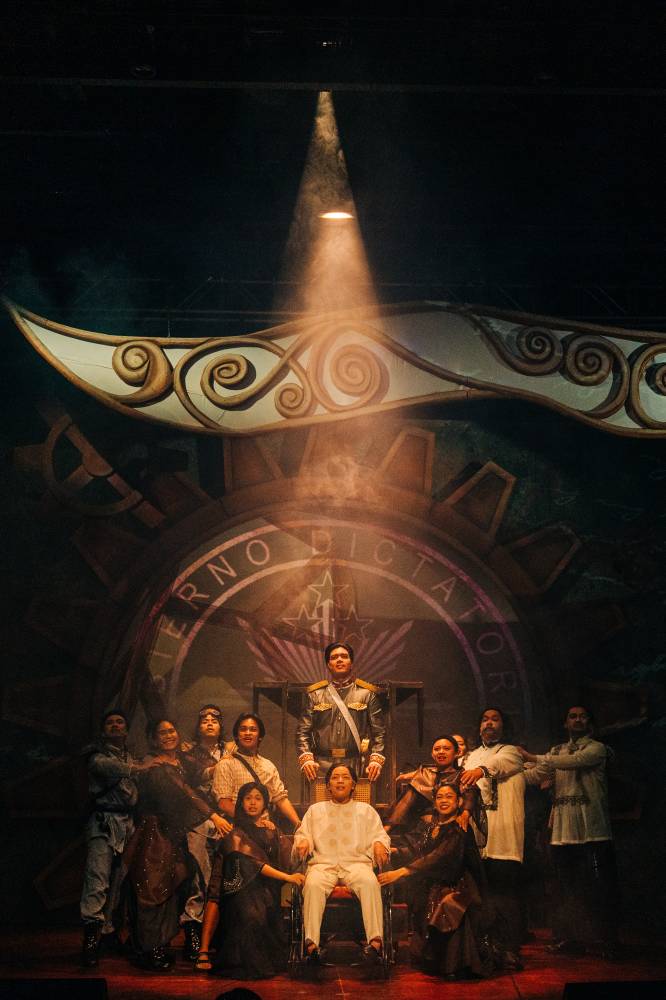
Iwas able to catch Tanghalan Pilipino’s “Mabining Mandirigma: A Steampunk Musical” on its last weekend at the Tanghalan Ignacio Gimenez Theater, and it was marvelous. The musical, written by Nicanor Tiongson with music by Joed Balsamo and directed by Chris Millado, is a complete theatrical experience. It has extensive musical numbers with great singing and dancing (choreography by Denisa Reyes and Richardson Yadao), intricate and playful set design by Toym Imao, and stunning projections by the late GA Fallarme and JM Jimenez.

“Mabining Mandirigma,” first produced in 2015, is a story about Apolinario Mabini as he navigates through the political challenges and the strife that followed during the Philippine Revolution against Spain and the subsequent Philippine-American War.

And through his story, we bear witness to the ravages of imperialism and how, in landmark moments of our history, the greatest enemy of the Filipino, oftentimes, is the Filipino himself.

A counterpoint to masculinity (and the patriarchy)

The show, with Shaira Opsimar as Mabini, has always cast a woman in the role. On that wheelchair, Opsimar is a commanding presence, and for all intents and purposes within the play, Mabini is a man.

But with Opsimar in his shoes, Mabini has a more caring, nurturing presence that plays counterpoint with all the masculine energy in the play; everyone from Aguinaldo (the show I saw had David Ezra, but Arman Ferrer is an alternate) to the illustrados who formed Aguinaldo’s congress (MC Dela Cruz, Roby Malubay, Jonathan Tadioan, Marco Viana).

There’s an inflection here that pushes against the patriarchy—that the oligarchy that meddled in Aguinaldo’s politics is primarily a masculine affectation, and having Mabini played by a woman provides a stunning counterpoint to this.

“Mabining Mandirigma” | Photo by May Celeste, courtesy of Tanghalang Pilipino

A wakeup call

The play is meant to be seen by students and adults alike, but because it’s written for a large audience, it means that the play is more forward with its themes. It doesn’t hold back with its criticism against what is wrong with Philippine politics then and, invariably, Philippine politics today. It also comments against patronage politics, the elite class shaping public policy to protect their own interests, and paints the imperialism of the West as our main enemy.

This is a truly Filipino production with the intention to wake its audience up from its slumber. It’s a call to action that speaks directly to our history and connects this with our present.

What’s more, the stylized “steampunk” aesthetic and tone allow the play to take modern elements in order to retell the past in ways that connect us to our issues today. This is the kind of theater that Gilda Cordero Fernando champions—and one that I really look for when watching a local production: How our shows utilize the medium’s urgency to speak directly to its audience and not just some form of entertainment.

The Filipinization of revivals

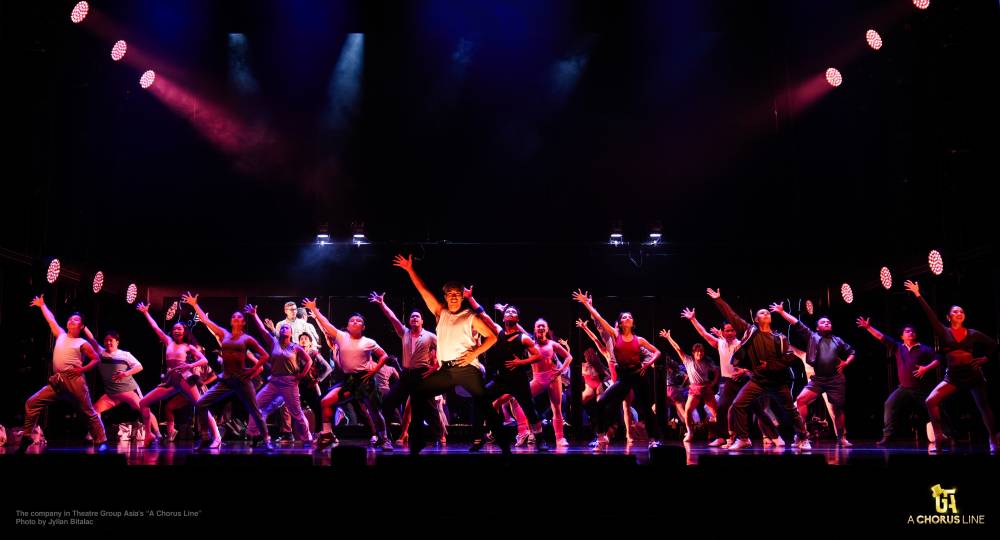
Also in its closing week last week was Theatre Group Asia’s “A Chorus Line.” The multiple Tony award-winning play by Michael Bennett—based on a book by James Kirkwood Jr. and Nicholas Dante, with music by Marvin Hamlisch and lyrics by Edward Kleban—celebrates its 50th anniversary this year. And the only show in the world to stage it (as of this writing) is the one held at the Samsung Performing Arts Theater with a cast composed completely of Filipinos, both here and abroad.

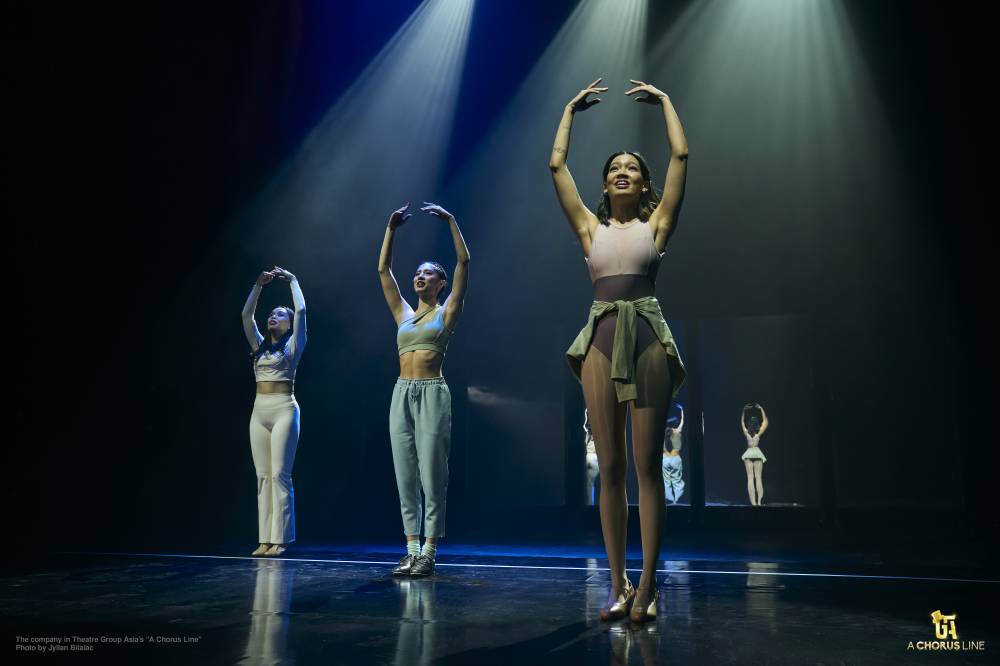
Directed by Emmy award-winning choreographer Karla Puno Garcia, the show is a heartfelt love letter to the ensemble. “A Chorus Line” is set in an empty theater as 17 dancers audition to get a part of a chorus in a new play. The show is demanding of its actors, requiring a high level of dance skills, complex acting portions, and some really beautiful songs to sing.

“A Chorus Line” | Photo by Jyllan Bitalac

Theatre Group Asia’s production of “A Chorus Line” is a triumph in every sense: great direction, great choreography, and great performances. This is a show I grew up listening to as a kid, so seeing it live is such a treat for me.

But outside that, what good reason would we have to stage “A Chorus Line” in the Philippines other than it being such an entertaining show? This is a show about dancers trying to get into Broadway. How could we relate? How could this show reflect upon our own realities?

What Puno Garcia and her cast lean into is their own backgrounds. The Filipinos in the cast who live and grew up outside the Philippines easily slip into American accents, but when they perform their monologues and mimic their parents’ speech, they give them a Filipino accent. Some exaggerate their eccentricities, leaning into the Filipino campiness that’s prevalent in our social media and our movies and series.

SEE ALSO

What happens is that, as we watch this revival of “A Chorus Line,” we are seeing Filipinos on the world stage, sacrificing everything to do what they love. We are reminded of how many successful Filipinos have made it on the world stage as actors, dancers, and singers. It’s a very American musical, but by allowing the actors to dig from their own realities, Puno Garcia builds a show that speaks to all our hopes and dreams about making it big somewhere, anywhere.

“Ang Linangan” | Photo by May Celeste

The universality of theater

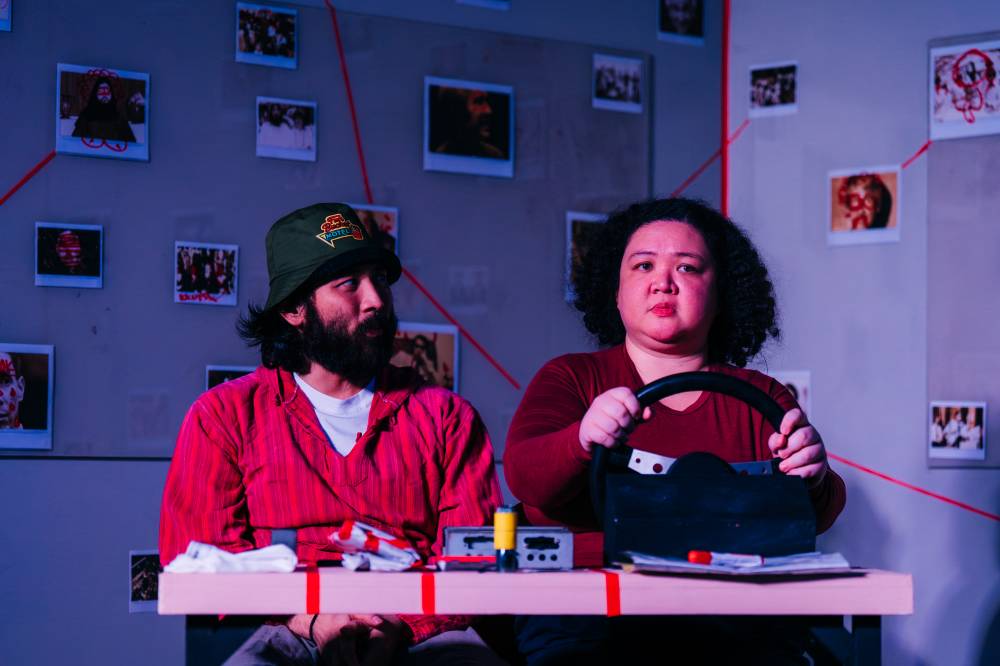
While not an adaptation, Scene Change’s “Linlangan,” directed and translated by Guelan Varela-Luarca, is a staging of New York-based playwright Davis Alianielo’s play “The Farm.” This two-hander, a brother and a sister, happens entirely in New York state in the middle of winter. But what Varela-Luarca does is to just translate all the dialogue into Filipino. He doesn’t adapt it into a Filipino setting or situation; the siblings, Tyler and Sasha, are Americans and try to reconnect after Tyler has separated from a cult. Brian Sy and J-mee Katanyag play Tyler and Sasha, and as they inhabit the siblings, they make this world real: a long drive in the winter, a brother and sister skirting around difficult subject matters, but a love for each other evident in every little gesture or look.

With Varela-Luarca’s translation and Sy and Katanyag’s comfortable delivery of these lines, I kept forgetting that they were playing Americans. What I saw on that simple stage—a table and two chairs meant to approximate the front half of a car—were two Filipino siblings bonding, catching up, taking into account the struggles of their lives. It was when Sasha made a call to Triple A (the car got stuck in the snow), and she delivered the whole dialogue in Filipino that I was taken out of my focus.

I was reminded that this story is set in America. These are Americans. They are only speaking Filipino because it’s a translation. They are not Filipino immigrants. This is not an adaptation.

Varela-Luarca delivers this Western play to us in a language that makes it accessible to us—very much like the Tanghalan Ateneo shows I’ve seen that stage Rolando Tinio’s translations of Shakespeare (again, not adaptations but just translated)—but by doing so, we see that in our tongue, there are similarities between the bonds of siblings with Americans and Filipinos.

It’s the power of theater—whether translated or adapted—that shows us that the lives of people somewhere else are not much different from here.

And for theater to really have an impact that goes beyond making us laugh and making us cry—for entertaining us—it has to take the urgency of the live performance and speak directly to our realities. It’s what I’m always looking for in any stage production.

Senior-friendly fitness spots you’ll love


The older we get, the more important it is to stay fit and healthy. That, however, can be easier said than done because as we get older, our bodies may have a harder time doing very physical activities. Despite this reality, this shouldn’t dissuade anyone from trying fitness activities, even in old age.

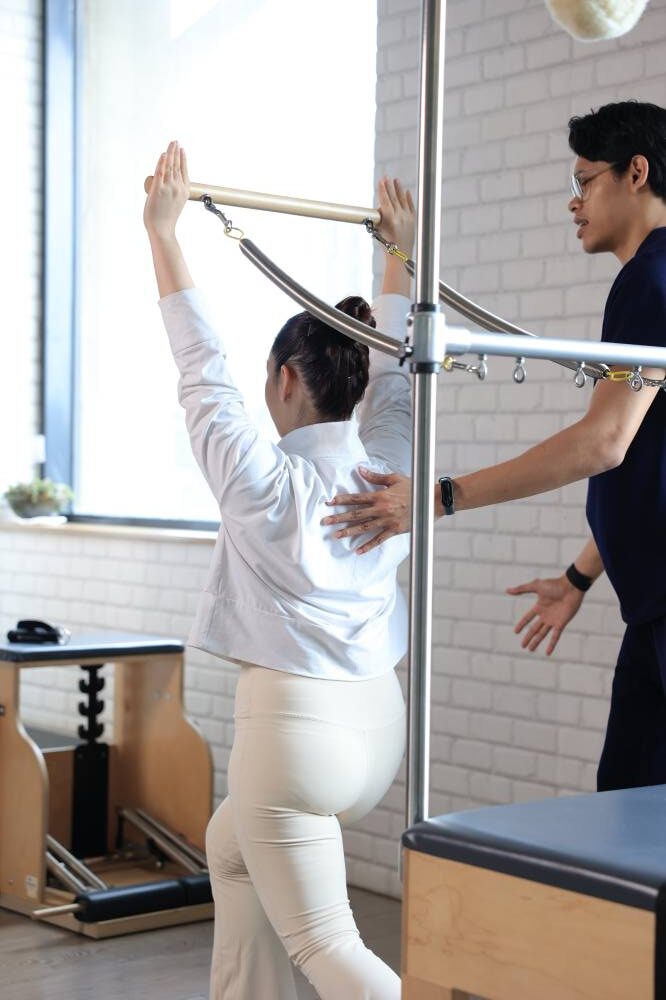
From Pilates and Tai Chi to ultrasound-assisted core and pelvic floor rehab, these three senior-friendly fitness spots make exercising enjoyable, rewarding, and even relaxing.

Lulou Beauty and Wellness

Lulou Beauty and Wellness was born out of the concern of two daughters for their mother. Rehabilitation medicine doctor and Lulou founder Kelsey Tan and her twin sister saw their once-energetic mom gradually become slower and more forgetful.

“As a rehabilitation medicine doctor, I knew that the key to reversing these declines was a combination of exercise, cognitive stimulation, and social engagement,” says Tan. “That understanding—and our desire to help our own mother—became the foundation of Lulou Wellness.”

Lulou Beauty and Wellness

Lulou Beauty and Wellness offers classes that encourage participants to try and explore, including Tai Chi and several forms of dance. This fitness spot also offers services that address osteoporosis and maintenance of muscle mass.

These activities are all beginner-friendly and are open not just to seniors, but also to young adults. Most of these activities can also be done on a chair, making it highly accessible for those with balance or mobility issues.

Lulou Beauty and Wellness is located at 3F Santolan Town Plaza, Col Bonny Serrano, San Juan. You can reach them by calling or texting 0917 110 8242 and by visiting https://lulouwellness.com/ or instagram.com/lulou_beautyandwellness/

Next+ Wellness

Next+ Wellness

Next+ Wellness is another senior-friendly fitness spot whose beginnings are rooted in the love for a parent. CEO Angela Solquillo was inspired to launch Next+ Wellness after watching her 84-year-old father strive to stay active despite the limited options for physical activities.

“I realized that the Philippine wellness industry wasn’t serving the full spectrum of needs,” Solquillo points out. “We have studios for general fitness, we have clinics for athletes, but a significant gap exists for those who need healing innovation most: older adults and people managing chronic pain. This led us to our integrated approach.”

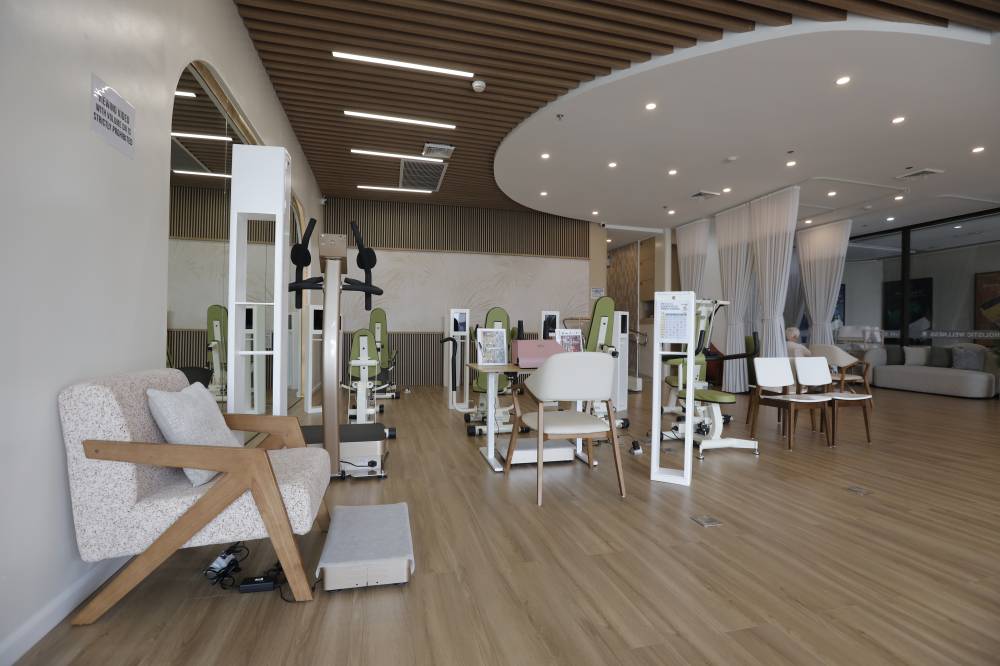
Built on accessibility and safety for all ages, Next+ Wellness offers different levels of Pilates (beginner, intermediate, and advanced) classes, as well as regenerative treatments such as Regenerative Cell Therapy. Aside from these, Next+ Wellness also has Stem Cell Activation Suite and Advanced Physiotherapeutic machines and treatments that can further aid in maintaining health and wellness.

NEXT+ Wellness is located at 4F CKB Centre, Tomas Morato, Quezon City. You can reach them by calling or texting 0927 883 7090 or by visiting instagram.com/nextwellnessph

Onelife Studio

Onelife Studio

Onelife Studio differentiates itself by being women-centric, aiming to become a “space where women can move intentionally, recover safely, and feel seen in every stage of womanhood,” according to founder Tanya Aguila.

“As our community grew, we began supporting more aging women who were seeking movement that felt safe, gentle, and purposeful. We met women navigating perimenopause and menopause, managing balance issues, joint pain, pelvic floor changes, and shifts in mood and energy,” she says. “Their needs called for deeper expertise, compassion, and specialized programming. Our team is committed to studying, training, and developing services that truly support them through these transitions.”

Onelife Studio

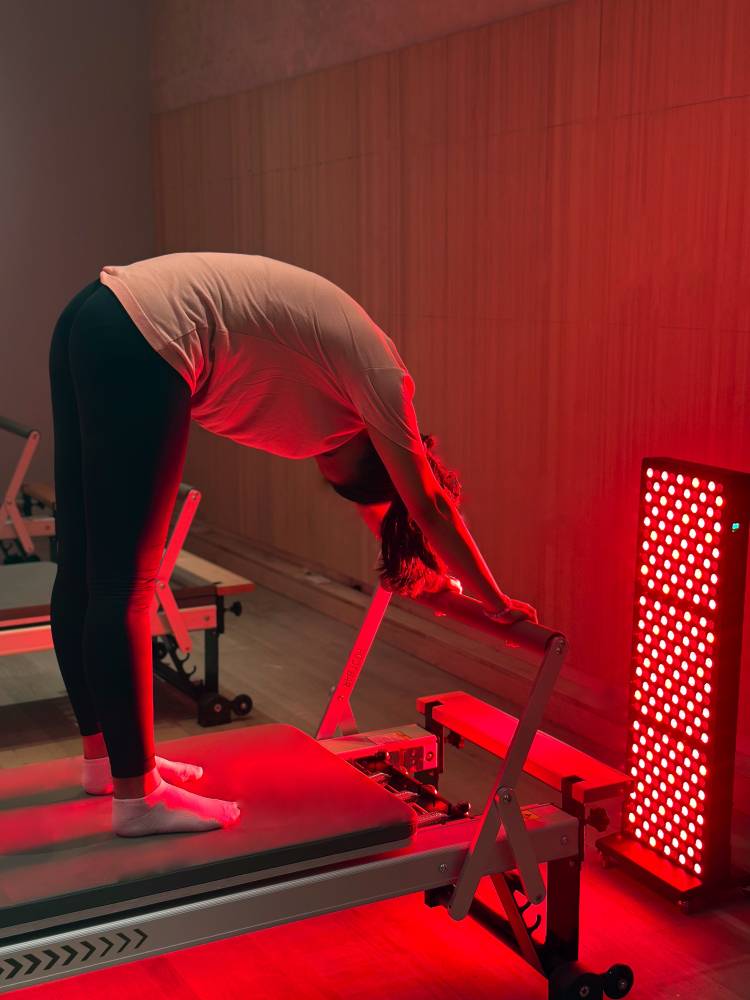
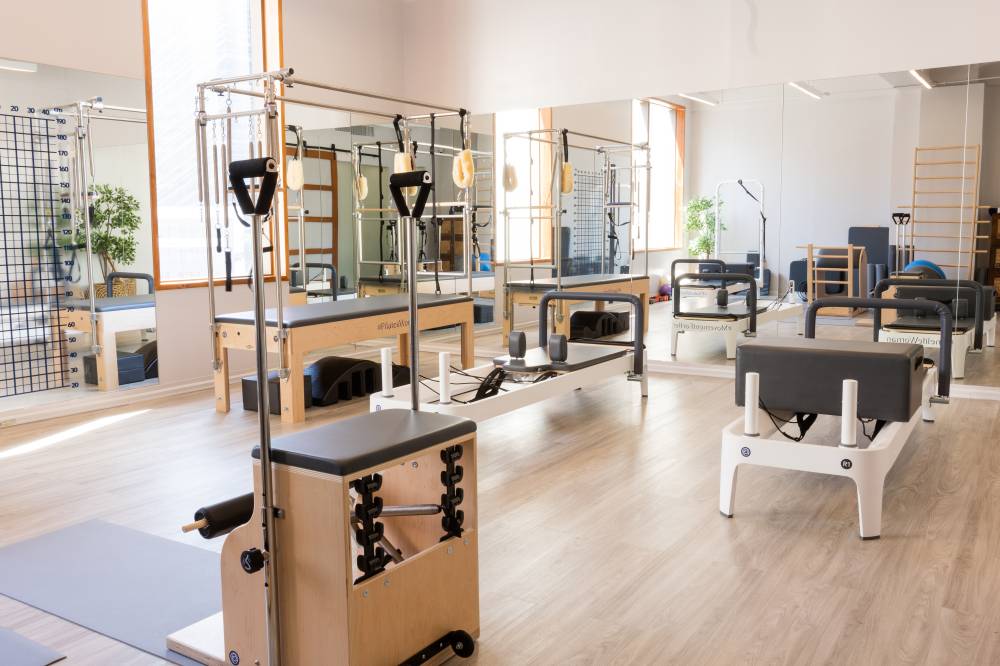
Recognizing the needs of both young and aging women, Onelife Studio offers Physiopilates, its signature Pilates program that is fully customizable and improves core strength, posture, balance, movement quality, and overall health. Other services include physio-led stretching, ultrasound-assisted core and pelvic floor rehab, and even theracupping, which boosts circulation and eases chronic tension.

Onelife Studio has locations in Alabang, BGC, Makati, Ortigas, San Juan, and Shangri-La Plaza Mall. The contact information of each branch is available on https://www.theonelifestudio.com/ and instagram.com/onelifestudio

Making health and wellness a priority

What these fitness spots have in common is the rejection of the idea that growing old equates to declining health and wellness.

SEE ALSO

“We believe [seniors] deserve the chance to continue living fully—to stay strong, sharp, and independent,” says Tan. “Investing time, effort, and resources into their health and well-being gives them that opportunity.”

“For me, investing in wellness for our seniors isn’t just about physical health,” adds Solquillo. “It’s the ultimate strategic investment in autonomy and dignity.”

As these three senior-friendly spots show, there are now more options for seniors who want to remain fit even in old age. However, Aguila wants to emphasize that active aging “is more than staying fit.”

“It is choosing a life where movement feels empowering, the body is supported, and every season is embraced with vitality and grace.”

PRAYing it forward


Nathan Duq

I am starting to like prayers.

During one Sunday service in January, a lack of cellular signal deprived me of my usual digital distractions. I normally rely on my phone to keep my hands busy and prevent myself from fidgeting during the sermon. Without it, I was forced to engage more fully with the liturgy. When the time for prayer arrived, I stood there with no expectations and found myself unexpectedly drawn in. I experienced a familiar intimacy, seeking comfort in stillness rather than a screen. In that focused silence, I truly heard our pastor pray for a fellow churchmate’s success. I was deeply moved by how he wove encouragement and genuine trust in that person’s abilities into his prayer, a moment of sincerity I might otherwise have missed.

My whole life, I have lived inside prayers: family prayers, church prayers, school prayers, Sunday school prayers. They were always present, wearisome, and expected. Then it hit me. My pastor’s prayer reminded me of my parents.

The moment they close their eyes and bow their heads, something shifts. Their presence changes, as if the world fades and only God remains before them. What deepens this is that their prayers are never prepared. They stand before people, and before God, without a script. They speak from instinct, from attentiveness to those listening, and from a careful sensing of what God might want to say in that exact moment. All this unfolds within minutes. It is demanding work, yet deeply rewarding, especially when faith feels as though it is passed hand to hand after the final “Amen.”

With my mother, prayer arrives as calm and tenderness in every word. She becomes more expressive, yet never careless. Each sentence lands with intention. In life, she is a woman of few words, reserved and quiet. But in prayer, her voice carries weight. I believe her words are shaped by the burdened life she has endured, anointed not only by the Holy Spirit but also by the small, persistent hopes she has carried and fought for while she painstakingly yearned for a better life, surviving on the lower rung of society. Perhaps prayer is her refuge during unannounced trouble, that in moments where she is finally leading one in front of many, God touches her words with compassion, using them to heal others as He once healed her.

My father, by contrast, prays with intensity and force. In daily life, he is loud and expressive, often masking care with humor or frustration. Yet when his eyes close and his brow tightens, everything else falls away. What remains is a steady, encouraging voice, no longer joking or sharp, but anchored in faith. In minutes, he becomes both vulnerable and firm. He offers empathy and strength, giving people the humanity and hope they need before a service begins or as they prepare to return home. Perhaps prayer is his only space for emotion, a place where the world’s cruelty cannot reach him.

In these moments, when both of them offer their voices, courage, and tested faith, I hear the purest form of speech I know. It is unfiltered, emotional, faithful, and deeply human, a weaving of earthly longing lifted toward the One they cannot see, yet believe in completely.

Maybe the prayers that linger most come from those whose faith has been tested time and again. I do not believe that prayers are only for the most devoted, but that they are an instinctual avenue when things become too complex to be understood by our worldly minds and feeble bodies. Whether one believes that prayers can move mountains or not, prayer, in its truest and most human form, becomes something more: a steady mantra that strengthens the heart despite doubt, a final leap of faith held tightly when pushed beyond the ledge, a self-assurance that our problems are not isolated but a universal experience that can be solved through faith, or a quiet offering of hope for others who are starting to lose theirs.

I never disliked prayer, but I often found it tedious, having rarely seen it practiced with the conviction my parents embodied. Truly listening to our pastor that Sunday morning, rather than simply following along with closed eyes, gave me a new perspective.

I realized my parents are only two among many who, having reached the limits of their own strength, find solace in humbling themselves before God. In that humility comes relief, allowing us to be gentler with ourselves. By surrendering our burdens to a higher power, we are freed to act within our means, comforted by the belief that we are watched over and redirected.

I always knew my parents taught my brothers and me to pray for protection. But perhaps, beneath that, they were teaching me how to pray so that one day I, too, might become a beacon of faith, as they once were for me.


10 signs you are too emotional


1. You find it hard to say 'no' to others because you care a lot.

2. You cry when you're by yourself but don’t share it with anyone because you worry about what they might think.

3. You think everyone is your friend and try to help everyone you meet, even if they are just around for a little while.

4. You are very nice to people and treat them kindly, hoping they will do the same for you.

5. You don’t see when someone is using you because you would never do that to anyone else.

6. You can’t hurt others on purpose because you are so gentle.

7. You find it hard to share your feelings without becoming very emotional.

8. You notice even small changes in how people act towards you, but you don’t speak up about it.

9. You care a lot about others and always try to understand what they are feeling, wanting to help every time.

10. You like to solve problems for others and worry about losing friends, but often, you still end up feeling alone.