You plan to move to the Philippines? Wollen Sie auf den Philippinen leben?

There are REALLY TONS of websites telling us how, why, maybe why not and when you'll be able to move to the Philippines. I only love to tell and explain some things "between the lines". Enjoy reading, be informed, have fun and be entertained too!

Ja, es gibt tonnenweise Webseiten, die Ihnen sagen wie, warum, vielleicht warum nicht und wann Sie am besten auf die Philippinen auswandern könnten. Ich möchte Ihnen in Zukunft "zwischen den Zeilen" einige zusätzlichen Dinge berichten und erzählen. Viel Spass beim Lesen und Gute Unterhaltung!


Visitors of germanexpatinthephilippines/Besucher dieser Webseite.Ich liebe meine Flaggensammlung!

free counters

Total Pageviews

Sunday, August 2, 2026

What is it like studying in Germany?


 ·

Oh, and by this I don’t mean the education system. That is world class, one of the best you can get in EU countries.

But yeah studying here is aweful. Damn annoying.

Why?

Because there is so much to do here.

  1. 26 beautiful Schengen countries at your fingertips. Just book a bus, flight or a train ticket and you are good to go. I live in Passau, Germany and I can just literally walk over to Austria. By foot.
  2. More concerts than you can imagine. Metallica, Slipknot etc does a Europe tour every year. Ed Sheeran comes to Munich like its his summer home.
  3. Beer festivals like they are about to blow up. Oktoberfest, Passauer Dult, Chiemseer, the list goes on and on.
  4. The Alps. Don’t want to go until Switzerland? Go to Füssen or Bayerisch Walden and you are in the Alps.
  5. Public saunas, nudist beaches, just in case you want to feast your eyes.

You get the gist right?

Now the studying. Due to reasons aforementioned, it can be dull because of the vibrant environment you get to live in.

It's good to have a German stamp on your degree. Like I said, one of the best you can get.

  1. Amazing facilities, even if you are studying in a small University.
  2. 120 credit based system, which means you got a lot of stuff to live upto.
  3. Universities tend to focus on research, while University of Applied Sciences are more practical oriented.
  4. The syllabus is designed to keep you on your toes. One night fight doesn't work out here.
  5. Lots of student discounts on train and city services. Free Amazon Prime for a year.
  6. Lots of Part time work options, English based as well. However it's good to get familiar with German language as it will prove to be of an immense help.
  7. People are nice, teachers helpful. But only to an extent. If you try their patience, get ready to be on the receiving end of their wrath.

It's been a year since I am studying in Germany. Loved it so far.

What should an expat know about living or retiring to the Philippines?


 · 

There is nothing more to know than the information you already have at the click of your mouse or the touch of your fingertips.

Among these are:

  1. Your preference for a temperate tropical climate. You don’t want to finalize your decision, and a month or two after living there, realize, that you don’t like the humidity that comes with sea breeze. Philippines is an archipelago of more than seven thousand islands. Breeze is everywhere. Humidity is in every breeze. Is this something you look forward to when you retire? It is water from end to end. If not, then consider changing your plans as early as now.
  1. Do you like asian food (Filipino food) or the Filipino variation of westernized meals? These meals are named almost exactly the same names as you hear them in the west. But they are not cooked in the west. They are cooked and prepared with the Filipino taste buds. Sure, you can have spaghetti. But not your spaghetti kind. If you want your kind, your taste, your preference, you have to import that from somewhere, or prepare it yourself with the exact ingredients you use from where you came from, not from the local manufacturers. Is this something you want to adventure upon retirement? Many people would do this if only to depart from the usual life and lifestyle they lived while still earning their retirement.

This:

Versus This:

  1. Do you enjoy adapting and adopting cultural practices? Do you like to decorate an accent of your own culture? The Philippines is a pot of gold of adaptations of cultures. You will fit anywhere, anytime. If you adapt. The Filipinos are born with innate tendencies to adapt to a culture around them. They will adapt to you. Would you adapt to them? Very flexible, considerate, adaptable, easy to teach and influence and noticeably versatile. Do you like this? Or do you prefer to be rigid and tough and rough? If you decide to retire there regardless of your cultural characteristics, chances are you, your ego will be broken to pieces in pain. But if you let go of that tough rough rigid image and embrace a new you, you will be crowned the apple of their eyes.
  1. The Philippines is a nation of fun and adventurous people, at times over the top. There are no snow skiing, but you can always try doing it in the hills of chocolate grasses. Swimming with the sharks? No problem. Roller coasters? Sure. Flintstone style. Horseback riding? You got it. Except you do it on several other animals too, not just horses. Carabaos, cows, sometimes, donkeys the size of a goat. Pick your fun.
  1. Budget? What budget? Just keep your money in your socks. We ain’t got nothing to budget. No, uh uh. Ain't gonna happen. You like McDonald’s? Sorry, thats for birthday, once a year. You are going to eat chicken, maybe sardines, and tons of fresh vegetables. Regularly. Or travel by motor bike as bus, or take the bankas as boat. It’s cheap here, man. You got to learn it. Get over your air conditioned cars. That’s for drama and show off. Take a motorcycle. Ten pesos per trip to downtown. That is about 25 cents a trip. And you could reduce that cost if you own your own motorbike and take someone with you for a fee. If that sounds adventure and fun to you, hop in on your plane and land in Cebu. You can start a life for less than a month’s salary.
  1. So you are white, or black, Hispanic, or maybe a combination of a little bit of this and that color? And your nose a little bit different? No, hugely different? Then security is an issue for you. What do you do? Change your skin? Cut back on your nose’s height? No. Be you. Be the you that you want to be. Decide to live peaceably, and leave the litigious mentality of ‘see you in court” kind behind you. Ain't gonna work that way.
  1. Eat. This is why you decide to retire there. Eat while planning what to eat next. This is perhaps the only reason that will stand the test of your decision to retire in the Philippines. Eat everything at least twice. If you don’t like to eat there, why are you there?
  1. Miami, Florida; Phoenix, Arizona. Sometimes California, or New Mexico. And sometimes Texas. Are retirement destinations of the cold northerners. If they only know 7, 107 islands are waiting for them in the coasts of the Pacific for a fraction of the cost in Hawaii. Go live as a retired expat there, and go up north in the summer, to your point of origin. In terms of water, this is also called renewable sources of energy. Go up and down the globe, just like salmons upstream the streams to take advantage of the refreshing rivers.

Go. Just go. I’ll see you there, soon.

𝐂𝐨𝐚𝐬𝐭 𝐆𝐮𝐚𝐫𝐝 𝐒𝐭𝐚𝐭𝐢𝐨𝐧 𝐃𝐚𝐯𝐚𝐨 𝐒𝐭𝐫𝐞𝐧𝐠𝐭𝐡𝐞𝐧𝐬 𝐂𝐨𝐚𝐬𝐭𝐚𝐥 𝐑𝐞𝐬𝐢𝐥𝐢𝐞𝐧𝐜𝐞 𝐨𝐟 𝐋𝐚𝐬𝐚𝐧𝐠 𝐓𝐡𝐫𝐨𝐮𝐠𝐡 𝐌𝐚𝐧𝐠𝐫𝐨𝐯𝐞 𝐏𝐥𝐚𝐧𝐭𝐢𝐧𝐠

𝐋𝐎𝐎𝐊: Demonstrating its unwavering commitment to marine environmental protection, Coast Guard Station Davao together with Civil Relations Group- Southeastern Mindanao, in partnership with the Tambongon Fisherfolks Association (TAMFIAS), successfully conducted a Mangrove Planting Activity at the Tambongon Mangrove Site in Purok Tambongon, Barangay Lasang, Davao City on 01 August 2026.
The activity resulted in the planting of 100 mangrove propagules, contributing to the restoration of vital coastal ecosystems that serve as natural barriers against coastal erosion, storm surges, and the impacts of climate change. Healthy mangrove forests also provide critical habitats for marine life, support local fisheries, improve water quality, and strengthen the resilience of coastal communities.
Through initiatives like this, the Philippine Coast Guard continues to uphold its commitment to protecting and preserving the country's marine environment while fostering stronger partnerships with coastal communities toward a greener and more climate-resilient future.


Kabacan responders top Gov. Lala Simulation Exercise


By Keith Bacongco

Published Aug 1, 2026 05:34 pm
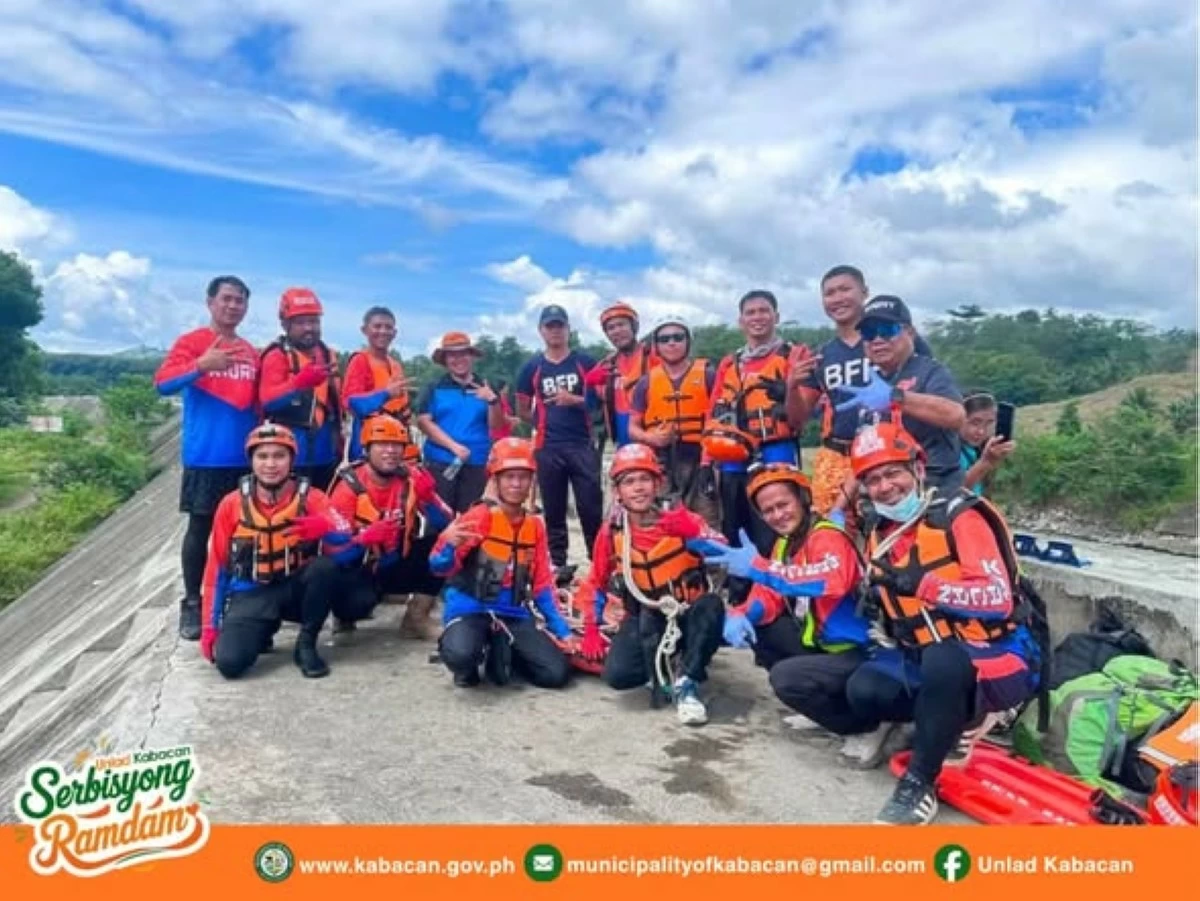
DAVAO CITY – Responders from the local government of Kabacan in Cotabato topped the 6th Gov. Lala Simulation Exercise (SimEx) on mass casualty incidents in Banisilan, Cotabato from July 26 to 31.
The Kabacan Incident Quick Response Team (KIQRT) outperformed their counterparts from different towns in most of the disciplines during the competition.
The KIQRT was also the Best in Swift Water/River Crossing, Best in Hailing, Best in Low Angle Rescue, and Best in Emergency Transfer, List, and Carries.
Responders from Matalam placed second after earning the Best in Patient Management and Best in Extrication in the Mass Casualty for Earthquake, Landslide, and Flooding Incidents. Third was responders from Pikit which was the Best in Transfer, Coordination, and Endorsement in the same scenario.
In the same scenario, responders from Tulunan were Best in Camp Management; Makilala as Best Organized Team, and Best in Search and Rescue Uniform was also awarded to responders from Antipas and Makilala.
Special awards were given under the Mass Casualty Incident and Vehicular Crash to responders from Kabacan for Best in Extrication; Arakan for Best in Triage; M’lang for Best in Patient Management, and Pikit for Best in Transfer, Coordination, and Endorsement.
The five-day activity was part of the provincial government’s effort to hone the skills of every responder in the province in man-made disasters and geohazards.
According to the Provincial Disaster Risk Reduction and Management Office (PDRRMO), the simulation exercises also aim to identify the competencies of all Municipal Disaster Risk Reduction and Management Councils and partner-agencies in the province in managing events or incidents.
The PDRRMO acknowledged that the province is exposed to a wide range of natural and human-induced hazards, necessitating a high level of preparedness among responders and stakeholders.
“With its strategic locations and expanding road networks, the province continues to experience increasing risks of vehicular accidents that may result in mass casualty incidents,” the PDRRMO said.
The agency noted that the province lies in a seismically active region, making it vulnerable to earthquakes that may trigger secondary hazards such as flooding, landslides, and infrastructure collapse.
“These realities underscore the need for continuous capacity building, interventions, particularly simulation exercises that replicate real-life emergency scenarios and test the readiness of response systems at all levels,” PDRRMO said.
Banisilan Mayor Arlene Alisasis said that the local government is grateful for being chosen as the host of the activity.
“Calamities could strike anytime and anywhere, we cannot predict when disasters could strike. That is why we have to always be prepared, we should remain united because there are no challenges that we cannot overcome,” Alisasis said.