SEASONAL MONSOON TRANSITION MONITOR
This might not be the typical expat blog, written by a German expat, living in the Philippines since 1999. It's different. In English and in German. Check it out! Enjoy reading! Dies mag' nun wirklich nicht der typische Auswandererblog eines Deutschen auf den Philippinen sein. Er soll etwas anders sein. In Englisch und in Deutsch! Viel Spass beim Lesen!
You plan to move to the Philippines? Wollen Sie auf den Philippinen leben?
Ja, es gibt tonnenweise Webseiten, die Ihnen sagen wie, warum, vielleicht warum nicht und wann Sie am besten auf die Philippinen auswandern könnten. Ich möchte Ihnen in Zukunft "zwischen den Zeilen" einige zusätzlichen Dinge berichten und erzählen. Viel Spass beim Lesen und Gute Unterhaltung!
Total Pageviews
Tuesday, September 1, 2026
HABAGAT IS OUT, AMIHAN IS IN?
Alex Eala fever hits US Open
At A Glance
- From her practice sessions to exhibition and mixed doubles matches, there is no doubt that Alex Eala is a crowd favorite in the ongoing U.S. Open, drawing thousands of fans who flock to the courts just to catch a glimpse of the Filipina star.

Pinoy Catholics: HELLO, SEPTEMBER
Three cyclones stir 'habagat'; death toll rises to 33
| ||
Parts of Luzon and the western section of the Visayas can expect rainy weather as three tropical cyclones continue to enhance the southwest monsoon or “habagat,” the Philippine Atmospheric, Geophysical and Astronomical Services Administration (PAGASA) said on Monday, Aug. 31. Read more | ||
Meanwhile, the Office of Civil Defense (OCD) recorded 33 deaths, 19 injured persons, and three missing individuals amid the effects of three tropical cyclones and the southwest monsoon. Read more |
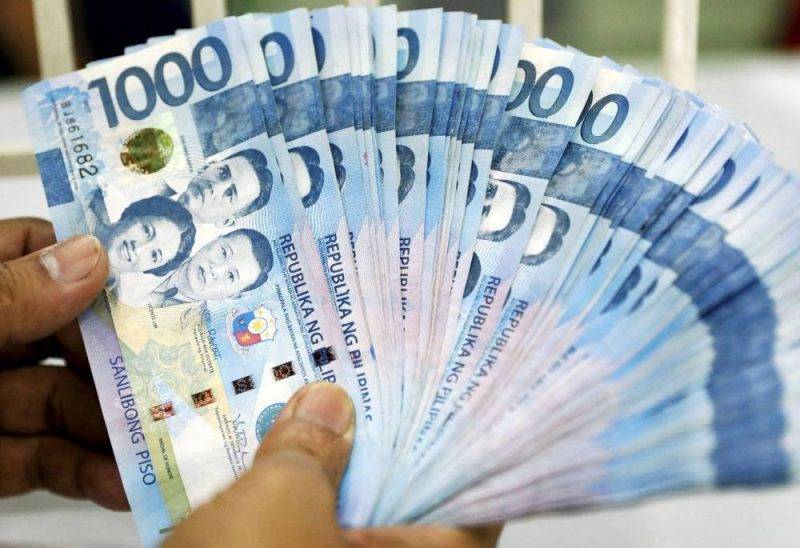
Peso tagged as Asia’s ‘weakest link’

The Philippine peso remains Asia’s “weakest link” despite the central bank’s recent interest rate increase, as policymakers confront a delicate balancing act between bringing inflation under control and supporting an economy that has struggled to gain momentum.
For Asian currencies, the key question is increasingly whether inflation will remain persistent enough to warrant further monetary tightening, MUFG Bank Ltd. said in a note on Monday.
The dollar’s recent weakness had provided some support for Asian currencies, but that cushion may be fading, the global bank noted.
Who do we follow?
By Fr. Roy Cimagala
Chaplain
Center for Industrial Technology and Enterprise (CITE)
Talamban, Cebu City
Email: roycimagala@gmail.com
WE have to ask ourselves this question from time to time: are we really following Christ, or have we quietly begun following our own likes, dislikes, and opinions?
It is surprisingly easy to drift. Instead of allowing Christian faith to guide our decisions, we can gradually depend on our own reasoning, personal tastes, and changing ways. Regular examination keeps faith central.
We can see this danger in the Gospel episode about Jesus returning to Nazareth. (cfr. Lk 4:16–30) He entered the synagogue, read from Isaiah, and began speaking. At first, the people were impressed by his words.
They wondered at the gracious words coming from his mouth. But admiration soon changed. They asked whether this was not Joseph’s son, someone they already knew from their neighborhood. Familiarity became an obstacle to faith.
Then Jesus explained that Isaiah’s prophecy was being fulfilled in him. Suddenly, admiration became resistance, and the people became so angry that they wanted to throw him over a cliff. The story remains relevant.
It presents a practical question for us. Do we follow Christ when his teachings agree with our preferences, or do we follow him even when he challenges our comfortable assumptions? That question deserves honest attention.
It matters especially today. We live amid remarkable progress in technology, communication, science, philosophy, and other fields. These developments have made life easier, faster, and wonderfully convenient.
None of these achievements is bad. They can be gifts when used wisely. Technology can serve humanity, reason can discover truth, and creativity can solve problems. Trouble begins when good things quietly take faith’s place.
We may become so impressed by human intelligence that we forget realities which intelligence alone cannot fully grasp. This is one subtle spiritual challenge of our time: placing our methods and opinions above God’s wisdom.
Faith and reason, however, are not enemies. They belong together. Both are gifts from God, and properly understood, they cooperate in helping us discover truth, make sound decisions, and live responsibly.
The difficulty comes when reason tries to become independent of God. Intelligence can then become a servant of ambition, convenience, or self-interest, rather than an instrument for sincerely seeking truth and what is genuinely good.
We should therefore ask ourselves honestly: am I using reason to understand God’s creation better, or mainly to justify what I already want? Modern conveniences can become “sweet poisons,” making dependence on God seem unnecessary.
Christ gives us the corrective when he says that anyone who wishes to follow him must deny himself and carry his cross. Faith cannot remain an agreeable idea or Sunday habit; it must shape life.
Following Christ means allowing him to challenge us. Sometimes he asks us to forgive when resentment feels justified, serve when we would rather relax, or sacrifice when convenience seems attractive. This makes discipleship concrete.
We do not prove faith merely by knowing Christian teachings. We prove it by letting them shape our choices, habits, priorities, relationships, and actions. Therefore, renewed evangelization and apostolate are needed to purify our culture.
This renewal should not be hostile. We can present the beauty and reasonableness of Christian living through families, schools, workplaces, parishes, friendships, and communities where truth is respected and charity is practiced naturally.
We need not fear modernity, technology, or human progress. Rather, we should place these valuable things in proper order, keeping God at the center and using everything else wisely for serving others.
The goal is not to reject the world but transform it. When Christ guides our minds and hearts, our abilities become instruments for serving others. So we ask: am I following Christ, or myself?
WE LIVE IN UNCERTAIN TIMES…BUT HAVEN’T WE ALWAYS?

PEOPLE often look back at history as if it were stable, but every generation has faced wars, economic crashes, pandemics or rapid social changes.
The brain dislikes ambiguity. It prefers clear information. When the future is unclear, the mind may interpret the lack of answers as a potential threat, causing stress and anxiety.
There is also an “Uncertain Times” cycle. The phrase tends to become popular during crises. When life feels calm, it fades from use, even though the fundamental unpredictability of tomorrow never really goes away.
Uncertain times are usually understood as bad times. The phrase has been used to describe the decades of the Cold War, the sudden collapse of the housing market, the years of a pandemic and the nervous months before an election. When we are happy, content or confident—when ominous global powers fall, the housing market recovers, vaccines are developed and officials are finally sworn in—the phrase falls out of fashion.
The phrase “Certain Times,” by contrast, almost never appears. Yet that is precisely what “Uncertain Times” seems to imply: that while sometimes we do not know what will happen, at other times we somehow do. It is comforting. If there is uncertainty, then there must also be certainty.
Certainty—or uncertainty—is often a matter of feeling rather than fact. Of course, I know that “Uncertain Times” is simply shorthand for describing a general feeling of unease; no one is foolish enough to believe that they truly know the future. Or perhaps it is like the words “discombobulated,” “disgruntled” and “disgusted,” which seldom, if ever, appear without their prefixes.
But, rightly or wrongly, we do experience a sense of certainty. It would be impossible to go about our daily lives without it: By seven o’clock, the sun will be out. When I eat food, it will give me energy. When I drink this tea, it will not kill me. Certainty is relative. Certainty is also flimsy.
If you say that something is questionable, you mean that it is not completely honest, reasonable or acceptable. These have certainly been challenging times for all of us—times that can also be deeply thought-provoking.
No, I am not talking about political matters. Most of my fellow columnists are already doing that. More than enough. I am talking about times of darkness—times when the whole world seems to be against you and me.
No, I am not talking about corruption either. We have already heard enough about that. It is what many people who still believe and trust in a new beginning are talking about.
Allow me to become very personal. I remember difficult, problematic and questionable periods in my life and surroundings when I almost lost all my strength to confront the problems before me. Life’s path became narrow. Fears grew: It’s enough. It’s enough!
I am talking about personal matters. But I also observe the people around me. We are all—yes, please count me in—starting to become awkward and irritable. I find myself reluctant to accept the good ideas of others. I feel driven into a corner. Everything seems to have become a problem. Our voices rise, and our groans become louder and louder.
Creating the life you want while dealing with uncertainty does not happen overnight. It is found in the little things. It is about having a vision and making it compelling. It is about seeing and feeling it with genuine emotion.
It is about caring for other people. It is calling someone simply to say, “I love you,” for no particular reason. It is taking every opportunity to connect, to be playful, and to honor and cherish the people you love.
In my personal case, I suddenly experienced how God put me into life’s “reconversion plant” and refreshed me. Small but meaningful and important acts of care suddenly appeared. After a hot day and a refreshing thunderstorm, we may once again be able to enjoy the following day and night. The person who insulted us suddenly apologizes; the illness disappears.
“You prepare a banquet for me, where all my enemies can see me!” (Psalm 23:5).
I am glad. I really do not know what new spitefulness my next “enemy on duty” might bring in the near future. I do not even want to know. I have learned that negativity blocks life and its plans.
Given just how common and recurrent uncertainty is, there will always be people ready to capitalize on it—and others willing to pay to be rid of it.
Op-ed writers, pundits, religious figures, scholars, consultants, influencers and hot-takers are always ready to prescribe remedies for our feelings of uncertainty: travel preparedness, political influence, literature, advice from football coaches, insurance, environmental sustainability and self-acceptance. Yet their advice rarely seems to be that perhaps we should simply learn to live with uncertainty.
Once, we consulted oracles and soothsayers. Then we looked to prophets and religious figures. We read tea leaves and Tarot cards. And no matter the epoch, we have always been vulnerable to despots and demagogues promising to create certainty for us.
Today, we search for certainty in the vast, nebulous sea of data. We implore statisticians to tell us who is going to win an election—or even a baseball game. Yet we rarely ask them how we might simply become comfortable with not knowing.
Sad to say, many people still do not seem to be in the mood to follow Christ’s advice…!
***
Email: doringklaus@gmail.com or follow me on Facebook or LinkedIn or visit www.germanexpatinthephilippines.blogspot.com or www.klausdoringsclassicalmusic.blogspot.com./PN
POINTS TO PONDER
By: Klaus Döring
"There are many points to ponder". Two case studies, and a zillion points to ponder.
"Thoughts to Ponder" is a board full of quotes which will make us think that LIFE is more valuable than any other material things in this world.
Sometimes we feel our life is turning miserably. Our negativism doesn't allow us to keep our eyes, ears - and, most important!_ our minds, hearts and souls open. We reach our breaking point.
This breaking point can be the prelude to our strongest moment. It is when we reach our breaking point, that we discover our real strength. Allow me to ask you, my dear readers; "What happens to you or with you when you reach your breaking point?" Do you face it or do you run away/' i'll be giving you a very simple answer: If you face it - you break it. If you run away (and/or close your ears, eyes and mouth) - it breaks you!
Everyday - a dull reality! Many of us will answer this question with a big YES! Actually, who do we like to cover a newborn day already with a grey veil? Each day has a new face, but sometimes we don't have the strength to watch its countenance. Of course, not every day has adventures and highlights.
Contrary to what might be expected, I look back on experiences that, at the same time, seemed especially desolating and painful with a particular satisfaction. Indeed, everything I have learned, everything that has truly enhanced and enlightened my existence, has been through affliction and not through happiness.
If it ever were to be possible to eliminate affliction from your earthly existence, the result would not be to make life delectable, but to make it too banal and trivial to be endurable.
By observation, we can feel that many of us need help to manage their everyday life. We need something that would keep us going as we journey through life. Many times we can also learn from other people and their experiences.
And here is one more thing: Affection is the humblest love - it gives itself no airs. It lives with humble and private things: soft slippers, old clothes, old jokes, and the thump of a sleepy dog's tail on the kitchen floor. The glory of affection, the disposition of mind, the good will and tender attachment, is that it can unite those who are not "made for one and another', people. who, if not out down by fate in the same household or community, would have nothing to do with one and another.
Life for me has been a thing of ups and downs in approximately equal measure. I don't have something sensational to report every day about my progress. Often I wonder if fulfilment in life is necessarily tied to change for the better.
Don’t attach too much significance to words. Words, like waves, keep changing form & coming back, giving us the illusion of shores. Language often corrupts the soul.


.jpg)