
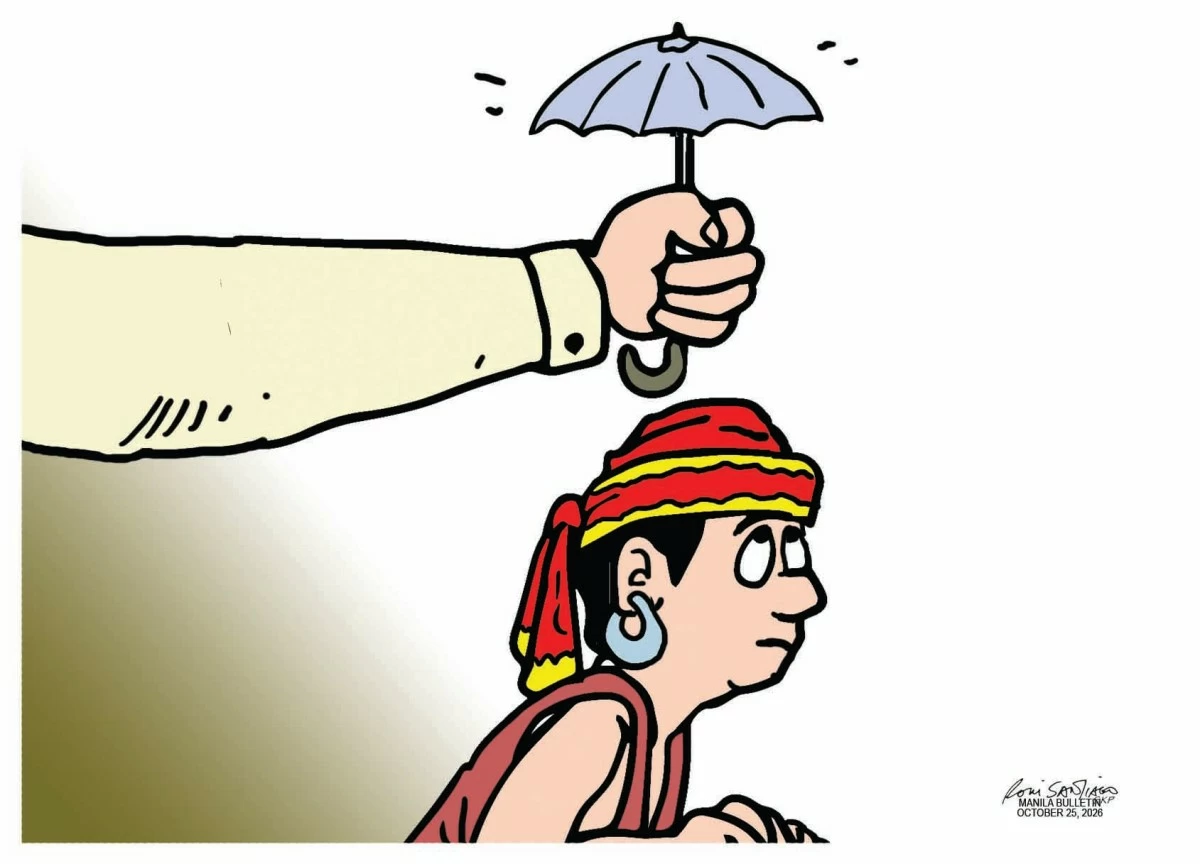
October is drawing to a close. Soon, November will arrive, followed by the final month of the year. Amid the many issues occupying the country’s attention, one important observance risks passing with little notice: National Indigenous Peoples Month.
Declared through Presidential Proclamation No. 1906 in 2009, the month-long observance with the theme, “Empowering Indigenous Peoples: Strengthening Rights, Culture, and Ancestral Domains,” deserves more than ceremonial recognition. It should remind us that Indigenous Peoples are an essential part of our history, culture, and national identity. Their concerns must be our concerns, too.
Indigenous communities are not simply figures in history books or participants in cultural festivals. They are living communities whose languages, traditions, knowledge, and practices have been passed down through generations. Their understanding of the land, traditional livelihoods, and stewardship of natural resources form part of the heritage that has shaped our nation.
When their ancestral lands are threatened, their traditions disappear. When their voices are ignored, the loss is not theirs alone. It is a loss for the entire country.
This October also marks the 29th anniversary of Republic Act No. 8371, or the Indigenous Peoples’ Rights Act (IPRA) of 1997. The law recognizes and protects their rights, including those involving ancestral domains, cultural identity, and participation in decisions affecting their communities.
Yet nearly three decades after its enactment, considerable challenges remain.
The Commission on Human Rights (CHR), citing World Bank data, noted that as of early 2023, only 55 of 257 ancestral domains with approved Certificates of Ancestral Domain Title had been fully registered. Meanwhile, Philippine Statistics Authority figures showed that poverty incidence among Indigenous Peoples reached 32.4 percent in 2023, affecting approximately 2.93 million people.
These figures represent communities confronting difficulties in securing their lands, accessing education and healthcare, and obtaining basic government services. They also raise questions about how development is pursued, particularly when projects affect ancestral domains.
During this year's celebration in Cotabato, National Commission on Indigenous Peoples (NCIP) Secretary Nancy Catamco emphasized that Indigenous communities must actively participate in decisions affecting their lands and development.
“Our role should go beyond being beneficiaries,” she said.
Her statement deserves attention. Indigenous Peoples should not merely receive the benefits of development. They must have a meaningful voice in determining how development takes place in their communities.
This responsibility does not belong to the government alone.
The media must also provide space for Indigenous Peoples' concerns in the national conversation. Coverage should go beyond cultural celebrations, traditional costumes, and colorful festivals. Issues involving ancestral lands, education, poverty, displacement, and cultural preservation deserve sustained attention in news reports, features, documentaries, and opinion pages.
Their stories must be told, and more importantly, they must be given opportunities to tell these stories themselves.
The same responsibility extends to our schools and universities. Young Filipinos must understand that Indigenous Peoples are not separate from our national history. Their contributions, experiences, and present-day struggles are part of the Filipino story. Learning about them should extend beyond textbooks and occasional school celebrations.
Campus journalists, educators, and student organizations can help bring these concerns into classrooms and public discussions. Through education and meaningful exchanges, the younger generation can develop greater appreciation for the cultures and communities that form part of our shared heritage.
As National Indigenous Peoples Month comes to a close, we must remember that recognizing Indigenous Peoples should not be confined to October. Their rights deserve protection throughout the year, their cultures deserve preservation, and their concerns deserve a place in every discussion about the nation's future.
After all, Indigenous Peoples are not merely part of our past. They are part of our present and future. Their history is our history. Their heritage is our heritage. And their concerns must be our concerns, too.
