
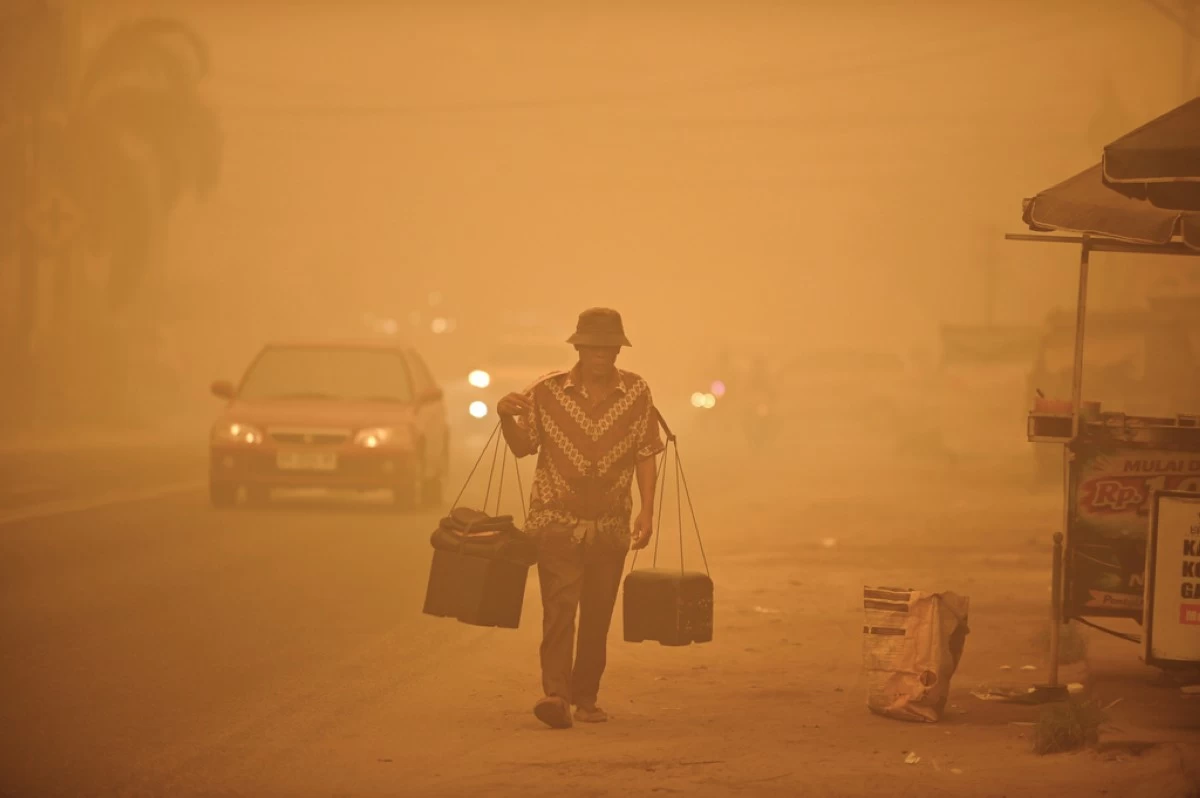
A street vendor walks amid thick haze from wildfires in Palangkaraya, Central Kalimantan, Indonesia, Saturday, Oct. 24, 2026. (AP Photo/Yulianus Stefan Lundju)
JAKARTA, Indonesia (AP) — Indonesia and Singapore agreed Tuesday to cooperate more closely to combat the illegal burning of land that has contributed to a toxic haze that has blanketed multiple cities across Southeast Asia in recent weeks.
Singapore’s Foreign Minister Vivian Balakrishnan met with Indonesian Foreign Minister Arrmanatha Nasir in Jakarta and said afterward that the two countries agreed to establish a task force to strengthen enforcement under existing regulatory powers, and to consider new ones.
The haze comes primarily from western Indonesia where forest and peatland fires often are started to clear land for farming. While such fires are common during the dry season starting in April, this year’s are the worst on record, partly because of hotter and drier weather attributed to the El Niño weather pattern.
“El Niño is a natural phenomenon, but the burning of the forest and land is caused by human actions," Balakrishnan said in a joint press statement. “We have a responsibility to ensure the health of all the citizens of Indonesia and Singapore. Therefore, I hope that the Indonesian and Singapore governments will work together to overcome this challenge.”
The haze in Southeast Asia has triggered health concerns and ignited a public backlash from Singapore, Malaysia and other members of the Association of Southeast Asian Nations.
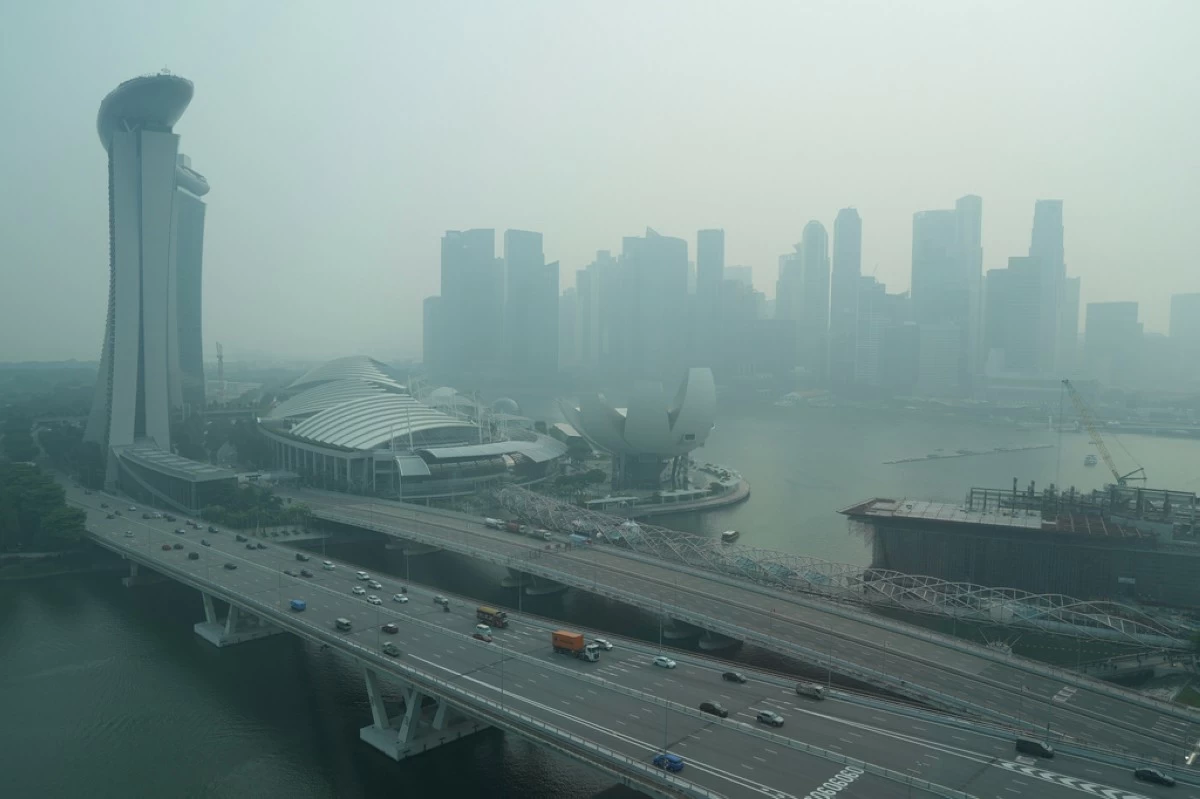
A thick haze obscures the skyline behind the Central Business District area in Singapore, Friday, Oct. 9, 2026. (AP Photo/David Hu, File)
Singapore recently announced it had sent warning letters to 10 Indonesian companies that may have been linked to forest fires.
Nasir added that Indonesian authorities also have taken law enforcement actions resulting in hundreds of individuals and more than 50 companies facing legal proceedings. Some of them have been found guilty under Indonesian law.
“Smoke can cross borders, so can money. That is why we must follow the money trail these companies have left behind. Singapore offered to share data on companies linked to the fires, which we welcome as a valuable opportunity,” Nasir said in the joint statement.
The thick haze has turned the skies orange over the Indonesian sections of Borneo Island, and has spread across neighboring Singapore, Malaysia and other parts of Southeast Asia where it has disrupted life and prompted schools to close.
Indonesia’s Forestry Ministry has recorded more than 2,020 square kilometers (780 square miles) of burned land between January and July, while the Nusantara Atlas project estimated that nearly 8,960 square kilometers (3,460 square miles) had burned by the end of August.
