You plan to move to the Philippines? Wollen Sie auf den Philippinen leben?

There are REALLY TONS of websites telling us how, why, maybe why not and when you'll be able to move to the Philippines. I only love to tell and explain some things "between the lines". Enjoy reading, be informed, have fun and be entertained too!

Ja, es gibt tonnenweise Webseiten, die Ihnen sagen wie, warum, vielleicht warum nicht und wann Sie am besten auf die Philippinen auswandern könnten. Ich möchte Ihnen in Zukunft "zwischen den Zeilen" einige zusätzlichen Dinge berichten und erzählen. Viel Spass beim Lesen und Gute Unterhaltung!


Visitors of germanexpatinthephilippines/Besucher dieser Webseite.Ich liebe meine Flaggensammlung!

free counters

Total Pageviews

Wednesday, October 28, 2026

A MOST DOWN-TO-EARTH BOOK


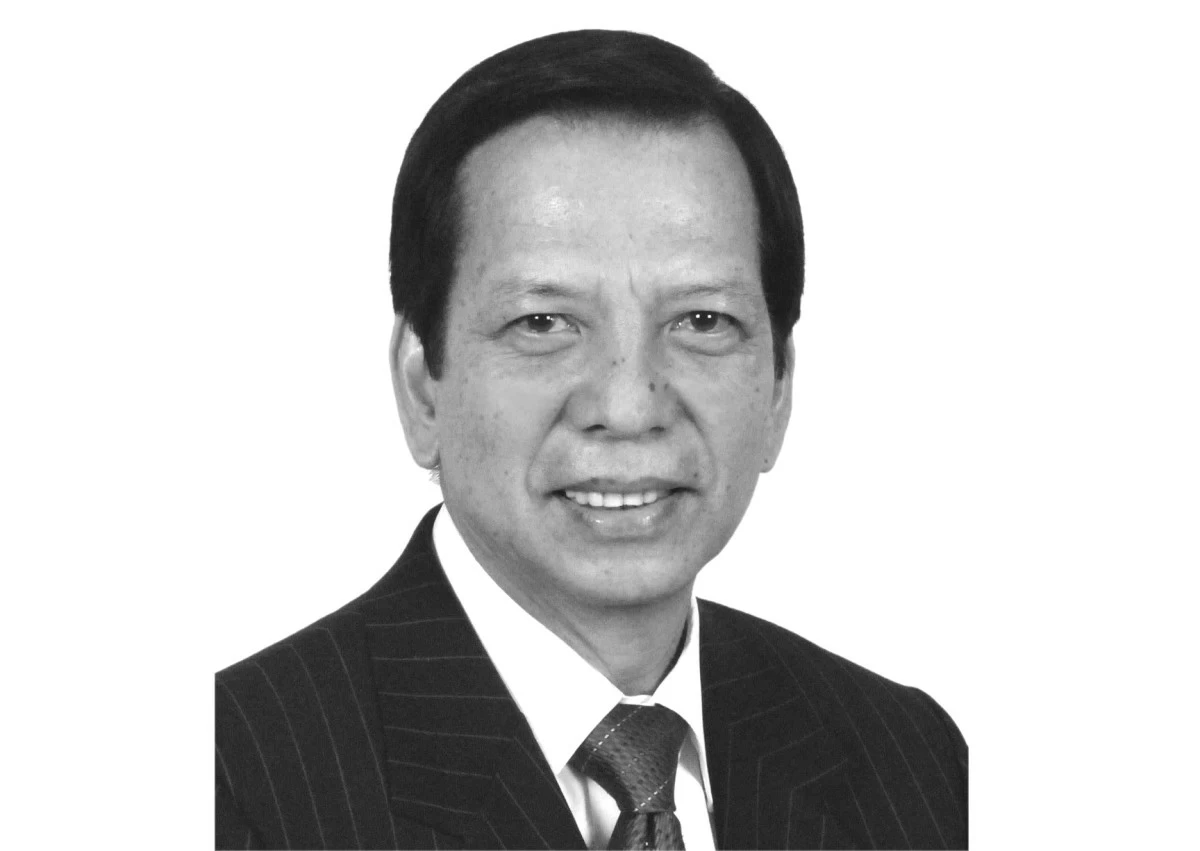
By Klaus Döring


Down to Earth (2008) is a Canadian literary collection by high school students in Montreal.[ The book focuses on environmental issues through creative writing. The collection features introductions by Roberta Bondar and Justin Trudeau as well as endorsements from David Suzuki and Robert Bateman. The book was edited and published by Michael Ernest Sweet.

The book is a student anthology of poetry, fiction, non-fiction and drama. It was written to express concerns about global warming and environmental destruction. The book has two strands: the first warns about environmental destruction, and the second promotes a new awe of nature. It was launched by Justin Trudeau in 2008. Mark Garneau, first Canadian in space, wrote that the writing overwhelmed him, and made him realise that we must act now.[

When tragedy strikes, it's easy to harden our hearts and cry out, "God, why did you let this happen?" Maybe then, we started praying. Before, when everything went smoothly, we would not even think a minute about praying... .

"To be a Christian without prayer, "said Martin Luther, "is no more possible than to be alive without breathing." Prayer is the only way of becoming what God wants us to be. This is the reason why Jesus spent many hours praying.

Unquestionable, our needs bring us to a place of prayer. Confronted with danger or tragedies, as I mentioned earlier, we look for God's help. Difficult times always cause the hearts of men to turn to God into prayer.

Let me ask you: How long has it been since you've brought your burdens to God? Since you asked His forgiveness for your shortcomings?

In his very interesting book "People in Prayer", Dr. John White reminds us that prayer is a divine-human interaction and it is always God who takes the initiative. White writes: "God speaks and we respond. God is always speaking. To hear his voice is not usually a mystical experience. It consists merely of a willingness to pay heed to God who lays a claim to our lives."

Yes, God always speaks. It is up to us whether we will listen and respond to Him. Many think we are the ones who initiate prayer. But prayers begin and end with God.

There was a time, I wasn't in the mood to pray any more. It seemed that God didn't listen to my prayer any more. I didn't get what I prayed for. Of course, not... ! That's not the meaning of praying to God. Will all my wishes be granted? Heaven forbid!

Sometimes, after we have prayed, God's answers may puzzle us. But as time goes by and as events unfold we see God's purpose in his answers. We might get a larger vision, what HE likes. Not what WE like... .

Think about it for a moment" How does the idea that prayer begins and ends with God affect me now? Do I have the habit of listening to god? How do I respond to Him? How do I usually pray?

I confess that a long time ago I have been trying to persuade God to change other people in my surroundings or circumstances. Nothing changed. Of course not, what a fatal attraction? I got confused because God never granted my requests. Meanwhile I got God's answers to my prayers. Maybe very simple: I was willing to let God change me... .This is how each one of us should start. Happy endings. Because I prayed according to His will... .

Talking about prayer, we also have to mention the probably most down-earth book in the bible which is  Proverbs. Its education prepares you for the street and the marketplace, not the schoolroom. The book offers the warm advice you get by growing up in a good family. It covers small questions as well as large ones: talking too much, visiting neighbors too often, being unbearably cheerful too early in the morning. Proverbs simply tell how life works most of the time.

I always love to quote proverbs, which express the truth about life in an elegant, witty kernel. You should not hunt through it for proverbs you might like. You should study the whole book to get its overall point of view. This takes time, for Proverbs covers dozens of subjects in subtle detail.

A BETTER CALLING IN MY LIFE?


By Klaus Döring
36049454_10216422232618692_3969639560735883264_n.jpg

A better calling in your life starts by shifting your focus from finding a specific job title to living out a purpose rooted in everyday obedience, love, and alignment with God.

What is a calling? Your life's calling is what makes you feel that life is meaningful. It helps you live a purposeful life. Callings look different for everybody. Some people, for example, want to help others as part of their calling.

Have you ever felt a sense of purpose or direction in your life that you couldn't quite explain? Some people refer to this feeling as a “calling.” It's a sense that there is something you were meant to do or become, a mission or a destiny that is unique to you.

Career is a rapid motion. A course of action. Sure! A professional conduct in life. Even a progress through life. Here we are! That means, a careerist is one, who rushes widely and makes his own personal advancement as well as his (or her) own aim in life!

What can we do, if "career doubts" won't go away? First allow me to quote my bible, especially Jude (Watching out! Sounding an alarm!), who writes in the style of a teacher who is watching a freight train bear down on his student's driver. Yes, bells ring out: "Be merciful to those who doubt." (Jude 2:22).

What does my calling in life mean? Your calling can be thought of as the urge to share your gifts with the world. When you express your gifts for the sake of others, you often experience the joy of being fully alive.

A true calling is a career or walk of life that a person feels compelled or meant to do. Finding meaning in life is something people often spend a lot of time contemplating. Or some individuals may feel the passion so strong that they know quickly in their heart what they were born to do.

"The way that people pick up careers is incredibly  primitive," said Nicholas Lore, founder of the Rockport Institute, a career coaching firm, and author of "The Pathfinder". Strong tobacco, indeed. That's why so many people are indeed dissatisfied with their jobs.

Believe me, I always thought about a true calling for myself. Sure, people, whose careers aren't the fight fit, often  feel like impostors, as Professor Robert I. Sutton, an organizational psychologist at Stanford University in Palo Alto, said. Very, very well said, Sir.

Notice dreams and signs. Prioritize creative expression. Think about what you used to love. Notice what feels good. Turn down the distractions.Pay attention to what keeps coming back. Try new things regularly.

How about you, my dear reader of this column? Are you also placing too high a value on the external rewards of a job, like money, prestige and power? Of course, for many of us (most?). These things are indeed important. Hold on, please! The work you do and the skills  your opportunity  requires and the value of your work are really more vital to fulfillment. Paper work, or not... . You think, you find a better career fit? Go ahead - but don't expect that this is your life's career!

I waited for my "better calling" (what a terrible term!) experiencing many even better and wonderful moments in life. I also experienced that several professional things I did in the past had not been very much compatible with me. But I stored many valuable experiences.

Today, I am what I am. And, I am proud of it. Almost 73. A retiree with still so many opportunities in the Philippines.


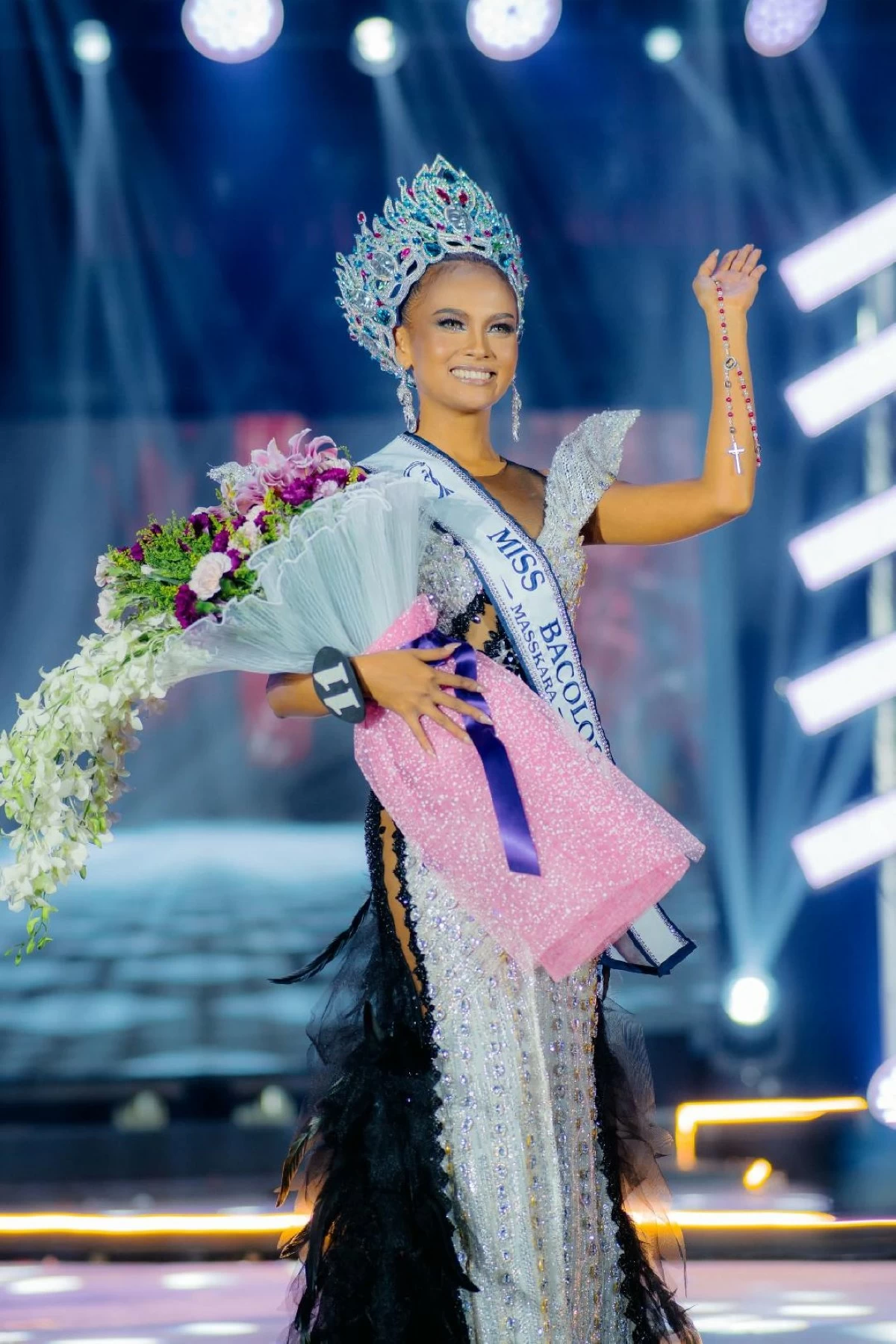
Bago City SK councilor crowned Miss Bacolod MassKara 2026


Published Oct 27, 2026 04:48 pm
ALBARICO  (MassKara Festival 2026)
ALBARICO (MassKara Festival 2026)
BACOLOD CITY – A 24-year-old Sangguniang Kabataan (SK) councilor from Bago City, Negros Occidental was crowned Miss Bacolod MassKara 2026 as part of the 47th MassKara Festival here on Sunday, Oct. 11.
Macy Alaine Albarico, who represented Barangay Singcang Airport, bested 14 other candidates in the pageant and coronation night at STI-West Negros University Gymnasium which highlighted women’s empowerment, local heritage, and community service.
The youth leader and environmental advocate received P150,000, a sash, a bouquet, and bagged the Miss Congeniality award.
Albarico, a graduate of Bachelor of Science in Business Administration Major in Financial Management, works as a Business Process Outsourcing (BPO) agent and plans to use her title to promote coastal conservation and responsible waste management, particularly among young people.
She described winning the crown as the fulfillment of a long-held dream and credited her family, glam team, and community for their support throughout the competition.
“So, the crown would not be mine alone, rather it is our crown,” Albarico said.
Albarico was also crowned Lin-ay sang Pontevedra 2025 and Diwata sang Bago 2023 second runner-up in Negros Occidental.
Julie Mikayla Borja of Barangay Mansilingan was first runner-up and received P100,000, a sash, and a bouquet, while Maria Zonora Ellyssa Curaza of Barangay Sum-ag was second runner-up, receiving P50,000, a sash, and a bouquet.
Completing the Top 5 were Kyla Aligaga of Barangay Pahanocoy and Daniella Louisse B. Merelos of Barangay 32.
During the question-and-answer round, Albarico highlighted the need to expand opportunities for Bacolodnons when asked what she would change for the city.
“If I were to pull a string for this city, that would be the strength of opportunities,” Albarico said, emphasizing the importance of access to jobs, seminars, and information that can help residents improve their lives and contribute to the city’s progress.
Borja won four special awards, Best in Festival Costume, Best in Gown, Best in Talent, and Darling of Social Media.
Aaron Spencer Marin was named Best Festival Costume Designer for the costume worn by Borja while Reina Caspe won Best Gown Design for the gown worn by Margarette Ymballa of Barangay Taculing.
Curaza received the Miss Photogenic award, Aligaga won Best in Production Number, and Lourdeth Codico of Barangay Bata was named Best in Swimwear.
Mayor Greg Gasataya congratulated all candidates who graced the stage, poured their hearts out, and made this year's pageant meaningful.
“Padayon, Bacoleña!” (Keep going Bacoleña), he said, as he acknowledged them for embodying the heart, resilience, and beauty of Bacolod.
The pageant’s creative direction celebrated Bacolod’s cultural identity through local landmarks and symbols, with the Bacolod City Public Plaza serving as inspiration for the Evening Gown Competition.
This year’s creative narrative explored women taking control of their own identities and destinies, using the imagery of dolls in a child’s play as a metaphor for self-determination and empowerment.
Leading the panel of judges were Bea Millan-Windorsky, who is set to represent the Philippines at the Miss Universe pageant in Puerto Rico, and Asia Rose Simpson of Miss World Philippines.
Sen. Risa Hontiveros graced the event and recalled the tragedies and difficult circumstances that confronted Bacolod in the 1980s, which helped inspire the creation of the MassKara Festival as a symbol of resilience and hope.

Who holds the purse?


SPEAKING OUT
Most Filipinos glaze over when talk turns to the national budget. Numbers in the trillions have a way of sounding distant from the daily concerns of Juan and Maria. But a recent Supreme Court ruling has brought the budget process into the spotlight, raising a simple but important question: Who gets to decide how our tax money is spent?
Last week, the Supreme Court declared unconstitutional key portions of the 2024 and 2025 national budgets and struck down certain provisions of the 2026 budget. The Court ruled that Congress cannot increase the President's total recommended appropriations when it passes the annual General Appropriations Act.
To many, this sounds like a technical dispute among lawyers, legislators, and budget officials. It is not. Every peso in the national budget comes from taxpayers. Whether through income taxes, VAT, fuel taxes, fees, or government borrowing that future generations must repay, the money being allocated belongs to the Filipino people. That is why the dispute matters.
The Executive Branch prepares the National Expenditure Program. It identifies priorities, forecasts revenues, and determines how much the government can afford to spend. Congress then reviews the proposal and decides where the money should go.
The Supreme Court has now reminded everyone that while Congress may adjust allocations, it cannot enlarge the overall spending envelope proposed by the President.
Think of it this way. A family decides that it can afford to spend ₱30,000 this month. The parents may debate whether more should go to education, groceries, repairs, or medical needs. But they cannot suddenly decide to spend ₱50,000 if the family's income only supports ₱30,000. The Supreme Court is essentially applying the same principle to government finances.
Supporters of the ruling say it protects fiscal discipline and prevents excessive spending. They argue that constitutional limits exist for a reason and that government must live within its means. Critics, including some officials in the Executive Branch, contend that the decision could make government budgeting less flexible. They worry that restrictions on so-called "unprogrammed appropriations" may limit the government's ability to respond quickly to emerging needs and opportunities. The administration has already sought reconsideration of the ruling.
Reasonable people can disagree on the legal arguments. But there is one lesson that should unite us. The budget is more than an accounting document. It is a moral document. A budget reveals what a nation values. It determines whether classrooms are built, roads repaired, hospitals equipped, farmers assisted, and communities protected from floods.
For too long, budget discussions have been treated as a private conversation among experts. Yet ordinary Filipinos have the greatest stake in the outcome. When a project is delayed, it is Juan and Maria who wait. When public funds are wasted, it is Juan and Maria who pay. When spending is prudent and effective, it is Juan and Maria who benefit.
The Supreme Court ruling is ultimately not about lawyers winning arguments or politicians winning battles. It is about strengthening the safeguards that govern the people's money. At a time when Filipinos continue to struggle with high prices, rising living costs, and economic uncertainty, every peso matters.
That is why the question before us is not merely constitutional. It is deeply personal. After all, the money being debated in court and in Congress is not government money. It is the people's money. And the people deserve nothing less than transparency, discipline, and accountability in how it is spent.

Government moves ahead with ₱103-billion MRT-3 privatization plan


Government moves ahead with ₱103-billion MRT-3 privatization plan

The government’s plan to transfer the operations of Metro Rail Transit Line 3 (MRT-3) to the private sector remains on track for next year, despite the project recently being deemed incomplete by the Public-Private Partnership (PPP) Center. Read more