
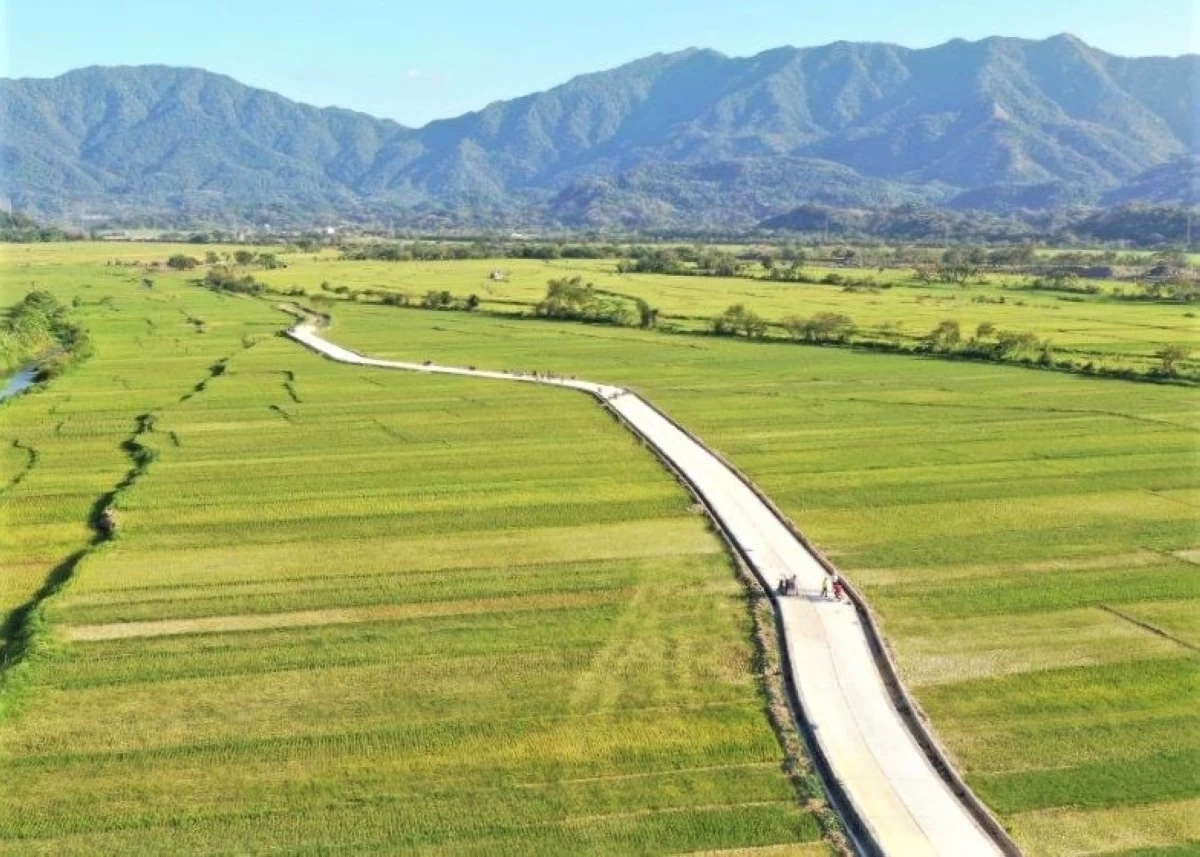
The Department of Agriculture (DA) is teaming up with civil society groups to help promote transparency in the development of farm-to-market road (FMR) projects.
The DA said in a statement on Friday, Oct. 30, that it has partnered with citizen watchdogs the People’s Budget Coalition (PBC), BetterGov.PH, and Bisto Proyekto for a comprehensive review of its FMR projects.
The scrutiny of the projects is expected to range from planning and budget preparation to construction and post-implementation monitoring, according to Agriculture Secretary Francisco Tiu Laurel.
The agency has agreed to share project documents and conduct joint monitoring under its partnership with the civil society groups.
This comes amid questions over FMR coordinates, which were earlier flagged in a recent Senate hearing due to inconsistencies, including entries that appeared to be located in the sea.
Civil society groups have likewise raised concerns over more than 350 FMR projects worth nearly ₱6 billion that were inserted in the proposed national budget due to the lack of publicly available documents.
Agriculture Undersecretary Arrey Perez said the DA’s partnership with citizen watchdogs is crucial to ensuring that every infrastructure project is completed for its intended purpose.
“We welcome the extra hands and eyes offered by these civil society groups to audit these projects and ensure they are executed properly,” Perez said.
“By completing these projects as intended, we bring greater development to our farmers, fisherfolk, other food producers, and more rural areas,” he added.
In line with efforts to uphold transparency, the DA earlier launched the FMR Watch online portal, which publishes detailed engineering designs, programs of work, and validation
reports of ongoing projects.
The department is also pursuing third-party audits involving state universities and colleges, where their engineers and faculty could independently assess FMR projects before contractors receive payment.
With these safeguards, the DA said it is making sure that FMRs are constructed to connect farms to trading centers, effectively reducing logistics costs and limiting post-harvest losses.
The DA has identified the need for 131,000 kilometers (km) of FMRs nationwide, with about 55,000 km still unbuilt. By 2028, it plans to develop roughly 10,000 km, or about 18 percent of the infrastructure backlog.
The DA said its partnership with watchdogs and civil society groups would not be limited to this year, indicating that the initiative would continue beyond the current budget cycle.
“Its ultimate measure will not be the number of documents published or projects inspected, but whether scrutiny helps prevent waste, improves construction quality and ensures roads reach the farming communities that need them most,” it said. (Dexter Barro II)

No comments:
Post a Comment