
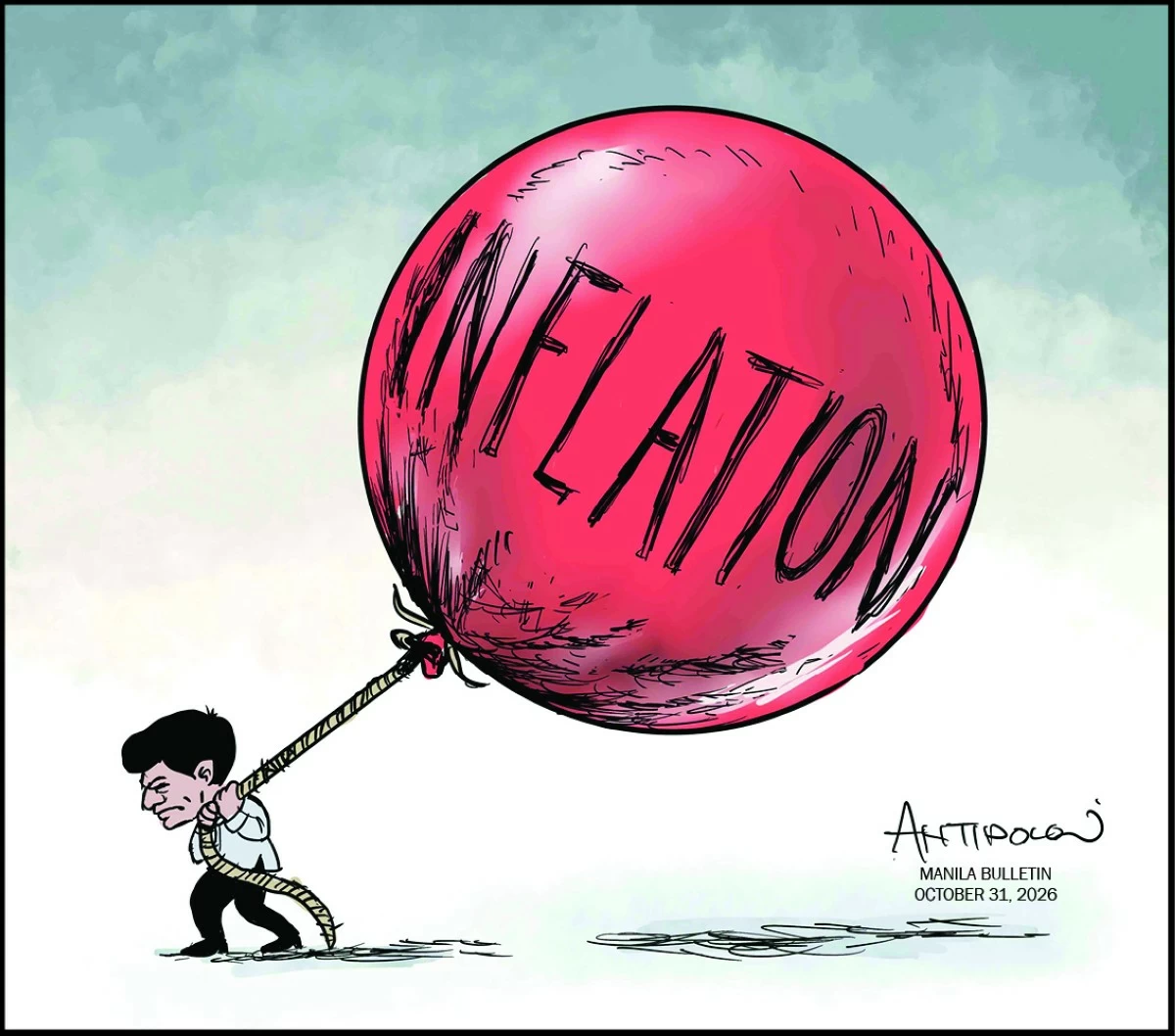
The peso breaking past 64 against the United States dollar may have signaled that monetary policy has reached its limit. The Bangko Sentral ng Pilipinas (BSP) has already pushed the benchmark interest rate to 5.50 percent, with market analysts bracing for another hike toward six percent if inflation keeps climbing. Now, it seems President Marcos is expecting the central bank to single-handedly defend the currency and stabilize the economy, which is a serious mistake.
Higher interest rates are an indiscriminate mechanism because while they can curb currency speculation and cool down aggregate demand, they cannot produce more rice, repair broken irrigation networks, or move goods smoothly through crowded ports.
The primary drivers behind domestic price hikes are structural supply shortages and high transport costs. Treating a supply problem strictly with interest rate hikes is squeezing local businesses and families already struggling to pay for basic necessities.
This is where the Marcos administration must step in with serious fiscal solutions. Yet, the current handling of government funds shows the continued disconnect between fiscal spending and economic priorities.
According to the latest national government disbursement report from the Department of Budget and Management (DBM), capital outlays and public infrastructure spending dropped sharply to ₱522 billion at end-September from ₱798.4 billion in the same period last year, a ₱276.4 billion contraction.
The DBM attributed the slump to reduced disbursements by the Department of Public Works and Highways, driven by stricter payment conditions, enhanced project verification, and heightened oversight. In August alone, infrastructure spending fell 16.9 percent year-on-year. While safeguards on public spending are necessary, allowing essential capital investments to stall during an economic slowdown weakens the very foundation the country needs to sustain growth.
Instead of fixing these spending bottlenecks and directing capital where it is needed most, the proposed ₱7.2 trillion national budget for 2027 looks like business as usual. The House of Representatives added over ₱180 billion in unvetted infrastructure insertions for thousands of local projects, including multi-purpose buildings and bypass roads with little technical justification. To make room for these additions, heavy cuts were made to essential areas: ₱130 billion stripped from foreign-assisted projects, ₱9.5 billion taken from calamity funds, nearly ₱5 billion removed from health programs, and vital funding cut from mass transit like the EDSA Busway.
A coalition of 35 major business and civil society groups recently called out these insertions, pointing out that shifting national resources into vague local projects while cutting disaster preparation, healthcare, and infrastructure undermines investor confidence.
If the government wants to ease price pressures and support the peso, public spending must be directed toward real economic bottlenecks. That means prioritizing repairs to existing irrigation systems before El Niño conditions worsen, lowering logistics costs for food producers, streamlining customs clearance, and accelerating domestic energy investments to reduce reliance on expensive imported oil. Spending public money on well-planned supply solutions builds long-term productive capacity; spending it on discretionary local line items simply strains public finances.
There is also a direct fiscal cost to leaving the fight against inflation entirely to the central bank. With national debt standing at ₱19.61 trillion, every rate hike by the central bank increases the government’s own borrowing costs. Meanwhile, foreign direct investment has dropped as international investors weigh higher interest rates against weak execution and infrastructure gaps.
Government assurances that the country holds enough foreign exchange reserves to protect the peso offer temporary comfort, but those reserves are not bottomless. Gross international reserves have already dipped to a three-year low of $100 billion. The central bank cannot spend its dollar buffers indefinitely while fiscal policy pulls in the opposite direction.
Interest rate hikes can buy temporary time, but they cannot fix underlying structural weaknesses. Until the Marcos administration cleans up the 2027 budget, removes politically motivated insertions, and puts public money into projects that actually expand supply and lower business costs, the central bank will be left fighting a lonely and expensive battle to protect the Philippine economy.

No comments:
Post a Comment