
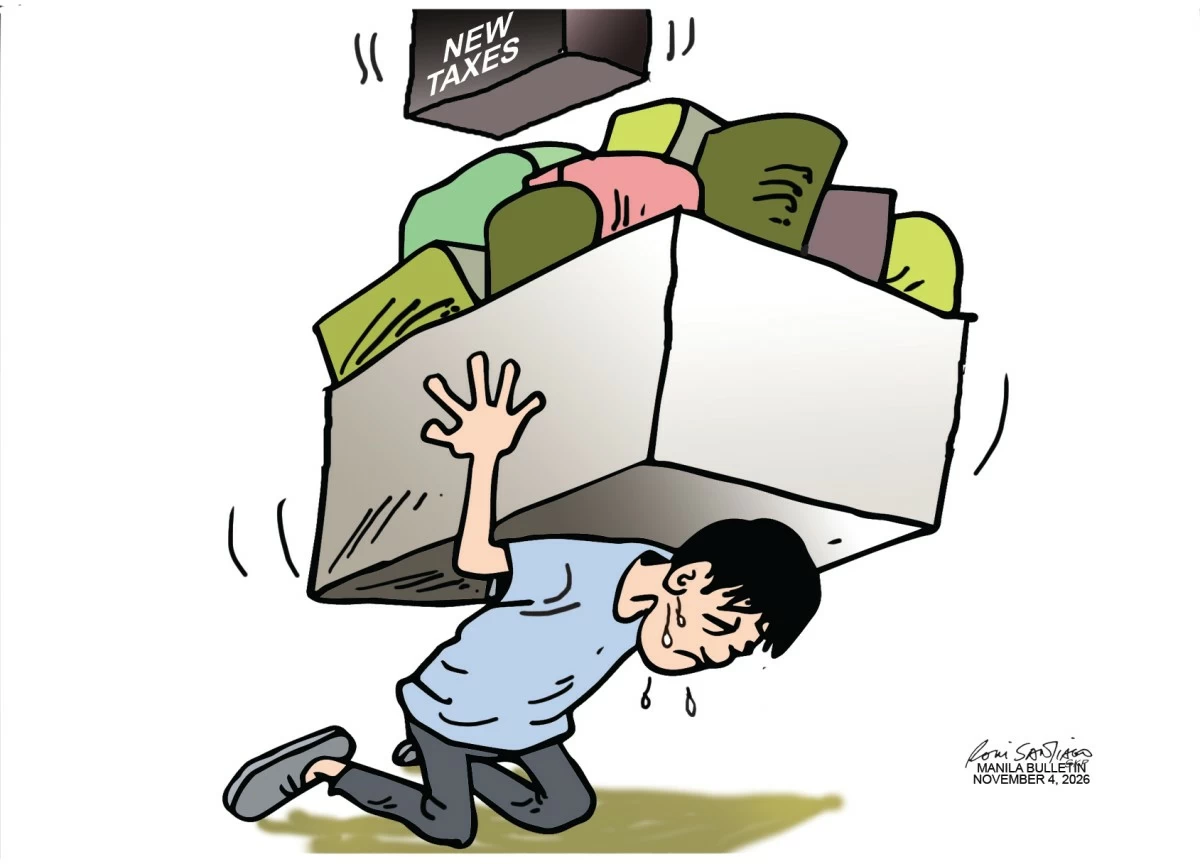
The government’s pursuit of additional revenues is a crucial test for the country. Will plugging tax leakages strengthen the Philippine economy, or will ordinary Filipinos once again shoulder the cost of fiscal consolidation?
The Department of Finance (DOF) is currently examining the removal of the ₱10,000 de minimis import threshold and an additional tax on online gambling. While both proposals promise potential revenue gains, their consequences deserve scrutiny beyond the government’s collection targets.
Under Section 423 of Republic Act 10863, or the Customs Modernization and Tariff Act, imported goods valued at ₱10,000 or below are exempt from customs duties and taxes. The DOF argues that this exemption disadvantages local manufacturers, whose products are generally subject to taxation, particularly as cross-border e-commerce expands.
There is merit in addressing this imbalance. Requiring imported goods to bear appropriate taxes could level the competitive playing field, encourage consumers to consider locally manufactured alternatives, protect domestic enterprises, and potentially support jobs. Additional collections could also finance infrastructure, education, healthcare, and other public services.
But eliminating the threshold is not automatically equitable. Many Filipinos use online platforms to purchase affordable clothing, household necessities, school supplies, and other goods unavailable or more expensive locally. Import duties and applicable taxes could increase their prices, disproportionately affecting low-income households already struggling with inflation and limited purchasing power.
Moreover, taxing inexpensive imports will not automatically revive local manufacturing. Domestic producers must also address production costs, infrastructure constraints, productivity, and competitiveness. Without stronger local industries and efficient customs administration, consumers could simply pay more without receiving better alternatives.
The proposed online gambling tax presents a different opportunity. Former Finance Secretary Ralph Recto had estimated that an additional 10-percentage-point levy on gross gaming revenues, on top of the approximately 38 percent currently collected through existing government charges and taxes, could generate another ₱20 billion annually.
Such revenue could finance public hospitals, addiction-treatment programs, education, and social protection. A higher tax could also discourage excessive gambling if operators pass some of the additional cost to players. However, this outcome is not guaranteed. Excessive taxation could push some bettors toward illegal platforms, undermining regulation and collections. Effective enforcement, responsible-gambling safeguards, and monitoring must accompany any new levy.
Could this become another sin-tax success story?
The comparison with tobacco and alcohol taxation is instructive, but not exact. Philippine sin-tax laws demonstrate how excise collections can support public health financing. Republic Act 11346 and related legislation allocate portions of tobacco and alcohol tax revenues to PhilHealth and health programs. An online gambling levy could adopt a similar earmarking mechanism, directing a defined share toward addiction prevention, mental-health services, and treatment.
However, unlike tobacco and alcohol taxes, gambling taxation must contend with rapidly evolving digital platforms and potentially offshore operators. Collection and enforcement therefore require specialized capabilities.
The government's simultaneous consideration of travel-tax abolition and general tax amnesty further complicates the revenue equation. Removing the travel tax could ease expenses for departing Filipinos, while a carefully designed amnesty might encourage tax compliance. Yet foregone collections must be matched by credible alternative revenues.
Ultimately, revenue generation should not be measured solely by how much the government collects, but by how effectively those taxes improve people’s lives.
Before imposing new taxes, policymakers must establish who pays, who benefits, how much is collected, and whether the promised economic gains outweigh the added burdens. Transparency, impact assessments, and measurable public benefits should be non-negotiable.
Filipinos need a government that closes genuine tax loopholes without turning every economic activity into another revenue opportunity. The real test of fiscal policy is not whether government coffers grow, but whether public welfare grows with them.
