
Intensified magmatic unrest persists
At A Glance
- The ash emission event occurred at 8:22 a.m. Tuesday, Nov. 3.
- The event generated a plume that rose 1.6 kilometers above the summit crater before drifting southwest.
- Mayon remains under Alert Level 3, which has been in effect since Oct. 30, when Phivolcs announced that the volcano had entered "a new phase of magmatic eruption."
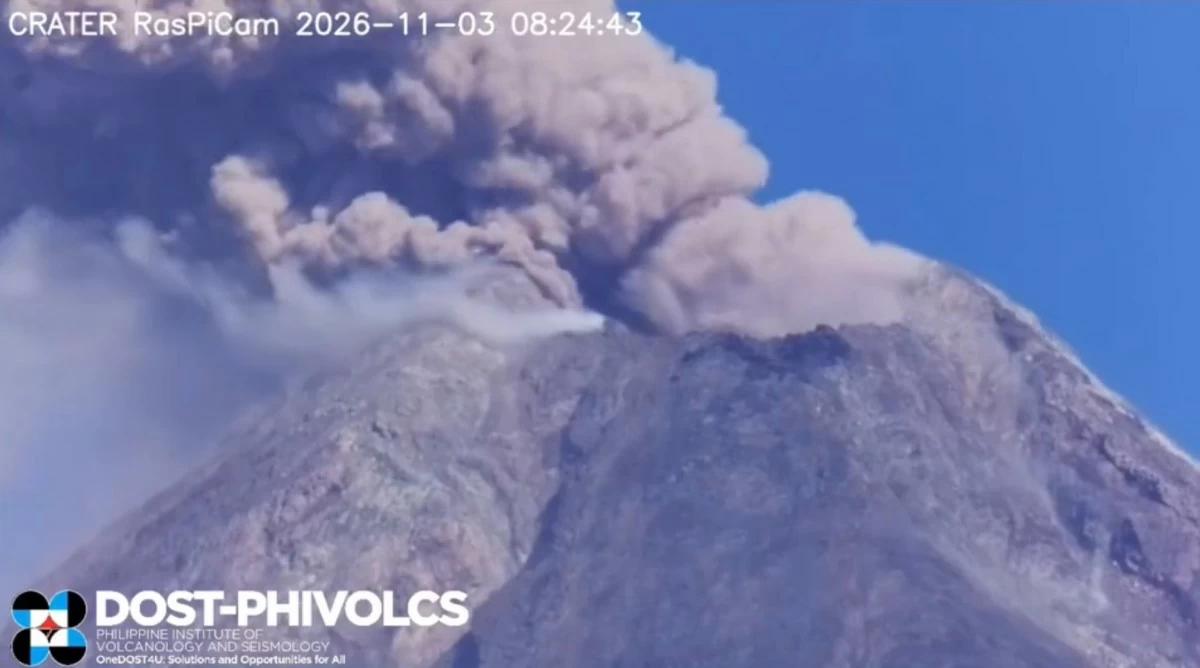
Screenshot shows an ash emission event at the summit crater of Mayon Volcano on Nov. 3, 2026, generating a plume that rose 1,600 meters before drifting southwest. (Philippine Institute of Volcanology and Seismology Facebook page)
Mayon Volcano in Albay continued to show signs of unrest on Tuesday, Nov. 3, as an ash emission event was recorded at its summit crater following the escalation of its status to Alert Level 3 (intensified magmatic unrest) on Oct. 30, the Philippine Institute of Volcanology and Seismology (Phivolcs) said.
The event occurred at 8:22 a.m., generating a plume that rose 1.6 kilometers above the summit crater before drifting southwest.
From midnight on Nov. 2 to midnight on Nov. 3, Phivolcs had recorded 13 volcanic earthquakes and one rockfall signal.
During the 24-hour monitoring period, a fair crater glow was visible to the naked eye while the volcano exhibited minor strombolian activity, characterized by short explosive bursts that eject glowing volcanic materials and produce brief lava fountains.
Mayon remains under Alert Level 3, which has been in effect since Oct. 30, when Phivolcs announced that the volcano had entered “a new phase of magmatic eruption.”
Alert Level 3 indicates relatively high volcanic unrest and an increased likelihood of a hazardous eruption, as magma is close to or has already reached the crater.
At this alert level, volcanic earthquakes and tremors may become more frequent, sulfur dioxide emissions may further increase, and rockfalls may occur in the summit area.
Other signs of unrest include vigorous steaming, sustained crater glow, and persistent swelling of the volcano's edifice.
Phivolcs reiterated that entry into Mayon's six-kilometer permanent danger zone (PDZ) must be prohibited.

No comments:
Post a Comment